Key Moments
Yannis Pappas: History and Comedy | Lex Fridman Podcast #175
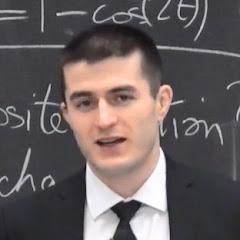 Lex Fridman
Want to know something specific about what's covered?
We've already dissected every moment. Ask and we will deliver (with timestamps).
Key Moments
Yannis Pappas discusses history, comedy, power, mortality, dogs, and the human condition.
Key Insights
Power can corrupt, but it often reveals pre-existing traits, with psychopaths having an advantage due to lack of empathy.
Embracing the ephemerality of life and accepting mortality is crucial for emotional survival and objectivity.
Dogs played a vital role in human evolution, acting as partners in survival and early warning systems.
The Greek spirit, characterized by 'philotimo' (honor, loyalty, altruism), drives resilience against oppression.
Charisma can be a powerful tool for both positive and negative influences, capable of blinding even intelligent individuals.
Authenticity, action, and embracing one's true self are key to a meaningful life and genuine connection.
THE INTERSECTION OF HISTORY AND COMEDY
Yannis Pappas, formerly of the "History Hyenas" podcast, explores history through a comedic lens, finding humor in its absurdity and human folly. Despite the show's end, Pappas continues to host "Long Days" and offers his insights, blending intellectual curiosity with a unique comedic perspective that he describes as an "f student of history." This approach makes complex subjects accessible and entertaining, suggesting that humor is a vital tool for understanding the past and present.
THE CORRUPTING NATURE OF POWER AND WEALTH
The conversation delves into the corrupting effects of power and wealth, drawing parallels to figures like Tim Dillon and historical dictators. Pappas argues that power doesn't change individuals but rather reveals their true nature, especially their darkest aspects. He touches on the allure of unchecked power, likening it to a Roman dictator, and contrasts this with the perceived stability dictatorships can offer, while acknowledging the long-term drawbacks of such systems compared to democracies.
EMBRACING IMPERMANENCE AND ACCEPTING MORTALITY
A significant theme is the discussion around impermanence and the acceptance of death. Pappas, influenced by his father's wisdom, emphasizes that nothing is permanent – not possessions, problems, or even one's physical state. He suggests that accepting mortality is fundamental to emotional survival and living an objective life. This perspective encourages flexibility and a greater appreciation for the present, moving away from the illusion of permanence often pursued through wealth.
HUMANITY'S CONNECTION WITH THE ANIMAL KINGDOM
Pappas expresses a deep affection for dogs, highlighting their crucial role in human evolution and civilization, acting as partners and protectors. The discussion extends to other animals, with a particular fascination for hyenas, admired for their intelligence, cunning, and matriarchal society. This segment explores the predator-prey dynamic, the ethics of consuming certain animals, and the complexities of animal consciousness, raising questions about rights and suffering, particularly in the context of future artificial intelligence.
THE GREEK SPIRIT AND HISTORICAL RESILIENCE
The conversation highlights the Battle of Crete and the resilience of the Greek people, embodying 'philotimo' – a concept of honor, loyalty, and altruism. Pappas shares a personal connection through his mother's experience during the Nazi occupation, underscoring a deep-seated pride and defiance. This spirit, he suggests, allowed Greeks to resist invaders and preserve their culture, even influencing major historical events like the postponement of Hitler's invasion of Russia.
THE MECHANICS OF CONSPIRACY AND DECEPTION
The dialogue touches upon conspiracy theories, particularly those surrounding events like 9/11 and figures like Jeffrey Epstein and Bernie Madoff. Pappas distinguishes between genuine conspiracies and the tendency for people to project dishonesty onto institutions. He suggests that charisma, flattery, and playing on egos are tools used by con artists and potentially malevolent leaders to manipulate others, emphasizing the importance of critical thinking and transparency in combating deception.
LEADERSHIP, COMPASSION, AND THE IDEAL SOCIETY
The discussion shifts to leadership styles, contrasting rule by love versus fear, using Queen Elizabeth I and Vladimir Putin as examples. Pappas advocates for a balance between capitalism and socialism, suggesting that while capitalism drives progress, socialism can temper its excesses, particularly in areas like healthcare and prisons. He emphasizes the value of data-driven solutions and honesty in governance, idealizing a pragmatic approach that acknowledges human self-interest while ensuring a social safety net.
AUTHENTICITY AND THE PURSUIT OF MEANING
Pappas advises young people to remain doggedly authentic, emphasizing that genuine connection and communication are the true currencies of life. He defines love as an action rather than just a feeling, a realization that took time and personal struggle. His own journey from considering a more conventional path to embracing comedy highlights the importance of trusting one's instincts and finding a place where one truly belongs, even if it means defying expectations.
Mentioned in This Episode
●Products
●Software & Apps
●Companies
●Organizations
●Books
●Concepts
●People Referenced
Common Questions
Yannis Pappas believes power doesn't change people but rather reveals their darkest aspects and existing darkness. He cites Joe Rogan as a rare example of someone who resisted corruption despite increased fame and influence, while Lex Fridman speculates that psychopaths already lack empathy, so power only allows them to indulge rather than corrupting them.
Topics
Mentioned in this video
A history comedy podcast co-hosted by Yannis Pappas, known for its unique chemistry and rants, which recently ended.
Yannis Pappas's new podcast after History Hyenas, which the host is enjoying.
The podcast hosted by Lex Fridman, known for its in-person conversations and diverse guests.
A buddy cop movie franchise, used as a humorous comparison for a potential collaboration between Tim Dillon and Kim Jong-un.
A romantic historical fiction film, mentioned in the context of Gwyneth Paltrow's Oscar win.
A film starring Johnny Depp and Ray Liotta, mentioned as a father-son movie that evokes emotional responses.
Animated Disney film, mentioned as a source of common, often negative, portrayals of hyenas.
A movie that Yannis Pappas appreciates for its realistic portrayal of the mafia, contrasting with glorified depictions.
Yannis Pappas's comedy special, available on YouTube.
Poet and author, quoted for his poem 'Nirvana' and his view on love.
North Korean dictator, humorously compared to Tim Dillon in terms of absolute power.
Leader of Nazi Germany, discussed regarding power, corruption, charisma, and his tactical errors in World War II.
Comedian and co-host of the History Hyenas podcast, now hosts Long Days with Yannis Pappas, has a comedy special called 'Blowing the Light'.
Philosopher and author, whose book 'The Denial of Death' posits that human behavior is driven by the fear of mortality.
Hedge fund manager and con artist, responsible for the largest financial fraud in US history, described as a 'goat' (greatest of all time) thief for his brilliant scam and use of charm.
Former presidential candidate, running for New York City mayor, praised for his data-driven approach in politics and honesty about complex issues such as prison costs.
Author and philosopher known for Objectivism, mentioned in discussions about self-interest and capitalism.
Comedian and friend of Yannis Pappas and Lex Fridman, discussed in the context of unchecked power and indulgence.
A Finnish comedian and friend of Yannis Pappas, who emphasized trusting one's gut instinct as a survival mechanism.
Podcaster known for 'Hardcore History,' contrasted with History Hyenas for his focus on historical accuracy and thoughtfulness while still inspiring people to learn.
Filmmaker, quoted for saying personality 'goes a long way', supporting the idea that charisma can overcome common sense.
Actress who won an Oscar for 'Shakespeare in Love', mentioned in a humorous context of her winning over Cate Blanchett.
Martial artist and philosopher, referenced for his 'be water' philosophy, encouraging flexibility in life.
Former leader of the Soviet Union, discussed as a powerful leader whose legacy is being reevaluated in Russia.
Actor starring in the film 'Blow'.
Podcaster and comedian, cited as an inspiration for maintaining authenticity despite growing fame and influence. Lex Fridman admires his authenticity and role in popularizing intellectual podcasts.
Founder of psychoanalysis, mentioned in a humorous context regarding Oedipal complex.
Serial killer, used as an example of failing to trust one's gut instinct and the deceptive nature of psychopaths.
Fascist dictator of Italy, described as subservient to Hitler during World War II.
Financier and convicted sex offender, discussed as a charismatic individual who used flattery to gain influence among brilliant but often isolated academics, rather than being part of a deep government conspiracy.
Founder of Amazon, mentioned when discussing New York City's rejection of an Amazon deal, impacting job creation and economic growth.
Former Mayor of New York City, mentioned as a 'tough mayor' in his sane days, contrasting with his later public persona.
Queen of England and Ireland, celebrated for her long and successful reign, adept public relations, and a fascinating, Machiavellian leadership style.
Former German Chancellor, mentioned as a strong female leader but compared to Elizabeth I, suggesting Elizabeth I was unmatched in historical impact.
Philosopher, economist, and revolutionary, quoted at the end of the podcast.
Computer engineer, mentioned as a guest with whom Lex Fridman felt a genuine human connection.
Former President of Iraq, discussed as a strongman dictator who initially appeared progressive before his regime's true nature was revealed.
Former Mayor of New York City, cited as an example of a 'money guy' mayor who successfully led the city, representing a more capitalistic approach.
Comedian and friend of Yannis Pappas.
Filmmaker, discussed regarding separating the art from the artist despite personal controversies.
President of Russia, discussed in the context of power, dictatorships, and charisma, with a background in espionage.
Comedian and actor, cited as an example of someone pretending to be the opposite of what they are to hide nefarious acts.
Actor starring in the film 'Blow'.
Former Prime Minister of the United Kingdom, quoted for his statement about how 'heroes fight like Greeks' after the Battle of Crete.
Co-founder of Microsoft, mentioned as a political figure who was part of Jeffrey Epstein's network.
Actress, praised for her portrayal of Queen Elizabeth I in films.
Mathematician and podcaster, mentioned for his theory that Jeffrey Epstein might have been a front for an intelligence agency.
Founder of the Mongol Empire, discussed regarding the historical perception of leaders and whether they truly led from the front lines.
An ancient Greek philosophy that emphasizes virtue, reason, and self-control, mentioned in connection with meditating on death.
A test of a machine's ability to exhibit intelligent behavior equivalent to, or indistinguishable from, that of a human, described as more about talking than feeling or consciousness.
A long period of relative peace and minimal expansion by military force experienced by the Roman Empire, used as a comparison for England's flourishing period under Elizabeth I.
A poem by Charles Bukowski, mentioned for its theme of magic in human connection.
A social psychology theory that proposes that human behavior is motivated by an unconscious fear of mortality.
Figure in Greek mythology, used as a metaphor for the endless, futile pursuit of wealth and material gain.
An app mentioned by Yannis Pappas as an example of helpful robot/software use.
Dan Carlin's podcast, known for its in-depth and accurate historical storytelling.
An Instagram channel depicting the brutality of nature, found to be difficult to watch due to its raw depictions of predation.
The German parliament building, where Hitler delivered a speech acknowledging the bravery of the Greek people in WWII.
Prestigious university where Jeffrey Epstein established connections with academics.
Former primary security agency of the Soviet Union, mentioned in connection with Vladimir Putin's background in espionage and his psychological control tactics.
Mentioned as having produced a documentary about Hitler's charisma.
The largest empire in history, under which the sun was said to never set; mentioned in connection with Queen Elizabeth I's reign.
More from Lex Fridman
View all 552 summaries 227 min
Gary Gallagher: American Civil War, Slavery, Lincoln, Grant & Lee | Lex Fridman Podcast #499
 232 min
The Rise and Fall of the Roman Empire and the Byzantine Empire | Lex Fridman Podcast #498
 174 min
Biggest Mysteries in Physics: Antimatter, Dark Energy & ToE - Don Lincoln | Lex Fridman Podcast #497
 259 min
FFmpeg: The Incredible Technology Behind Video on the Internet | Lex Fridman Podcast #496
Ask anything from this episode.
Save it, chat with it, and connect it to Claude or ChatGPT. Get cited answers from the actual content — and build your own knowledge base of every podcast and video you care about.
Get Started Free