Key Moments
What I Really Think About Trump and Media Bias (Episode #293)
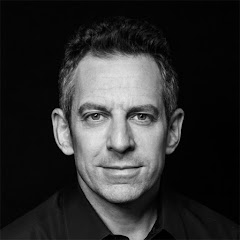 Sam Harris
Key Moments
Sam Harris clarifies comments on Trump, media bias, and the Hunter Biden laptop story.
Key Insights
The viral clip was taken out of context, and Harris misspoke a key word, creating misunderstandings.
Harris argues that while Trump is a terrible person, he is less dangerous than certain hypothetical alternatives due to his lack of ideology and grand vision.
The decision to delay reporting on the Hunter Biden laptop story was a difficult but potentially justifiable journalistic choice, not an act of illegal election fraud.
Harris criticizes the 'left-wing conspiracy' narrative, stating that genuine political concerns exist on both sides, and media platforms require moderation.
He emphasizes that his critique of Trump is rooted in his character and threat to democratic norms, not partisan politics.
Harris highlights his independent audience, which allows him to speak freely and correct errors without fear of backlash.
CLARIFYING MISUNDERSTANDINGS AND THE POWER OF CLIPS
Sam Harris addresses a recent controversy stemming from a podcast appearance where his statements about Donald Trump and media bias caused significant outrage. He acknowledges that he spoke unclearly and, in one instance, misspoke, leading to widespread misunderstandings amplified by social media clips. Harris notes the tendency, described by Nietzsche, for people to hold grudges against those who challenge their preconceived notions, often by clinging to the worst possible interpretation of their words, especially when presented in decontextualized clips.
RE-EVALUATING THE TRUMP CHARLottesville REMARKS
Harris revisits the controversy surrounding Trump's remarks after the Charlottesville rally, where he referred to 'very fine people on both sides.' Harris argues that, contrary to popular interpretation, Trump's full remarks indicate he was not equating neo-Nazis with ordinary counter-protesters. He criticizes the selective editing of clips that omit Trump's own clarification, illustrating how decontextualization misleads audiences and fuels partisan animosity, a problem he observes on both the political right and left.
TRUMP'S CHARACTER VERSUS IDEOLOGICAL THREAT
Harris elaborates on his controversial statement that Trump is a 'worse person' than Osama bin Laden. He clarifies that this comparison is not about Trump being more dangerous ideologically, but about his profound lack of personal virtue. While bin Laden was driven by a destructive ideology and demonstrated certain virtues within his worldview, Trump is characterized as a 'black hole of self-regard' and a 'child in a man's body,' lacking integrity and capable of immense harm due to his ruthlessness, not his ideals. This distinction, he explains, is often lost in the outrage.
THE HUNTER BIDEN LAPTOP STORY AND JOURNALISTIC JUDGMENT
Harris defends his remarks concerning the Hunter Biden laptop story, specifically the word 'warranted' which he admits was a misspelling. He explains that his intention was to discuss the difficult ethical and journalistic decision of delaying reporting on such a story, especially given its timing before an election and the potential for it to be disinformation. He argues that media platforms and journalists grapple with editorial judgments, and suppressing or delaying a story, while debatable, is not inherently illegal or an act of subverting democracy, especially when compared to Trump's challenges to democratic norms.
MEDIA BIAS, PLATFORM MODERATION, AND CONSPIRACY CURES
Addressing accusations of media bias and censorship, Harris asserts that all platforms, including social media, engage in forms of moderation. He argues that platforms like Twitter have an ethical obligation to exercise editorial control for the public good, even if imperfectly executed. He criticizes right-wing echo chambers for hypocrisy in clamoring about media bias while ignoring inconvenient truths themselves. Harris dismisses hyperbolic 'left-wing conspiracy' narratives, suggesting that public discourse on how to handle potentially damaging information is akin to a group discussing how to deflect an asteroid – a necessary conversation, not necessarily nefarious.
DEMOCRACY'S RELIANCE ON NORMS AND TRUMP'S UNIQUE THREAT
Harris underscores that Donald Trump represents an existential threat to democracy not because of his ideology, but because of his willingness to undermine fundamental norms, such as the peaceful transfer of power. He argues that these norms are as crucial as laws and that Trump's actions, such as questioning election results and encouraging the January 6th events, demonstrate a disregard for democratic processes. This behavior, he contends, further normalizes such actions and exacerbates political division and irrationality, making him uniquely dangerous to the stability of democratic institutions.
SAM HARRIS'S INDEPENDENT AUDIENCE AND UNWAVERING PRINCIPLES
Harris reflects on the personal and professional implications of his controversial statements, noting that his critique of figures across the political spectrum leaves him without a strong partisan tribe to defend him. However, he values his audience, which seeks genuine intellectual exploration rather than partisan agreement. This independence, bolstered by his subscription model, allows him the freedom to express his views, admit when he misspells, and correct the record without succumbing to backlash or external pressures, a position he considers a significant professional advantage.
Mentioned in This Episode
●Software & Apps
●Companies
●Concepts
●People Referenced
Common Questions
Sam Harris addressed outrage generated by statements he made on another podcast about Donald Trump and Joe Biden. He clarifies that he misspoke in one instance, leading to significant misunderstandings that were amplified online, particularly regarding the Hunter Biden laptop story and Trump's comments.
Topics
Mentioned in this video
Mentioned as another platform that contributed to negative reactions.
Used as an example of an unfiltered platform, contrasting with the need for moderation on other social media sites.
Mentioned as another platform that contributed to negative reactions.
The social media platform discussed as a source of outrage and used for clarifying statements. Also referred to as 'twitter cancer'.
Mentioned as a conservative-alternative social media platform.
Cited as an example of a right-wing media outlet that allegedly ignores inconvenient stories.
His laptop story is the central point of the viral clip and discussion regarding journalistic ethics, media bias, and potential disinformation.
His laptop's impact on a previous election is cited as a reason for potentially ignoring the Hunter Biden laptop story.
Quoted for an aphorism about people holding grudges when their minds are changed.
Mentioned as someone who criticizes both the right and the left, similar to the speaker's own approach.
Mentioned as someone who criticizes both the right and the left, similar to the speaker's own approach.
Used as an analogy for Trump, suggesting him as a figure who is a disaster for the country, with a humorous note about typing ability.
His podcast's influence is brought up as an example of large platforms and whether government should force them to host certain guests.
Mentioned as someone the speaker was not a fan of, placed within the 'normal range of political and ethical chaos' as opposed to Trump.
Mentioned as a hypothetical example of a situation where the New York Times would not have ignored a controversial story.
Used as a point of comparison for Trump's character, highlighting Bin Laden's psychological framework and virtues within his own beliefs, contrasted with Trump's lack of personal virtue.
Her office was mentioned as a place where items were stolen during the January 6th Capitol breach.
Mentioned in contrast to Hunter Biden regarding the laptop story, and his potential corruption is compared to Trump's.
Cited as an example of a non-leftist figure opposing Trump, illustrating that opposition to Trump is not solely a left-wing phenomenon.
Used as an analogy for Trump, suggesting him as a figure who is a disaster for the country but not on the scale of historical dictators.
Mentioned for its role in breaking the Hunter Biden laptop story and having its Twitter account suppressed.
Cited as an example of a right-wing media outlet that allegedly ignores inconvenient stories, questioning the sincerity of Trump supporters' concerns about media bias.
Mentioned as a past scandal of Donald Trump, suggested to be worse than anything on Hunter Biden's laptop.
Cited as a journalistic institution that appeared to show political bias by ignoring the Hunter Biden laptop story.
Mentioned in the context of platform moderation and censorship, particularly regarding how it handles edits.
More from Sam Harris
View all 298 summaries 28 min
Michael Pollan on Consciousness, Psychedelics, and the Limits of Neuroscience
 22 min
Why the Stock Market Has Become a Casino
 61 min
UNRAVELING THE DREAM (A New Documentary Executive Produced by Sam Harris)
 20 min
Francis Fukuyama: The End of History Was Never What You Think
Ask anything from this episode.
Save it, chat with it, and connect it to Claude or ChatGPT. Get cited answers from the actual content — and build your own knowledge base of every podcast and video you care about.
Get Started Free