Key Moments
Trump's market impact: Bitcoin, M&A, IPOs + transition picks; Polymarket CEO raided by FBI
 All-In Podcast
Key Moments
Trump's election impacts Bitcoin, M&A, IPOs, and political appointments, alongside the Polymarket CEO raid.
Key Insights
Trump's election has significantly boosted Bitcoin and fintech stocks, with expectations of deregulation stimulating these markets.
The M&A and IPO markets are anticipated to see renewed activity in 2025, influenced by a potential easing of regulatory scrutiny.
Pharma advertising practices on television are questioned, with concerns about potential influence on media coverage and public health.
The FBI raid on Polymarket’s CEO raises questions about political retribution and the regulation of prediction markets.
Trump's cabinet picks suggest a strategy to foster internal debate and diverse viewpoints within his administration.
The "punctuated equilibrium" metaphor suggests Trump's aim is to act as a disruptive "extinction event" for bureaucratic systems, challenging their resilience.
MARKET REACTION TO TRUMP'S ELECTION
The election of Donald Trump has triggered a significant positive market reaction, particularly in Bitcoin and cryptocurrency markets, which have seen an all-time high. Fintech stocks like Affirm, Robinhood, and Coinbase have also experienced substantial gains. This rally is attributed to Trump's campaign promises, including replacing SEC Chair Gary Gensler, promising not to sell government Bitcoin holdings, and establishing a crypto advisory council. The general sentiment is that Trump's policies, characterized by lower taxes and deregulation, are expected to stimulate investment and economic growth. This regulatory environment is seen as particularly beneficial for sectors like crypto, finance, and fintech, allowing for faster product launches and revenue generation. However, the potential for increased inflation due to tariffs remains a concern, reflected in the sustained high yield of 10-year treasuries.
CRYPTO REGULATION AND MARKET DYNAMICS
The cryptocurrency market's positive momentum is further bolstered by the improved prospects for crypto regulation. A bipartisan bill, the FIT 21 Act, which classifies digital assets as commodities under the CFTC if they are decentralized, has a greater chance of passing with Republican control of the Senate. This offers much-needed clarity for the crypto industry, potentially ending the era of SEC Chairman Gary Gensler's aggressive enforcement actions. The expectation is that clear, codified rules from Congress will provide a stable regulatory framework, allowing businesses to innovate without the constant threat of enforcement. A provision for an accredited investor test via a pathway also indicates potential market expansion.
PROJECTED TRENDS IN M&A AND IPOS FOR 2025
Following a historically slow period for IPOs and M&A, 2025 is poised for a potential resurgence. This optimism is fueled by the expectation of a less stringent regulatory environment under a Trump administration, specifically referencing the potential end of Lina Khan's tenure at the FTC. Companies are holding significant amounts of cash, and a prevailing sense of optimism may encourage renewed deal-making. Several prominent tech companies, including Stripe, Databricks, and OpenAI, are rumored to be considering IPOs. The M&A market could also benefit from a more favorable regulatory climate, potentially leading to increased consolidation and inorganic growth opportunities across various sectors.
THE DEBATE OVER PHARMACEUTICAL ADVERTISING
A significant discussion point revolves around pharmaceutical advertising, particularly its allowance on television. The hosts questioned whether such advertising should be permitted, referencing concerns that it might be a tool for Big Pharma to buy influence over media coverage rather than directly informing consumers. Bobby Kennedy’s stated aim to end such advertising highlights a growing sentiment that it may not serve the public interest, as seen in countries that prohibit it. The debate touches upon free speech principles versus potential manipulation, with arguments that advertising could influence coverage and news decisions, leading to skewed reporting on pharmaceutical companies and their products.
FBI RAID ON POLYMARKET CEO AND ELECTION MARKETS
The recent FBI raid on Shayne Coplan's home, CEO of prediction market platform Polymarket, has sparked controversy. Polymarket is reportedly under investigation for accepting trades from U.S. users, a violation of a previous settlement with the CFTC. Coplan suggested the raid was political retaliation for Polymarket accurately predicting the election outcome. Speculation surrounds the FBI's motives, including investigating illegal wagering by domestic 'whales,' potential wash trading, or even attempts to manipulate election narratives. The timing of the raid, after the election, suggests an effort to avoid perceptions of direct political interference, yet it highlights the ongoing regulatory scrutiny of new financial markets.
TRUMP'S TRANSITION PICKS AND ADMINISTRATIVE STRATEGY
Donald Trump's potential cabinet and transition appointments are viewed as a strategic move to encompass a diverse range of viewpoints within the Republican party. Key figures like RFK Jr. for HHS, Tulsi Gabbard for a dovish foreign policy stance, and potentially Elon Musk or Vivek Ramaswamy in advisory roles are discussed. The selection of individuals like Matt Gaetz for Attorney General, while controversial, is framed within the context of 'de-weaponizing' the DOJ and challenging existing bureaucratic inertia. This approach suggests an intention to introduce disruptive forces and subject federal agencies to rigorous testing, aiming for a reset rather than a continuation of the status quo.
THE CONCEPT OF 'PUNCTUATED EQUILIBRIUM' IN GOVERNMENT
A compelling metaphor used to describe Trump's approach to government is 'punctuated equilibrium,' drawing parallels to evolutionary biology. This theory posits that progress isn't linear but punctuated by extinction events that reset systems, allowing resilient species to thrive. In this context, Trump is seen as the potential 'extinction event' for outdated or inefficient bureaucratic structures within federal agencies. The mandate from his supporters is to be disruptive, even destructive, to force a re-evaluation and strengthening of government functions. While this carries risks of instability and job losses, the argument is that the current fiscal path is unsustainable, making radical change a necessary, albeit risky, endeavor.
ASSESSING CABINET PICKS: BETA AND POTENTIAL IMPACT
The discussion delves into the potential 'beta' or risk/reward profile of Trump's key cabinet appointments. While figures like Musk and Ramaswamy are seen as obvious choices aligned with efficiency, RFK Jr. and Tulsi Gabbard are highlighted for their 'high beta' potential. RFK Jr.'s focus on health and the food system, and Gabbard's dovish foreign policy stance, are seen as having significant potential for positive change but also carry risks. The selection of Gabbard, in particular, is emphasized as critical for balancing hawkish voices and potentially averting unnecessary conflicts. The overall cabinet is interpreted as an attempt to create a diverse coalition that can force internal debate and challenge the existing establishment through skepticism.
THE FUTURE OF BIG TECH REGULATION AND M&A
The future regulatory landscape for Big Tech, particularly regarding antitrust and M&A, remains a contentious topic. While some argue for breaking up companies like Google due to perceived monopolies in search, advertising, and YouTube, others believe Meta (Facebook) is more likely to face scrutiny over free speech and censorship issues. The transition from the Biden administration to Trump is expected to shift regulatory focus. However, concerns linger about whether the intention is to truly reform Big Tech or engage in a competition for narrative control between government and private entities. The role of M&A in this context is complex, with potential for increased deals if regulations ease, but also potential limitations on large tech companies acquiring others.
SAN FRANCISCO'S ECONOMIC TURNAROUND AND POLICY SHIFTS
Amidst broader economic discussions, there's a cautiously optimistic outlook on San Francisco's potential turnaround. The election of Mayor Daniel Lurie and a shift in the Board of Supervisors to less progressive members are seen as positive indicators. Efforts to control the city's budget, which is disproportionately high compared to other major cities, are underway. The reduction in visible signs of disorder, such as fewer Walgreens stores, is humorously noted as a step towards improvement. This shift suggests a potential return to a more functional urban environment, driven by political changes and a focus on safety and fiscal responsibility.
Mentioned in This Episode
●Companies
●Organizations
●Drugs & Medications
●Concepts
●People Referenced
Common Questions
Following Donald Trump's election, Bitcoin and other cryptocurrencies have seen a significant surge, with Bitcoin reaching an all-time high. Companies like Affirm, Robinhood, PayPal, and Coinbase have also experienced substantial stock price increases.
Topics
Mentioned in this video
Trump's potential plan to fire Chairman Gary Gensler and appoint a new one is discussed, along with the SEC's role in crypto regulation.
Experiencing a 50% drop in ratings post-election, suggesting a loss of credibility with its audience.
Cited as a primary source of lobbying money in Washington, driving a hawkish foreign policy.
Accused of pressuring Meta to censor information, specifically the New York Post's story on Hunter Biden.
Raided the home of Polymarket CEO Shane Copelan, an action discussed as potentially politically motivated and extreme.
Its regulatory role in classifying crypto assets as commodities is discussed, as well as its past settlement with Polymarket and its legal battle with Kalshi.
Accused of being lied to by the DOJ to spy on Donald Trump's campaign during the Russia investigation.
Their story on Hunter Biden was censored in 2020, which Mark Zuckerberg now regrets.
Discussed in the context of being 'de-weaponized' under a potential Trump administration, citing past actions related to the Trump and Hunter Biden investigations.
Facing significant layoffs and declining ratings, indicating a loss of audience trust.
Stock price has seen a notable increase following Trump's election.
The group of large-cap tech stocks is discussed in the context of M&A, with a proposal to limit their acquisition activity to foster competition.
The CEO was raided by the FBI, allegedly for accepting trades from US users. The company had previously settled with the CFTC.
Stock price has seen a notable increase following Trump's election and is mentioned in the context of its past legal battles and potential future in prediction markets.
Criticized for biased coverage during the election, potentially violating fairness doctrine.
Mentioned as a pharmaceutical company whose advertising deals may influence media coverage and lead to self-censorship.
Stock performance post-election is analyzed as a 'lawfare discount,' and its potential re-entry into the trillion-dollar valuation club is noted.
Stock price has seen a notable increase following Trump's election.
A self-driving car company spun out from Google, considered impressive and innovative, with its existence attributed to Google's investment.
Mentioned as having closed many locations in San Francisco, which is humorously linked to a decrease in crime.
Mentioned as a company that successfully won a lawsuit against the CFTC, allowing it to offer presidential prediction markets.
Criticized for biased coverage during the election, including favorable segments for Kamala Harris and deceptive editing.
Stock price has seen a notable increase following Trump's election.
Discussed as a potential acquirer in M&A discussions and as a dominant tech company that could face competition from merged mid-market entities.
Elected mayor of San Francisco, seen as a key factor in the city's potential turnaround and addressing budget issues.
The current SEC Chairman, whose potential firing by a Trump administration is a significant topic of discussion regarding crypto regulation.
CEO of Polymarket, whose home was raided by the FBI; he claims it was political retribution and posted a notable tweet, 'new phone who dis'.
Considered a dovish voice for peace in a potential Trump cabinet, her nomination is seen as critical for balancing hawkish perspectives.
An advisor to Polymarket, known for his accurate political predictions.
Mentioned in connection with the funding of the Steele dossier used in investigations against Donald Trump.
Mentioned in satirical Trump appointments and as a potential candidate for a government role.
Founder of Palantir and Founder Fund, invested in Polymarket. His podcast appearance discussing skepticism vs. dogma in science is referenced.
Regrets Meta's compliance with Biden administration censorship requests, particularly regarding the Hunter Biden story.
Co-host of the All-In Podcast, discusses his travel schedule and the show's ratings.
CEO of Ohalo, joins the podcast to discuss market trends and political appointments.
Host of the All-In Podcast, introduces guests and steers the conversation through various topics.
His election has significantly impacted various markets, including crypto and finance. His potential policies and cabinet picks are a major discussion point.
Mentioned satirically as a potential head of a fictional 'Bureau of Founder Mode Procurement' in a simulated Trump announcement.
Mentioned satirically as being appointed ambassador to Puerto Rico.
Mentioned as a potential competitor for the 'Chief Virtue Signaler' role.
More from All-In Podcast
View all 405 summaries 81 min
OpenAI Misses Targets, Codex vs Claude, Elon vs Sam Trial, Big Hyperscaler Beats, Peptide Craze
 69 min
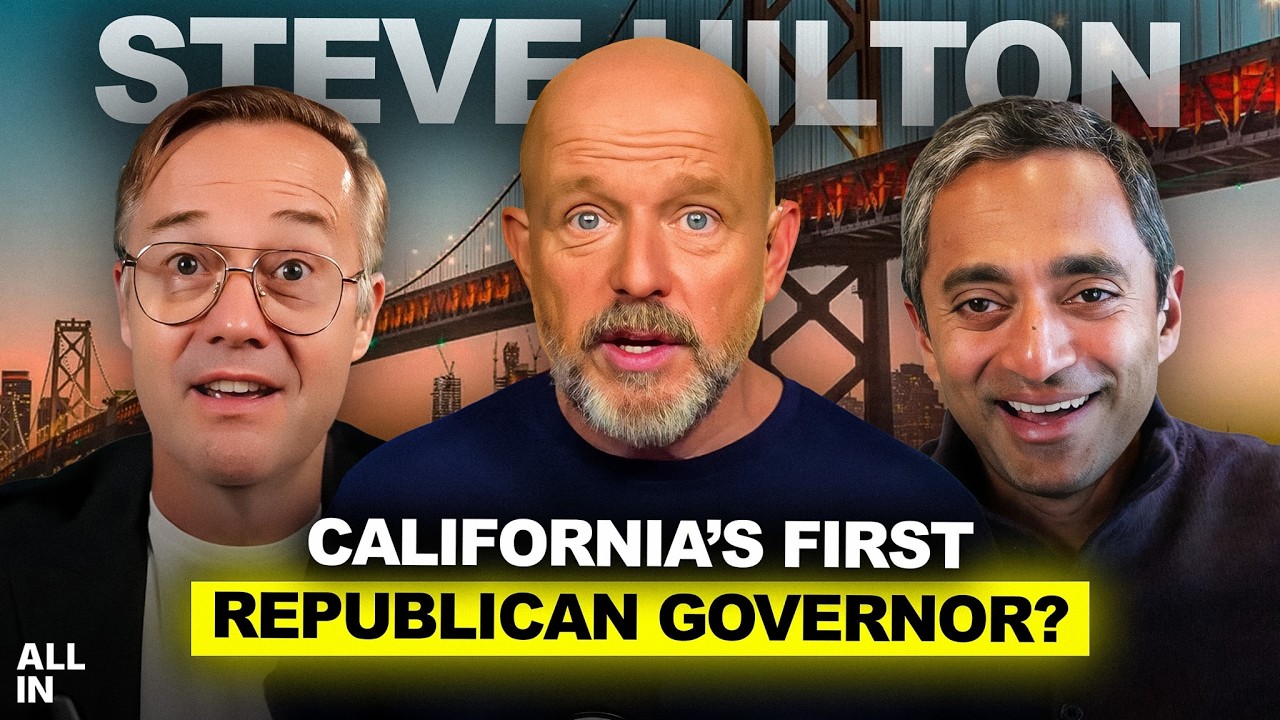
CA Governor Candidate Steve Hilton on Why California is Destroying Itself & How a Republican Can Win
 91 min
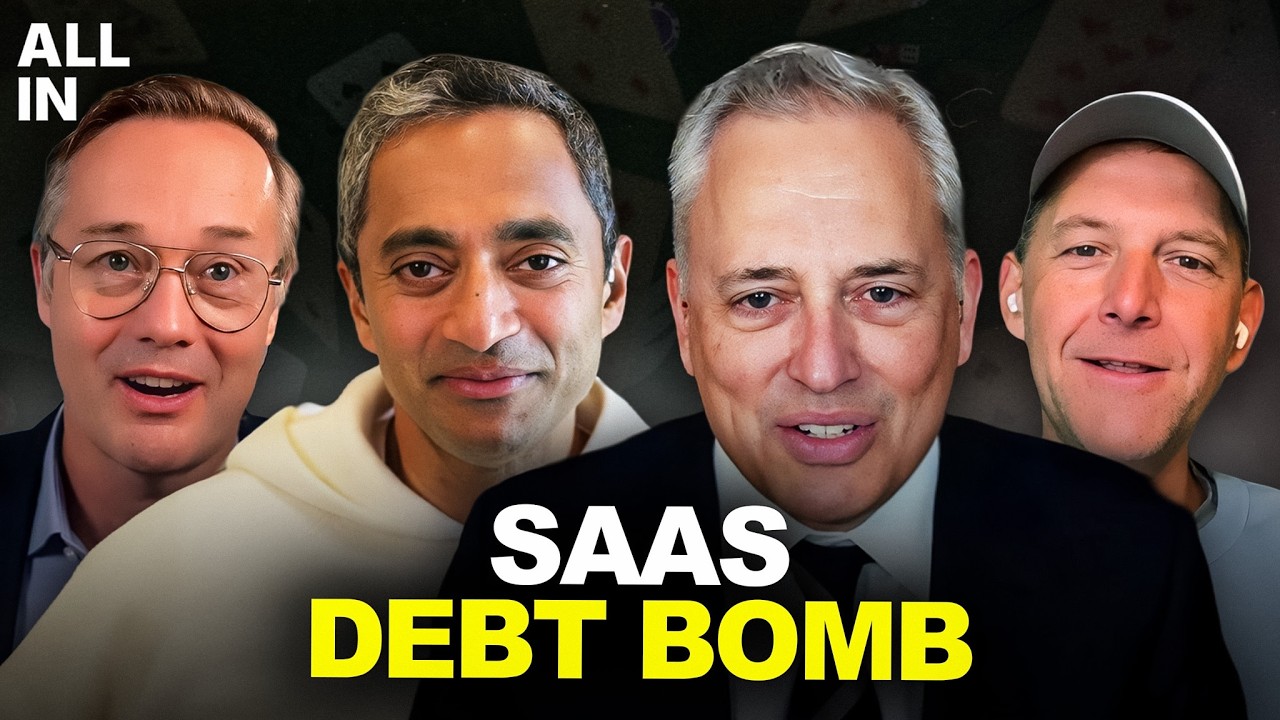
SpaceX-Cursor Deal, SaaS Debt Bomb, New Apple CEO, SPLC Indictment, Colon Cancer Spike
 91 min
OpenAI's Identity Crisis, Datacenter Wars, Market Up on Iran News, Mamdani's First Tax, Swalwell Out
Ask anything from this episode.
Save it, chat with it, and connect it to Claude or ChatGPT. Get cited answers from the actual content — and build your own knowledge base of every podcast and video you care about.
Get Started Free