Key Moments
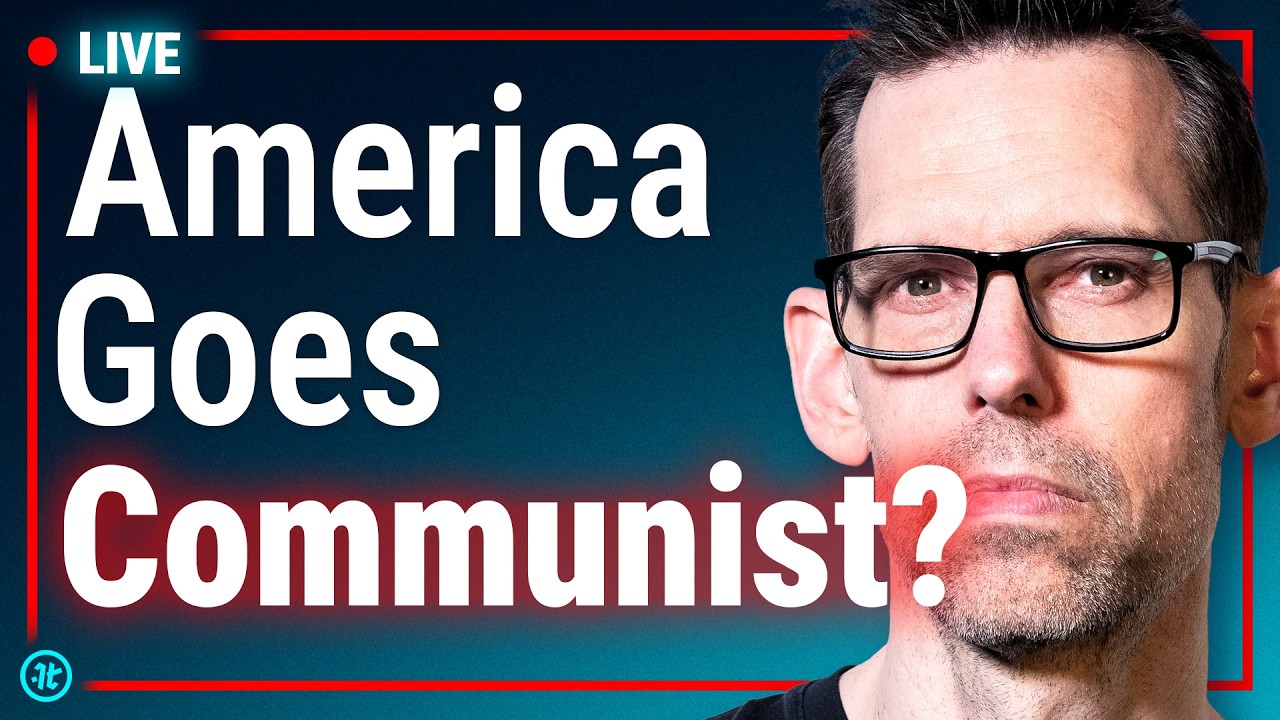
Trump Kills Housing Bill To Stop "Commies" & The Supreme Court's 4 MASSIVE Judgments
 Impact Theory
Want to know something specific about what's covered?
We've already dissected every moment. Ask and we will deliver (with timestamps).
Key Moments
Trump is withholding a bipartisan housing bill to push his "Save America Act," sparking debate on election integrity vs. affordability. The Supreme Court ruled on immigration, and NYC rent freezes are enacted, potentially worsening its housing crisis.
Key Insights
Trump is refusing to sign a bipartisan affordable housing bill, using it as leverage to pass the "Save America Act," which is intended to ensure only citizens can vote.
The affordable housing bill includes a cap on private equity firms owning single-family homes, limiting them to 350 properties, and incentives for new construction.
Inflation has reached 4.1%, double the Federal Reserve's mandate, and is up from May.
The Supreme Court issued four significant rulings: shielding Monsanto from Roundup cancer lawsuits, striking down a Hawaii gun law, restricting asylum seekers' access, and allowing the end of Temporary Protective Status (TPS) for migrants from Haiti and Syria.
Thomas Massie criticizes Trump's administration for nationalizing ownership stakes in private companies (e.g., Intel, MP Materials), labeling it "communism with Chinese characteristics" and a move away from free market capitalism.
The discussion highlights the complexity of AI development, with companies like Anthropic seeking government protection due to competition from cheaper alternatives and open-source models. The "first wave" investors in revolutionary tech often face liquidation.
Trump's leverage play with the housing bill
The discussion opens with Donald Trump's refusal to sign a bipartisan affordable housing bill, a move he's using to pressure Congress into passing the "Save America Act." This act aims to ensure that only citizens vote in elections. The housing bill itself is described as having broad bipartisan support and aims to address affordability issues by capping institutional investors from owning more than 350 single-family homes and providing incentives for new construction. The host, Tom, frames this political maneuvering as a "grotesque" but standard aspect of politics, where popularity of one bill is used as leverage for another. The debate hinges on whether election integrity (as pitched by the "Save America Act") or housing affordability should take precedence, and how these issues are interconnected at a deeper economic incentive level.
Supreme Court's significant immigration and gun rulings
The Supreme Court has issued several key decisions, including two immigration-related wins for the Trump administration. One ruling restricts asylum seekers from applying for asylum if they are stopped at the border or turned back to Mexico, stating they haven't legally "arrived" in America. Another decision allows the Trump administration to end Temporary Protective Status (TPS) for migrants from Haiti and Syria, a move viewed by some as unfair, despite TPS being inherently temporary. Additionally, the Court struck down a Hawaii law requiring permission to carry guns in public places, impacting Second Amendment rights. The Monsanto v. Darnell case is also highlighted, where the Court ruled Monsanto is shielded from lawsuits by cancer victims over Roundup, citing federal pesticide laws that prevent states from mandating cancer warnings on labels. This ruling is criticized as protecting corporations over citizens, with Thomas Massie asserting that government agencies primarily protect corporations from citizens.
New York's rent freeze and broader economic indicators
New York City has passed rent freezes, a policy that is expected to "supercharge" the city's affordability crisis and potentially justify property seizures. This move is met with strong disapproval, as historical experiments with rent freezes in the 1960s and 70s led to catastrophic outcomes, including buildings being burned down for insurance money due to the inability of owners to maintain them. The discussion emphasizes that freezing prices is akin to controlling prices at grocery stores or gas pumps – it's historically proven ineffective and leads to shortages. The only sustainable solution, it's argued, is to increase supply through more building. Inflation has also reached a concerning 4.1%, double the Fed's mandate and an increase from May.
The "Save America Act" versus housing affordability debate
A significant portion of the conversation revolves around the "Save America Act" and its prioritization over the housing bill. Drew argues that while the political maneuvering is unpleasant, the "Save America Act" is the core issue here, focusing on ensuring only citizens vote. He contends that housing affordability is a critical issue but secondary to election integrity. Tom, however, believes that addressing housing affordability is paramount, arguing that a more secure populace with stable housing is less susceptible to socialist tendencies, which he sees as the underlying threat. The debate explores whether election integrity or economic stability, like affordable housing, is the more foundational issue that drives other societal outcomes. Drew stresses that "who votes in your elections controls housing affordability," thus prioritizing voting rights is essential.
Concerns over government overreach and "communism with Chinese characteristics"
Thomas Massie's criticism of Trump for nationalizing ownership stakes in companies like Intel and MP Materials is discussed. This move is labeled as "American economy with Chinese characteristics" – a departure from free market capitalism. The argument is that such government intervention, even if intended to benefit the public, leads to the government picking winners and losers, calcifying the free market over time. The analogy of government as a "cancer" is used to describe its tendency to pull resources, self-preserve, and grow without a self-destruct mechanism. There's a fear that the US is devolving towards a one-party state, driven by an incentive structure where services are offered to attract more people, who then vote for policies that perpetuate those services, further strengthening the party in power. This parallels historical examples like Reagan's amnesty program in California, which is argued to have shifted voting patterns.
The role of citizen voting and economic incentives
The fundamental belief is articulated that "who votes in your elections controls housing affordability." Therefore, ensuring only citizens vote is presented as the most foundational issue. If non-citizens are voting, or if the voting populace has incentives that lead to policies detrimental to wealth creation (like excessive spending or unsustainable economic practices), then any efforts towards housing affordability will be futile. The discussion delves into the complexities of immigration, the census count, and potential voting integrity issues, though Drew expresses skepticism about widespread illegal voting, focusing more on the incentive structures that encourage immigration and the policies that might follow. The core argument is that a sound voting system is a prerequisite for a functional economy and for achieving goals like affordable housing.
AI development and the "build and they will come" philosophy
The video touches upon the booming success of GTA 6, which, according to rumors, generated $3 billion in pre-sales five months before its release, significantly recouping its estimated $1.5 to $2 billion development cost. This illustrates the "if you build it, they will come" principle. In AI, however, the landscape is more complex. Companies like Anthropic are reportedly seeking government protection due to increasing competition from cheaper AI models and open-source alternatives, particularly from China. The rapid pace of AI innovation also means that early investors in revolutionary technologies often face financial ruin as the technology matures and infrastructure costs become unsustainable before revenue streams are established. The foundational AI models may become commodities, with profitability shifting to companies that build innovative applications on top of that core intelligence.
Reimagining wealth accumulation and the American Dream
A key proposal for addressing economic inequality and ensuring broader participation in capitalism is to create a sovereign wealth fund or a public investment avenue where every citizen is automatically invested in the US stock market, perhaps through a system similar to Social Security. This would distribute wealth more broadly and incentivize greater care for the overall health of the economy, rather than favoring specific companies. The discussion critiques the current system where foreign investment drives stock market highs, potentially inflating assets without directly benefiting the average American worker, whose productivity gains have not kept pace with their compensation since the 1970s. Deglobalization and a focus on domestic manufacturing are suggested as ways to strengthen the worker's position. The "American Dream," originally a marketing campaign for homeownership, is seen as effective because it integrated people into the capitalist system, giving them a stake in its success. The ideal scenario involves educating people about assets and financial markets, ensuring that the benefits of economic growth are shared.
Mentioned in This Episode
●Products
●Software & Apps
●Companies
●Organizations
●Books
●Studies Cited
●Concepts
●People Referenced
Common Questions
Trump is using the bipartisan affordable housing bill as leverage to pressure Congress into passing his 'Save America Act.' He sees the housing bill's popularity as a tool to gain support for his own legislative priorities.
Topics
Mentioned in this video
A food company that makes hot sauces with clean ingredients, praised for its flavor and ethical sourcing.
A company that received payouts in federal lawsuits related to voter fraud claims, particularly from Fox News and MyPillow.
A company whose founder settled a lawsuit with Dominion Voting.
A company that was shielded from cancer victims suing over Roundup due to federal pesticide laws, a decision that is criticized as horrifying and indicative of regulatory capture.
A company mentioned as having 10% nationalized ownership by the administration, cited as an example of communist-leaning economic policy.
A company mentioned as having 15% nationalized ownership by the administration, cited as an example of communist-leaning economic policy.
A Chinese car company mentioned as ubiquitous in the UK, used to exemplify Chinese market flooding.
A company mentioned as having 5% nationalized ownership by the administration, cited as an example of communist-leaning economic policy.
A company mentioned as having 10% nationalized ownership by the administration, cited as an example of communist-leaning economic policy.
The developer of the Destiny series, reported to be undergoing layoffs and exploring AI for game development due to high costs.
A band whose song 'California Girls' video is referenced to illustrate the influx of Japanese tourists in the 80s.
An AI company mentioned as potentially not surviving the current AI market due to high debt and competition, leading to calls for regulatory capture.
An AI company mentioned as aggressively seeking government protection due to customers finding cheaper alternatives and high costs.
A financial group whose findings on companies shifting to cheaper AI models are cited.
An early internet service provider mentioned as an example of a first-wave technology company that didn't survive in the long run.
An early internet service provider mentioned as an example of a first-wave technology company that didn't survive in the long run.
A payment processing company mentioned as a successful later-stage internet product.
An e-commerce company mentioned as a successful later-stage internet product.
Elon Musk's AI company, criticized by Yann LeCun for struggling with talent and infrastructure costs.
Elon Musk's company, criticized by Yann LeCun in the context of XAI's struggles.
The former president who is refusing to sign a bipartisan affordable housing bill and whose administration is involved in Supreme Court decisions.
A Republican who called out Trump for communist-like actions, particularly regarding nationalization of companies.
Mentioned in the context of an alleged incident in Georgia involving ballot boxes, though the speaker misidentifies her role.
Mentioned as drinking apple juice, an analogy for not pursuing effective treatments for societal 'cancer'.
Mentioned as the recipient of an email from Peter Thiel regarding millennial attitudes.
The Chinese leader credited with initiating economic reforms that embraced free market capitalism, pulling many out of poverty.
Cited for his insight on millennial attitudes towards socialism, linking student debt and unaffordable housing to disengagement with capitalism.
Critiqued for his view of Canada as a 'mosaic' rather than a 'melting pot,' which the speaker dismisses as 'suicidal' and unrealistic for national unity.
Cited for his quote about Anthropic seeking government protection as a sign of competitive struggle in the AI market.
Mentioned as the author of 'The Use of Knowledge in Society,' an essay explaining markets as systems of epistemic production.
Highly critical of XAI and Tesla, suggesting they are struggling to build internally and are resorting to renting out data space.
Founder of XAI and Tesla, mentioned as an engineer renowned for achieving the impossible, and against whom betting is unwise despite criticisms of his AI ventures.
Praised for effectively challenging Gary's Economics' logic in a debate on 'Diary of a CEO'.
Mentioned as having run calculations on long-term stock market investments, illustrating the benefits of consistent saving.
The highest judicial body in the US, discussed in the context of immigration-related rulings and other decisions.
A news organization that paid out to Dominion Voting in a lawsuit.
A military alliance mentioned in the context of the US potentially scaling back its global involvement.
A political organization criticized for advocating economic policies similar to the 'Cuba style danger' that could break prosperity.
Mentioned as having an insider who claimed Destiny 3 is planned with an AI pipeline.
The country whose flagged ship was struck near the Strait of Hormuz.
A strategic waterway where a Singaporean ship was struck, leading to discussions about geopolitical tensions and traffic disruption.
City discussed in the context of rent freezes, which are argued to worsen affordability.
Discussed as a state where policies are expanding voter rights to non-citizens, influencing the debate on immigration and voting.
The state whose gun control law was struck down by the Supreme Court.
Country whose migrants' temporary protective status was ended by a Supreme Court ruling.
Country whose migrants' temporary protective status was ended by a Supreme Court ruling.
Highlighted as an example of a country that became wealthy after WWII and fostered widespread prosperity.
Used as a contrasting example of a communist system that 'kills people' through starvation, compared to China's economic model.
Mentioned in the context of Mark Carney's view of it as a 'mosaic' rather than a 'melting pot'.
A highly anticipated video game that made $3 billion in pre-sales months before release, demonstrating market demand for quality products.
An early internet browser mentioned as an example of a first-wave technology company that didn't survive in the long run.
A web browser mentioned as a successful later-stage internet product that superseded earlier internet companies.
An email service mentioned as a successful later-stage internet product that superseded earlier internet companies.
A game engine that released an MCP server connection, going in the right direction for integrated AI game development.
A content creator whose economic arguments are critiqued for relying on emotional reasoning rather than logical cause-and-effect.
Discussed in the context of the housing bill, which proposes to limit large institutional investors from owning more than 350 single-family homes.
A temporary status for migrants discussed in the context of being ended by Supreme Court rulings, raising concerns about fairness for those who followed official procedures.
A term used to describe a new kind of economy with authoritarian control but pro-free markets, which Trump's nationalization policies are compared to.
The speaker's personal project, mentioned while discussing building an incentive structure for manufacturing.
More from Tom Bilyeu
View all 106 summaries 55 min
We Have To Stop THIS ECONOMIC DELUSION
 123 min
How The Fed Quietly Created America's Communist Moment
 35 min
The Real Reason Elon Is A Trillionaire Has Nothing To Do With Greed — It Has To Do With Your Savings
 123 min
Trump makes insane threat to Iranian negotiators and re-activates the US military, ending the talks
Ask anything from this episode.
Save it, chat with it, and connect it to Claude or ChatGPT. Get cited answers from the actual content — and build your own knowledge base of every podcast and video you care about.
Get Started Free