Key Moments
Trump makes insane threat to Iranian negotiators and re-activates the US military, ending the talks
 Impact Theory
Want to know something specific about what's covered?
We've already dissected every moment. Ask and we will deliver (with timestamps).
Key Moments
Trump's threat to Iranian negotiators nearly derailed talks, but a deal was salvaged, revealing the fragility of diplomacy and the high stakes of international relations.
Key Insights
Talks between the US and Iran initially collapsed after Trump threatened Iranian negotiators, calling it "insane" and a "wild" move.
Despite the collapse, major progress was supposedly made, with JD Vance claiming the "straight is open" and a "deconfliction team" was established.
Iran agreed to allow nuclear inspectors back into the country, a point previously covered under the JCPOA, raising questions about effectiveness.
The core of the conflict and negotiations revolves around economics, with both the US and Iran leveraging their economic positions as leverage.
The 'Deia Doctrine' and the 'Rise Early and Kill First' philosophy are cited as Israeli military strategies, reflecting a policy of disproportionate response.
A significant portion of the discussion centers on the potential dangers of AI and the need for adaptability in a rapidly changing job market, with AI potentially making current career paths irrelevant.
Trump's 'insane' threat and the near collapse of Iran talks
The episode begins by detailing the dramatic collapse of negotiations with Iran, triggered by what was described as an "insane" threat from then-President Trump to Iranian negotiators. This aggressive stance nearly derailed all diplomatic efforts, highlighting the volatile nature of international relations and the significant leverage held by key figures. Despite the initial implosion, the talks were reportedly "duct-taped back together," with claims of major progress made, particularly by JD Vance. This precarious situation underscores the fragility of diplomatic processes, where a single statement can have profound consequences.
Salvaging the Iran MOU: A fragile de-escalation
Following the initial breakdown, efforts were made to piece the Iran Memorandum of Understanding (MOU) back together. JD Vance reported significant progress, stating that "the straight is open" and a "deconfliction team" had been established. This team is intended to manage and de-escalate potential skirmishes, acknowledging that such events are likely to occur. Iran also agreed to reinstate nuclear inspectors, a measure previously part of the JCPOA. However, skepticism remains about the effectiveness of these inspectors, given past experiences, and the overall long-term viability of the agreement, which is still predicted to fall apart.
The economic battlefield: Leverage and 'Mexican standoff'
A central theme is the role of economics as the primary weapon in geopolitical conflicts. The discussion frames the situation as a "Mexican standoff" where both Iran and the US have significant leverage—Iran can close the Strait of Hormuz, and the US can resort to bombing. Both actions would be catastrophic, but neither side is willing to back down without inflicting damage. The pragmatic approach from the Trump administration acknowledges ceasefires as merely "less shooting" and anticipates ongoing skirmishes. The underlying economic pressures and the need to maintain stability, particularly regarding gas prices and inflation in the US, heavily influence decision-making. This economic reality imposes constraints on foreign policy, turning it into a delicate balancing act.
Israel, Lebanon, and the cycle of disproportionate response
The conflict between Israel and Lebanon, particularly concerning Hezbollah, is presented as a core sticking point in the broader Iran negotiations. Iran uses Israel's refusal to leave occupied territories in Lebanon as a reason to stall talks, while Israel, emboldened by figures like Ben Gvir, shows no sign of withdrawal. The concept of "disproportionate response" is discussed, referencing historical Israeli military doctrine. This involves retaliating with overwhelming force for perceived provocations, a strategy likened to a "bully" punching back harder to deter future aggression. While effective in creating deterrence, this approach also risks escalating conflicts and leading to immense civilian suffering, potentially turning Israel into a "monster" in the eyes of the world, despite the initial provocations.
Geopolitical shifts: The West leans left, South America leans right
The global political landscape is described as experiencing significant shifts. While Europe, with the resignation of Keir Starmer, appears to be moving further left, South America is witnessing a "red wave" with a swing towards right-wing governments, as exemplified by Colombia's new president. This regional divergence highlights a complex and dynamic global political environment. The discussion also touches on China's tightening grip on power under Xi Jinping, with new laws restricting criticism, even from abroad, suggesting a move towards authoritarian control.
The 'maker vs. taker' debate and the critique of Ro Khanna's proposals
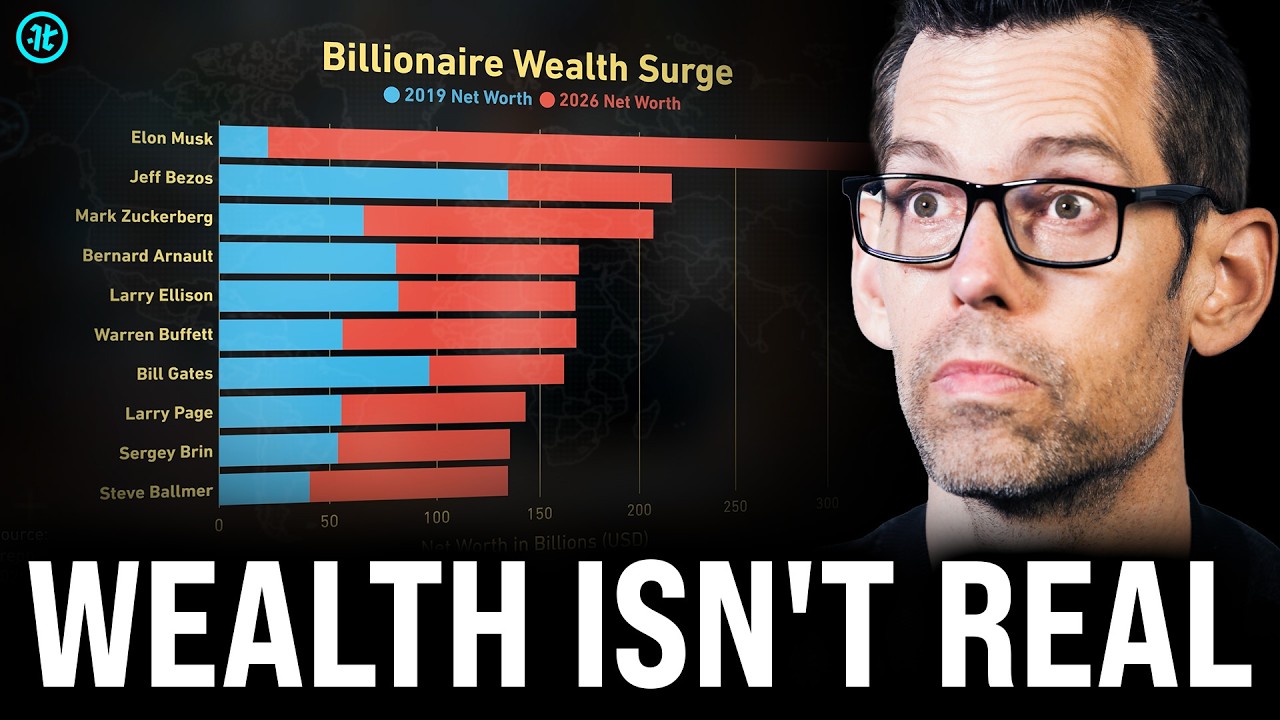
A significant segment criticizes Congressman Ro Khanna's proposals to tax billionaires like Elon Musk to fund social programs, such as childcare and education. The argument is made that such proposals are based on a flawed "maker vs. taker" economic framework, distinguishing between those who create value and politicians who merely redistribute wealth. The concept of "unrealized gains" is highlighted as not being actual spendable money. Furthermore, the idea of a one-time tax is questioned, as it would necessitate ongoing policies that create future budget deficits. The debate questions whether such proposals stem from ignorance or intentional misrepresentation, with the conclusion leaning towards the latter, suggesting a deliberate conflation of issues rather than genuine solutions.
The death of the American dream and the role of politicians and central bankers
The destruction of the "American dream" is attributed directly to "politicians and central bankers." Their actions, such as excessive regulation, deficit spending, and money printing, devalue the dollar and force smart money into appreciating assets, thereby enriching the wealthy. This creates an unsustainable cycle where the economy is depicted as "morbidly obese" and in need of severe fiscal discipline. The discussion critiques government spending, noting a nearly 90% increase in the federal budget over the last decade without a proportionate improvement in citizens' lives. This highlights a significant disconnect between government expenditure and tangible benefits, underscoring a systemic problem of overspending and inefficient resource allocation.
AI's existential threat and the call for adaptability
The rapid advancement of AI is presented as a profound and potentially existential threat to current job markets and societal structures. The fear is that AI could make many current careers and skills obsolete, forcing a fundamental reevaluation of how individuals earn a living. The potential for AI to usher in an era of "universal high income" is acknowledged, but this raises new challenges related to finding "meaning and purpose" in a world with less need for traditional labor. The advice given is to focus on adaptability, critical thinking, and skills that are uniquely human, such as emotional intelligence and interpersonal engagement, which AI cannot easily replicate. The importance of lifelong learning and embracing change is emphasized as crucial for navigating this uncertain future.
Mentioned in This Episode
●Software & Apps
●Companies
●Organizations
●Books
●Concepts
●People Referenced
Common Questions
Initially, the Iranian delegation and Qataris signaled the talks were dead, with Iran demanding a Trump apology and Israel's withdrawal from Lebanon. However, despite the aggressive rhetoric on social media, negotiations were eventually re-engaged.
Topics
Mentioned in this video
Former US President who threatened Iran's negotiators, which initially stalled talks, but also employed a 'bad cop' strategy to push for negotiations.
Claimed major progress was made in the Iranian negotiations and is seen as playing the 'good cop' role in Trump's foreign policy approach.
Officially resigned as leader of the Labour Party in the UK, leading to potential shifts further left in British politics.
President of El Salvador, whose policies are being emulated by the newly elected president of Colombia.
A US politician and one of the top traders in Congress, who engages in debates about wealth inequality and taxation with David Friedberg.
Engaged in a debate with Ro Khanna, advocating for distinguishing between 'makers' and 'takers' in the economy.
Chinese leader who has made it illegal to criticize the Chinese government, even for those living abroad.
Mentioned in the context of leaders demonstrating a willingness to kill negotiators, highlighting the extreme nature of Trump's threat.
Mentioned in the context of refusing to meet Putin in Russia for negotiations, illustrating the breakdown of trust.
An Israeli politician who advocates for a 'disproportionate response' against Lebanon, exemplified by his extreme tweets.
The current Prime Minister of Israel, whose stance on Lebanon is mentioned in contrast to Ben-Gvir's more extreme rhetoric.
American political consultant, mentioned for his 'ghoul-like' public persona, contrasting with others' eloquence.
Described as sharp, calm, and eloquent, playing a role in smoothing out diplomatic situations, contrasting with Trump's aggressive approach.
Implicitly referenced when discussing Trump's willingness to kill individuals, highlighting the real threat behind his bluffs.
Libyan leader, mentioned as an example of what can happen to leaders who lose power and become vulnerable.
British Prime Minister, featured for his foresight in transitioning the Royal Navy to oil during World War I and II, impacting global geopolitics.
Ultra-wealthy individual sympathetic to the Zionist cause, mentioned as a significant financial contributor to pro-Israel politicians.
British political activist, mentioned for his outspoken criticism regarding the UK grooming gang reports and systemic failures.
Mentioned as the likely successor to Keir Starmer, indicating a potential shift further left in UK Labour leadership.
US progressive politician, used as an analogy for the leftward shift represented by Andy Burnham in the UK.
Former UK Prime Minister, whose type of character is suggested as necessary for the UK economy, but politically unlikely to emerge.
President of Argentina, cited as an example of a right-wing leader turning his country around, despite initial skepticism.
The father of communism, whose father's letter expressed disdain for resentment as a driving force, offering insight into the ideology's origins.
Host of a show where Ro Khanna discussed student loan debt and proposed solutions.
Business magnate, used as an example in debates about taxing the wealthy, with arguments against taxing his 'unrealized gains'.
Mentioned as proposing a 5% one-time tax on Elon Musk to fund universal child care.
An anarchist author, mentioned in the context of advocating for no government interventions, including military and taxation.
A company used to gauge public sentiment and willingness to invest money, serving as a proxy for polls.
Social media platform where political rhetoric, threats, and debates, like those between Ro Khanna and David Friedberg, unfold and are community-noted.
A tech company mentioned as a high-performing asset, possibly outperforming even Bitcoin and Pokemon cards.
Automotive and clean energy company co-founded by Elon Musk, discussed in the context of government subsidies and contracts.
Aerospace manufacturer and space transportation services company co-founded by Elon Musk, discussed in the context of government subsidies and contracts.
A financial company mentioned in the context of the 2008 bailout, questioning whether their loans were fully repaid like TARP loans.
Automotive company involved in the 2008 bailout, alongside General Motors.
Automotive company involved in the 2008 bailout, alongside Ford.
The Iran nuclear deal which previously allowed nuclear inspectors, now being re-evaluated by the Trump administration.
A government program used to bail out banks during the 2008 financial crisis, argued to be different from student loan forgiveness because banks repaid their loans with interest.
An Iranian proxy group active in Lebanon, used by Iran as a 'trump card' against Israel, and involved in terror tunnels.
Gulf Cooperation Council nations, an increasingly important part of the foreign equation, particularly in relation to oil and Middle East influence.
A political party in the UK, identified as representing the 'real right' in British politics, potentially offering an alternative to mainstream conservatism.
Questioned for its potential influence on left-leaning politics in South America and suggested to be an activist group.
A book mentioned in relation to an Old Testament passage about preemptive self-defense, connecting to Israel's 'disproportionate response' doctrine.
The central religious text of Islam, mentioned in the context of some interpretations leading to the concept of 'kafir' and justifying violence.
A collection of traditions and sayings of the Prophet Muhammad, used alongside the Quran for Islamic jurisprudence, mentioned in the context of interpretations of 'kafir'.
More from Tom Bilyeu
View all 167 summaries 47 min
The Japan Playbook Is Coming to America — The Big Reset Is Here
 116 min
Iran’s Problems are Worse Than You Think & OpenAI Had to Hit the Panic Button AGAIN
 131 min
10 YR Treasury Yield is Going Vertical, Speedrunning 2008 Financial Crisis
 55 min
The Inequality Debate Is a Lie — Both Sides Are Right (And Wrong)
Ask anything from this episode.
Save it, chat with it, and connect it to Claude or ChatGPT. Get cited answers from the actual content — and build your own knowledge base of every podcast and video you care about.
Get Started Free