Key Moments
Tracy DiNunzio Interview: Part 1 (Full Episode) | The Tim Ferriss Show (Podcast)
 Tim Ferriss
Want to know something specific about what's covered?
We've already dissected every moment. Ask and we will deliver (with timestamps).
Key Moments
Tracy DiNunzio discusses building Tradesy from a painter's background, bootstrapping, and learning on the fly.
Key Insights
Entrepreneurship can emerge from unexpected backgrounds, like that of a painter.
Bootstrapping requires immense resourcefulness, including unconventional financing and self-taught skills.
The sharing economy offers new avenues for funding startup ventures.
Focus is crucial; expanding too early or without customer validation can be detrimental.
Social media, while once a powerful acquisition channel, may now be less effective due to saturation and monetization.
Understanding SEO and user-generated content is key for online visibility in crowded markets.
UNCONVENTIONAL PATH TO ENTREPRENEURSHIP
Tracy DiNunzio's journey into entrepreneurship began not in a business school, but as a fine arts painter. After earning degrees in fine arts and traveling extensively, she sought more stability, finding that startups, despite their perceived risk, offered a more secure path than painting. This unique background highlights that entrepreneurial success isn't confined to traditional business education, and a creative mindset can be a significant asset in building a company.
BOOTSTRAPPING WITH UNEXPECTED RESOURCES
DiNunzio's first venture, Recycled Bride, was bootstrapped with personal savings, credit cards, and a true commitment to resourcefulness. She taught herself various aspects of the business, from design to marketing, and even resorted to unconventional methods like having a web developer live in her storage unit in exchange for rent. This period underscores the grit and adaptability required when financial resources are limited, turning challenges into opportunities for innovative solutions.
LEVERAGING THE SHARING ECONOMY FOR FUNDING
A pivotal strategy for financing her early ventures was the active use of the sharing economy. DiNunzio rented out her own living space via Airbnb, an experience that serendipitously led to her meeting her future husband, who was her first guest. This enabled her to generate revenue to reinvest in her growing business, illustrating how emerging platforms can provide crucial funding for aspiring entrepreneurs, making the pursuit of a startup more accessible without traditional capital.
THE CRITICAL LESSON OF FOCUS AND CUSTOMER VALIDATION
Reflecting on her early endeavors, DiNunzio identifies a significant mistake: the premature expansion into Recycled Tyke, a marketplace for children's items, while Recycled Bride was still gaining traction. This loss of focus, coupled with not fully listening to customer feedback during the initial concept phase, proved detrimental. It reinforced the importance of validating ideas with potential users and maintaining a clear, unwavering focus on the core business proposition.
THE STRATEGIC SHIFT TO TRADESY AND VENTURE CAPITAL
Recognizing the massive potential of the fashion market, DiNunzio transitioned from Recycled Bride to Tradesy. This larger opportunity, coupled with the competitive landscape, necessitated a move from bootstrapping to seeking venture capital. Applying to an incubator like Launchpad LA provided the structure and connections needed to raise significant funding, approximately $1.5 million, enabling the scaling of Tradesy to compete effectively in a broader marketplace.
NAVIGATING THE VENTURE CAPITAL LANDSCAPE
The decision to pursue venture capital involved trade-offs, primarily dilution of ownership and influence. However, DiNunzio viewed these as positive trade-offs, enabled by the substantial capital that allowed her company to grow rapidly. She emphasizes the importance of choosing investors who align with the company's vision and values, noting that successful partnerships can be more beneficial than retaining full ownership, especially in high-growth markets.
SEO AND USER-GENERATED CONTENT AS A COMPETITIVE ADVANTAGE
In the crowded online space, DiNunzio found a key competitive advantage in Search Engine Optimization (SEO), particularly leveraging user-generated content. By encouraging detailed and accurate product descriptions from sellers, Tradesy's listings naturally optimized for search engines. This strategy, combined with a focus on allowing individual sellers to monetize their existing possessions, provided a powerful, scalable, and cost-effective method for attracting customers in a noisy digital marketplace.
THE EVOLUTION OF ACQUISITION CHANNELS
DiNunzio notes a significant shift in the effectiveness of social media for customer acquisition. While it was a powerful tool in the early days of Recycled Bride (2009-2010), the current landscape, with its increased noise, saturation, and monetization, has made social media a more expensive and less reliable acquisition channel for e-commerce. This observation highlights the constant need for businesses to adapt their marketing strategies as digital platforms evolve.
Mentioned in This Episode
●Software & Apps
●Companies
●Organizations
●Books
●Concepts
●People Referenced
Common Questions
Tradesy is a peer-to-peer marketplace for fashion, similar to eBay but designed to be easier, safer, simpler, and faster for users. It allows individuals to buy and sell clothing and accessories.
Topics
Mentioned in this video
A platform where Tim Ferriss created a syndicate to invest in startups like Tradesy.
A company founded by Derek Sivers.
The band that performed the song 'Shima Uta'.
A peer-to-peer marketplace for fashion, founded by Tracy DiNunzio. It's described as easier, safer, simpler, and faster than eBay.
A venture capital firm with which John Doerr is associated, and an investor in Tradesy.
A brand whose products are sold on Tradesy, used as an example for SEO benefits of user-generated content.
Winery of the wine Tim Ferriss was drinking during the podcast recording.
A failed second venture by Tracy DiNunzio, similar to Recycled Bride but for baby and kids' stuff, which led to a loss of focus.
Tracy DiNunzio's first company, a peer-to-peer marketplace for wedding-related items, which served as a precursor to Tradesy.
Vineyard associated with the wine Tim Ferriss was drinking.
Used as a comparison point for Tradesy's business model, noted as being more complex than Tradesy.
A platform Tracy DiNunzio used to rent out her room to fund her startup, and where she met her husband.
A ride-sharing company mentioned as an example of the sharing economy and a way to fund a startup.
Mentioned in reference to a previous podcast episode where Tim Ferriss drank a significant amount of wine.
Co-founder and Chief Product Officer of Tradesy, who acts as a 'focus police' for Tracy DiNunzio.
Founder of CD Baby, known for his expertise in programming and ability to explain technical concepts simply.
Mentioned as an example of a notable individual featured on The Tim Ferriss Show.
An investor in Tradesy.
Mentioned as an artist whose advice Tim Ferriss has followed, particularly regarding communication in interviews.
CEO and founder of Tradesy, interviewed on the podcast. She transitioned from being a traveling artist to a tech CEO.
A legendary venture capitalist and investor in Tradesy, who also joined its board.
A song and genre originating from the Amami Islands, with two versions discussed: one in Japanese and one in an island dialect.
A comic book series about high school gangs and martial arts, which Tim Ferriss used to learn Japanese. The title translates roughly to 'Good for Nothing Blues'.
A book recommended by Tim Ferriss regarding market strategy and positioning.
A weekly manga anthology where Rurouni Kenshin was a hit.
A cloud computing service mentioned as an example of on-demand infrastructure for startups.
A company for which Tim Ferriss was an early advisor, mentioned in the context of the sharing economy.
A platform-as-a-service mentioned as an example of on-demand infrastructure for startups.
A crowdfunding platform mentioned as an alternative funding source for businesses.
More from Tim Ferriss
View all 703 summaries 70 min
Q&A with Tim — The Art of Male Friendship, Reinvention in The Age of AI, & More
 125 min
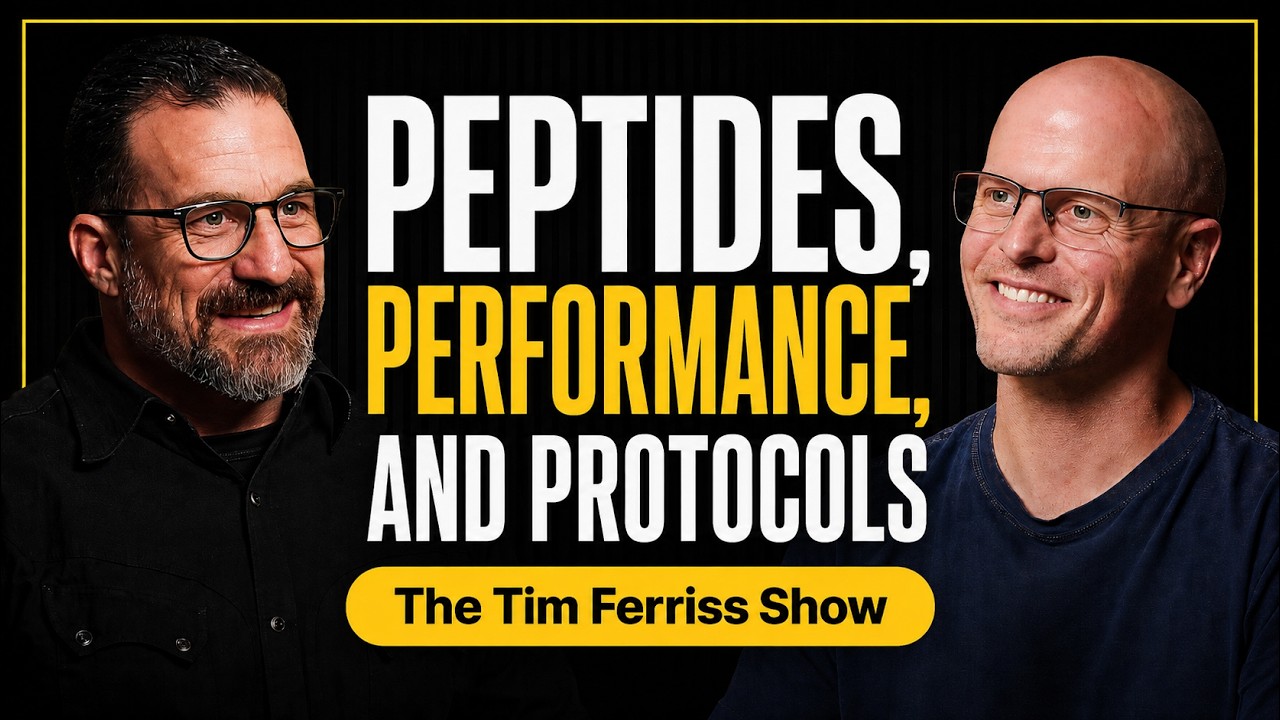
Dr. Andrew Huberman — Peptides, Performance, and Protocols
 112 min
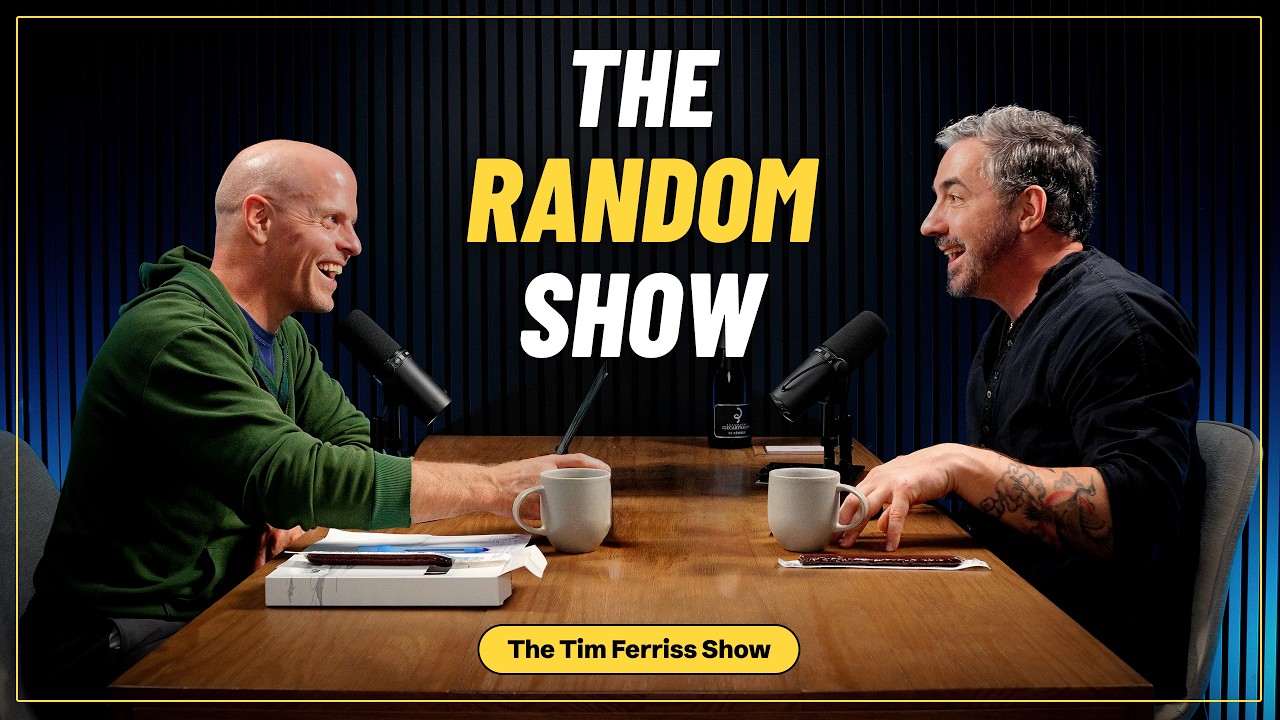
The Random Show! Mortality, AI, Supplements, Rock Climbing, & More
 88 min
The Legendary Hollywood Power Broker — Guy Oseary on 36 Years of Managing Madonna, 26 IPOs, and More
Ask anything from this episode.
Save it, chat with it, and connect it to Claude or ChatGPT. Get cited answers from the actual content — and build your own knowledge base of every podcast and video you care about.
Get Started Free