Key Moments
The War in Ukraine: A Conversation with Yaroslav Trofimov (Episode #358)
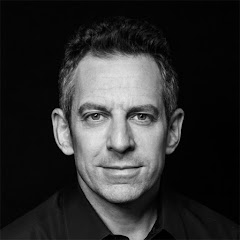 Sam Harris
Key Moments
Ukraine war: Misconceptions, Russian failures, Ukrainian resilience, propaganda, and global implications.
Key Insights
Widespread initial assumptions of a swift Russian victory were based on a profound misunderstanding of Ukrainian society and its military transformation since 2014.
Russian military incompetence and a culture of fear within its command structure significantly hampered its initial invasion efforts.
Putin's historical narrative, viewing Ukraine as historically inseparable from Russia, underlies his imperialist ambitions and rejection of Ukrainian statehood.
Russian propaganda, particularly the 'denazification' claim and the portrayal of Ukraine as 'Satanist,' aims to sow cynicism and erode the concept of objective truth.
While initially celebrated by some Western right-wing populists, Ukraine's tangible presence in Europe has shifted political stances, unlike the US where such support has persisted.
Zelenskyy's leadership, characterized by his decision to stay and rally the nation, proved pivotal in galvanizing Ukrainian resistance and garnering international support.
INITIAL MISCONCEPTIONS AND RUSSIAN DELUSIONS
The initial phase of the Russian invasion was marked by widespread false assumptions, not only within Russia but also in Western capitals, anticipating a swift Ukrainian collapse. These expectations were rooted in a significant misunderstanding of Ukraine's societal transformation since the 2014 conflict, its strengthened military, and the deep-seated resistance to Russian rule. The belief that Ukraine would welcome Russian forces as liberators proved to be a critical miscalculation by the Kremlin.
TRANSFORMATION OF UKRAINIAN SOCIETY AND MILITARY
Since the initial 2014 invasion and the conflict in Donbas, Ukrainian society and its military have undergone a profound transformation. What began as a poorly equipped army and volunteer units resisting Russian incursions evolved into a professional, combat-tested fighting force by 2022. This shift, coupled with a populace deeply aware of the realities of Russian occupation, created a formidable defense that defied early predictions.
RUSSIAN INCOMPETENCE AND PROPAGANDA STRATEGIES
The early stages of the war revealed significant Russian military incompetence, attributed to a pervasive culture of fear, corruption, and a lack of accurate reporting up the command chain. Simultaneously, Russian propaganda, particularly the 'denazification' narrative and the vilification of Ukraine as 'Satanist,' aimed to remove truth as a stabilizing concept, fomenting cynicism and confusion both domestically and internationally.
PUTIN'S HISTORICAL NARRATIVE AND NATIONAL IDENTITY
Central to Putin's worldview is a deeply ingrained historical narrative that views Ukraine not as a distinct nation but as an integral part of Russia, stemming from the Kievan Rus'. This perspective, fostered by Russian education and historical interpretation, fundamentally challenges Ukraine's sovereignty and fuels imperialist ambitions to reclaim perceived historical lands, disregarding Ukraine's own heritage and identity.
THE ROLE OF THE ORTHODOX CHURCH AND CONSPIRACY THINKING
The Russian Orthodox Church, under Patriarch Kirill, has actively supported the war, framing it as a holy conflict. This religious endorsement, combined with the regime's portrayal of Ukraine as a Western-influenced, 'Satanist' entity, serves as a tool of state power and propaganda. This aligns with a broader pattern of conspiracy thinking, where competing, often absurd, narratives are disseminated to erode trust in objective truth.
EVOLVING PERCEPTIONS OF PUTIN AND WESTERN SUPPORT
Initially celebrated by some Western right-wing populists as an anti-globalist figure, Vladimir Putin's image has seen shifts. While this perception has largely persisted in the US, in Europe, the tangible reality of the war and the influx of Ukrainian refugees have made open support for Putin more politically untenable, leading to stronger backing for Ukraine, even among previously pro-Russian parties.
DIPLOMATIC FAILURES AND THE MINSK AGREEMENTS
The Minsk agreements, intended to resolve the conflict in eastern Ukraine, ultimately failed due to Russian intransigence and demands for veto power over Ukraine's foreign policy. Western diplomacy, particularly in the initial stages post-2014, was characterized by a lack of decisive support for Ukraine, prioritizing economic interests over security concerns, which inadvertently allowed Russia time to prepare for a larger conflict.
ZELENSKYY'S LEADERSHIP AND MORAL CLARITY
Volodymyr Zelenskyy's decision to remain in Kyiv during the invasion was a pivotal moment, galvanizing Ukrainian resistance and projecting an image of defiance. His background in entertainment facilitated direct communication with Western audiences, effectively articulating the moral case for Ukraine's struggle. While acknowledging his potential mistakes, his legitimacy as an elected leader provides a crucial symbol of Ukrainian statehood.
THE SIGNIFICANCE OF THE WAR AND GLOBAL IMPLICATIONS
Despite often being perceived as a localized conflict, the war in Ukraine carries profound global significance. As the first major land war in Europe since World War II, it challenges the post-war international order. A Russian victory would be interpreted worldwide as an American defeat, underscoring the need for sustained international support and highlighting the high stakes involved beyond the immediate battlefield.
Mentioned in This Episode
●Products
●Software & Apps
●Companies
●Organizations
●Books
●Concepts
●People Referenced
Common Questions
Russia vastly underestimated Ukrainian resistance, expecting to capture Kyiv in three days and conquer the rest of Ukraine in about six weeks. This delusion was shared to some extent by Western capitals.
Topics
Mentioned in this video
Yaroslav Trofimov served as the Wall Street Journal's bureau chief here for 5 years and reported on its conflicts.
The central focus of the discussion, covering the Russian invasion and its independence war.
The city where Yaroslav Trofimov observed civilians volunteering to pick up weapons after the invasion began.
Yaroslav Trofimov served as the Wall Street Journal's bureau chief here for 5 years.
Mentioned in a poem by Joseph Brodsky about Ukrainian independence.
The region invaded by Russia in 2014, marking the beginning of the conflict.
A city in Ukraine where some older generations, due to Soviet nostalgia, might have held pro-Russian tendencies before 2014.
Sponsored the Minsk talks aimed at de-escalating the conflict in eastern Ukraine.
A region in eastern Ukraine that was occupied by Russian forces for eight years.
The destination Ashraf Ghani fled to after leaving Kabul.
Its collapse is called Putin's greatest tragedy, and its legacy influences Russia's historical narrative and actions.
Sponsored the Minsk talks aimed at de-escalating the conflict in eastern Ukraine.
Yaroslav Trofimov was a correspondent here and covered the invasion in 2003.
Areas in eastern Ukraine where Russia demanded autonomy and veto power over Ukraine's foreign policy through proxies.
A region in eastern Ukraine that was occupied by Russian forces for eight years.
The capital of Afghanistan, which fell to the Taliban while Ashraf Ghani fled.
The location of Israeli war mentioned in the book's afterward, occurring in October 2023.
Chief Foreign Affairs correspondent for the Wall Street Journal and author, interviewed about the war in Ukraine.
Mentioned as a public figure associated with QAnon conspiracy theories.
A ruler of Kievan Rus after whom Zelenskyy and Putin are named, and after whom the interviewer is named.
Famously stated the US could do nothing to prevent Russia from dominating Ukraine and did not provide lethal aid.
Host of the Making Sense podcast who is interviewing Yaroslav Trofimov.
Former president of Afghanistan who fled Kabul as the Taliban took over, serving as a contrast to Zelenskyy's decision to stay.
An FSB officer who is described as having started the armed uprising in Donbas in 2014 and was later sentenced for his role in the MH17 downing.
Interviewed Putin, who focused on historical claims rather than NATO expansion regarding the war's causes.
Called Zelenskyy on the morning of the invasion, offering him refuge in London.
A Russian dissident poet who wrote negatively about Ukrainian independence in 1991.
Mentioned as a celebrity associated with QAnon conspiracy theories involving adrenochrome.
Its government-in-exile during WWII is used as a comparison for what Zelenskyy could have done.
Its role in Russia and its support for the war is discussed.
Igor Girkin, an officer in this service, is cited as having started the armed uprising in Donbas in 2014.
Membership of Ukraine in NATO is discussed as an alleged provocation for the Russian invasion.
Mentioned as having officers within the clergy during the Soviet era, and the church's current close work with the military.
The group that took over Kabul in Afghanistan, contrasting with Ukraine's resistance.
Mentioned as an example of conspiracy thinking with analogues in Russia, involving false beliefs about pedophile cannibals and adrenochrome.
Yaroslav Trofimov was a finalist for this award in international reporting in 2022 and 2023.
The delay of US aid to Ukraine is discussed as a factor in the war.
A term used to describe Russian troops in unmarked uniforms operating in Donbas.
More from Sam Harris
View all 297 summaries 22 min
Why the Stock Market Has Become a Casino
 61 min
UNRAVELING THE DREAM (A New Documentary Executive Produced by Sam Harris)
 20 min
Francis Fukuyama: The End of History Was Never What You Think
 24 min
The Democratic Party Has a Reckoning Coming
Ask anything from this episode.
Save it, chat with it, and connect it to Claude or ChatGPT. Get cited answers from the actual content — and build your own knowledge base of every podcast and video you care about.
Get Started Free