Key Moments
The War in Gaza: A Conversation with Dan Senor and Douglas Murray (Episode #344)
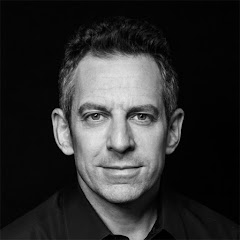 Sam Harris
Want to know something specific about what's covered?
We've already dissected every moment. Ask and we will deliver (with timestamps).
Key Moments
Discussion on the Gaza war, free speech hypocrisy, and historical narratives surrounding Israel and Palestine.
Key Insights
Elon Musk's actions on X are characterized by hypocrisy and self-interest, not free speech absolutism.
University presidents' responses to calls for genocide reveal hypocrisy and the failure of DEI apparatus.
Claims of 'colonization' and 'genocide' regarding Israel are historically inaccurate and weaponized narratives.
Hamas is strategically manipulating ceasefires and hostage releases to prolong conflict and regain control.
The international community often prevents Israel from achieving a decisive victory, perpetuating conflict.
The 'war on the West' narrative, applied to Israel, ignores historical context and selectively applies standards.
HYPOCRISY IN FREE SPEECH DEBATES
Sam Harris opens by critiquing recent events concerning free speech, specifically Elon Musk's reinstatement of Alex Jones on X and the congressional testimony of university presidents regarding anti-Semitism. Harris argues that neither situation represents genuine free speech absolutism. Instead, he identifies hypocrisy and moral confusion, particularly in Musk's actions, which he deems impulsive, self-serving, and contradictory, like threatening advertisers while claiming to defend free speech. This sets the stage for a broader discussion on how principles are selectively applied and often abandoned in contemporary discourse.
THE FAILURE OF INSTITUTIONAL RESPONSE
The testimony of university presidents from Harvard, Penn, and MIT is highlighted as a prime example of institutional failure, particularly concerning the Diversity, Equity, and Inclusion (DEI) apparatus. Harris argues that while these institutions are quick to punish minor infractions like incorrect pronoun usage, they faltered when faced with serious calls for violence against Jews. This inconsistency, he contends, is what angered the public, revealing a deep-seated hypocrisy where certain 'grievances' are prioritized over others, leading to a breakdown in ethical coherence.
DECONSTRUCTING FALSE NARRATIVES ON ISRAEL
Douglas Murray systematically debunks common narratives surrounding the conflict, such as the idea that the war is a response to colonization or that Israel itself is a colonial state. He asserts that Gaza was handed over to Palestinians in 2005 and that Hamas, not Israel, is the colonizer in Gaza. Furthermore, he refutes the notion of genocide, pointing to population growth in Gaza, and criticizes the use of Nazi analogies as a deliberate attempt to wound Jews, detached from historical accuracy and contextual understanding of past atrocities.
HAMAS'S STRATEGIC MANIPULATION AND ISRAEL'S DILEMMA
The conversation delves into Hamas's strategic use of hostage negotiations and ceasefires to prolong the conflict and regain control. Murray explains how Hamas hoards hostages as leverage, deliberately prolonging their captivity and manipulating the situation to their advantage. This creates a dilemma for Israel, which must negotiate with Hamas while simultaneously aiming to dismantle it. The perception is that Hamas, led by figures like Sinwar, is dictating the timeline, potentially extending the conflict for weeks or months.
THE INTERNATIONAL COMMUNITY'S ROLE IN PERPETUATING CONFLICT
A significant point raised is the international community's role in preventing Israel from achieving a decisive victory. Murray argues that Israel is consistently told it has the right to self-defense but must not 'win,' which perpetuates the conflict. He defines 'winning' as the destruction of Hamas and the cessation of rocket fire. The argument is made that external pressure, often framed around proportionality, forces Israel into draws rather than decisive outcomes, making the resolution of the 'insoluble' Palestinian question a perpetual burden on Israel, which should arguably be shared by regional actors.
THE 'WAR ON THE WEST' AND SELECTIVE OUTRAGE
Murray connects the discourse surrounding Israel to his broader thesis in 'The War on the West,' arguing that Western democracies are uniquely subjected to scrutiny regarding their historical wrongdoings. He criticizes the application of concepts like 'original sin' and 'colonization' to Israel, labeling it an 'idiotic American idea' transplanted onto Western countries. The swift and intense outrage following October 7th, particularly the immediate calls of 'genocide' against Israel, is seen as evidence of this 'mind virus' corrupting critical thinking, to the point where those expressing it are unknowingly echoing Hitler's desires.
THE INEFFECTIVENESS OF GLOBAL OUTCRY
The discussion contrasts the international outcry over the abduction of Nigerian schoolgirls by Boko Haram with the response to the October 7th massacre. Murray notes that while 'Bring Back Our Girls' became a global hashtag, similar campaigns for Israeli hostages have seen less traction, particularly from women. He attributes this, in part, to either international indifference towards Jews or a belief that their suffering is a necessary 'broken egg' for the creation of a Palestinian state, a sentiment he powerfully counters with George Orwell's critique of justifying atrocities for a perceived greater good.
THE IMPOSSIBILITY OF PEACE WITHOUT DEFEAT
Murray concludes that for lasting peace, one side must decisively lose. He argues that conflicts are primarily resolved when an enemy accepts defeat, and this is not being allowed to happen with Israel and Hamas. He contends that Hamas must be unequivocally defeated, not just contained. The idea that Hamas is an 'idea' that cannot be bombed away is dismissed, with historical examples like the defeat of fascism and Japanese imperialism used to illustrate that ideologies can be dismantled through military and political means, emphasizing the necessity of an enemy's defeat for true resolution.
Mentioned in This Episode
●Companies
●Organizations
●Books
●Concepts
●People Referenced
Common Questions
The main critique is that his behavior is impulsive, unprincipled, and self-serving, rather than genuinely committed to free speech absolutism. He is accused of hypocrisy, threatening advertisers, and promoting controversial figures.
Topics
Mentioned in this video
Mentioned as a CEO called out by Elon Musk for not wanting brand damage associated with X.
Host of the podcast 'Call Me Back,' co-author of 'The Genius of Israel,' and author of 'Startup Nation.' He interviews Douglas Murray about the Gaza war.
The Prime Minister of Israel, whose stated aim is to destroy Hamas while simultaneously negotiating with them, a contradiction explored in the discussion.
A professor of international law at Columbia Law School, whose interpretation of proportionality in warfare is discussed regarding collateral damage versus military gain.
Mentioned as being part of a 'clown car' event on X Spaces hosted by Elon Musk, alongside Tucker Carlson, Vivek Ramaswami, Alex Jones, and Andrew Tate.
Mentioned as having been boosted by Tucker Carlson for years, despite Carlson's private texts calling him a 'demonic force'.
Mentioned as a 'grievance entrepreneur' who has helped calibrate the diversity, equity, and inclusion (DEI) apparatus in universities.
Mentioned as possibly the only famous Palestinian figure many people can name, used to illustrate the perceived recentness of the Palestinian national identity.
Mentioned as an example of someone reinstated on X by Elon Musk without a principled stand, showcasing 'audience capture'.
The Hamas leader in Gaza believed to have planned the October 7th massacre. A former prisoner released in the Gilad Shalit swap.
Mentioned as someone welcomed back onto X (Twitter Spaces) by Elon Musk, alongside others like Jack Pic of Pizzagate fame.
Mentioned in the context of Elon Musk's platform X being a megaphone for those who want to make the world safe for him and render American society ungovernable.
A described 'sickly academic' in the UK who wrote in the London Review of Books after 9/11 that 'America had this coming,' drawing a parallel to the immediate blowback against Israel after October 7th.
Mentioned in relation to communism still thriving and the party stepping away from some aspects of the ideology.
Described as a 'diagnostic' figure for Elon Musk's views; a person who boosted Trump despite privately considering him a 'demonic force'.
Mentioned as having participated in the widespread 'Bring Back Our Girls' campaign following the Boko Haram abductions.
Discussed for his impulsive, unprincipled, and self-serving behavior regarding the platform X, and his perceived hypocrisy in claiming to be a free speech absolutist.
Mentioned as being present on X (Twitter Spaces) with Elon Musk, Alex Jones, and Andrew Tate, and associated with 'Pizzagate'.
Mentioned as a 'grievance entrepreneur' who has helped calibrate the diversity, equity, and inclusion (DEI) apparatus in universities.
Mentioned as being part of a 'clown car' event on X Spaces hosted by Elon Musk, alongside Tucker Carlson, Matt Gaetz, Alex Jones, and Andrew Tate.
Mentioned as an example of an event where universities produced 'howling sanctimony' in response, contrasting with their silence following the October 7th atrocities.
An associate editor of The Spectator and author of several books, who discusses the war in Gaza with Dan Senor. He is known for his work on anti-Westernism and identity politics.
An Israeli soldier whose 2011 release involved a swap of over a thousand Palestinian prisoners, setting a precedent for hostage deals that included controversial figures.
Quoted regarding the Stalinist phrase 'you can't make an omelette without breaking eggs,' used to challenge those who justify violence for a political outcome.
Cited as an example of a university whose presidents failed to coherently address anti-Semitism, highlighting flaws in the diversity, equity, and inclusion apparatus.
The Palestinian militant group responsible for the October 7th attack. Discussed extensively regarding its actions, motives, and the response to it.
Cited for a 2014 report identifying the Shifa hospital in Gaza as Hamas's headquarters and a place for torturing and killing Palestinian prisoners.
Cited as an example of a university whose presidents failed to coherently address anti-Semitism, highlighting flaws in the diversity, equity, and inclusion apparatus.
Cited as an example of a university whose presidents failed to coherently address anti-Semitism, highlighting flaws in the diversity, equity, and inclusion apparatus.
Palestinian political party, mentioned as having opponents who were killed by Hamas after Hamas was voted into power, indicating Hamas's lack of democratic principles.
Mentioned in relation to the UN Charter and the formation of countries, including Israel, by vote, questioning the ongoing debate about Israel's legitimacy.
The Islamic State of Iraq and Syria, discussed in comparison to Hamas and the destructive military campaigns waged against ISIS in places like Raqqa and Mosul.
Mentioned as the affiliation of Matthew Waxman, a professor of international law whose views on proportionality were cited.
Terrorist group that abducted Christian school girls in Nigeria in 2014. Their actions and the international response are compared to the Gaza hostage crisis.
A book by Douglas Murray, for which Sam Harris wrote a blurb. Discusses how social justice and identity politics can stifle honest thinking.
A book by Douglas Murray, mentioned as part of his bibliography.
A New York Times bestseller co-authored by Dan Senor, discussed as part of its promotion on Sam Harris's podcast.
A book by Douglas Murray, discussed in relation to its thesis on anti-Westernism and how it applies to the reaction to October 7th.
A book by Dan Senor about Israel's economic miracle, translated into over 30 languages, mentioned as part of his background.
Mentioned in relation to Palestinian leadership celebrating the October 7th massacres and a recent lynching of two Palestinians, used to argue against the viability of a Palestinian state.
Mentioned for its military action in Cote d'Ivoire, used to contrast with the international scrutiny of Israel's military actions, implying a double standard.
Mentioned as a Western country that, like the US and UK, is subject to criticism based on 'original sins' and rewritten history, fitting into the 'War on the West' thesis.
An Israeli city mentioned as being within missile range from Gaza, illustrating the ongoing threat faced by Israelis even outside the immediate border region.
Mentioned as a past cause célèbre for signaling virtue, contrasted with the current focus on Israel, and noting that international pressure had little effect on China.
Mentioned as having a border with Gaza that has been kept closed, contrasting with the Israeli border and its role in discussions about Gaza's conditions.
The Palestinian territory from which Hamas launched the October 7th attack. Its history, the Israeli withdrawal in 2005, and the current conflict are central topics.
Identified by Amnesty International in 2014 as Hamas's headquarters and a center for torturing and killing Palestinian prisoners.
The town in Borno State, Nigeria, where Boko Haram abducted 276 school girls in 2014.
A city in Syria where significant military operations against ISIS took place, used as an example of aggressive warfare without stringent proportionality debates.
The country that experienced the October 7th attack and is responding militarily. Its right to self-defense and the international community's response are discussed.
Used as a comparison point to refute the claim that Gaza is a ghetto analogous to Nazi-era conditions, highlighting key differences like freedom of movement and international aid.
Mentioned as a country to which the 'insoluble problem' of the Palestinians could be given, alongside Egypt, Qatar, and the UAE.
Used as a comparison to Israel, highlighting how Pakistan was created in the same year but does not face the same level of questioning regarding its legitimacy or existence.
Mentioned as a Nazi concentration camp, contrasted with Gaza to highlight differences in conditions and international aid received.
Mentioned as a country that could potentially solve the 'insoluble problem' of the Palestinians, suggested as an alternative to Israel bearing that burden.
Mentioned as a Western country that, like the US and UK, is subject to criticism based on 'original sins' and rewritten history, fitting into the 'War on the West' thesis.
Mentioned as a country that could potentially solve the 'insoluble problem' of the Palestinians, suggested as an alternative to Israel bearing that burden.
A city in Iraq where significant military operations against ISIS took place, used as an example of aggressive warfare without stringent proportionality debates.
Used as a historical analogy in accusations against Israel, which the speaker argues is often a reflex from a public culture that knows only Nazism as a historical evil.
Mentioned as an ideology that has largely been defeated, although it still exists in some places, used to argue against the idea that certain ideologies are undefeatable.
Mentioned as an ideology that was destroyed by war, used to counter the argument that ideas like Hamas cannot be defeated militarily or through force.
Mentioned as a robust ideology that was destroyed by war, used to counter the argument that ideas like Hamas cannot be defeated militarily or through force.
Described as a strong idea that was destroyed through military defeat and bombing, used to support the argument that Hamas can also be defeated.
More from Sam Harris
View all 306 summaries 92 min
Is AI Already Conscious? (FULL EPISODE)
 25 min
Why Sam Harris Is Still Angry at Ezra Klein
 30 min
Can AI Cure Loneliness?
 25 min
Why Is Everyone So Unhappy?
Ask anything from this episode.
Save it, chat with it, and connect it to Claude or ChatGPT. Get cited answers from the actual content — and build your own knowledge base of every podcast and video you care about.
Get Started Free