Key Moments
The Conversational Nature of Reality: A Conversation with David Whyte (Episode #184)
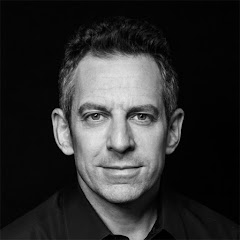 Sam Harris
Key Moments
Poet David Whyte discusses reality's conversational nature, the "three marriages," and the importance of attention over time.
Key Insights
Reality unfolds as a conversation between our desires and the world's demands, not as fixed outcomes.
The "three marriages" are with a partner, one's vocation (work), and oneself, each requiring commitment and attention.
Work-life balance is an illusion; life naturally shifts focus between work and personal life, requiring adaptation.
Deep attention to the world and others can transform and deepen one's sense of self.
Poetry serves as a vital tool for navigating life's complexities, offering language that disarms and deepens understanding.
The iterative and repeated recitation of poetry mirrors life's need to revisit and deeply understand experiences.
Approaching life involves embracing the unexpected shifts in self and partnering with oneself.
THE POET AS A PRACTICAL THINKER
David Whyte posits that poetry is not merely an artistic pursuit but a practical tool for navigating life. Unlike strategic thinking, which relies on binary logic, good poetry engages with the phenomenology of life's conversations. It invites deeper understanding by offering language that enriches and transforms the listener. This practice of verbal acuity, coupled with listening, prepares individuals for broader comprehension and invites others into shared insights in a way that is both beautiful and personally enriching.
ATTENTION AS THE CURRENCY OF LIFE
Drawing from his background in marine zoology and experiences in the Galapagos, Whyte identifies distinct levels of attention that profoundly shape identity. He argues that attention, rather than time, is life's true wealth. The more attention paid to external realities and others, the more an individual's identity deepens and widens. This contrasts with inherited beliefs, which Whyte considers less interesting. Life, he suggests, is the sum and substance of how we choose to direct our attention, offering a path to the timeless.
SPIRITUAL PRACTICES AND PSYCHEDELIC INSIGHTS
Whyte's journey includes extensive solitude in nature, classical education, and a deep engagement with Zen meditation, which he feels is now embodied within him. He also recounts transformative experiences with psychedelics, particularly LSD, which helped bridge the gap between his adult self and his childhood self, restoring a sense of wonder. These threshold experiences, often sought in solitude, consistently invited him toward deeper grounding, self-understanding, and insight, complementing his other introspective practices.
THE BELL AND THE BLACKBIRD: NAVIGATING CHOICE
The poem 'The Bell and the Blackbird' illustrates the Celtic tradition's wisdom: human beings often choose too soon between life's dualities. The poem presents a monk hearing the call to deep inner work (the bell) and the call to engage with the world as it is (the blackbird). The crucial insight is that one doesn't have to choose definitively between these calls. True living involves holding both the inner and outer calls, recognizing that both require courage and lead to a form of self-transcendence.
POETRY AS AN ANTI-DEFENSE MECHANISM
Whyte explains his distinctive poetic recitation style, involving the repetition of lines, as a re-innervation of ancient traditions. This method, unlike many modern readings, allows listeners time to absorb the meaning, akin to how vital news or arguments are delivered—repeatedly and carefully. Poetry, in this context, is language against which we have no defenses, demanding a slower, more immersive consumption. It respects the listener and acknowledges that even the poet may not fully grasp the implications of their words until later.
REALITY AS A CONTINUOUS CONVERSATION
The 'conversational nature of reality' means that neither our personal desires nor the world's impositions arrive precisely as envisioned. Instead, reality is the dynamic frontier where what we want meets what the world wants from us. The discipline lies in staying present on this frontier, continuously overhearing ourselves and the world. This process of mutual engagement and unexpected outcomes inherently deepens our understanding and integrity, guiding us toward a horizon we might not have initially imagined.
DECONSTRUCTING WORK-LIFE BALANCE AND THE THREE MARRIAGES
Whyte challenges the notion of 'work-life balance' as a stressful illusion. He proposes that life naturally oscillates between prioritizing work and personal life, requiring adaptation rather than forced equilibrium. He defines the 'three marriages': the primary relationship with a partner, the vocation (work) as a commitment beyond daily difficulties, and the relationship with oneself—the evolving stranger we meet daily. Each marriage demands attention, commitment, and a willingness to engage with the unexpected aspects of the other and of the self.
THE EVER-EVOLVING SELF AND VOCATION
The third marriage, to oneself, acknowledges that our identity is constantly in flux. Like a partner, the self surprises us, presenting new desires and evolving. We must learn to know this changing self with the same dedication we commit to a spouse or a vocation. Similarly, work (the second marriage) is sustained not by daily satisfaction alone, but by a horizon or promise that transcends its grit. This commitment keeps the conversation with work alive, much like a marriage conversation is sustained by shared purpose.
EMBRACING UNFORESEEN PATHS AND INTEGRITY
Good work, Whyte suggests, inevitably leads us into worlds we couldn't have previously imagined. His own journey into corporate settings, stemming from a background resistant to hierarchy, proved surprisingly fruitful. He discovered that engaging with organizations could be done without compromising integrity, leading him into unforeseen professional relationships. This mirrors the broader theme that pursuing the frontier of reality's conversation allows for growth and unexpected, yet valuable, destinations.
Mentioned in This Episode
●Books
●Drugs & Medications
●Concepts
●People Referenced
Common Questions
David Whyte is a poet and author with ten books of poetry and four books of prose. He also has a degree in marine zoology and has worked with organizations, bringing a unique perspective to his work.
Topics
Mentioned in this video
David Whyte's academic background, which he pursued for ten years before returning to poetry.
Mentioned in relation to gradations of attention, which David Whyte encountered through his studies.
A meditation practice David Whyte engaged with seriously for many years, which he feels is 'in his body'.
A poem by David Whyte, recited in the episode, illustrating the tension between internal preparation and external engagement.
David Whyte's non-fiction book that discusses the illusion of work-life balance and the relationships with a partner, one's vocation, and oneself.
More from Sam Harris
View all 298 summaries 28 min
Michael Pollan on Consciousness, Psychedelics, and the Limits of Neuroscience
 22 min
Why the Stock Market Has Become a Casino
 61 min
UNRAVELING THE DREAM (A New Documentary Executive Produced by Sam Harris)
 20 min
Francis Fukuyama: The End of History Was Never What You Think
Ask anything from this episode.
Save it, chat with it, and connect it to Claude or ChatGPT. Get cited answers from the actual content — and build your own knowledge base of every podcast and video you care about.
Get Started Free