Key Moments
Stephen Wolfram: Computational Universe | MIT 6.S099: Artificial General Intelligence (AGI)
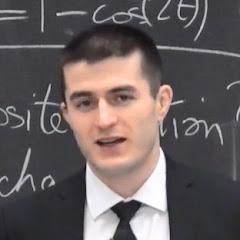 Lex Fridman
Want to know something specific about what's covered?
We've already dissected every moment. Ask and we will deliver (with timestamps).
Key Moments
Computational universe exploration is key to AGI. Wolfram Language bridges human thought and computation.
Key Insights
Wolfram Alpha's success relies on vast knowledge, data access, and computational models, not just reasoning.
Wolfram Language, a symbolic language, allows manipulation of data and abstract concepts, forming the basis of Wolfram Alpha.
The computational universe contains complex behavior from simple programs, suggesting a path for AI and technology.
Neural networks are powerful but their internal workings can be opaque, highlighting the challenge of 'understanding' AI.
Mining the computational universe for useful programs is more efficient than step-by-step construction for certain problems.
Computational irreducibility implies that understanding complex systems may be as difficult as their computation, impacting AI interpretability.
THE EMERGENCE OF WOLFRAM ALPHA AND NATURAL LANGUAGE UNDERSTANDING
Stephen Wolfram discusses the development of Wolfram Alpha, highlighting its success in answering real-world questions. He emphasizes that effective natural language understanding, crucial for such systems, depends less on sophisticated parsing and more on possessing a vast amount of world knowledge. Access to extensive data sources and the ability to perform complex computations based on that data are equally critical components. The system integrates data feeds with celestial mechanics models to track satellites, demonstrating the blend of real-world information and predictive modeling.
WOLFRAM LANGUAGE AS A BRIDGE BETWEEN HUMAN THOUGHT AND COMPUTATION
The foundation of Wolfram Alpha is the Wolfram Language, a symbolic language designed to represent and manipulate both abstract concepts and real-world data. This symbolic nature allows for operations on diverse entities, from random graphs and images to geographical locations and biological structures. The language's integrated approach to knowledge representation enables it to interpret natural language queries and translate them into precise computational tasks, bridging the gap between human intention and machine execution. This integration facilitates complex operations like route optimization and geographical plotting.
EXPLORING THE COMPUTATIONAL UNIVERSE FOR TECHNOLOGICAL ADVANCEMENT
Wolfram introduces the concept of the computational universe, which consists of all possible programs, including simple ones like cellular automata. He demonstrates how very basic rules can generate incredibly complex and seemingly random behavior, exemplified by Rule 30. This principle suggests that sophisticated functionality, such as random number generation or modeling natural phenomena, can be discovered by searching this vast computational space rather than by trying to engineer them from first principles. This approach is vital for discovering optimal algorithms and novel computational solutions.
NEURAL NETWORKS AND THE CHALLENGE OF INTERPRETABILITY
The talk delves into modern machine learning, specifically neural networks. Wolfram showcases how image identification models work, but also highlights the 'black box' problem. He illustrates this by visualizing the intermediate layers of a neural network, revealing that its internal representations and feature distinctions may not align with human concepts or language. This lack of interpretability, even in well-trained models, poses a significant challenge for understanding and trusting AI systems.
COMPUTATIONAL IRREDUCIBILITY AND THE LIMITS OF PREDICTION
Wolfram explains computational irreducibility, a consequence of the principle of computational equivalence, which posits that non-trivial computations are often as complex as they can be and cannot be shortcutted by human reasoning or simpler models. This means that predicting the output of complex Wolfram Language programs or even simple cellular automata often requires running the computation in full. This phenomenon challenges our ability to understand and foresee the outcomes of complex systems, including advanced AIs, suggesting that 'understanding' may not always equate to predicting results efficiently.
BRIDGING HUMAN INTENTIONS WITH COMPUTATIONAL POWER AND FUTURE AI
Wolfram emphasizes that while the computational universe offers immense power, translating human goals and intentions into AI actions is a primary challenge. He proposes Wolfram Language as a 'computational communication language' to bridge this gap. The development of symbolic discourse languages, akin to precise legal contracts, is crucial for defining AI behavior, ethics, and goals. This approach aims to create 'AI Constitutions' that can guide AI actions, acknowledging that purpose and goals are fundamentally human constructs, requiring careful articulation to align with AI capabilities.
Mentioned in This Episode
●Products
●Software & Apps
●Books
●Concepts
●People Referenced
Common Questions
Wolfram Alpha achieved natural language understanding not through complex parsing alone, but primarily by 'knowing a lot of stuff' about the world and having access to vast data sources. It also leveraged centuries of exact science by solving mathematical equations and applying models rather than relying solely on human-like reasoning heuristics.
Topics
Mentioned in this video
Wolfram's book exploring cellular automata and simple computational systems from which complex behavior can emerge, inspiring the host's interest in AI.
A book written by Stephen Wolfram about the biographies of various individuals and how they developed their ideas, linking to his interest in the history of science and ideas.
Wolfram expressed early interest in neural networks in the 1980s but couldn't get interesting results. Later, he revisited the idea, realizing computation alone could be sufficient for AI.
Wolfram's principle stating that beyond a certain threshold of computational sophistication, all systems are equivalent in their computational power, implying no bright line between 'intelligent' and 'merely computational' systems.
A concept used in Wolfram Alpha to predict the trajectory of objects like the International Space Station, combining observational data with mathematical models.
A discrete model studied by Wolfram where cells on a grid evolve based on simple rules to produce complex patterns, demonstrating the 'computational universe'. Rule 30 is highlighted for its random output.
Used by Wolfram as an example to show how searching the computational universe can find the simplest axiom system, leading to automated proofs.
The phenomenon where the only way to determine the outcome of a computation is to run the computation itself, making prediction impossible and understanding difficult.
A computational knowledge engine created by Stephen Wolfram, designed to answer factual queries by computing answers from external data.
A scientific computing software program developed by Stephen Wolfram, which evolved into Wolfram Language.
A multi-paradigm programming language developed by Wolfram Research, serving as the primary language for Wolfram Alpha and allowing symbolic representation and computation.
A website demonstrating music compositions generated by searching the computational universe, initially surprising Wolfram by serving as a source of creative ideas for human composers.
Quoted as saying he felt like a child picking up a seashell on the beach compared to the 'ocean of truth,' which Wolfram relates to exploring a small corner (like calculus) of the vast computational universe.
A pioneer in the field of artificial intelligence, a friend of Wolfram who was initially skeptical but eventually understood the utility of Wolfram Alpha.
Reference to Gödel's incompleteness theorems, which suggest that any sufficiently complex axiomatic system will have statements that are true but unprovable within that system, analogous to the complexities of AI ethics and legal systems.
Philosopher and mathematician who, 300 years ago, pursued a similar goal to Wolfram: formalizing everyday discourse and legal questions into logic for automatic execution.
The speaker, a computer scientist, physicist, and businessman known for his work on cellular automata, Mathematica, and Wolfram Alpha.
Mentioned in the context of 'Asimov's laws of robotics' when discussing the impossibility of a single, simple 'golden rule' for AI ethics due to computational irreducibility.
More from Lex Fridman
View all 550 summaries 174 min
Biggest Mysteries in Physics: Antimatter, Dark Energy & ToE - Don Lincoln | Lex Fridman Podcast #497
 259 min
FFmpeg: The Incredible Technology Behind Video on the Internet | Lex Fridman Podcast #496
 124 min
Vikings, Ragnar, Berserkers, Valhalla & the Warriors of the Viking Age | Lex Fridman Podcast #495
 146 min
Jensen Huang: NVIDIA - The $4 Trillion Company & the AI Revolution | Lex Fridman Podcast #494
Ask anything from this episode.
Save it, chat with it, and connect it to Claude or ChatGPT. Get cited answers from the actual content — and build your own knowledge base of every podcast and video you care about.
Get Started Free