Principle of Computational Equivalence
idea that complicated computational systems are somehow equivalent
Build a research pod on Principle of Computational Equivalence.
6 expert discussions. Save them all to your own pod, ask any question, get cited answers.
Common Themes
Videos Mentioning Principle of Computational Equivalence

All-In Summit: Stephen Wolfram on computation, AI, and the nature of the universe
All-In Podcast
The idea that complex behavior arises from simple programs, and that most computational systems are computationally equivalent to universal computers.

What is Wolfram Language? (Stephen Wolfram) | AI Podcast Clips
Lex Fridman
A principle developed by Stephen Wolfram suggesting there is no bright line between intelligence and the computational capabilities of complex systems.

Cellular Automata and Rule 30 (Stephen Wolfram) | AI Podcast Clips
Lex Fridman
Stephen Wolfram's hypothesis that all systems that are sufficiently complex and computationally capable behave according to the same fundamental computational rules, suggesting that simple and complex systems can be computationally equivalent.
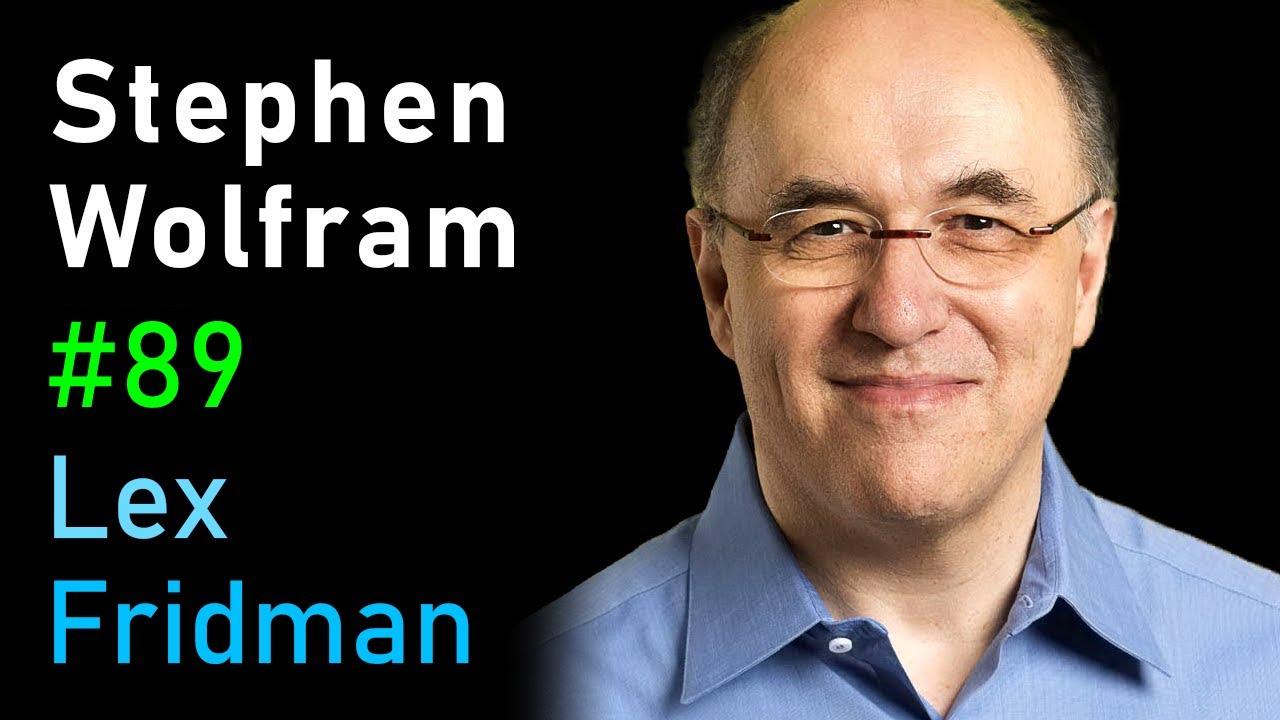
Stephen Wolfram: Cellular Automata, Computation, and Physics | Lex Fridman Podcast #89
Lex Fridman
Wolfram's principle stating that almost all processes that are not obviously simple are computationally equivalent, meaning they can perform universal computation.

Stephen Wolfram: Computational Universe | MIT 6.S099: Artificial General Intelligence (AGI)
Lex Fridman
Wolfram's principle stating that beyond a certain threshold of computational sophistication, all systems are equivalent in their computational power, implying no bright line between 'intelligent' and 'merely computational' systems.

Stephen Wolfram: Fundamental Theory of Physics, Life, and the Universe | Lex Fridman Podcast #124
Lex Fridman
Stephen Wolfram's principle stating that once a computational system reaches a certain threshold of complexity, it achieves the same computational universality as any other complex system.