Key Moments
Senators John Fetterman and Dave McCormick: Bipartisanship, Money in DC, Datacenters, Graham Platner
 All-In Podcast
Want to know something specific about what's covered?
We've already dissected every moment. Ask and we will deliver (with timestamps).
Key Moments
Pennsylvania Senators Fetterman and McCormick highlight bipartisanship amidst national polarization, emphasizing AI and energy as economic drivers for the state, but warn against China's dominance in AI.
Key Insights
Pennsylvania, a microcosm of the US, requires coalition building across urban and rural divides, with two-thirds of union rank-and-file workers voting for Senators Fetterman and McCormick.
Senator John Fetterman, initially supportive of ending the filibuster, now staunchly defends it as crucial for minority rights and Senate function, admitting he was "so wrong" about its elimination.
Senator Dave McCormick highlights that data centers are driving significant investment and job creation in Pennsylvania, with $92 billion committed at an energy and innovation summit, yet facing opposition.
Fetterman argues that opposing AI as a "scourge or cancer" is a "China-first policy," and that the US must lead in developing AI technology to avoid ceding ground to China.
The median income in Pennsylvania is $52,000, and there's significant anxiety about job displacement and lack of economic mobility, with a "K-shaped economy" benefiting asset holders disproportionately.
Over $500 million was spent in one Senate race alone, illustrating the colossal sums of money in politics, with Fetterman and McCormick agreeing that more financial contribution is needed or the primary system should be reformed.
Finding common ground in a polarized era
Pennsylvania's senators, Democrat John Fetterman and Republican Dave McCormick, emphasize the necessity of bipartisanship, especially in a time of extreme political polarization. They both agree that shutting down the government is detrimental to the commonwealth and the nation, and they actively seek common ground, even when they disagree. Their voting record, they claim, reflects a "country over party" approach, setting an example by fostering trust and cooperation. Fetterman expressed pride in calling McCormick a "good friend" and vowed to "fight together for Pennsylvania and for our nation," acknowledging the need to "find a better way forward." McCormick echoed this, stating that Pennsylvania voters expect them to work together. He framed the current moment as potentially the "most consequential moment in humankind," driven by rapid changes in AI, life sciences, and energy, which naturally create anxiety and lean towards extremism. Therefore, he argued, finding common ground is more critical now than ever, citing bipartisan work on issues ranging from energy policy and the fentanyl crisis to anti-semitism and drone technology.
Pennsylvania as a microcosm for national politics
Both senators see Pennsylvania as a reflection of the broader American political landscape. McCormick points out that the state's demographic makeup—with large Democratic urban centers like Philadelphia and Pittsburgh, and mostly Republican rural areas—necessitates building broad coalitions to win. He noted that many voters who supported Senator Fetterman also voted for him and President Trump, highlighting the formation of a "working families coalition." This coalition, he explained, includes significant support from Latino and African-American voters, with the latter achieving its highest turnout in 2024 in 30 years. The senator believes that winning this coalition in Pennsylvania and nationally will dictate future political outcomes. Fetterman concurred that Pennsylvania "keeps you honest," and that their success in flipping seats was achieved by rejecting extreme views and working together. He also mentioned how his stance on issues like data centers can sometimes put him at odds with the Democratic party's direction, identifying them as opportunities rather than a "scourge."
The filibuster: A bulwark against tribalism
The conversation turned to the filibuster, with both senators expressing a newfound appreciation for its role in forcing compromise. Fetterman admitted that he and the entire Democratic party were "so wrong" about eliminating the filibuster, and thanked figures like Senators Manchin and Sinema for preserving it, stating, "Thank God we had people that stood there." He now considers defending the filibuster one of his "hill I would die on," emphasizing its importance for minority rights and preventing the Senate from becoming a "smaller version of the House." McCormick agreed, acknowledging the frustration with the slow pace of legislation from a business perspective but endorsing the filibuster's requirement for bipartisan action. He argued that significant progress has been made on energy, and that permitting reform could be a "biggest economic lever." Both senators see the filibuster as a vital tool for preserving deliberation and preventing "total tribalism."
AI and energy: Pennsylvania's blue-collar boom
A significant portion of the discussion focused on how AI and energy are creating a burgeoning blue-collar economy in Pennsylvania. McCormick highlighted an energy and innovation summit hosted in Pennsylvania that attracted $92 billion in investment commitments from energy, AI, and investment leaders. He detailed a specific example in Homer City, where a coal plant is transitioning to natural gas, dedicating a large portion of its power to a new data center complex, with the remainder feeding back into the grid. This trend, he noted, is creating thousands of construction jobs, with electricians and seasoned welders in their late teens and early twenties earning over $100,000 annually and facing a shortage of skilled labor. Fetterman corroborated this, referencing the hundreds of thousands of new construction jobs created and a 25%-30% wage increase for construction workers over the past 15-16 months, attributing this growth partly to data centers and energy projects. He stressed that these projects are economic engines, creating logistics jobs and revitalizing communities that have been losing population for 20 years. He urged for community buy-in and stressed the need to break through misinformation surrounding these developments, drawing parallels to the initial opposition and eventual broad support for fracking.
The anxiety of the K-shaped economy and wealth concentration
The senators addressed the growing concern over the "K-shaped economy" and wealth concentration. Fetterman pointed to Pennsylvania's median income of $52,000 and the "enormous anxiety" stemming from a lack of clear paths to economic advancement, drawing parallels to past deindustrialization caused by globalization. He argued that without addressing this gap, capitalism itself is at risk. McCormick agreed that wealth concentration is a "huge problem" and that the "bottom half is not happy." He proposed solutions like "Invest America counts" and school choice provisions to create opportunities and equality. He also advocated for channeling wealth into the hands of those who will benefit through incentives and choice, rather than government dictates, comparing it to Andrew Carnegie's philanthropy. There was a disagreement on the role of government spending, with one speaker arguing that increased government intervention leads to market inefficiency and inaccessibility, while the other suggested spending more on programs that provide opportunity and circumvent excessive government bureaucracy.
Navigating misinformation and foreign influence
Concerns were raised about misinformation, particularly regarding data centers, with McCormick suggesting that opposition is "largely being driven by China and outside forces." He drew a parallel to the misinformation campaigns against fracking, which he believes were largely driven by environmentalist groups and economic competitors. However, he feels that foreign state actors are a more significant factor in the opposition to AI and data centers compared to the shale industry. Fetterman also voiced concerns that the opposition to AI development is effectively a "China-first policy," as the US risks falling behind if it labels AI as a "scourge." He believes that the US must lead in developing AI technology, emphasizing that arguments against it are sometimes funded by groups aligned with the Chinese Communist Party (CCP). He also criticized the tendency of his own party to focus on "billionaires" and private citizens rather than systemic issues, stressing that job creators should not be unfairly targeted.
The rise of extremism and anti-semitism
The conversation touched upon the alarming rise of extremism and anti-semitism in politics, exemplified by the discussion around a candidate with a Nazi tattoo. Fetterman expressed disbelief and concern that such a candidate could be viable, condemning the normalization of hateful rhetoric. He recounted instances of the candidate's inflammatory comments about soldiers and the military, attributing this trend in part to a backlash against partisan politics and the divisive rhetoric initiated by figures like Donald Trump. McCormick observed a migration within the Democratic party towards "terrible ideas of socialism and Marxism," coupled with a "rise of anti-semitism and hatred." He noted that mainstream Democrats are campaigning on platforms that are anti-Israel and border on anti-semitism, which he finds "horribly unhealthy for America." Both senators agreed that anti-Israel sentiment and anti-semitism are serious dangers, and Fetterman stated that taking a stance against them is being on the "right side of history."
Money in politics and the future of campaigns
The immense cost of political campaigns was a significant point of discussion. McCormick cited his own race costing $500 million, with $200 million raised on his side and $300 million by the opposition, a figure he expects to increase dramatically in future elections. Fetterman concurred, noting his 2022 race cost $330 million, which now seems "quaint." Both acknowledged the destructive nature of $300 million being spent to "destroy reputations" rather than to benefit Pennsylvania or its people. They suggested that either the amount of money in politics needs to be reduced, or more people need to contribute to both sides. Fetterman also proposed the elimination of the primary system, which he believes incentivizes extreme views and promotes division. The senators also discussed the impact of "Trump Derangement Syndrome (TDS)" and the far-left and far-right converging on anti-establishment or anti-AI stances, indicating a broader realignment of political ideologies.
Mentioned in This Episode
●Supplements
●Companies
●Organizations
●Concepts
●People Referenced
Navigating Bipartisanship and Economic Opportunity in Pennsylvania
Practical takeaways from this episode
Do This
Avoid This
Common Questions
Both senators emphasize that Pennsylvania voters expect them to work together. They prioritize country over party and focus on issues where cooperation is possible, such as on energy policy, fentanyl crisis, and combating anti-Semitism.
Topics
Mentioned in this video
Mentioned as an example of a billionaire donor contributing to political campaigns.
Democratic Senator from Pennsylvania, emphasizing bipartisanship, capitalism, and a pragmatic approach to AI and governance.
Republican Senator from Pennsylvania, highlighting a similar background to Fetterman and the need for bipartisan work, particularly on AI and economic issues.
Mentioned in the context of national union endorsements versus rank-and-file voting.
Mentioned as an opponent in a previous election cycle, contrasted with the coalition building discussed.
Mentioned as a figure whose opposition defines the Democratic party and as a starting point for divisive rhetoric.
Mentioned in relation to the current administration's approval ratings and handling of certain policies.
Mentioned as an example of a billionaire who creates jobs and should not be targeted by the party.
A candidate discussed for his controversial views and symbols, raising concerns about political extremism and societal backlash.
Mentioned as one of the senators whose stance on the filibuster was vindicated.
Mentioned as one of the senators whose stance on the filibuster was vindicated.
Invoked as an analogy for a modern approach to wealth distribution and investment in opportunity.
Governor of Pennsylvania, praised as a prominent Jewish figure whose success signals common ground and checks anti-Semitism.
Mentioned as the leader of a powerful and noisy wing within the Democratic party that could challenge Fetterman.
Discussed as a key swing state and a microcosm of the US, requiring bipartisan cooperation.
Mentioned as a competitor in the AI race and as a potential source of misinformation and influence.
One of the two major urban centers in Pennsylvania, largely Democratic.
One of the two major urban centers in Pennsylvania, largely Democratic.
Discussed in the context of energy prices and nuclear non-proliferation concerns.
Identified as a major driver of global change and anxiety, with differing views on its potential and regulation (e.g., moratoriums vs. opportunities).
Discussed as an issue where bipartisan agreement exists, and also as a concern within political discourse and the Democratic party.
More from All-In Podcast
View all 421 summaries 25 min
Dan Dreyfus: The Next AI Bottleneck is Copper
 29 min
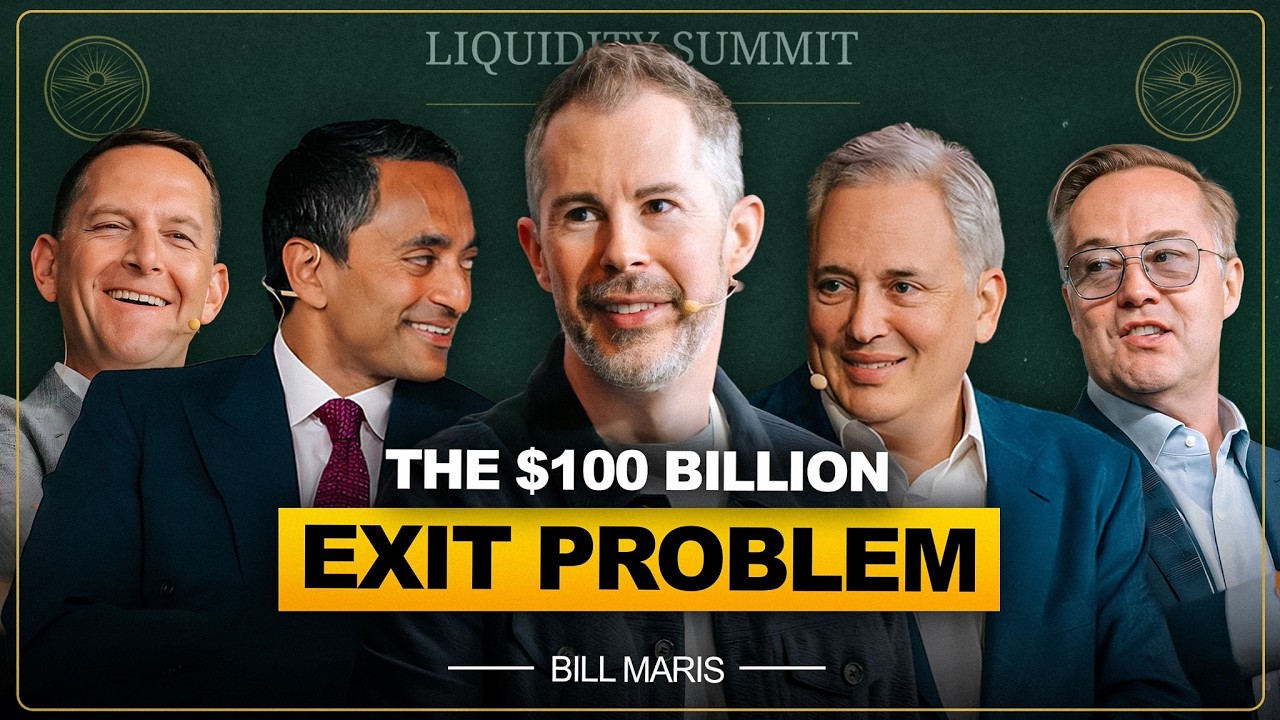
Bill Maris: How Google Could Crush AI Competitors, Why Small Funds Win, and AI's Atari Stage
 32 min
Palo Alto Networks CEO: "AI Found 5 Years of Bugs in 6 Weeks"
 40 min
Why Secondary Markets Are Eating the IPO | All-In Liquidity Secondary Markets Panel
Ask anything from this episode.
Save it, chat with it, and connect it to Claude or ChatGPT. Get cited answers from the actual content — and build your own knowledge base of every podcast and video you care about.
Get Started Free