Key Moments
Self-Driving Cars: State of the Art (2019)
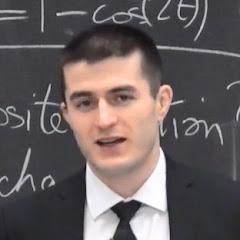 Lex Fridman
Want to know something specific about what's covered?
We've already dissected every moment. Ask and we will deliver (with timestamps).
Key Moments
Autonomous vehicle development in 2019: industry progress, challenges in human-AI interaction, sensor tech, and future outlook.
Key Insights
The primary goal of autonomous vehicles is to save lives and improve mobility, not just profit.
Waymo has achieved 10 million autonomous miles, while Tesla's Autopilot has covered 1 billion semi-autonomous miles.
Fatalities in autonomous vehicle incidents garner disproportionate public and media attention, creating a higher bar for success.
The debate continues on whether progress will be driven by vision-based systems (like Tesla) or lidar-based systems.
The human experience and interaction are critical for widespread adoption, not just safety or speed.
Truly autonomous vehicles (Level 4/5) require perfect problem-solving, unlike semi-autonomous systems (Level 2/3) where humans act as a failsafe.
THE OVERARCHING MISSION OF AUTONOMOUS VEHICLES
The core mission behind the development of autonomous vehicles extends beyond entrepreneurial aims; it's fundamentally about enhancing mobility for those with limitations, increasing transportation efficiency, and most importantly, saving lives. With a staggering statistic of one global car crash fatality every 23 seconds, the urgency to prevent injuries and fatalities is a primary driver for engineers and researchers in the field.
2018: KEY MILESTONES AND SOERING INCIDENTS
In 2018, Waymo made significant strides, accumulating 10 million autonomous miles, a notable achievement in public deployment. Correspondingly, Tesla's Autopilot system reached 1 billion miles driven semi-autonomously, primarily relying on camera-based computer vision and neural networks. However, the year also saw tragic fatalities, including an Uber incident in Tempe, Arizona, and a Tesla Autopilot-related crash in Mountain View, California, highlighting the critical need for public understanding and stringent safety standards.
THE CHALLENGE OF PUBLIC PERCEPTION AND SAFETY METRICS
Fatalities involving autonomous vehicles, whether fully or semi-autonomous, attract intense public and media scrutiny, setting an exceptionally high bar for performance and safety. While statistical comparisons can be complex, initiatives are underway to accurately compare safety metrics between autonomous and human-driven vehicles. The perception of safety is crucial, as public acceptance is vital for the successful proliferation of this technology.
CURRENT DEPLOYMENTS AND THE QUESTION OF SCALE
Public testing of autonomous taxi services expanded in 2018, with companies like Waymo, Cruise, and others operating in constrained environments, often with safety drivers. The true measure of success, however, lies in achieving scale—meaningful deployment beyond prototype stages. Reaching a threshold like 10,000 operational vehicles is considered essential for these systems to fundamentally impact the general population.
PREDICTIONS AND THE SPECTRUM OF OPTIMISM VS. PESSIMISM
Industry predictions for widespread autonomous vehicle adoption vary significantly, ranging from optimistic forecasts by companies like Tesla to more cautious estimates from leading engineers. While some foresee widespread adoption within years, others believe humans will remain in the loop, albeit with advanced assistance, for decades. This spectrum highlights the inherent difficulty in removing the human element entirely from the driving equation.
HUMAN EXPERIENCE AS THE KEY ADOPTION DRIVER
Beyond technical safety and efficiency, the widespread adoption of autonomous vehicles hinges on creating a superior human experience. This includes intuitive natural language interaction, personalized features, and a seamless transfer of control, making the journey enjoyable and enriching. Focusing on the human experience from the outset, rather than as an afterthought, is considered paramount by many in the field.
DEFINING AUTONOMY: LEVELS AND APPROACHES
Autonomous driving is categorized into levels, with Level 2 representing driver assistance and Level 5 signifying full autonomy where the vehicle is entirely responsible. The distinction between 'human-centered autonomy' and 'full autonomy' is critical, as full autonomy implies no teleoperation or reliance on the driver to take over in critical situations. The goal is for the vehicle to ensure safety independently, even finding a 'safe harbor' if necessary.
STRATEGIES FOR DEPLOYING FULLY AUTONOMOUS VEHICLES
Several deployment strategies for fully autonomous vehicles are being explored. These include last-mile delivery services for goods and people using zero-occupancy vehicles, autonomous trucking on highways with platooning, personalized public transport that mimics train-like services but with fewer passengers, and operations within closed communities. Each approach addresses specific use cases with varying levels of complexity and environmental constraints.
THE VISION VS. LIDAR DEBATE IN SENSOR TECHNOLOGY
A central debate in sensor technology revolves around a vision-centric approach, championed by companies like Tesla using cameras and deep learning, versus a lidar-based approach focused on highly mapped environments. Vision systems offer rich data but struggle with accuracy and adverse weather. Lidar provides precise depth information but is expensive and less reliant on deep learning, leading to a divergence in development philosophies.
THE ROLE AND LIMITATIONS OF VARIOUS SENSORS
Autonomous vehicles rely on a suite of sensors, each with strengths and weaknesses. Cameras offer high resolution but are susceptible to weather and depth estimation issues. Lidar provides accurate 3D mapping but is costly. Radar excels in obstacle detection and all-weather performance but lacks resolution. Ultrasonic sensors are effective for short-range proximity detection. Sensor fusion, combining data from multiple sensors, is crucial for creating a comprehensive environmental model.
SEMI-AUTONOMOUS VS. FULLY AUTONOMOUS SYSTEMS: FAILSAVE MECHANISMS
In semi-autonomous systems, the human driver often serves as the failsafe, stepping in when the system encounters difficulties. Conversely, fully autonomous systems, like those Waymo is developing, rely on failsafes such as highly accurate maps and robust sensor suites (potentially including lidar) to ensure safety without human intervention. This fundamental difference dictates the design and reliability requirements for each approach.
EMERGING CONCEPTS: CONNECTED VEHICLES AND TUNNELS
Beyond traditional sensor-based navigation, innovative concepts like connected vehicles are emerging. Vehicle-to-vehicle and vehicle-to-infrastructure communication could optimize intersections and traffic flow, potentially eliminating traffic lights. Another concept involves extensive underground tunnel networks, which by constraining the operational environment, could dramatically simplify the challenges of autonomous driving and enable higher speeds.
THE FUTURE OF AUTONOMY AND AI'S ROLE
The development of autonomous vehicles represents a defining challenge for artificial intelligence in the 21st century, pushing the boundaries of AI beyond theoretical benchmarks. It requires integrating AI algorithms into real-world applications where they directly impact human lives and civilization. This interdisciplinary challenge involves addressing aspects of psychology, philosophy, sociology, robotics, and perception, making it a continuously fascinating and evolving field.
Mentioned in This Episode
●Products
●Software & Apps
●Companies
●Organizations
●People Referenced
Autonomous Vehicle Deployment and Technology Comparison
Practical takeaways from this episode
Do This
Avoid This
Autonomous Vehicle Sensor Comparison
Data extracted from this episode
| Sensor Type | Pros | Cons |
|---|---|---|
| Vision (Cameras) | High resolution, rich texture, cheap, abundant data, world designed for human eyes | Noisy, poor depth estimation, bad in extreme weather, requires mass data for accuracy |
| Lidar | Consistent, reliable, explainable, high accuracy, 360-degree visibility (some sensors) | Expensive, not primarily deep learning-based, limited data due to low adoption |
| Radar | Cheap, good for obstacle detection and avoidance, works in extreme weather, good range | Lower resolution, limited information |
| Ultrasonic Sensors | Good for proximity detection, high resolution for close objects (used for parking) | Limited range, similar limitations to radar |
Autonomous Vehicle Prediction Timeline (2019 Perspective)
Data extracted from this episode
| Company/Group | Prediction | Type of Deployment |
|---|---|---|
| Tesla | 2019 | Fully Autonomous Vehicles |
| Major Automakers | Varying (2019-2021) | Deployment |
| Nissan, Honda, Toyota | 2020 | Highway/Urban Constraints |
| Hyundai, Volvo | 2021 | Scale |
| BMW, Ford | 2021 | Scale |
| Daimler | Early 2020s | Scale |
| Elon Musk | 2019 | Fully Autonomous Vehicles |
| Rodney Brooks | Beyond 2050 | Fully Autonomous Vehicles (potential city bans in 2030s, US cities in 2040s) |
Common Questions
The primary goal is to improve mobility access for those unable to drive due to age or location, increase transportation efficiency, and most importantly, save lives by preventing crashes, injuries, and fatalities.
Topics
Mentioned in this video
Reached 1 billion miles in semi-autonomous driving with its Autopilot system. The company's approach uses cameras as the primary sensor and is pushing towards full autonomy.
A leader in autonomous vehicle deployment, having reached 10 million autonomous miles by October 2018 and operating the 'Waymo One' service in Phoenix, Arizona.
Conducting autonomous vehicle testing in Texas.
A former leader in search engines, disrupted by Google.
Used as an example of a company that disrupted an existing market (search engines with Yahoo, Infoseek, Excite) and is now taking a GPU-to-GPU approach similar to Tesla's hardware development.
Expanding autonomous operations beyond Detroit.
A former leader in search engines, disrupted by Google.
A former leader in search engines, disrupted by Google.
Experienced a fatality in March 2018 with a pedestrian collision in Tempe, Arizona. Also resumed autonomous vehicle taxi service testing in Pittsburgh after acquiring Otto.
Conducting testing in San Francisco, Arizona, and Michigan, with representation from GM.
Operating autonomous taxi services in Boston.
Mentioned in the context of 'Super Cruise,' an L2 advanced driver-assistance system.
A platform used to explore ethical dilemmas in autonomous vehicle programming, specifically regarding choices made in unavoidable accident scenarios.
A machine learning library mentioned in the context of achieving high accuracy in image classification benchmarks like ImageNet.
Working on autonomous taxi services in isolated communities and villages in Florida.
Tesla's semi-autonomous driving system that controls lane position and longitudinal movement, primarily using camera-based computer vision and neural networks.
Founded by the former head of Tesla Autopilot, conducting testing in San Francisco and Pittsburgh.
A research group at MIT focused on human-centered autonomous vehicles, possessing a fully autonomous vehicle for testing.
Their vehicle 'Boss' won the 2007 DARPA Urban Grand Challenge, further demonstrating progress in autonomous driving.
Mentioned as an example of media outlets that respond to single fatalities involving autonomous vehicles, sometimes disproportionately.
Organized the 'Race to the Desert' in 2005 and the 'Urban Grand Challenge' in 2007, which significantly advanced the field of autonomous vehicles and robotics.
Their vehicle 'Stanley' won the 2005 DARPA Grand Challenge, captivating imaginations about autonomous vehicle capabilities.
A roboticist from Toyota who emphasizes the importance of the 'human in the loop' for autonomous vehicle development, stating that removing the human is still far off.
A physicist quoted for his view that physics is the only real science, implying that other fields, like computer science, might be seen as dealing with 'stupid silly details'.
A key figure behind Aurora, previously involved with DARPA challenges.
Represents the optimistic side of the autonomous vehicle prediction spectrum, with bold predictions for their arrival, including fully autonomous vehicles by 2019.
Represents the more pessimistic side of the autonomous vehicle prediction spectrum, suggesting fully autonomous vehicles may not be prevalent until beyond 2050, with significant city bans on manual driving in the 2030s.
Uber's initiative exploring aerial mobility and flying cars, suggesting future transportation might involve taking elevators to rooftops to meet vehicles.
Mentioned as the most popular car in America, indicating the continued prevalence and data generation from manually driven vehicles.
An example of a vehicle with an advanced driver-assistance system (L2) that can keep the car in its lane.
More from Lex Fridman
View all 552 summaries 227 min
Gary Gallagher: American Civil War, Slavery, Lincoln, Grant & Lee | Lex Fridman Podcast #499
 232 min
The Rise and Fall of the Roman Empire and the Byzantine Empire | Lex Fridman Podcast #498
 174 min
Biggest Mysteries in Physics: Antimatter, Dark Energy & ToE - Don Lincoln | Lex Fridman Podcast #497
 259 min
FFmpeg: The Incredible Technology Behind Video on the Internet | Lex Fridman Podcast #496
Ask anything from this episode.
Save it, chat with it, and connect it to Claude or ChatGPT. Get cited answers from the actual content — and build your own knowledge base of every podcast and video you care about.
Get Started Free