Key Moments
Sam Harris on Deleting His Twitter Account
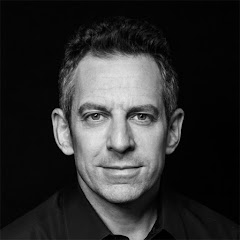 Sam Harris
Key Moments
Sam Harris deleted Twitter, finding it a net negative that made him a worse person, fostering hate/disgust.
Key Insights
Sam Harris deleted his Twitter account after 12 years, concluding it had become a net negative influence on his life.
Twitter distorted his perception of humanity by consistently exposing him to the worst of people, leading to feelings of disgust and despair.
He realized he was becoming someone who viewed people as irredeemable and unable to communicate effectively, questioning the value of his own engagement.
Harris's departure was not a protest against Elon Musk but a personal decision stemming from his own negative experience and an observation of Musk's similar addiction.
He distinguishes between free speech absolutism and the need for private platforms to have terms of service that prohibit harmful behavior, using examples like Alex Jones and Trump.
The erosion of trust in institutions, exacerbated by social media, is highlighted as a critical problem, and Harris argues against simply tearing down existing structures without offering viable alternatives.
THE DECISION TO LEAVE TWITTER
Sam Harris decided to delete his Twitter account after 12 years, during which he had posted nearly 9,000 times. He describes the decision as simple, ultimately concluding that his engagement with the platform was making him a worse person. While acknowledging that Twitter can be a source of connection and information for some, for him, particularly when engaging with controversial topics, it became a significant net negative influence. This realization was a gradual process, but the final decision was clear: the platform's impact on his personal well-being and outlook was detrimental.
DISTORTED PERCEPTION OF HUMANITY
A primary reason Harris deleted his account was how Twitter exposed him to the worst aspects of human behavior. Engaging with controversial subjects, especially from a centrist political stance, resulted in immense hate and misunderstanding from all sides. Unlike some who can ignore negative feedback, Harris found himself drawn back into trying to clarify misunderstandings, only to find it a 'hopeless' endeavor. This constant exposure to irrational contempt and sneering thoughts, even if distorted, began to foster a sense of disgust and despair, painting a dark and inaccurate view of others.
THE PROBLEM OF HATRED AND DISCONNECTION
The issue for Harris wasn't solely the hate directed at him, but the hate and disgust he began to feel towards others. He found Twitter acting as a 'malignant form of telepathy,' exposing him to negative thoughts repeatedly. Even when he recognized this perception was distorted, it still affected his attitude. He realized he was disliking people he'd never met and even people he knew, including former friends. Rather than announcing his departure, he simply deleted his account, which led some to worry about his mental state, unaware of the massive blocking he had employed.
THE 'DIGITAL GENOCIDE' OF BLOCKING
Harris admitted to blocking approximately 50,000 people in his final week on Twitter, describing it as a form of 'digital genocide.' He implemented a strategy of blocking everyone who liked a particularly idiotic or vicious tweet directed at him, believing these individuals were beyond reach. While this effectively shielded him from most of the hate, it led him to question how he had become someone who viewed large groups of people as intellectually and morally irredeemable, and who had lost faith in the power of conversation and effective communication with them.
MUSK, FREE SPEECH, AND PLATFORM RESPONSIBILITY
Harris clarified that his departure was not a protest against Elon Musk's acquisition of Twitter. While he observed negative changes on the platform post-acquisition, he remained agnostic about Musk's long-term success. Instead, he drew a lesson from Musk's own life, seeing it as an example of how even productive individuals can damage themselves through addiction to Twitter. He touched upon the complex free speech debate, asserting that individuals do not have a constitutional right to be on Twitter, viewing it as a private platform with the right to set its own terms of service, distinct from First Amendment protections against government censorship.
THE NUANCES OF FREE SPEECH VS. PLATFORM MODERATION
Harris argued that 'free speech absolutism' is largely a fantasy online, as virtually all platforms, even informal ones like 4chan, have moderation policies. He believes private digital platforms need standards of civility to function as businesses. His argument for removing figures like Trump and Alex Jones from Twitter is based on their violation of terms of service by weaponizing lies to cause harm and incite harassment, not on a free speech principle. He suggested that if Trump continues to cause harm, Elon Musk should enforce his own platform's terms of service.
THE SOCIAL HARM OF MISINFORMATION AND DISINFORMATION
A significant concern for Harris is the societal harm caused by misinformation and disinformation, particularly when amplified by algorithms. He likens algorithmically boosted lies spreading rapidly to shouting 'fire' in a crowded theater, emphasizing that scale and velocity matter. He criticizes 'free speech absolutism' as a sign of not engaging with these complex issues. Technological advancements have granted new powers, and society is struggling to wield them safely, leading to a situation where a single billionaire can alter the platform's direction arbitrarily.
LOST TRUST AND INSTITUTIONAL FAILURE
Harris acknowledges the understandable loss of trust in institutions, citing examples from the COVID-19 pandemic, such as perceived institutional failures, questionable policies, and the influence of 'woke nonsense' in scientific discourse. However, he argues that this erosion of trust does not justify a descent into contrarianism and conspiracy thinking. He believes that instead of tearing down institutions, the focus should be on improving them and identifying genuine experts, as there is no substitute for trusted institutions and experts when making critical decisions about society's future.
THE OPPORTUNITY COST OF SOCIAL MEDIA
Reflecting on his own life and societal conflicts, Harris identifies Twitter as a significant source of confusion and friction. Even when the platform offered valuable content and connections, he recognized it as a 'degrading distraction.' The fragmentation of attention inherent in Twitter's design came at an opportunity cost, diverting his energy from more meaningful activities like reading, writing, meditating, enjoying family, and working on his podcast. Stepping away, he felt it was a mistake to have invested so much time on the platform.
Mentioned in This Episode
●Software & Apps
●Organizations
●Drugs & Medications
●People Referenced
Common Questions
Sam Harris deleted his Twitter account because he felt his engagement with the platform was making him a worse person, distorting his perception of humanity, and fostering negativity and despair.
Topics
Mentioned in this video
Used as an example of a digital sewer that unregulated platforms can become, emphasizing the need for moderation.
The social media platform the speaker discusses deleting his account from, citing its negative impact on his perception of humanity and personal well-being.
Mentioned as one of the platforms contributing to the proliferation of contrarianism and conspiracy thinking, and not a solution to societal communication problems.
Cited as an example of someone who should not be on Twitter due to the harm caused by his past actions, aligning with the speaker's terms of service argument.
Mentioned as someone who seemingly ignores negative feedback on Twitter.
Mentioned as someone who seemingly ignores negative feedback on Twitter.
The owner of Twitter, whose decisions and behavior on the platform are discussed in relation to the speaker's own issues and broader societal concerns.
More from Sam Harris
View all 298 summaries 28 min
Michael Pollan on Consciousness, Psychedelics, and the Limits of Neuroscience
 22 min
Why the Stock Market Has Become a Casino
 61 min
UNRAVELING THE DREAM (A New Documentary Executive Produced by Sam Harris)
 20 min
Francis Fukuyama: The End of History Was Never What You Think
Ask anything from this episode.
Save it, chat with it, and connect it to Claude or ChatGPT. Get cited answers from the actual content — and build your own knowledge base of every podcast and video you care about.
Get Started Free