Key Moments
Q&A: Becoming A Dad, Health Update & Favourite Peptides
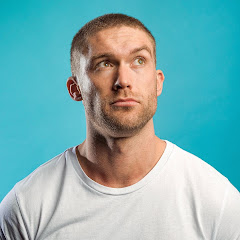 Modern Wisdom
Want to know something specific about what's covered?
We've already dissected every moment. Ask and we will deliver (with timestamps).
Key Moments
Chris Williamson is navigating the growing pains of podcasting and personal growth, from questioning self-help fatigue to embracing emotional vulnerability and managing complex health issues.
Key Insights
Self-improvement fatigue is real, with a noticeable shift towards 'get rich quick' financial content replacing slow investment strategies in the last 12 months.
Feeling lonely 90% of the time in a relationship is a clear sign it's not working, and external validation should not be sought to justify staying in an unhappy situation.
Achilles rupture rehab requires extreme diligence, with Williamson attributing his full recovery to a consistent, hour-long daily routine, even during the pandemic.
The podcast has evolved from solo recordings in basic settings to having a full team and multiple sets, yet Williamson emphasizes maintaining his 'taste' and core idea generation.
Modern nervous systems, evolved for survival against predators, are now sensitized to smaller social concerns like group chat exclusion, leading to heightened stress despite increased safety.
Ambition is a powerful drive, but genuine ambition feels like loving the work, whereas insecurity-driven ambition stems from a fear of not being enough.
The 'self-improvement fatigue' and the search for balance
Chris Williamson observes a growing weariness within the self-improvement space, noting a shift from 'grind and hustle' content to a desire for more relaxed, enjoyable content. He contrasts this with the financial world, where the dominant niches have shifted from long-term investments like 401ks to rapid wealth accumulation strategies. Williamson aims to balance profound insights with accessible, enjoyable delivery, exemplified by an episode on the Odyssey that can be passively absorbed without feeling like a task. He acknowledges feeling this fatigue himself as a prominent figure in the space and commits to finding a middle ground, offering content that educates without overwhelming.
When relationship loneliness signals the end
Addressing a listener's concern about feeling lonely 90% of the time in a relationship with a highly ambitious partner, Williamson offers direct advice: the partner's ambition is secondary to the listener's emotional experience. He stresses that trying to rationalize away persistent loneliness is counterproductive and that happiness cannot coexist with a constant desire for things to be different. He advises open communication, setting boundaries, and prioritizing one's own well-being, framing romantic discernment as a form of preventative healthcare. The core message is that feeling lonely 90% of the time is not a sustainable or healthy state for a relationship, regardless of the partner's positive attributes.
Rebuilding from an Achilles rupture during a pandemic
Williamson recounts his experience rupturing his Achilles tendon, an injury he describes as one of the worst common physical injuries, requiring a full year of rehabilitation. He notes the unique timing of this during the pandemic allowed him to focus solely on recovery without feeling like he was missing out on life. His commitment to a strict, hour-long morning rehab routine was crucial for regaining full mobility and strength. He highlights the mental toll of immobility, particularly the rapid muscle atrophy, and the psychological impact of seeing a limb significantly decrease in size. Resources like Ryan Holiday's 'The Obstacle Is the Way' and resilience documentaries provided mental support during this challenging period.
The evolving nature of ambition and self-trust
Responding to a question about a belief that once protected but now confines, Williamson identifies his tendency towards caution and meticulous planning. While this protected him from early mistakes, it also hindered swift action. He contrasts this with Sasha Chapin's idea that excessive planning can be a form of 'catastrophe fantasization,' a socially acceptable anxiety. Williamson now seeks to balance his analytical 'head' with his intuitive 'gut,' acknowledging this shift may lead to more mistakes but is a necessary step for growth. He also discusses the need for external advice, framing it not as a lack of self-trust, but as a natural human tendency to seek validation and perspective, especially for significant decisions.
The long, complex road to recovering from chronic illness
Williamson shares his ongoing battle with chronic health issues, including mold and Lyme disease, emphasizing that there are no quick fixes. His treatment involves a multi-faceted approach including hyperbaric oxygen therapy (Hbot), saunas, binders, and consistent sleep and exercise. He admits to being hesitant to discuss his health struggles publicly to avoid appearing to complain or make it his sole identity. He views his health recovery as a full-time job alongside running his podcast, acknowledging the immense challenge of managing complex illnesses and the feeling of life being put on hold. He finds solidarity with others facing similar chronic conditions, recognizing the shared struggle and the difficulty of balancing the need for support with the avoidance of victimhood.
The impact of embracing emotions and finding congruence
Williamson describes the profound shift from a 'macho, grinding hustler' persona to one that embraces emotional vulnerability. The greatest benefit is a deeper connection to life, allowing successes to feel genuinely rewarding. The hardest part is the inability to detach from failures, making setbacks more painful. He questions whether the trade-off of not feeling pain is worth sacrificing the joy of success. This emotional openness, though challenging, makes him feel truly alive, contrasting with simply existing. He also touches on the 'lonely chapter' of personal growth, where inner work doesn't immediately reflect in the outer world, highlighting the need for faith and self-celebration during periods of uncertainty.
The podcast's evolution and the core of content creation
Reflecting on the growth of his podcast from solo recordings to a professional setup with a team, Williamson emphasizes that his core role remains idea generation, guest selection, and determining the conversation's direction. He believes that a creator's 'taste' and discernment are irreplaceable by even the most skilled researchers or writers. While he has delegated many logistical tasks, such as booking guests, he actively protects his involvement in the conceptualization of the show. He acknowledges the temptation of 'shiny object syndrome' but prioritizes saying 'no' to distractions to maintain focus on his vision for the podcast.
Future aspirations: fatherhood and business growth
Looking ahead five years, Williamson's primary focus is on becoming a father, both to golden retrievers and human children, viewing this as a significant life achievement. He also anticipates substantial growth for his company, Newtonic, though he downplays the monetary aspect, proud of having previously turned down an acquisition offer. He aims for the podcast to continue fostering deep, sincere conversations and creating moments of relaxation for listeners. Ultimately, he sees his family life and the podcast's mission as intertwined, with a vision of becoming a "farmer's dog"-like parent, sharing his journey extensively.
Mentioned in This Episode
●Supplements
●Products
●Software & Apps
●Companies
●Books
●Concepts
●People Referenced
Common Questions
The speaker acknowledges a growing 'self-improvement fatigue' possibly due to uncertainty or 'grind sloppy' content. He aims to balance self-improvement with relaxing content that doesn't feel like a task.
Topics
Mentioned in this video
Advertising executive mentioned as a potential guest.
Mentioned as a potential guest who could react to business nightmare stories.
Mentioned as a potential guest who could 'roast' horrible first date stories.
Guest on the podcast who did a two-and-a-half-hour retelling of The Odyssey.
Author of 'The Obstacle Is the Way', a book the speaker read during his Achilles recovery.
Author of 'The Art of Resilience', a book the speaker read during his Achilles recovery.
Athlete whose hip replacement recovery was documented in 'Resurfaced', which the speaker watched.
Athlete mentioned as an example of someone who needs to be 'locked in' for a 12-month recovery.
Comedian mentioned humorously in a response to a question about sexuality.
Author and political commentator mentioned humorously in a response to a question about sexuality.
AI expert who is pro-AI, mentioned as a participant in an upcoming debate episode.
Moderately skeptical about AI, mentioned as a participant in an upcoming debate episode.
Geopolitical strategist mentioned as a dream participant for a geopolitics debate.
Mentioned as a potential participant for a geopolitics debate.
Author of the Red Rising series, who texted the speaker about his writing process.
Author of Dungeon Crawler Carl, who is planned to be a guest on the show.
Fantasy author mentioned as part of a dream round table of fiction writers.
Fantasy author mentioned as part of a dream round table of fiction writers.
Author whose line about 'intolerance for risk' and 'catastrophe fantasization' resonated with the speaker.
Motivation speaker mentioned for his pain-pleasure principle to overcome inaction.
Provided a voice note to the speaker about becoming humble and empathetic through periods of not knowing if one could get better.
Humorously referenced in relation to ill-fitting gym wear.
Physicist and author of 'The Beginning of Infinity', mentioned as a potential guest.
Entrepreneur and investor, whose 'podcast Naval in his head' concept is referenced.
Author of 'Atomic Habits', whose habit process is referenced as a way to improve life.
Physicist and professor the speaker wants to have as a guest.
Author of 'The Precipice', recommended by the speaker.
Writer and commentator who will probably return as a guest, potentially for a round table.
Mentioned by the speaker as someone he's currently speaking with, indicating a high level of confidence.
Mentioned as a potential guest for UK podcast recordings after the tour.
Mentioned for a potential second appearance on the podcast.
Referenced in relation to Andrew Tate's lawyer's speaking style, using phrases like 'best guys, wonderful guys'.
Mentioned as a potential participant for a round table with Mary Harrington.
Host of the Joe Rogan Experience, referred to as the 'final boss' of social anxiety for the speaker.
Psychologist and author, whose interviews with the speaker demonstrate his increased confidence over time.
Discussed in relation to the 'manosphere' and his current legal situation, with a humorous nod to Donald Trump's speaking style.
Humorously mentioned in relation to the speaker's hairline and his 'genetically' cut hair.
Flashcard software mentioned in the context of feeling guilty for not taking notes from a podcast.
Note-taking application mentioned in the context of feeling guilty for not taking notes from a podcast.
Treatment mentioned as being effective for chronic health issues.
A type of stool test mentioned for diagnosing gut issues.
Speaker's company, described as having the potential to be 'insanely huge'.
A type of test mentioned for diagnosing gut issues.
Ancient Greek epic poem, mentioned as a topic of a podcast episode.
Book by Ryan Holiday that the speaker read during his Achilles rupture recovery.
Book by Ross Edgley that the speaker read during his Achilles rupture recovery.
A favorite fiction series of the speaker, highly recommended to listeners.
Another highly recommended fantasy series, described as very different but equally compelling to Red Rising.
Book by David Deutsch, mentioned in context of potential guest.
Book by James Clear, mentioned in the context of taking ideas from others to improve oneself.
Book by Toby Ord that the speaker recommends.
Streaming service where 'Resurfaced' documentary about Andy Murray's hip replacement was available.
Ready-to-drink protein shake brand, compared to Core Power but made from A2 milk, highly praised by the speaker.
Protein drink brand mentioned for comparison with Pioneer Pastures.
A 3-in-1 fiber supplement that the speaker uses daily, highlighting its benefits for digestion, gut barrier, and blood sugar stability.
Peptide previously tried by the speaker.
Peptide previously tried by the speaker.
A daily greens supplement providing 75 vitamins, minerals, probiotics, and whole-food-sourced ingredients.
Peptide mentioned as being used by the speaker for immune support.
Peptide mentioned as being used by the speaker for mitochondrial support due to chronic tiredness.
Newer version of AG1, backed by clinical trials to fill nutrient gaps and improve gut bacteria.
Peptide mentioned as being used by the speaker for recovery and gut health, and for bone regrowth after a tooth extraction.
Vitamin supplement included in the free AG1 welcome kit.
Peptide mentioned as being used by the speaker for recovery, and helpful during Achilles rupture recovery.
More from Chris Williamson
View all 89 summaries 127 min
The New Science Of Female Attraction - Psychology Roundtable
 119 min
Who You Meet Down America’s Forgotten Backroads - Peter Santenello
 76 min
Ex-Military Hacker: The Secret World Of Government Surveillance - Bill Thompson
 120 min
Proof That The Lonely Chapter Works - Jett Franzen
Ask anything from this episode.
Save it, chat with it, and connect it to Claude or ChatGPT. Get cited answers from the actual content — and build your own knowledge base of every podcast and video you care about.
Get Started Free