Key Moments
Noah Feldman on Hyper-Productivity, Learning 10+ Languages, DAOs, and More | The Tim Ferriss Show
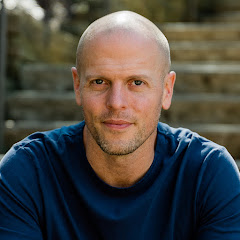 Tim Ferriss
Want to know something specific about what's covered?
We've already dissected every moment. Ask and we will deliver (with timestamps).
Key Moments
Hyper-polyglot Harvard Law professor and public intellectual, Noah Feldman, shares insights on language, productivity, constitutional law, and the future of governance.
Key Insights
Learning a new language exposes you to alternative worldviews and fundamentally reshapes your perspective, highlighting the relativity of truth.
Extreme productivity can be sustained by fierce focus on the task at hand, prioritizing sufficient sleep, and avoiding stimulants like caffeine.
Constitutions serve as blueprints for self-governance, requiring widespread agreement and an understanding of societal power dynamics, and cannot succeed amidst anarchy.
The evolution of the US Constitution, particularly through Lincoln's actions, transformed it from a pragmatic compromise into a moral blueprint for a more just society.
History offers a powerful lens for predicting future challenges, especially when disruptive technologies or social changes emerge, by examining how past issues were addressed.
Decentralized autonomous organizations (DAOs) represent fascinating experiments in governance, but their long-term effectiveness hinges on overcoming historical limitations of decentralized decision-making and balancing fixed rules with evolutionary flexibility.
Experiments in governance, such as the Facebook Oversight Board, aim to introduce checks and balances, transparency, and global representation into private entities, mirroring the separation of powers found in effective governments.
A CHILDHOOD ROOTED IN CROSS-CULTURAL ABSORPTION
Noah Feldman's path to hyper-polyglotism began in a "quilombo" (mess) of a childhood, characterized by extensive global exposure through his parents' travels and a unique family environment. Growing up with Afghan teenagers in his home and spending a year in Israel as a toddler, he was immersed in multiple languages from an early age. This early exposure, reinforced by his father's stories about linguistic overlap even between warring nations, instilled a profound appreciation for language as a tool for understanding and connection.
THE DECODING IMPULSE: LANGUAGE AS A PORTAL
Feldman's drive to learn languages was fundamentally an impulse to "decode the world." Starting with Hebrew in a Jewish school and later Arabic at age 14 or 15, he sought to understand different perspectives beyond his initial milieu. The experience of learning Arabic and seeing the world from an entirely different viewpoint was mind-blowing, revealing the radical distinctions in perception and challenging his preconceived notions. For Feldman, language acquisition is a direct pathway into the thought processes and cultural context of its speakers.
THE ENIGMA OF PRODUCTIVITY: NO CAFFEINE, ONLY SLEEP
Despite his prolific output—teaching, writing columns and books, hosting podcasts, advising tech companies, and raising two children—Feldman avoids caffeine entirely, attributing his energy to metabolic luck and ample sleep. He emphasizes the importance of getting enough rest to sustain high performance without relying on stimulants. His approach to time management centers on intense, singular focus: being completely present in each task, shutting out distractions, and avoiding self-doubt, allowing him to transition seamlessly between diverse commitments.
VOICE RECOGNITION: A CATALYST FOR WRITING FLOW
Feldman adopted voice recognition software in 2002 after suffering a repetitive stress injury from typing. This technological shift dramatically altered his writing process, making it less intimidating than a blank page. He uses Dragon NaturallySpeaking, speaking at a slightly slower pace as if addressing an audience. This method allows him to enter a state of flow, generate rough drafts quickly, and then refine them later, effectively bypassing the initial block that many writers face.
THE ESSENTIALS OF CONSTITUTIONAL FORMATION
A constitution is a fundamental blueprint for self-governance, requiring broad collective agreement. Modern constitutions typically borrow and adapt from existing models, rather than being entirely invented from scratch. Key to drafting one is identifying credible representatives, ensuring participants perceive a greater benefit from agreement than from disagreement, and establishing a baseline of order. Feldman learned firsthand in Iraq that without basic safety and a clear authority structure, constitutional negotiation is impossible, as trust and realistic long-term planning cannot exist amidst chaos.
LESSONS FROM IRAQ: PITFALLS OF NATION-BUILDING
Feldman's experience as a constitutional advisor in post-invasion Iraq highlighted critical errors in nation-building. The primary mistake was the failure to establish immediate, clear authority, leaving Iraqis confused about who was in charge and fostering a dangerous power vacuum. The absence of visible security forces led to a breakdown of order and encouraged people to align with local groups for protection, creating conditions ripe for internal conflict. This demonstrated the vital importance of perceived competence and law enforcement, even by potentially untrustworthy local forces, to prevent anarchy.
THE SOUTH AFRICAN CONSTITUTION: A MODEL OF BALANCED ASPIRATION
The post-apartheid South African Constitution stands out as a "best practices" modern constitution. Its beauty lies in its careful balance of guaranteeing rights while acknowledging economic realities. Negotiated to prevent capital flight and civil war, it protected the rights of the white minority and established a framework for truth and reconciliation. While not solving all of South Africa's systemic problems like unemployment or corruption, its success in averting larger catastrophes demonstrates the power of a subtly negotiated, aspirational constitutional order.
BLOCKCHAIN GOVERNANCE: CONSTITUTIONS OF THE DIGITAL AGE
Feldman draws fascinating parallels between traditional constitutions and the governance structures of cryptocurrency platforms and DAOs (Decentralized Autonomous Organizations). Both involve explicit agreements on power distribution, decision-making, and conflict resolution. He highlights Vitalik Buterin's work on legitimacy in the crypto world, noting that predictability and fairness are critical for the collapse or success of both constitutional systems and crypto platforms. DAOs, while promising for collective decision-making, face challenges in rapid evolution and adaptation due to uneditable smart contracts, a limitation not typically seen in real-world agreements.
HISTORY AS A FUTURIST'S GUIDE
Understanding history is crucial for predicting and shaping the future. By analyzing how past crises, challenges, and disruptions played out, one can anticipate future problems with greater accuracy. Feldman uses the example of Airbnb facing racial discrimination issues, mirroring historical challenges in the hotel industry, to illustrate how past social dynamics re-emerge in new contexts. Similarly, examining historical periods of political polarization provides insights into strategies for compromise and avoiding societal breakdown, emphasizing shared objectives over intractable differences.
THE BROKEN CONSTITUTION: LINCOLN'S TRANSFORMATIVE ACT
Feldman's book, "The Broken Constitution," confronts the fundamental question of whether the US Constitution, with slavery embedded in its DNA, is irredeemably flawed. He argues that Abraham Lincoln, initially a compromiser who even declared no intention of interfering with slavery, ultimately broke the original, flawed Constitution to forge a new, moral one. Lincoln's Emancipation Proclamation, issued as a war measure despite his initial belief in its unconstitutionality, transformed the union from a pragmatic agreement into a moral enterprise. This shift fundamentally altered American identity, establishing the Constitution as a blueprint for justice and equality.
REDEFINING COMPROMISE: BEYOND WAFFLING TO ASPIRATION
Feldman distinguishes between two types of compromise: "waffling" and "real aspiration." Waffling involves painful concessions in zero-sum conflicts to maintain cooperation, necessary for the early Union but ultimately unsustainable due to the moral "lousiness" of slavery. Real aspirational compromise, however, stems from a shared, grand objective of actively making the world better. In this higher form, disagreements are seen as different routes up the same mountain, fostering a willingness to experiment with alternative paths while remaining committed to the ultimate, shared goal. Figures like Nelson Mandela and Martin Luther King Jr. exemplify this productive, aspirational compromise.
OLIVER WENDELL HOLMES JR. AND THE LIFE OF LAW AS EXPERIMENTATION
Oliver Wendell Holmes Jr., a Civil War veteran and Supreme Court Justice, is a pivotal figure for Feldman. Holmes's philosophy, encapsulated in his famous quote, "The life of the law has not been logic: it has been experience," views law as a continuous process of societal updating and upgrading based on past mistakes and future aspirations. Part of the Pragmatist "Metaphysical Club," Holmes championed experimentation, arguing that the government should not hinder social and economic reforms. His judicial philosophy of allowing experiments to run, even if he was cynical about their success, also made him a pioneer of free speech, essential for the sharing of ideas in a constantly evolving society.
INNOVATIONS IN BIG TECH GOVERNANCE: THE FACEBOOK OVERSIGHT BOARD
Feldman is actively involved and excited by experiments in tech governance, such as the Facebook Oversight Board. Conceived as a "Supreme Court of Facebook," this independent entity is tasked with making final decisions on content moderation, operating with funding from, but independently of, Facebook. The goal is to introduce a genuine separation of powers within a private company, pushing it towards rule-based decision-making and greater accountability. Key to its success will be its independence, its ability to reverse Facebook's decisions, and its commitment to transparency. If successful, it could inspire other tech companies to adopt similar innovative governance models, fostering public good beyond profit.
GLOBAL EXPERIMENTS: PANDEMICS, CLIMATE CHANGE, AND COORDINATION
Feldman highlights the global challenges of the COVID-19 pandemic and climate change as massive, real-time experiments in human coordination. He emphasizes that the interconnectedness of these issues—a virus knows no borders, and climate change is an existential threat—necessitates unprecedented levels of international cooperation and resource sharing. The pandemic, in particular, demonstrates the urgent need for a shared global aspiration to mitigate suffering and work together, offering immediate feedback on the effectiveness of collective action on a planetary scale.
Mentioned in This Episode
●Software & Apps
●Companies
●Organizations
●Books
●Studies Cited
●Concepts
●People Referenced
Common Questions
Growing up with parents who lived in different parts of the world and encountering multiple languages on street signs, like Hebrew, Arabic, and English, taught Noah Feldman that language matters and that even conflicting cultures have overlap. This early exposure fostered a desire to 'decode' the world and understand alternative perspectives.
Topics
Mentioned in this video
Noah Feldman's latest book, which explores Abraham Lincoln's role in breaking and remaking the U.S. Constitution in the context of slavery and the Civil War.
A book mentioned by Tim Ferriss, which examines the linguistic path of various translations and mistranslations in scripture.
One of Noah Feldman's ten books, focusing on the historical and contemporary issues of church and state in America.
Noah Feldman's biography of James Madison, focusing on his roles as a constitutional architect, political strategist, and president.
A grand book by Francis Fukuyama, recommended for understanding how political order comes into existence and how it falls apart; a scholarly yet readable work.
A movie mentioned which refers to the physical book African Americans carried to find legally allowed places to stay during segregation, highlighting racial discrimination in the hotel industry.
Noah Feldman's book examining the relationship between the US and China and its implications for future global competition.
A shorter, incredibly helpful book by Adam Przeworski discussing the intertwining of democracy and capitalism. It emphasizes Alexander Hamilton's role in creating financial markets for government effectiveness.
A book by Noah Feldman that delves into the ethical considerations and challenges of nation-building in Iraq.
A book by Noah Feldman about the Supreme Court justices during Franklin D. Roosevelt's presidency.
A book written by Oliver Wendell Holmes Jr., which was a radical re-reading of legal history, arguing that 'the life of the law has not been logic, it has been experience.'
A country where Noah Feldman served as senior constitutional advisor to the Coalition Provisional Authority after the 2003 invasion, advising on the drafting of its interim constitution.
Noah Feldman has childhood pictures of himself on the Temple Mount in Jerusalem, part of his early exposure to diverse cultures and languages.
Mentioned as an example where white South Africans did not want to see a repeat of massive capital flight when it ceased to be Rhodesia.
Noah Feldman and his family spent a year there during his childhood, where he was exposed to multiple languages like Hebrew, Arabic, and English on street signs.
Noah Feldman's parents spent time there before he was born and had Afghan friends and teenagers living with them when he was a child.
The capital of Iraq, where Noah Feldman literally camped out in the Republican Palace, working on the Iraqi constitution.
Mentioned in the context of the 1967 and 1973 wars between Israel and Egypt, indicating a period of actual shooting war over the canal.
Former name of Zimbabwe, used to illustrate capital flight when a country transitions power.
Noah Feldman has childhood pictures of himself in front of the pyramids in Egypt, an early travel experience.
A country where Noah Feldman advised on constitution writing, specifically its post-Arab Spring constitution, highlighting that even an elegant constitution can't solve fundamental economic problems.
Noah Feldman has childhood pictures of himself in front of the Acropolis in Athens, indicating early exposure to diverse cultures.
Suggested as a possible route Noah Feldman's parents took via boat to travel from Israel to Egypt during a time of conflict.
Mentioned as the location of a statue dedicated to Al-Khwarizmi, linking to the etymology of 'algorithm'.
The state that implemented forcible sterilization practices upheld by Oliver Wendell Holmes Jr. in Buck v. Bell.
A Harvard professor who taught Noah Feldman colloquial Arabic, allowing him to bypass enrollment rules and later teaching him linguistic 'tricks' to translate formal Modern Standard Arabic into Egyptian colloquial.
Former US Secretary of State and Chairman of the Joint Chiefs of Staff, who Noah Feldman states believed 600,000 troops were needed for the Iraq invasion, a number much higher than actually deployed.
A Supreme Court Justice, son of a famous writer, who volunteered in the Civil War, and later became an archetypal pragmatist and pioneer of free speech. His philosophy centered on law as evolving experience and societal experimentation.
A contemporary of Oliver Wendell Holmes Jr. and a Supreme Court Justice, who was a genuine progressive but was passed over as a 'poster child' because he was Jewish.
A former top gun pilot and impressive official in the Defense Department who recruited Noah Feldman to work on the Iraqi constitution, insisting it wasn't a political appointment.
Former US President whose de-platforming decision was weighed in on by the Facebook Oversight Board, which stated Facebook had handled it incorrectly but could keep him off the platform if done right.
The founder of Al-Qaeda, described as a rich kid who organized Arabs and others to fight the Soviets in Afghanistan, with initial US support.
A prominent black abolitionist mentioned in the context of many other serious black abolitionists debating the Constitution in the 1830s-1850s.
The statue of whom came down in Baghdad a couple of days before Noah Feldman arrived in April 2003, marking the end of his regime.
The ambassador sent by President Bush to Iraq, who was identified by Noah Feldman as the government, an unfamiliar name to the Iraqi people at the time.
Former US Vice President whom Noah Feldman worked for, litigating in the 2000 Bush v. Gore election fight.
The President who sent Ambassador Bremer to Iraq after the invasion.
A political scientist recommended for his work on the creation and decay of governance and state-building, especially his book 'Political Order and Political Decay'.
Mentioned as a contrast to Martin Luther King Jr., representing an approach less inclined to compromise with injustice, advocating 'all means necessary' for equality and justice.
A member of the Metaphysical Club, associated with Oliver Wendell Holmes Jr. and other pragmatists.
A Harvard Law professor and later Supreme Court Justice who 'discovered' an aging Oliver Wendell Holmes Jr. and turned him into a progressive poster child, deeply worshiping him.
Guest on the Tim Ferriss Show, a Harvard professor, legal scholar, and author of numerous books including 'The Broken Constitution'. He is known for his work in constitutional law, ethical philosophy, and as a public intellectual.
Mentioned by Tim Ferriss as someone he spent time with in Uzbekistan, in the context of Al-Khwarizmi.
A late Supreme Court Justice, whom Justice Neil Gorsuch is reportedly aspiring to be the heir to as the conservative intellectual leader of the court.
The South African leader who, after his release from prison, helped negotiate the South African constitution, convincing all South Africans of a common objective despite past oppression.
One of the core figures in the founding of Ethereum, praised for his ability to explain complex crypto concepts accessibly. He wrote an essay on legitimacy in the crypto world.
A Supreme Court Justice whom Noah Feldman wrote a column about, highlighting his aspiration to be the intellectual leader of the conservative court and his formalistic interpretation of law.
The lead drafter and 'inventor' of the US Constitution, who looked to ancient and British constitutions as models. He is noted for his contrasting views with Alexander Hamilton on financial markets.
A Polish-born political scientist and author of 'Democracy and the Market,' highly influential on Noah Feldman's thinking about government design, especially regarding the link between democracy and capitalism.
Known as 'the Great Compromiser' and founder of the Whig Party, he was an idol for Abraham Lincoln.
A hugely famous psychologist and central figure in pragmatism, known for self-experimentation with drugs to expand consciousness, and a member of the Metaphysical Club.
Central figure in US founding, who prioritizing creating bond and capital markets for government effectiveness and infrastructure, contrasting with James Madison's more naive economic views.
Author of 'The Metaphysical Club,' a Pulitzer Prize-winning group biography that re-introduced Noah Feldman to Oliver Wendell Holmes Jr.
The subject of Noah Feldman's book 'The Broken Constitution,' discussed as a compromiser who, during the Civil War, 'broke' the Constitution to end slavery and refound America on moral principles, despite his initial views on emancipation.
A great example of someone capable of productive, aspirational compromise to achieve equality and justice, contrasting with Malcolm X's approach.
A contemporary of Oliver Wendell Holmes Jr. and William James, who formalized pragmatism into a logical system, also part of the Metaphysical Club.
Arabic for 'the base,' the name given to Osama bin Laden's organization; founded to fight the Soviets in Afghanistan, with US support.
An independent body, sometimes called 'the Supreme Court of Facebook,' designed to make ultimate decisions on content Facebook allows or takes down, aiming to demonstrate separation of powers and accountability.
Where Noah Feldman earned his D.Phil. after being a Rhodes Scholar, writing his dissertation on Aristotle's ethics.
A media outlet where Noah Feldman works as a policy and public affairs columnist.
Noah Feldman received his J.D. from Yale Law School and later clerked for Justice David Souter.
A major newspaper for which Noah Feldman was a former contributing writer.
The political party that negotiated South Africa's post-apartheid constitution, which aimed to guarantee rights and avoid capital flight and civil war.
A group of famous pragmatists including William James, C.S. Peirce, and Henry Adams, with whom Oliver Wendell Holmes Jr. associated.
The department where Louis Menand, author of 'The Metaphysical Club,' is a professor.
A truly obscure ancient Greek confederacy that James Madison was particularly interested in when developing ideas for federalism.
A group of Native American tribes that formed an alliance with collective governance much earlier than others, influencing the thought world of US founders like James Madison regarding federalism.
A political party of compromise that repeatedly saved the United States from breaking apart over the slavery question, and Lincoln associated himself with it prior to the Civil War.
A social media platform where Noah Feldman can be found and interacted with.
An example of a disruptive technology that faced challenges related to racial discrimination, similar to the historical issues of the hotel industry it disrupted, proving how history can predict future challenges.
A big tech company that launched an Oversight Board (often called 'the Supreme Court of Facebook') to make independent decisions on content moderation, aiming for greater transparency and legitimacy.
Mentioned by Tim Ferriss in the context of why constitution-drafting is difficult without order and safety, suggesting that basic needs must be met first.
An organization operating on the blockchain that allows for collective, bottom-up decision-making without a central authority, serving as a 'strong wisdom of crowds' experiment in governance.
An Italian-adopted street slang used in Argentina, initially by lower classes and criminals. The word 'quilombo' comes from it.
The former system of institutionalized racial segregation and discrimination in South Africa, discussed in reference to the unjust distribution of wealth before the new constitution.
A notorious Supreme Court decision where Oliver Wendell Holmes Jr. upheld the state of Virginia's practice of forcibly sterilizing individuals deemed 'mentally inferior,' using the line 'three generations of imbeciles are enough.'
A famous Supreme Court case where Justice Gorsuch ruled that anti-discrimination laws (Title VII) extend to discrimination against gay and trans people, despite his deep conservative views, based on textualist principles.
More from Tim Ferriss
View all 699 summaries 77 min
The Many Benefits of Coca — The “Divine Leaf” with 8,000+ Years of Use
 100 min
Inside The AI Race: DeepMind, OpenAI, Anthropic, China, and The Race to Superintelligence
 108 min
The Path from The Soviet Union to Building Multi-Billion Dollar Companies — Max Levchin
 127 min
Reimagining Biotech with Jake Becraft of Strand Therapeutics — Tim’s Founder Kitchen
Ask anything from this episode.
Save it, chat with it, and connect it to Claude or ChatGPT. Get cited answers from the actual content — and build your own knowledge base of every podcast and video you care about.
Get Started Free