Key Moments
Naval Ravikant on Happiness Hacks and the 5 Chimps Theory | The Tim Ferriss Show (Podcast)
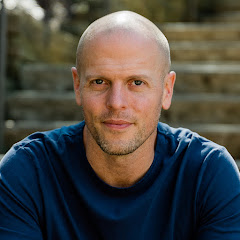 Tim Ferriss
Want to know something specific about what's covered?
We've already dissected every moment. Ask and we will deliver (with timestamps).
Key Moments
Naval Ravikant discusses AI, the gig economy, happiness, and building a meaningful life.
Key Insights
True general-purpose AI is still far off; current advancements are in specific AI applications.
The future of work is the gig economy, emphasizing independent branding and creative skills.
Happiness is an internal state cultivated through peace, understanding oneself, and managing desire.
Worldly success can hinder self-knowledge by inflating the ego.
Life's meaning is found in continuous growth, seeking truth, and accepting reality.
Developing good habits and breaking bad ones is a crucial life skill.
ARTIFICIAL INTELLIGENCE AND THE FUTURE OF WORK
Naval Ravikant believes that true general-purpose AI, the 'Skynet' kind, is still a distant prospect as fundamental breakthroughs are lacking. Current AI advancements are primarily in specific applications like computer vision and self-driving cars, which leverage massive data and processing power. He distinguishes this from the potential emergence of a 'social AI' from interconnected computer networks. For the job market, Ravikant predicts a shift towards a gig economy, where technology lowers transaction costs, enabling independent contractors to build personal brands and find work globally. This contrasts with the Industrial Revolution's need for large, hierarchical organizations.
BUILDING AN INDEPENDENT CAREER
To prepare for the future job market, Ravikant advises finding something you love to do and becoming exceptionally good at it. Building an independent brand around your name, focusing on creative work that can't be easily replicated, and becoming comfortable with fluctuating work periods are key. He suggests that independent journalists, bloggers, or content creators can build successful careers outside traditional corporate structures by leveraging online platforms to offer direct access and services to their audience.
THE PATH TO TRUE HAPPINESS
True happiness, according to Ravikant, stems from inner peace rather than external achievements or temporary pleasures. This peace is achieved through deep self-understanding, recognizing emotional reactions and attachments, and managing desires. He suggests that true happiness is the absence of suffering, cultivated by reducing judgment, desire, and reactive behavior. Simple daily practices like meditation, seeking positive interpretations, and acknowledging one's own happiness can incrementally improve one's state.
THE ROLE OF SELF-KNOWLEDGE AND WORLDLY SUCCESS
Worldly success, while having its biological imperatives, can paradoxically move one further away from the urge for self-knowledge. An inflated ego, fear of loss, and increased concern for others' opinions resulting from success can cloud introspection. Ravikant notes that for those seeking to understand themselves, material success can be a distraction. He emphasizes that true success is internal, even though external pursuits are necessary for biological and social functioning.
REDEFINING LIFE'S PURPOSE AND VALUES
Ravikant posits that the closest he can articulate to a life philosophy is continuous growth, seeking truth, and accepting reality as it is. He suggests avoiding rigid ideologies and belief systems that can lead to disappointment and conflict. Instead, the focus should be on living life fully, enjoying the present, and being in harmony with the world. He also highlights the importance of gratitude for what one has, suggesting that adversity can provide context and appreciation for life's simple necessities.
MASTERING HABITS AND TIME MANAGEMENT
Naval Ravikant emphasizes the profound power of habits, viewing humans as 'habit machines.' He advocates for consciously building good habits and breaking bad ones, suggesting that establishing a consistent daily routine, like exercise, can help eliminate other detrimental habits. He also stresses the critical importance of protecting one's time, which is finite. Strategies include being selective about commitments, saying 'no' to non-essential meetings, and ensuring unscheduled time for thinking, which is crucial for creativity and good decision-making. He uses the 'five chimps theory' to illustrate the importance of choosing one's social circle wisely.
LESSONS FROM INVESTING AND LIFE'S RANDOMNESS
Investing has taught Ravikant humility and the significant role of luck in outcomes, reinforcing the idea that 'nobody knows anything.' He advocates for establishing robust systems and processes rather than fixating on specific results. This systematic approach, he believes, can eventually separate signal from noise and lead to goals despite the inherent randomness of life. He notes that bad news often strikes suddenly, while good outcomes develop slowly over time, underscoring the need for patience and resilience.
EDUCATIONAL PRIORITIES AND PRACTICAL SKILLS
Ravikant suggests a shift in traditional education towards practical life skills. He proposes curricula focusing on happiness, nutrition, habit formation, financial literacy (e.g., running a small business), public speaking, and basic persuasion, over rote memorization of facts or extensive geographical or historical details. In an era of readily available information, the ability to learn is paramount. He also touches on the idea that recognizing the insignificance of individual existence in the vastness of the universe can alleviate the fear of death and encourage a more present-focused, less serious approach to life.
Mentioned in This Episode
●Products
●Software & Apps
●Companies
●Organizations
●Books
●Concepts
●People Referenced
Common Questions
Naval believes that true general-purpose AI is still far off as fundamental breakthroughs are missing. He sees more immediate potential in specific AI applications like computer vision and self-driving cars, but is not worried about a 'Skynet' scenario.
Topics
Mentioned in this video
A company that Epinions became a part of after going public.
Mentioned as an example of a platform for independent contractors.
Platform where top 10 questions for Naval Ravikant were submitted and upvoted.
A platform co-founded by Naval Ravikant, mentioned in relation to startup jobs.
A company Naval Ravikant has invested in.
A set-it-and-forget-it investing service using software, previously reserved for the ultra-wealthy, with features like tax-loss harvesting and rebalancing.
Acquired OpenDNS for $635 million.
A company Naval Ravikant has invested in.
An all-in-one nutritional supplement recommended by Tim Ferriss for optimal performance and nutritional insurance.
A company Naval Ravikant has invested in.
A company that Epinions became a part of after going public.
A company Naval Ravikant has invested in.
Mentioned as a platform where content creators can build independent brands and earn a living.
Mentioned as a platform for independent contractors to find jobs and as a source of distraction that can make people unhappy.
A company Naval Ravikant invested in, acquired by Cisco.
Mentioned as a company that employs technologists working on the Wealthfront investing service.
A company previously co-founded by Naval Ravikant, which went public as part of shopping.com and vast.com.
Mentioned as a platform that can make people unhappy due to social comparison and envy.
A book by Kamal Ravikant.
A science fiction book by Greg Egan that Naval is currently reading.
A book by Matt Ridley recommended by Naval.
A book by Richard Bach that Naval is rereading.
A book by Naval's brother, Kamal Ravikant, which Naval finished reading.
Mentioned as a religious text comparable in feel and truth to 'The Prophet'.
A book by Tim Ferriss where he recommended Athletic Greens.
A book by Matt Ridley recommended by Naval.
A book by Matt Ridley recommended by Naval.
A book by Nassim Nicholas Taleb.
A book about the science of habit formation and change, which Naval acknowledges as important.
A book by Julian Jaynes that Naval is reading.
A concise and incisive summary of historical themes by Will and Ariel Durant, recommended by a listener.
A collection of Richard Feynman's works that Naval is reading.
A book by Daniel Ingram that Naval highly recommends for those interested in Buddhism and meditation.
Referenced for the saying about a camel and the eye of a needle.
A book by Scott Adams that Naval found very interesting.
Tim Ferriss's notable book and website, mentioned for signing up for his 'Five Bullet Friday' email.
A book by Matt Ridley recommended by Naval.
A book by Jiddu Krishnamurti that Naval rereads often.
A philosophy book Naval is rereading.
A book by Matt Ridley recommended by Naval.
A book by Kamal Ravikant.
A collection of ancient wisdom by Nassim Taleb that Naval is reading.
A book by Nassim Nicholas Taleb.
A book by Adyashanti that Naval found very good.
A book Naval is reading.
A popular science fiction book that Naval found decent but a bit too long.
A book by Hunter S. Thompson that Naval started but found too drug-and-orgy focused.
Mentioned as a religious text comparable in feel and truth to 'The Prophet'.
A book by Alan Watts that Naval is reading.
A book by Kahlil Gibran that Naval found profound, beautiful, and non-denominational, comparing it to major religious texts.
Author of The Dao Philosophy, mentioned as someone Naval is reading.
A brilliant writer and physicist who writes hardcore science fiction.
Author of 'God's Debris' and books on succeeding without trying.
Author of 'Mastering the Core Teachings of the Buddha'.
Successful investor and business partner of Charlie Munger.
Co-author, with Ariel Durant, of 'The Lessons of History'.
Author of 'The Black Swan' and 'Fooled by Randomness', whose 'Aphorisms by Procrustes' Naval is reading.
The host of the podcast, who introduces the guests and poses questions.
Co-author, with Will Durant, of 'The Lessons of History'.
Author of 'Fear and Loathing in Las Vegas'.
Naval's brother, author of 'Love Yourself Like Your Life Depends On It' and 'Live Your Truth'.
Physicist whose works Naval has been rereading.
Mentioned for his 'Hell Yes or No' heuristic for deciding on commitments.
Warren Buffett's business partner, known for his wisdom on incentives and life advice.
Mysterious author whose works Naval has read and finds 'weird'.
CEO and co-founder of AngelList, investor, and guest on the podcast, discussing a wide range of topics from AI to happiness.
Author of 'The Prophet', praised for its poetic and philosophical insights on life.
Author of 'The Origin of Consciousness in the Breakdown of the Bicameral Mind'.
Author of 'The Power of Myth'.
Author specializing in evolutionary science, whose books like 'The Rational Optimist' and 'The Evolution of Everything' are recommended.
A coding academy where one can learn to code.
A coding academy where one can learn to code.
An accelerator incubator that helps immigrants start companies while retaining visa status.
Mentioned as a traditional employer that great journalists might not need to work for in the future gig economy.
More from Tim Ferriss
View all 699 summaries 77 min
The Many Benefits of Coca — The “Divine Leaf” with 8,000+ Years of Use
 100 min
Inside The AI Race: DeepMind, OpenAI, Anthropic, China, and The Race to Superintelligence
 108 min
The Path from The Soviet Union to Building Multi-Billion Dollar Companies — Max Levchin
 127 min
Reimagining Biotech with Jake Becraft of Strand Therapeutics — Tim’s Founder Kitchen
Ask anything from this episode.
Save it, chat with it, and connect it to Claude or ChatGPT. Get cited answers from the actual content — and build your own knowledge base of every podcast and video you care about.
Get Started Free