Key Moments
Naval Ravikant on Happiness, Anxiety, and More
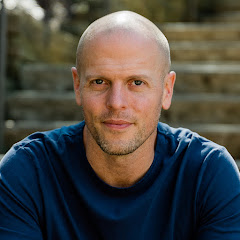 Tim Ferriss
Want to know something specific about what's covered?
We've already dissected every moment. Ask and we will deliver (with timestamps).
Key Moments
Naval Ravikant on happiness, wealth, self-awareness, and crypto.
Key Insights
True wealth creation is possible ethically and systematically, focusing on owning equity in businesses rather than trading time for money.
Happiness and effectiveness are amplified by reducing anxiety through self-examination, meditation, and philosophical reflection.
Mastery comes from deep understanding of fundamental principles rather than memorizing jargon or labels.
The core of effective living and success lies in choosing long-term strategies over short-term gratification.
Cryptocurrencies represent a significant technological innovation, offering a path to decentralized finance and a hedge against inflation, but come with inherent risks.
Self-awareness is a superpower that allows for clearer thinking, better decision-making, and more fulfilling relationships.
UNDERSTANDING SCIENCE AND KNOWLEDGE
Naval Ravikant uses Richard Feynman as a gateway to discuss the true nature of science, emphasizing falsifiability and doubt over consensus and political dogma. He distinguishes between 'knowing the name of something' and 'knowing something,' advocating for deep understanding of fundamental principles over rote memorization and jargon. This applies to all fields, including business and personal finance, where basic principles are more valuable than superficial knowledge.
THE PATH TO TRUE WEALTH
Ravikant defines wealth not as mere money, but as freedom—the ability to live life on one's own terms. He stresses that this is achievable through ethical wealth creation, primarily by owning equity in businesses, leveraging specific knowledge, and ensuring distribution. He critiques the 'renting out time' model and highlights the importance of productizing oneself and owning the resulting business or assets.
MANAGING ANXIETY AND CULTIVATING PEACE
Anxiety, a natural human trait rooted in our evolutionary past, can significantly hinder effectiveness. Ravikant suggests that reducing anxiety is a superpower, leading to increased clarity and capability. This is achieved not by suppressing it, but through self-examination, meditation, and philosophical reflection, which help uncover and resolve the unexamined thoughts and unresolved issues that fuel anxiety.
THE PRACTICE OF SELF-EXAMINATION
Beyond traditional meditation, Ravikant advocates for self-examination through reading philosophy, observing one's thoughts without judgment, and dedicated periods of sitting meditation (ideally 60 minutes daily). The goal is to achieve mental clarity, process unresolved issues, and foster a deep sense of inner peace and self-containment, independent of external validation or pleasure.
NAVIGATING THE WORLD OF CRYPTOCURRENCIES
Cryptocurrencies are presented as a revolutionary technology enabling decentralized finance and offering a hedge against inflation and state control of wealth. Bitcoin is discussed as a potential digital gold, though volatile. Stablecoins aim to mitigate volatility but introduce risks like fraud, censorship, or blow-up. While complex, crypto offers sovereignty and a new financial frontier.
THE POWER OF LONG-TERM THINKING
Success in all aspects of life—finances, health, relationships—boils down to consistently choosing the long-term over the short-term. This requires discipline to resist immediate gratification (cheap dopamine) and focus on sustainable growth. 'Easy choices, hard life; hard choices, easy life,' encapsulates this principle, emphasizing that true rewards come from deliberate, long-term investments.
CHOOSING YOUR GAMES AND KNOWING WHEN TO QUIT
Life is a series of games, from social interactions to wealth creation. The key to peace and freedom is to play these games consciously, win them, and then know when to stop playing or move on. The alternative is to remain trapped in an endless cycle of striving and anxiety. Embracing self-awareness and recognizing the limitations of external pursuits leads to genuine contentment.
THE SUPREMACY OF SELF-AWARENESS
The most attractive quality in people, Ravikant observes, is high self-awareness. This allows individuals to detach from their thoughts and emotions, avoid victimhood, and operate effectively without being overwhelmed. It's about understanding oneself deeply, including one's own biases and potential to self-deceive, which is crucial for navigating reality effectively and living a more fulfilling life.
Mentioned in This Episode
●Products
●Software & Apps
●Companies
●Books
●Concepts
●People Referenced
Common Questions
Naval avers that he doesn't believe in sequels, suggesting that repeat appearances often fall short of original content, becoming long-winded or repetitive. He made an exception for Tim Ferriss due to their long-standing friendship and Tim's early support in promoting Naval.
Topics
Mentioned in this video
An American investor, businessman, and vice chairman of Berkshire Hathaway, mentioned alongside Warren Buffett as a long-term wealth creator.
A spiritual teacher and author known for his direct and uncompromising approach to truth. His book 'Direct Truth' is recommended.
A prominent entrepreneur who seemingly enjoys playing the 'game' of wealth creation, distinguishing him from those who become miserable by continuously chasing more.
A Roman Stoic philosopher and dramatist. His 'Moral Letters to Lucilius' are recommended as a source of timeless wisdom.
The CEO of MicroStrategy, noted for his strong belief in Bitcoin and his company's large investment in it, converting half of its treasury into Bitcoin.
Co-founder and chairman of AngelList, angel investor in over 100 companies, podcaster, and philosopher; known for his views on wealth and happiness.
A Nobel laureate in Physics, pioneer in quantum electrodynamics, and part of the Manhattan Project. Known for his unconventional personality and books like 'Surely You're Joking, Mr. Feynman!'.
An essayist and scholar, known for his work on randomness, probability, and uncertainty, often critical of social sciences.
An American investor and business magnate, cited as an example of someone who successfully created wealth in a systematic way through long-term thinking.
A computer scientist, legal scholar, and cryptographer known for his pioneering research in digital contracts and cryptocurrency, considered a genius and pioneer in the crypto space.
An influential philosopher of science, known for his concept of falsifiability as a criterion for scientific theories.
A German philosopher known for his pessimistic philosophy and insights on human will and suffering. His 'Councils and Maxims' is recommended for self-reflection.
An Indian philosopher and speaker on philosophical and spiritual subjects. His books 'Think on These Things' and 'The Book of Life' are mentioned for self-reflection, though his work can be challenging.
A Jesuit priest and psychotherapist known for his spiritual books. 'Way to Love' and 'Awareness' are highly recommended for self-examination.
A physicist and proponent of Karl Popper's philosophy, emphasizing falsifiability as the hallmark of true science.
A legendary Japanese sword-master and ronin, whose calm demeanor in duels is used to illustrate the superpower of stillness and tranquility.
Author of 'The Untethered Soul,' whose 'crazy roommate' analogy for the mind is highlighted by Naval.
A spiritual teacher known for his advaita Vedanta teachings, focused on the nature of consciousness and non-duality.
A prominent hedge fund manager whose investment in Bitcoin was a significant signal for institutional adoption, strengthening the 'story' of Bitcoin as a store of value.
Author of 'Finite and Infinite Games,' whose work is recommended for understanding the nature of different 'games' in life.
Author of 'The Almanack of Naval Ravikant,' a compilation of Naval's wisdom and sayings, which is freely available online.
A book by Michael A. Singer that discusses the nature of consciousness and the inner voice, influencing Naval's perspective on self-awareness.
A novel by Hermann Hesse that deals with the spiritual journey of self-discovery, mentioned as a philosophical reading for inspiration.
A book compiled by Eric Jorgenson, which collects Naval Ravikant's wisdom on wealth and happiness, freely available online.
A collection of 124 letters written by Seneca the Younger to his friend Lucilius Junior, offering timeless Stoic philosophy and practical advice.
A book by Kapil Gupta, praised for its direct and hard-hitting approach to truth and self-reflection.
A book by Richard Feynman, exploring themes of intellectual honesty and indifference to external opinions.
A philosophical book by James P. Carse that distinguishes between two types of games: finite games that are played to win, and infinite games that are played to continue playing.
A classic Chinese text traditionally credited to the ancient Chinese philosopher Laozi, referenced as a source of philosophical wisdom.
An anecdotal memoir by Richard Feynman, reflecting his playful and philosophical approach to life and science.
A collection of philosophical reflections by Arthur Schopenhauer, recommended by Naval for inspiring self-reflection.
An ancient Indian scripture that forms part of the Hindu epic Mahabharata, discussed as a source of ancient wisdom.
A platform for buying and selling cryptocurrencies, which Naval helped start, and is mentioned as a place to acquire crypto assets and potentially use as a custodian.
A cryptocurrency exchange, whose stablecoin USDC is mentioned with regard to censorship risk, and as a platform for buying crypto.
A large institutional crypto custodian, recommended for public figures or those who need secure third-party storage for their crypto assets.
A company offering secure digital asset storage and financial services for institutional investors, mentioned as a suitable custodian for crypto.
A ride-sharing and food delivery company, cited as one of Naval's successful investments and an example of technology changing regulated spaces.
A food delivery service, mentioned as one of Naval's successful investments and an example of technology facing regulatory challenges.
A business intelligence firm that notably adopted Bitcoin as its primary treasury reserve asset, influenced by CEO Michael Saylor.
A social networking service mentioned as a mega-success company Naval invested in, and also as Naval's primary platform for sharing thoughts.
An online real estate company, listed as one of Naval's successful investments.
An audio streaming service, mentioned as a platform where Naval's podcast is available.
An automated investment service (robo-advising) that helps diversify portfolios, minimize fees, and lower taxes for long-term investors.
A smart home gym and personal trainer offering up to 200 pounds of digital resistance and a library of expert-led workouts using AI to personalize programs.
A US website for startups, angel investors, and job-seekers looking to work at startups.
An e-commerce platform, listed as one of Naval's successful investments.
The first decentralized cryptocurrency, considered by Naval as potential digital gold or a new Swiss banking system due to its sovereign-resistant and trustless nature.
A stablecoin pegged to the US dollar, discussed in the context of fraud risk due to questions about its underlying dollar reserves.
A decentralized, open-source blockchain with smart contract functionality, mentioned as an up-and-coming competitor to Bitcoin and used as collateral for stablecoins.
Nick Szabo's blog, highly recommended by Naval for insights into the cryptocurrency space.
A Western film starring Clint Eastwood, where a calm gunfighter's unflinching demeanor is shown as key to victory.
A science fiction film franchise where the Terminator robot's implacable, emotionless pursuit exemplifies the effectiveness of being calm and unstoppable.
An algorithmic stablecoin collateralized by other cryptocurrencies like Bitcoin and Ethereum, discussed in terms of 'blow-up risk' if collateral values fluctuate too much.
A cryptocurrency aimed at using cryptography to provide enhanced privacy for its users, mentioned as a privacy coin.
A privacy-focused cryptocurrency that uses advanced cryptography to obscure transaction details, mentioned as a privacy coin.
An e-commerce shipping solution that helps online sellers manage and ship orders, print discounted labels, and work with major carriers.
A productivity and note-taking web application, mentioned as an investment by Naval.
A language model that generates plausible text but lacks true underlying understanding, used as an example of AI's current limitations.
A philosophical principle stating that among competing hypotheses, the one with the fewest assumptions should be selected.
A mathematical method for inductive inference that combines Occam's Razor with probability theory to choose the shortest correct answer or theory.
More from Tim Ferriss
View all 704 summaries 121 min
How to Legalize Medical Psychedelics in Your Country — Tania de Jong on Australia’s Breakthrough
 70 min
Q&A with Tim — The Art of Male Friendship, Reinvention in The Age of AI, & More
 125 min
Dr. Andrew Huberman — Peptides, Performance, and Protocols
 112 min
The Random Show! Mortality, AI, Supplements, Rock Climbing, & More
Ask anything from this episode.
Save it, chat with it, and connect it to Claude or ChatGPT. Get cited answers from the actual content — and build your own knowledge base of every podcast and video you care about.
Get Started Free