Key Moments
My Workout with KneesOverToesGuy!
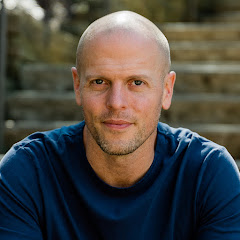 Tim Ferriss
Want to know something specific about what's covered?
We've already dissected every moment. Ask and we will deliver (with timestamps).
Key Moments
KneesOverToesGuy shares workout secrets for joint health and strength, focusing on sleds, ground-up exercises, and mobility.
Key Insights
Backward sled dragging is a low-impact way to load the legs, improve cardio, and rehab injuries without bearing direct weight.
Training the front shin (tibialis anterior) and calf muscles is crucial for overall leg health, especially for those with knee issues or tight calves.
Combining strength and flexibility through exercises like the split squat, with variations for progression, is key for joint health and injury prevention, particularly for the lower back.
Footwear and heel elevation in squats can be adjusted based on individual mobility and comfort, with the goal of strengthening hips and knees safely.
Maintaining core tension and controlled movements, even in rounded positions, is vital for protecting the lower back during exercises.
Accessible training methods, like using bodyweight, everyday objects, or affordable equipment, are emphasized to make joint-strengthening exercises reachable for everyone.
THE POWER OF RESISTED MOVEMENT: FORWARD AND BACKWARD SLEDDING
The session begins with an introduction to resisted sled dragging, a technique inspired by Finnish powerlifters and popularized by Louis Simmons for rehabilitation. This method involves walking or dragging a sled forward and backward. The key benefit highlighted is that the load isn't directly bearing down on the body, making it a safer, cardio-effective way to load the legs. It's particularly useful for individuals recovering from injuries, as it allows for controlled, low-impact movement that strengthens muscles without exacerbating pain, offering a unique way to train downhill strength without the harsh impact of running down hills.
GROUND-UP STRENGTH: FOCUSING ON SHINS AND CALVES
The training philosophy extends to building strength from the ground up, starting with exercises for the front shin muscles (tibialis anterior) and calves. Movements like simply lifting the toes while keeping the legs straight, or variations that involve moving the foot towards the big or pinky toe, are demonstrated. These exercises are crucial for addressing issues like tight shin muscles or compartment syndrome, often overlooked in conventional training. Even a single set performed to the point of burnout can significantly improve leg resilience and address imbalances that may contribute to knee and ankle pain.
INTEGRATING STRENGTH AND FLEXIBILITY: THE SPLIT SQUAT
A cornerstone of the workout is the split squat, which uniquely blends strength training with flexibility. By focusing on a deep range of motion, particularly with the back knee hovering near the ground, it actively stretches and strengthens the working leg and hip. This exercise is presented as a powerful tool for improving lower back health, as it encourages proper form and load distribution, helping to alleviate pain often associated with sedentary lifestyles or traditional squatting mechanics. Modifications, such as elevating the front foot or using support, allow for regressions to accommodate varying levels of mobility.
ADAPTING EXERCISES: FOOTWEAR AND RANGE OF MOTION
The discussion addresses practical considerations like footwear and how much range of motion is appropriate. Elevated heels in footwear can assist in achieving deeper squat positions, especially for those with ankle restrictions, though it does shift more pressure towards the knee. The emphasis is on finding a comfortable and effective range of motion for each individual, rather than adhering to rigid standards. Even with limitations like ankle stiffness, the intent to move and stretch is emphasized as beneficial, promoting gradual improvement and preventing injury by working within pain-free limits.
LOWER BACK PROTECTION AND HIP MOBILITY
Specific attention is given to protecting the lower back through exercises that improve hip and inner thigh flexibility, counteracting the effects of prolonged sitting. Exercises like a modified seated deadlift (often called a Jefferson curl variation) are highlighted for their ability to build resilience by training the body to move out of rounded positions safely. The focus is on controlled movements and appropriate loading, ensuring that strength and mobility work together to create a more robust and pain-free physique, especially for those predisposed to back issues.
ACCESSIBLE TRAINING AND PROGRESSION PRINCIPLES
Throughout the session, KneesOvertoesGuy stresses the importance of making effective training accessible. This includes using simple, affordable equipment like his own resisted units or even bodyweight exercises where individuals can act as resistance. The philosophy centers on finding regressions and progressions that suit individual needs, emphasizing long-term gains over quick fixes. The core idea is to build resilience by safely challenging the body in positions that mimic athletic endeavors, ultimately aiming to reduce fear and foster confidence in movement.
Mentioned in This Episode
●Products
●Organizations
●Concepts
Knees Over Toes Guy's Workout Principles:
Practical takeaways from this episode
Do This
Avoid This
Common Questions
Sled dragging, both forwards and backwards, is a way to load the legs and perform cardio without direct impact. It can improve quad strength, and backward sledding is particularly helpful for knee rehabilitation and ditching painkillers. It also engages the core and glutes without bothering sensitive low backs.
Topics
Mentioned in this video
Machines that provide resistance for walking or running backwards, seen as cheaper to make than conventional treadmills.
A type of sled that the speaker finds too large to fit in his current space in Austin.
Footwear with an elevated heel, mentioned as a way to work around limitations and aid in squatting.
More from Tim Ferriss
View all 698 summaries 100 min
Inside The AI Race: DeepMind, OpenAI, Anthropic, China, and The Race to Superintelligence
 108 min
The Path from The Soviet Union to Building Multi-Billion Dollar Companies — Max Levchin
 127 min
Reimagining Biotech with Jake Becraft of Strand Therapeutics — Tim’s Founder Kitchen
 132 min
Reversing Type 2 Diabetes and Rowing 2,750 Miles — Sami Inkinen of Virta Health
Ask anything from this episode.
Save it, chat with it, and connect it to Claude or ChatGPT. Get cited answers from the actual content — and build your own knowledge base of every podcast and video you care about.
Get Started Free