Key Moments
MIT 6.S094: Deep Reinforcement Learning for Motion Planning
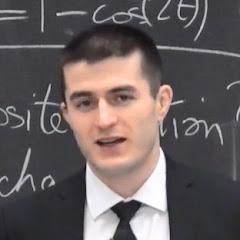 Lex Fridman
Want to know something specific about what's covered?
We've already dissected every moment. Ask and we will deliver (with timestamps).
Key Moments
Deep RL explained: from neurons to Q-learning and DeepTraffic simulation for motion planning.
Key Insights
Machine learning categorizes into supervised, unsupervised, and reinforcement learning, with RL bridging the gap by learning from delayed rewards in an environment.
Neurons (perceptrons) are the building blocks of neural networks, capable of logical operations like NAND gates, with activation functions enabling smooth learning.
Reinforcement learning involves an agent interacting with an environment, taking actions, receiving rewards, and aiming to maximize cumulative future rewards, often modeled as a Markov Decision Process.
Q-learning is a key RL algorithm that learns an optimal policy by estimating a Q-function, which predicts the value of taking an action in a given state, through exploration and exploitation.
Deep Q-learning (DQN) uses deep neural networks to approximate the Q-function, enabling learning from complex, high-dimensional inputs like raw pixels, as demonstrated by DeepMind's Atari game playing.
The DeepTraffic simulation provides a practical, browser-based platform for students to apply deep reinforcement learning to motion planning, challenging them to optimize driving speed on a simulated highway.
TYPES OF MACHINE LEARNING AND REINFORCEMENT LEARNING'S PLACE
The lecture begins by distinguishing between supervised learning, which requires labeled input-output data, and unsupervised learning, which seeks patterns in unlabeled data. Semi-supervised learning uses a small amount of labeled data. Reinforcement learning (RL) is presented as a unique paradigm where an agent learns in an environment by taking actions and receiving occasional, time-delayed rewards or punishments. This trial-and-error process, akin to human learning, forms the core of RL, treating rewards as the only form of ground truth available in an uncertain world.
NEURONS AND THE FOUNDATION OF NEURAL NETWORKS
At the heart of machine learning, especially neural networks, is the neuron (or perceptron). A perceptron takes weighted inputs, adds a bias, and applies a threshold to produce an output. While simple perceptrons use binary outputs, modern neural networks employ smooth activation functions, like sigmoid, to allow for gradual changes in output as weights are adjusted. This smoothness is crucial for effective training via backpropagation, enabling neural networks to learn complex mappings from inputs to desired outputs, much like a complex circuit of interconnected neurons.
REINFORCEMENT LEARNING: AGENT, ENVIRONMENT, AND REWARDS
Reinforcement learning models an agent's interaction with an environment. The agent observes the environment's state, selects an action, and receives a reward and a new state. This process is often framed as a Markov Decision Process (MDP), where the current state encapsulates all relevant information and future states depend only on the current state and action. The agent's goal is to learn a policy that maximizes the cumulative discounted future reward, balancing immediate gains with long-term benefits.
Q-LEARNING AND DEEP Q-NETWORKS (DQN)
Q-learning is a fundamental RL algorithm that learns an action-value function (Q-function) representing the expected future reward for taking a specific action in a given state. The Q-function is updated iteratively using the Bellman equation. Deep Q-learning (DQN) extends this by using deep neural networks to approximate the Q-function, allowing it to handle high-dimensional state spaces like raw pixel inputs from games. This approach, famously demonstrated by DeepMind playing Atari games, learns complex behaviors from experience without manual feature engineering.
MODELING THE WORLD AND THE ROLE OF REPRESENTATION
A critical aspect of RL is how the environment is modeled. Handcrafting an environment model can be complex and brittle. DQN bypasses this by learning directly from raw sensory input (e.g., pixels), treating the input as the state representation. This learned representation allows the agent to generalize across states. However, the effectiveness and robustness of such models, especially when transferring to real-world scenarios like driving, remain an active area of research, particularly concerning the influence of reward function design and environmental variations.
DEEPTRAFFIC: RL FOR MOTION PLANNING IN A SIMULATION
The lecture introduces the DeepTraffic simulation as a practical application of deep reinforcement learning for motion planning. In this browser-based game, an agent controls a car on a multi-lane highway, aiming to maximize average speed. The state is represented by a discretized grid of the environment, and the agent learns to choose one of five actions (left, right, accelerate, slow down, stay). Features like configurable perception (visible lanes, ahead/behind patches) and a safety system guide the learning process, offering students a hands-on experience in building and submitting their own RL-driven driving agents.
TRAINING AND COMPETITION IN DEEPTRAFFIC
DeepTraffic leverages web workers for efficient, near real-time training directly in the browser. Students customize network architectures and parameters, then initiate training. The simulation performs evaluation runs to score the agent's performance based on median speed over multiple trials. Submitting a trained model places it on a leaderboard, encouraging competition. The tutorial provides detailed steps, emphasizing that the true value lies in applying RL principles, like exploration-exploitation with an epsilon-greedy policy, to a realistic motion planning task.
THE POWER OF EXPERIENCE REPLAY AND DISTRIBUTED LEARNING
To combat instability and local optima in DQN training, techniques like experience replay are employed. This involves storing past experiences (state, action, reward, next state) in a memory buffer and sampling from it to train the network, breaking temporal correlations. Distributed architectures, such as Gorilla, further scale RL by enabling distributed simulation and learning, accelerating the training process and allowing models to learn from vast amounts of generated experiences, as seen in AlphaGo's approach of combining expert data with self-play.
CHALLENGES AND FUTURE DIRECTIONS IN DRIVING APPLICATIONS
While RL has shown remarkable success in games like Atari and Go, applying it to complex real-world domains like autonomous driving presents unique challenges. The difficulty lies in formalizing the reward function, ensuring safety, and achieving robust generalization across diverse driving conditions. The DeepTraffic example, while simplified, demonstrates a step towards tackling these issues by providing a controlled environment where RL agents can learn motion planning strategies, paving the way for more sophisticated autonomous driving systems.
Mentioned in This Episode
●Software & Apps
●Companies
●Concepts
●People Referenced
Common Questions
Supervised learning uses labeled data to learn input-output mappings. Unsupervised learning finds patterns in unlabeled data. Reinforcement learning involves an agent learning through trial and error, receiving rewards or punishments from an environment.
Topics
Mentioned in this video
A type of machine learning where the algorithm finds underlying structure and representations in data without known outputs or ground truth.
A type of machine learning algorithm, inspired by the brain, that has proven highly successful and forms the core of many AI applications.
Functions used in neural networks that introduce non-linearity and smoothness, allowing for gradual changes in output as weights and biases are adjusted during training.
A type of machine learning that requires a dataset with known inputs and outputs (ground truth) to learn a mapping function.
A type of machine learning where an agent learns by interacting with an environment, receiving rewards or punishments for its actions, without explicit ground truth for every step.
A type of neural network with memory that can retain information about the temporal dynamics of data, but is often more difficult to train.
A mathematical framework for modeling decision-making in situations where outcomes are partly random and partly under the control of a decision-maker, commonly used in reinforcement learning.
A core equation in dynamic programming and reinforcement learning used to find optimal policies by relating the value of a state or state-action pair to the values of subsequent states.
An extension of Q-learning that uses deep neural networks to approximate the Q-function, enabling it to handle high-dimensional state spaces like raw pixels from games.
A type of machine learning where only a small fraction of the data has labeled ground truth, sitting between supervised and unsupervised learning.
A type of neural network where information flows in one direction, from input to output, without loops.
A logical operation that can be used as a universal building block to construct any computer circuit, demonstrating the foundational computational power of simple logic gates.
An off-policy reinforcement learning algorithm that learns to approximate an optimal policy by estimating the Q-value (quality) of state-action pairs through experience.
A type of deep neural network, particularly effective for processing grid-like data such as images, used in the DeepMind Atari paper.
A large dataset of labeled images used for training and evaluating machine learning models, particularly for image recognition tasks.
An open-source machine learning framework mentioned in the context of implementing the squared error loss function.
A social news website focusing on computer science and entrepreneurship, mentioned as a platform where the Deep Traffic project gained publicity.
A library used for visualizing network inputs and outputs within the Deep Traffic project, including neurons and regression layers.
The JavaScript engine that enables high performance for JavaScript execution in modern browsers, allowing for efficient training of neural networks client-side.
A deep reinforcement learning project/codebase for solving traffic problems, used in the context of a competition and tutorial.
A distributed reinforcement learning architecture developed by DeepMind, capable of running simulations and learning in a distributed manner.
The original, simple type of artificial neuron with binary output, forming the basic computational building block of early neural networks.
A technique used in deep reinforcement learning where past experiences (transitions) are stored and randomly sampled for training, helping to break correlations and improve stability.
DeepMind's AI program that famously defeated the world champion in the game of Go, showcasing the power of deep reinforcement learning.
A code editor mentioned for its convenience and auto-completion features, useful for developing and modifying the neural network configurations in the Deep Traffic project.
A technology used for rendering graphics and visualizations within the browser for the Deep Traffic game and simulation.
A web API that allows JavaScript to run in background threads, enabling parallel processing for tasks like visualization and neural network training without blocking the main thread.
More from Lex Fridman
View all 550 summaries 174 min
Biggest Mysteries in Physics: Antimatter, Dark Energy & ToE - Don Lincoln | Lex Fridman Podcast #497
 259 min
FFmpeg: The Incredible Technology Behind Video on the Internet | Lex Fridman Podcast #496
 124 min
Vikings, Ragnar, Berserkers, Valhalla & the Warriors of the Viking Age | Lex Fridman Podcast #495
 146 min
Jensen Huang: NVIDIA - The $4 Trillion Company & the AI Revolution | Lex Fridman Podcast #494
Ask anything from this episode.
Save it, chat with it, and connect it to Claude or ChatGPT. Get cited answers from the actual content — and build your own knowledge base of every podcast and video you care about.
Get Started Free