Key Moments
MIT 6.S094: Deep Learning
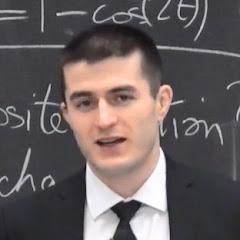 Lex Fridman
Want to know something specific about what's covered?
We've already dissected every moment. Ask and we will deliver (with timestamps).
Key Moments
Introduction to Deep Learning for Self-Driving Cars: Theory, applications, and course competitions.
Key Insights
Deep learning excels at representation learning, transforming complex raw data into actionable insights.
Self-driving cars represent a profound integration of personal robots with critical life-safety implications.
While neural networks are inspired by the brain, significant topological and functional differences exist.
Deep learning's effectiveness is amplified by large datasets, computational power (GPUs), and robust software frameworks.
Current deep learning models struggle with generalizing across diverse domains and reasoning like humans, especially with edge cases.
The course emphasizes a human-centered AI approach, focusing on driver state sensing and trust in autonomous systems.
COURSE OVERVIEW AND COMPETITIONS
Lex Fridman introduces MIT's 6.S094 course on Deep Learning for Self-Driving Cars, highlighting the synergy between advanced AI techniques and autonomous vehicle technology. The course features three main competitions: Deep Traffic (multi-agent reinforcement learning for controlling multiple cars), Seg Fuse (dynamic driving scene segmentation focusing on temporal dynamics), and Deep Crash (reinforcement learning for simulating car crashes to learn from failures). These competitions, along with guest lectures from industry leaders, aim to provide hands-on experience with cutting-edge AI challenges.
THE SIGNIFICANCE OF SELF-DRIVING CARS
Self-driving cars are presented not just as technological advancements but as a profound integration of personal robots into society, impacting transportation and human-robot interaction. The intimate connection between human and vehicle control, where lives are entrusted to AI, necessitates a focus beyond mere perception and control. This course advocates for a human-centered AI approach, emphasizing the need for autonomous systems to perceive, communicate, and build trust with human occupants and other road users.
DEEP LEARNING AS REPRESENTATION LEARNING
Deep learning is defined as a set of techniques focused on representation learning or feature learning, enabling AI systems to transform raw, complex data into simple, useful, and actionable information. It achieves this by constructing hierarchical representations, moving from basic features like edges to more complex object parts and finally to semantic classification. This ability to learn meaningful representations from data, whether supervised or unsupervised, is crucial for tackling intricate real-world problems where data is abundant.
ARTIFICIAL NEURAL NETWORKS VS. BIOLOGICAL BRAINS
Artificial neural networks, while loosely inspired by biological neural networks, exhibit significant differences. Human brains possess massive scale (billions of neurons, trillions of synapses) and complex, asynchronous, layered topologies. In contrast, artificial neural networks are typically layered, synchronous, and have a simpler structure, with backpropagation being the primary learning algorithm. Despite these differences, the emergent computational power from connected simple units is a key shared characteristic.
APPROACHES AND CHALLENGES IN DEEP LEARNING
The course explores various deep learning approaches, including supervised learning, which relies heavily on human-annotated data, and touches upon semi-supervised, reinforcement, and unsupervised learning as future frontiers. Key challenges include overfitting, where models perform well on training data but poorly on unseen data, and the need for regularization techniques like dropout and weight decay. The inherent difficulty in creating robust reward functions for reinforcement learning and the lack of transparency in black-box models are also highlighted.
ADVANCEMENTS AND LIMITATIONS IN DEEP LEARNING
Recent decades have seen a resurgence in neural network dominance due to increased computational power (GPUs), vast datasets (e.g., ImageNet), research breakthroughs in architectures like CNNs and LSTMs, and improved software frameworks. While deep learning excels at tasks like object classification, achieving human-level performance, it struggles with generalizing across diverse domains and robustly handling 'edge cases' – the rare but critical situations encountered in real-world applications like self-driving. The need for human oversight in architecture design and hyperparameter tuning remains.
THE ROLE OF DATA AND PERCEPTION
The effectiveness of deep learning is strongly correlated with the availability of large, diverse datasets, particularly for perception tasks. Variations in illumination, pose, and intra-class differences pose significant challenges for computer vision systems. While current models can achieve high confidence in classification, they can be easily fooled by minor perturbations, underscoring the gap between their data-driven pattern recognition and human-level reasoning and understanding. This highlights the importance of continued research into more robust and generalizable AI.
FUTURE DIRECTIONS AND OPEN RESEARCH PROBLEMS
The course aims to address open research problems in areas such as semantic segmentation for external perception, vehicle control in complex scenarios (Deep Traffic, Deep Crash), and driver state perception. Future deep learning models need to overcome limitations in transfer learning across dissimilar domains, improve reasoning capabilities, reduce reliance on massive supervised datasets, and enhance transparency. These advancements are crucial for developing truly reliable and trustworthy autonomous systems.
Mentioned in This Episode
●Products
●Software & Apps
●Companies
●Organizations
●Concepts
●People Referenced
Common Questions
The course aims to cover deep learning techniques and their application in self-driving cars, focusing on integrating AI into daily life to transform society.
Topics
Mentioned in this video
Mentioned as a company guest speaker and for its Autopilot system regarding transfer of control in self-driving cars.
Partnered with Aurora and also provides GPUs which have significantly contributed to deep learning advancements.
Not explicitly mentioned, but the discussion of AI and deep learning implicitly relates to the field where OpenAI operates.
Mentioned as a sponsor or partner for the course.
Mentioned as a company guest speaker and as a financial backer of deep learning research.
Mentioned as a company that provides significant financial backing for deep learning research.
An autonomous vehicle company, acquired by Delphi, where Amelia Rizzoli is CTO.
A platform where code, including the 'Deep Tesla' project, is hosted.
A robotics company whose representative, Mark Ryberg, is mentioned as a speaker for the AGI course.
A company making significant strides in fully autonomous vehicles, with its Director of Engineering set to be a guest speaker.
The lecturer and host of the course, who introduces the topics of deep learning and self-driving cars.
Associated with Tesla and its Autopilot system. His name is not explicitly mentioned, but Tesla's Autopilot is.
Author of a book from which an example of representation learning in deep learning is cited.
Mentioned as a speaker for the Artificial General Intelligence course.
Mentioned as a speaker for the Artificial General Intelligence course, formerly from Tesla.
A popular deep learning framework mentioned in the context of software infrastructure for training neural networks.
A solution to the 'dying ReLU' problem in activation functions, offering a way to mitigate learning rate issues.
An advancement of AlphaGo that learned to play Go by playing against itself, surpassing previous versions trained on human data.
An AI system developed for poker, mentioned as an example of AI achieving superhuman performance in complex games.
An autonomous vehicle startup where Oliver Cameron is CEO, previously director at Audacity.
A specific GAN-based model used to generate high-definition photorealistic images from semantic segmentation labels.
A new version of a competition platform for deep reinforcement learning, likely used for self-driving car simulations.
Used as a method for initial image collection for the ImageNet dataset.
A deep learning framework mentioned alongside TensorFlow for building neural networks.
Previous employer of Oliver Cameron, where he directed the self-driving car program.
A crowdsourcing platform used for human annotation, mentioned in the context of the ImageNet dataset labeling process.
An AI system that achieved a major milestone by defeating a top human Go player and later beat itself through self-play (AlphaGo Zero).
Acquired Metonymy, an autonomous vehicle company.
A neural network architecture that, in 2015, was the first to exceed human-level performance on the ImageNet challenge.
A pioneering deep learning network that achieved a significant performance leap on the ImageNet challenge in 2012, trained on GPUs.
More from Lex Fridman
View all 550 summaries 174 min
Biggest Mysteries in Physics: Antimatter, Dark Energy & ToE - Don Lincoln | Lex Fridman Podcast #497
 259 min
FFmpeg: The Incredible Technology Behind Video on the Internet | Lex Fridman Podcast #496
 124 min
Vikings, Ragnar, Berserkers, Valhalla & the Warriors of the Viking Age | Lex Fridman Podcast #495
 146 min
Jensen Huang: NVIDIA - The $4 Trillion Company & the AI Revolution | Lex Fridman Podcast #494
Ask anything from this episode.
Save it, chat with it, and connect it to Claude or ChatGPT. Get cited answers from the actual content — and build your own knowledge base of every podcast and video you care about.
Get Started Free