Key Moments
Kevin Scott: Microsoft CTO | Lex Fridman Podcast #30
 Lex Fridman
Key Moments
Microsoft CTO Kevin Scott discusses AI, mixed reality, and data dignity.
Key Insights
Microsoft's broad product portfolio spans cloud, software, hardware, research, and gaming.
Radical markets research explores new market-based mechanisms to address capitalism's challenges.
AI is viewed as a platform for innovation, democratizing its use for broader societal benefit.
Data dignity explores valuing individual data contributions to AI systems.
Mixed reality and quantum computing are seen as potential future computing platforms.
AI is being integrated subtly across Microsoft products to enhance user experience.
Ethical considerations for AI, including face recognition and deepfakes, require regulation and democratic input.
The future of computing involves AI-driven productivity, enhanced collaboration, and solving major global challenges.
Leading large engineering teams requires foresight in infrastructure, development processes, and a clear, unifying mission.
Hopeful optimism about technology's potential to solve societal problems is crucial for progress.
MICROSOFT'S BROAD AND DIVERSE PRODUCT PORTFOLIO
Microsoft operates across an extensive range of sectors, encompassing a significant cloud business, foundational productivity software, operating systems, and hardware. The company's research arm delves into diverse fields like economics, with concepts such as radical markets, and extends to human-computer interaction and artificial intelligence. Additionally, Microsoft's reach includes major platforms like GitHub and LinkedIn, alongside search advertising, news, and gaming, showcasing a comprehensive technological footprint.
EXPLORING RADICAL MARKETS AND ECONOMIC MECHANISMS
Microsoft's research division engages with intriguing economic theories, such as 'radical markets.' This concept questions whether current market-based mechanisms sufficiently distribute benefits equitably across society. It proposes exploring alternative, potentially provocative, market designs, like allowing assets such as real estate to be bid away from current owners. The aim is to create systems where asset pricing more accurately reflects their true economic utility, potentially mitigating rent-seeking behaviors and improving taxation.
AI AS A PLATFORM FOR DEMOCRATIZED INNOVATION
Kevin Scott views AI not merely as a tool but as a crucial platform, drawing parallels to Microsoft's historical success. The goal is to foster an environment where individuals and businesses can build upon AI, generating more value than the platform owners themselves. This approach counters the risk of AI development being concentrated in a few hands, advocating for widespread access to empower millions to innovate and solve problems, much like the democratizing effect of the steam engine over time.
DATA DIGNITY AND THE ECONOMICS OF INFORMATION
In collaboration with researchers like Jaron Lanier, Microsoft is exploring 'data dignity' or 'data as labor.' This initiative seeks to establish transparent marketplaces for valuing data contributions, which are the raw material for AI. Recognizing that users contribute data both explicitly (e.g., LinkedIn profiles) and implicitly through daily interactions, the project aims to create mechanisms for individuals to potentially earn from their data, addressing the current opaqueness in how data value is aggregated and utilized.
EVOLUTION OF MICROSOFT'S MISSION AND PLATFORMS
Since its early days of putting a PC on every desk, Microsoft's mission has evolved to empowering every individual and organization globally. This shift is driven by the ubiquity of technology and the development of hyper-scale cloud infrastructure and AI. The current focus is on broader enablement, utilizing platforms like Azure and AI infrastructure to help businesses automate processes and grow, reflecting a more comprehensive vision in a world where technology is a fundamental aspect of life.
MIXED REALITY AND QUANTUM COMPUTING AS FUTURE FRONTIERS
Beyond AI, Microsoft identifies mixed reality and quantum computing as significant potential future computing platforms. Mixed reality, exemplified by HoloLens, is already finding practical applications, particularly as a computing device for frontline workers in fields like maintenance and logistics who traditionally lacked such tools. This technology offers substantial productivity gains, akin to the impact of personal computers on office workers years ago.
INTEGRATING AI SUBTLY ACROSS MICROSOFT'S ECOSYSTEM
AI is being infused across Microsoft's product suite in a generally subtle manner, aiming to enhance functionality without overwhelming the user. Rather than being the primary focus, AI serves to improve existing experiences in products like Office, search engines, and content moderation for platforms like Xbox. The emphasis is on making these tools more intelligent and responsive, acting as sophisticated engineering tools that operate seamlessly in the background.
NAVIGATING ETHICAL CHALLENGES IN AI AND TECHNOLOGY
The rapid advancement of AI and digital technologies presents significant ethical challenges. Microsoft advocates for clear viewpoints and regulation, particularly concerning technologies like face recognition, arguing for a democratic process in defining their use. Issues such as bias in AI models and the potential misuse of deepfakes are critical concerns, necessitating careful consideration of societal impact and the development of mechanisms to ensure accountability and trust.
THE CHALLENGE OF CONTENT MODERATION AND ONLINE COMMUNITIES
Managing online communities, whether on professional networks like LinkedIn or gaming platforms like Xbox, involves complex content moderation. Differentiating between playful banter and harmful behavior, such as bullying, is difficult. Scott suggests that vertical social networks with clearer community goals may simplify moderation. However, he emphasizes the need for broader policy clarification to guide these decisions, as unilateral choices by platforms have significant societal implications.
ADDRESSING THE IMPACT OF DIGITAL TECHNOLOGY ON TRUTH AND SOCIETY
The proliferation of digital technology and the emergence of deepfakes challenge traditional notions of truth and trust. While technology can help detect fakes, issues of verification and chain of custody for digital content are crucial. Scott draws parallels to the development of journalism and scientific peer review over millennia, noting that society has only decades to grapple with the implications of ubiquitous digital information, underscoring the need for technological and societal adaptation.
THE FUTURE OF WINDOWS AND OFFICE WITH AI INTEGRATION
The future of products like Windows and Office will likely involve subtle, AI-powered productivity enhancements rather than drastic overhauls. Instead of a singular assistant like Clippy, expect gradual integration of helpful features, such as smarter auto-responses and personalized information retrieval through the Microsoft Graph. Collaboration tools, particularly within Microsoft Teams, are also evolving with frameworks like Fluid, enabling more dynamic and real-time content sharing and co-creation across different applications.
LEADING LARGE-SCALE ENGINEERING AND FOSTERING INNOVATION
Leading vast engineering teams requires strategic foresight in developing infrastructure, tools, and culture. A clear, unifying mission is paramount for coordinating efforts and preventing technical and cultural debt. Scott highlights that storytelling is essential for aligning large groups, much like currency or constitutions are societal constructs. This shared narrative guides collective action and fosters an environment where innovation can thrive amidst complexity.
TECHNOLOGY'S ROLE IN ADDRESSING GLOBAL CHALLENGES
Looking ahead, Scott expresses optimism about technology's potential to address significant global challenges like climate change and an aging global population. He believes AI, if directed appropriately, can empower individuals, improve healthcare, and help manage demographic shifts. Drawing on historical precedents like the Green Revolution, he asserts that technological innovation is key to overcoming societal constraints and improving the quality of human life worldwide.
Mentioned in This Episode
●Products
●Software & Apps
●Companies
●Organizations
●Books
●Concepts
●People Referenced
Common Questions
Microsoft has a vast product portfolio covering cloud services, productivity software, operating systems, hardware, extensive research (including economics and AI), gaming (Xbox), and professional networking via LinkedIn and GitHub.
Topics
Mentioned in this video
Her proposed wealth tax is mentioned as an example where a radical market-like mechanism for asset pricing might be necessary.
Referred to for his past statement on the measure of a successful platform, which is that it produces more value for builders than the platform owner.
Wrote a blog post outlining Microsoft's point of view on the ethical uses of face recognition technology.
The CTO of Microsoft, previously SVP of Engineering and Operations at LinkedIn and oversaw mobile ads engineering at Google. He also hosts the podcast 'Behind the Tech'.
The writer of the game 'Day of the Tentacle', whom Kevin Scott fangirled over.
Former CEO of LinkedIn, mentioned as a potential trusted identity for verifying content origin.
A smart young economist at Microsoft Research working on radical markets.
Mentioned for his concerns about AI's impact on society and potential job loss due to automation.
Mentioned in the context of Twitter's struggles to define the line between banter and bullying.
Two individuals thanked for their support of the podcast on Patreon.
Considered the 'father of virtual reality' and a 'most interesting human being', collaborating with Kevin Scott's team on the concept of data as labor/data dignity.
Her recent slide deck on internet penetration is mentioned, illustrating the rapid growth of digital connectivity.
Author of 'Sapiens', whose idea that storytelling is key to coordinating large groups is applied to company missions and the fabric of society.
Microsoft's portfolio includes GitHub.
Kevin Scott is the CTO of Microsoft, a major technology company with a broad product portfolio including cloud services, productivity software, operating systems, hardware, research, gaming, and more.
The discussion took place before Microsoft's investment announcement in OpenAI.
Kevin Scott previously oversaw mobile ads engineering at Google.
Kevin Scott previously served as the Senior Vice President of Engineering and Operations at LinkedIn. Microsoft also owns LinkedIn, which functions as a social network focused on professional connections.
Contrasted with market-based mechanisms, the idea of socialism and central planning as a way to distribute investments and outputs is mentioned.
Many features in Microsoft products, like Office and the search engine, are powered by sophisticated machine learning.
Mentioned as an early medium for the written word, predating the printing press by thousands of years, highlighting the long history of information dissemination.
The discussion touches upon whether capitalism and free markets work to produce equitably distributed benefits for society.
Microsoft provides training for neural networks in the cloud, along with pre-trained models and computing resources for inference.
A social component where communication differs from professional networks like LinkedIn, with a focus on playing games and avoiding bullying.
A theoretical limit to the number of stable social relationships a person can maintain, discussed in relation to the need for storytelling to coordinate large engineering teams.
A research concept involving new market-based mechanisms, discussed in a technical book by Glenn Weil, which proposes radical pricing mechanisms for assets to better match prices with value and prevent rent-seeking.
Highlighted as a robust apparatus for scrutiny and verification, relying on hypothesis, experimentation, peer review, and reproducibility.
A concept being worked on by Glenn Weil and Jaron Lanier, proposing that data, as the raw material for AI, should be valued and compensated, similar to labor.
Microsoft's mixed reality device, which is finding traction as a computing device for technicians, service workers, and factory floor personnel.
Microsoft's gaming division, including Xbox, is part of its portfolio. Content moderation is a key feature on Xbox and Xcloud platforms.
Used as a comparison point for the massive public excitement around the Windows 95 rollout.
Its rollout in 1995 was a massive event, comparable to early iPhone launches, signifying the ubiquitous nature technology eventually achieves.
Lex Fridman still uses PowerPoint for generating graphics and images, finding it more effective than Illustrator for his needs.
Mentioned as a key product released by Microsoft around 1990.
Invented at the end of the 19th century, it led to the explosion of ubiquitous printed word and contributed to the expansion of literacy.
Used as a historical analogy for how technology access democratizes over time, starting with capital owners and eventually becoming a common component.
An AI assistant from older versions of Microsoft Office, humorously mentioned in the context of potential future AI assistants in Office products.
Mentioned in the context of the Fluid Framework, where parts of a spreadsheet can be embedded and updated dynamically within a Teams conversation.
A productivity software suite from Microsoft that helps automate business processes and workflows.
Revolutionized the dissemination of the written word approximately 500 years ago, making it more ubiquitous, a precursor to modern mass media.
A framework developed by Microsoft (internal codename) that enables dynamic, real-time co-authoring and embedding of document components within conversations, such as in Teams.
Mentioned as a professional tool for graphics that Lex Fridman finds less effective than PowerPoint for his specific use case.
A past Windows release that Lex Fridman found particularly exciting.
An API that connects across various information silos, integrating them for use in features like auto-response and information retrieval.
A search functionality that goes beyond web search to encompass all information within a user's Office 365 tenant and potentially other products.
Increasingly used as a canvas for Office product portfolio usage, with collaboration at its center. It's where fluid framework integrations are happening.
Mentioned as an example of a trusted source whose content could be verified through a chain of custody system.
Mentioned as the region with the largest population growth expected over the next 50 years, facing challenges from global warming.
The city has outlawed government agencies from using face recognition technology, a measure considered potentially overly broad but indicative of cautious approaches.
More from Lex Fridman
View all 549 summaries 259 min
FFmpeg: The Incredible Technology Behind Video on the Internet | Lex Fridman Podcast #496
 124 min
Vikings, Ragnar, Berserkers, Valhalla & the Warriors of the Viking Age | Lex Fridman Podcast #495
 146 min
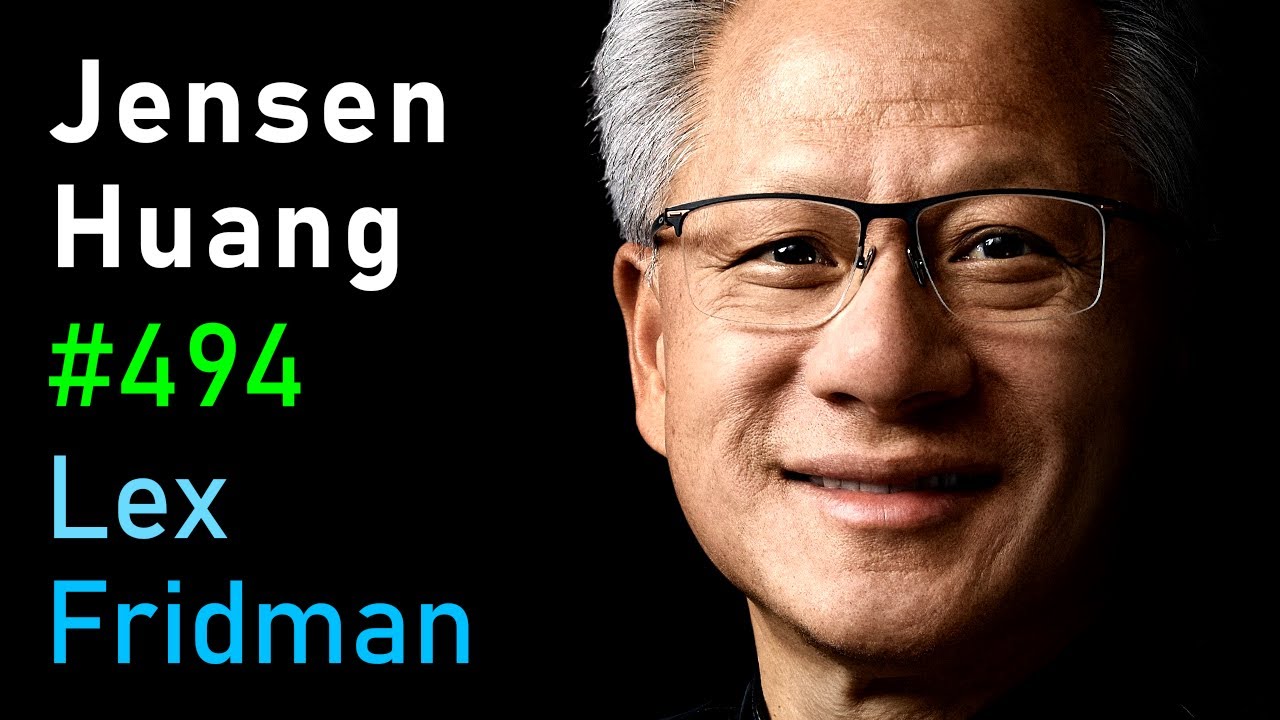
Jensen Huang: NVIDIA - The $4 Trillion Company & the AI Revolution | Lex Fridman Podcast #494
 311 min
Jeff Kaplan: World of Warcraft, Overwatch, Blizzard, and Future of Gaming | Lex Fridman Podcast #493
Ask anything from this episode.
Save it, chat with it, and connect it to Claude or ChatGPT. Get cited answers from the actual content — and build your own knowledge base of every podcast and video you care about.
Get Started Free