Key Moments
Katie Couric Interview | The Tim Ferriss Show
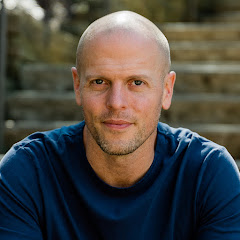 Tim Ferriss
Want to know something specific about what's covered?
We've already dissected every moment. Ask and we will deliver (with timestamps).
Key Moments
Katie Couric and Tim Ferriss discuss journalism, grief, cancer advocacy, and societal issues.
Key Insights
Authentic curiosity is key to effective interviewing, as demonstrated by an unexpected interview with President Bush.
Developing resilience and the ability to think on one's feet are crucial skills for journalists.
Grief is a complex process, and personal experiences can shape advocacy efforts.
Proactive cancer screening and awareness campaigns, like the 'Katie Couric effect,' can save lives.
Collaboration in scientific research, despite innate human tendencies, is vital for progress.
Media plays a critical role in shaping public perception and understanding nuanced issues.
Civic engagement, particularly voting, is essential for holding leaders accountable.
THE ACCIDENTAL INTERVIEW AND DEVELOPING RESILIENCE
Katie Couric recounts a pivotal moment early in her career where she unexpectedly had to interview President George H.W. Bush during a White House tour. Despite being unprepared, she managed to sustain the interview for an extended period by thinking on her feet and generating questions, a skill she attributes to her natural curiosity and 'moxie.' This incident was instrumental in proving her capability beyond typical 'feature' segments, reinforcing her desire to be taken seriously as a journalist in a male-dominated field and setting the stage for her co-anchor role on the 'Today Show' with a demand for equal responsibilities.
NAVIGATING NERVOUSNESS AND THE ART OF INTERVIEWING
Discussing interview preparedness, Couric reveals that interviews with heads of state or highly polarizing figures, like Yasser Arafat or Ross Perot, often induce nervousness due to their inherent risks and unpredictable nature. Live interviews, lacking the buffer of editing, are particularly daunting. The experience of preparing for and interviewing Sarah Palin is detailed, highlighting the extensive research, consultation with experts like Madeleine Albright, and the crucial advice to 'let her talk' and embrace silence, rather than rushing to fill conversational gaps, which proved effective in eliciting thoughtful responses.
CONFRONTING GRIEF AND THE POWER OF PUBLIC ADVOCACY
The conversation delves into personal grief, prompted by Tim Ferriss's own impending loss. Couric shares her devastating experience of her first husband's death from colon cancer at a young age. She reflects on her initial denial and proactive 'fix-it' mode as a coping mechanism, regretting not having had deeper conversations about his hopes and legacy for their daughters. This profound personal loss fueled her subsequent dedication to cancer advocacy, emphasizing the importance of preventative screenings and education, particularly the 'Katie Couric effect' of increased colonoscopies following her on-air procedure.
STAND UP TO CANCER AND REVOLUTIONIZING RESEARCH
As a co-founder of Stand Up to Cancer, Couric discusses the organization's mission to fund scientific research and its innovative approach to fostering collaboration among institutions, pharmaceutical companies, and biotech firms. This paradigm shift from competition to cooperation has led to significant advancements, including FDA-approved drugs. Couric expresses immense pride in the scientists and women who initiated the movement, highlighting their selflessness and dedication, and emphasizes that these researchers, often overlooked, should be the true 'rock stars' of our culture.
CURATING PROJECTS AND EXPLORING SOCIETAL ISSUES
Transitioning to her current project-based work, Couric explains her shift from traditional corporate employment to pursuing impactful and creatively freeing projects. She discusses her documentary series 'America Inside Out,' which aims to explore topics often overlooked or under-analyzed in the fast-paced media landscape. Examples include examining Confederate iconography and the controversy surrounding statues, exploring the experience of Muslims in America, and delving into the complexities of gender identity, stemming from her own learning experiences and past media missteps.
ENGAGING WITH COMPLEX SOCIAL AND ETHICAL DILEMMAS
Couric highlights the importance of fostering deeper understanding and empathy for diverse communities and challenging societal narratives. She touches upon issues like the impact of technology, the importance of voting, and the pervasive nature of 'slacktivism.' The discussion extends to the ethical considerations of emerging technologies, such as autonomous vehicles, posing complex moral dilemmas. Couric advocates for critical thinking and informed civic participation, emphasizing that understanding nuanced issues requires moving beyond surface-level headlines and embracing a more thoughtful, empathetic approach to public discourse.
Mentioned in This Episode
●Software & Apps
●Companies
●Organizations
●Books
●Concepts
●People Referenced
Common Questions
During a White House tour, President Bush unexpectedly joined Katie Couric for an interview. Lacking preparation, she 'pulled questions out of her ass,' asking about Iran-Contra and his campaign against Bill Clinton, managing to keep him engaged for nearly 20 minutes.
Topics
Mentioned in this video
Mentioned by Tim Ferriss as a comparison to his feeling of being out of his depth asking questions.
Mentioned by Tim Ferriss in the context of Luke Skywalker's early struggles.
Katie Couric recounts giving her a tour of the White House, which led to an impromptu interview with President Bush.
Katie Couric recounts an unprepared interview with him in the White House after his dog, Mellie, unexpectedly entered the room.
Katie Couric recalls asking President Bush about running against him during their interview.
Mentioned by Katie Couric as someone who came into the room during her unexpected interview with President Bush.
Katie Couric's executive producer who fed her questions through an earpiece during the unprepared interview with President Bush.
The TV critic for The Washington Post who wrote a flattering article about Katie Couric's interview with President Bush.
The then-president of NBC News, to whom Katie Couric stated her condition for co-anchoring the Today Show (50/50 division of labor).
Co-anchor of the Today Show with Katie Couric, with whom she insisted on a 50/50 division of labor.
A character from the movie Election, compared by Tim Ferriss to Katie Couric's early leadership aspirations.
Actress in the movie Election, mentioned by Tim Ferriss when discussing the character Tracy Flick.
Mentioned by Katie Couric in the context of the attention economy and technology's manipulative aspects.
A journalist Katie Couric has spoken with about her career transitions and who she had on her podcast.
Mentioned by Katie Couric regarding an interview where she asked an inappropriate question about gender reassignment surgery.
Mentioned by Katie Couric regarding an interview where she asked an inappropriate question about gender reassignment surgery.
Mentioned by Katie Couric as someone she spoke with for her 'Rewriting History' documentary segment on Confederate iconography.
Mentioned by Katie Couric as someone who petitioned to change her high school's name, relevant to the 'Rewriting History' documentary.
Founder of the Equal Justice Initiative, interviewed by Katie Couric for her documentary on the legacy of slavery and lynching.
Author of 'Option B', recommended by Katie Couric for Tim Ferriss to read regarding grief and resilience.
Co-author of 'Option B' with Sheryl Sandberg, and a person Katie Couric suggested Tim Ferriss interview.
Mentioned as someone Katie Couric had a late-night Twitter conversation with about insomnia.
Mentioned by Katie Couric in reference to the movie 'Three Billboards Outside Ebbing, Missouri' when discussing potential billboard messages.
Mentioned as someone Katie Couric had a late-night Twitter conversation with about insomnia.
The author of the quote 'The future is here. It's just not evenly distributed,' referenced in the discussion about technology.
A hospice care physician and triple amputee who shared profound insights with Tim Ferriss, including the billboard message 'Don't believe everything that you think'.
Technology futurist and friend of Tim Ferriss who uses a spreadsheet to track his remaining lifespan.
Mentioned as someone Katie Couric had a late-night Twitter conversation with about insomnia.
The movie featuring the character Tracy Flick, which Tim Ferriss referenced to describe Katie Couric's ambition.
A documentary Katie Couric made for National Geographic about changing notions of gender, prompted by a past interview misstep.
A docu-series by Katie Couric that premiered on National Geographic.
Organization founded by Bryan Stevenson, working on issues of mass incarceration and the legacy of slavery, featured in Katie Couric's documentary.
Hospice facility where BJ Miller has helped many people navigate end-of-life care.
The channel where Katie Couric's docu-series 'America Inside Out' premiered.
More from Tim Ferriss
View all 703 summaries 70 min
Q&A with Tim — The Art of Male Friendship, Reinvention in The Age of AI, & More
 125 min
Dr. Andrew Huberman — Peptides, Performance, and Protocols
 112 min
The Random Show! Mortality, AI, Supplements, Rock Climbing, & More
 88 min
The Legendary Hollywood Power Broker — Guy Oseary on 36 Years of Managing Madonna, 26 IPOs, and More
Ask anything from this episode.
Save it, chat with it, and connect it to Claude or ChatGPT. Get cited answers from the actual content — and build your own knowledge base of every podcast and video you care about.
Get Started Free