Key Moments
Jocko Willink: War, Leadership, and Discipline | Lex Fridman Podcast #197
 Lex Fridman
Key Moments
Jocko Willink discusses war, leadership, discipline, and the profound human connections forged through shared hardship.
Key Insights
War, while tragic, forges unbreakable bonds between soldiers due to the absolute reliance on each other for survival.
Discipline and shared suffering, even in extreme circumstances like war, are crucial for building cohesive teams and fostering personal growth.
Effective leadership involves understanding human nature, adaptability, and often balancing personal charisma with decisive action, while humility is key for continuous improvement.
Jiu-jitsu serves as a metaphor and practical tool for understanding life's complexities, teaching humility, strategy, and the interconnectedness of mind and body.
Self-defense prioritizes escape, with grappling skills like jiu-jitsu becoming critical only when escape is no longer an option.
True leadership prioritizes team success and growth over personal ego, emphasizing humility and continuous learning.
THE DUAL NATURE OF WAR AND HUMAN CONNECTION
Jocko Willink explores the paradox of war, acknowledging its tragic toll in human lives alongside its capacity to forge incredibly strong bonds between individuals. He explains that the intense pressure and life-or-death reliance inherent in combat create a unique camaraderie, unlike anything experienced in civilian life. This shared suffering, where survival depends entirely on the person next to you, forms connections that are profoundly difficult to break, shaping individuals and even cultures for generations.
DISCIPLINE AS THE FOUNDATION OF TEAM BUILDING
The conversation delves into how military training systems are designed to build these strong bonds through shared hardship and discipline. Boot camps and advanced training intentionally put recruits through intense physical and mental challenges, creating a common experience of suffering. This shared ordeal, from overcoming fear to enduring difficult conditions, strips away civilian individuality and forges a collective identity, emphasizing the principle that discipline is the pathway to freedom and collective success.
LEADERSHIP AND THE STRATEGIC MANAGEMENT OF HUMANITY
Willink examines leadership through historical and personal lenses, discussing the importance of understanding human nature and the strategic implications of decisions. He touches upon the failures of leadership, particularly in war, where ego and miscalculation can lead to immense loss of life. Effective leaders, he suggests, must be willing to admit mistakes, possess a deep understanding of their people, and balance grand strategy with the practical realities on the ground.
THE TRANSFORMATIONAL POWER OF JIU-JITSU
Jiu-jitsu is presented not just as a martial art but as a profound life lesson and a connective tissue for various aspects of life. Jocko emphasizes how training teaches humility, strategic thinking, and the interconnectedness of mind and body. The discipline and honesty of the mat, where one's limitations are constantly revealed, translate into leadership, combat tactics, and personal development, fostering a mindset of continuous learning and adaptation.
ETHICAL CONSIDERATIONS IN WARFARE AND TECHNOLOGY
The discussion touches upon the grim realities of war, including the high civilian casualties, the concept of total war, and the ethical dilemmas surrounding modern warfare. Willink acknowledges the necessity of self-defense but stresses that war should be a last resort. He also expresses skepticism regarding autonomous weapon systems, emphasizing the irreplaceable role of human ethics and the potential for unintended consequences when technology is deployed without deep moral consideration.
DEFINING GREATNESS IN LEADERSHIP AND HUMANITY
Willink defines a great individual, man, or woman as someone who consistently puts others above themselves. Applying this to leadership, he stresses the importance of humility, adaptability, and fostering a culture of continuous improvement, drawing parallels with tech leaders like Elon Musk and Steve Jobs. Ultimately, he advocates for a balanced approach to leadership, combining confidence with humility, and emphasizing the power of inspiration over fear, which builds trust and resilience.
THE RIGOR OF A DISCIPLINED LIFE
Jocko outlines the structure of a disciplined day, starting with an early wake-up, physical conditioning, and focused work. This routine provides a psychological advantage and sets a tone of accomplishment. He likens the process to mental conditioning, where facing personal challenges, like early morning workouts, builds resilience and prepares one for the day's demands. This disciplined approach extends to his reading, writing, and training, prioritizing consistent effort and focus.
COMPETITION AS A REVELATOR OF POTENTIAL
Competition, whether in jiu-jitsu or other endeavors, is seen as a vital tool for identifying weaknesses and driving improvement. It reveals unexpected challenges and forces individuals to adapt, learn, and strategize. Willink contrasts winning by points with winning by submission, advocating for a proactive and aggressive approach that embraces risk. This perspective is crucial for growth, as it pushes individuals beyond their comfort zones and encourages a deeper understanding of their capabilities.
THE VALUE OF HUMILITY AND TRUST IN LEADERSHIP
Humility is highlighted as a cornerstone of effective leadership and personal growth. Willink contrasts confident individuals who are open to learning with those whose egos prevent growth. He emphasizes that true leaders delegate and trust their teams, even if performance metrics are not immediately perfect, fostering a culture where individuals are empowered to step up. This trust, built through humility and delegation, conserves leadership capital and allows for strategic focus.
THE INTERSECTION OF SELF-DEFENSE AND MARTIAL ARTS
In self-defense, Willink prioritizes escape as the primary tactic. Only when escape is impossible, such as in a physical grapple, does the importance of martial arts like jiu-jitsu, wrestling, or boxing come into play. Jiu-jitsu is particularly emphasized for its effectiveness in ground fighting and control, turning a potentially dangerous situation into an opportunity to regain the ability to escape. He advocates for a comprehensive approach, encouraging training in various disciplines.
INSPIRATION FROM MILITARY LITERATURE AND PERSONAL HEROES
Colonel David Hackworth's "About Face" is cited as a pivotal book that profoundly impacted Willink's understanding of leadership and warfare. The memoir's depiction of Hackworth's integrity, combat prowess, and willingness to speak out against flawed leadership resonated deeply. This admiration highlights the importance of learning from historical figures who exemplify courage, ethical conviction, and a commitment to their principles, even at significant personal cost.
EMBRACING LOVE, FRIENDSHIP, AND FAMILY
Beyond discipline and duty, Willink acknowledges the critical role of love, expressed through friendship and family, in a fulfilling life. He equates putting others above oneself, a core leadership principle, with the practical implementation of love. This reflects a recognition that while hardship forges strength, genuine human connection and care are what ultimately give life meaning and purpose.
Mentioned in This Episode
●Software & Apps
●Companies
●Organizations
●Books
●Concepts
●People Referenced
Common Questions
Strong bonds in war are formed through shared suffering and the realization that individuals must rely on each other for survival. This creates deep connections unparalleled in civilian life, as seen in military training and combat experiences. (Timestamp: 236)
Topics
Mentioned in this video
One of the excellent books co-authored by Jocko Willink, focusing on leadership principles.
A book by Jocko Willink emphasizing the importance of discipline for achieving freedom.
A book by Colonel David Hackworth that had a massive impact on Jocko Willink's leadership perspective, providing lessons he still re-reads.
A unit within SEAL Team 3 commanded by Jocko Willink, which became the most highly decorated special operations unit of the Iraq War.
The special operations force of the U.S. Navy that Jocko Willink served in for 20 years, commanding Task Unit Bruiser.
Referenced as one of the nations (along with the Nazis) that Jocko Willink believed justified intervention in World War II due to their efforts to impose their will on other nations.
The capital of Russia, mentioned as a target for the German army during their 1941 push in World War II.
The country where Lex Fridman was born and raised, experiencing its history, culture, and the lasting impact of World War II.
Mentioned in the context of dehumanization leading to conflict, and referenced for its historical conflict with Chechnya.
Lex Fridman's adopted country, which he credits for giving him opportunity and freedom, and expresses his love for, balancing patriotism with humanism.
Mentioned as a nation with increasing dehumanization, leading potentially to conflict akin to a cold or hot war, particularly in the context of cyber security and AI weapons.
A German military tactic used in World War II characterized by dynamic and bold moves, which initially proved successful.
A growing concern discussed as a potential catastrophic risk to human civilization, becoming easier to do and potentially leading to extinction.
A martial art that Jocko Willink credits with connecting various aspects of his life (mind, combat tactics, strategy) and fostering humility. He recommends it as the starting point for self-defense.
A martial art focused on throws and grappling on the feet, good for practicing explosive aggression and recommended for self-defense.
A concern in the AI community, referring to superintelligent AI systems that could create widespread damage or be a reason for human civilization's extinction.
A striking martial art mentioned as a good self-defense skill to train in after mastering jiu-jitsu for grappling.
The political party and regime responsible for immense atrocities and existential threats during World War II, against whom the Soviet Union fought an attrition war.
A grappling martial art emphasized for its intensity and aggression, recommended for self-defense alongside judo.
A striking martial art mentioned as beneficial for self-defense and recommended for training.
The band that performed the song 'Brothers in Arms,' which Lex Fridman refers to as a powerful song often played at military funerals.
The podcast hosted by Lex Fridman featuring conversations with various guests, including Jocko Willink.
A powerful song by Dire Straits, with a lyric questioning the foolishness of war, relevant to the discussion of conflict.
Referenced in the context of the perennial leadership question: is it better to be loved or feared?
A retired U.S. Navy SEAL, co-author of several books, and host of the Jocko Podcast. He discusses war, leadership, and discipline.
A public figure who had a conversation with Jocko Willink about war being a last resort and whose advice on making your bed is mentioned.
An ultra-endurance athlete known for intense physical discipline, mentioned as someone who works through 'demons' via exercise, contrasting with Jocko's more work-oriented approach.
A tech CEO known for his harshness, first principles thinking, dedication to factory floor details, and ability to inspire respect from engineers. His struggles with managing emergencies and building decentralized command are discussed.
The CEO of SpaceX, recognized for successfully managing the company and allowing Elon Musk to focus on other ventures.
A Colonel who wrote 'About Face,' an exceptional warrior of the Vietnam and Korean Wars, initially revered, but later seen as rebellious for speaking out against the Vietnam War.
The leader of Nazi Germany, whose early strategic decisions were considered brilliant but later costly due to ego, particularly the attack on the Soviet Union.
A general who worked for Colonel David Hackworth in Vietnam and confirmed the positive accounts of Hackworth's leadership from 'About Face'.
The President of the United States during World War II, who initially tried to avoid involvement in the war, prioritizing American interests.
Mentioned as having done a four-hour podcast on the potential of bioengineering viruses to destroy human civilization.
A tech leader with a unique harsh, emotional, and temperamental style, but also immense skill in design and marketing that allowed his company to thrive despite his controversial behavior. His 'A-players' philosophy is also discussed.
Host of a successful podcast, mentioned for his decision to hire Jamie without extensive prior knowledge, who then excelled as a producer.
Jocko Willink's jiu-jitsu coach and main training partner for over 20 years, known for his focus on submission victories in competition.
The CEO of Alphabet and Google, admired for his calm, listening, and empathetic leadership style that brings people together and fosters innovation, contrasting with more dictatorial styles.
The producer for The Joe Rogan Experience, who stepped up and became one of the best producers in the world after being hired with little initial knowledge by Joe Rogan. Noted for his exceptional self-critical nature.
A jiu-jitsu coach and philosopher known for creating a 'science of jiu-jitsu' through systems thinking and advocating for winning by submission (or dominance) rather than points.
The parent company of Google, with Sundar Pichai as CEO, known for its continued innovation under his leadership.
The tech giant, whose innovations are attributed to Sundar Pichai's leadership style, contrasted with the bureaucracy that can arise in large companies.
Elon Musk's company, mentioned in the context of his hands-on engineering approach and the need for more decentralized command as the company grows.
Elon Musk's company, where Gwen Shotwell is credited as a successful CEO helping to run the operations.
More from Lex Fridman
View all 549 summaries 259 min
FFmpeg: The Incredible Technology Behind Video on the Internet | Lex Fridman Podcast #496
 124 min
Vikings, Ragnar, Berserkers, Valhalla & the Warriors of the Viking Age | Lex Fridman Podcast #495
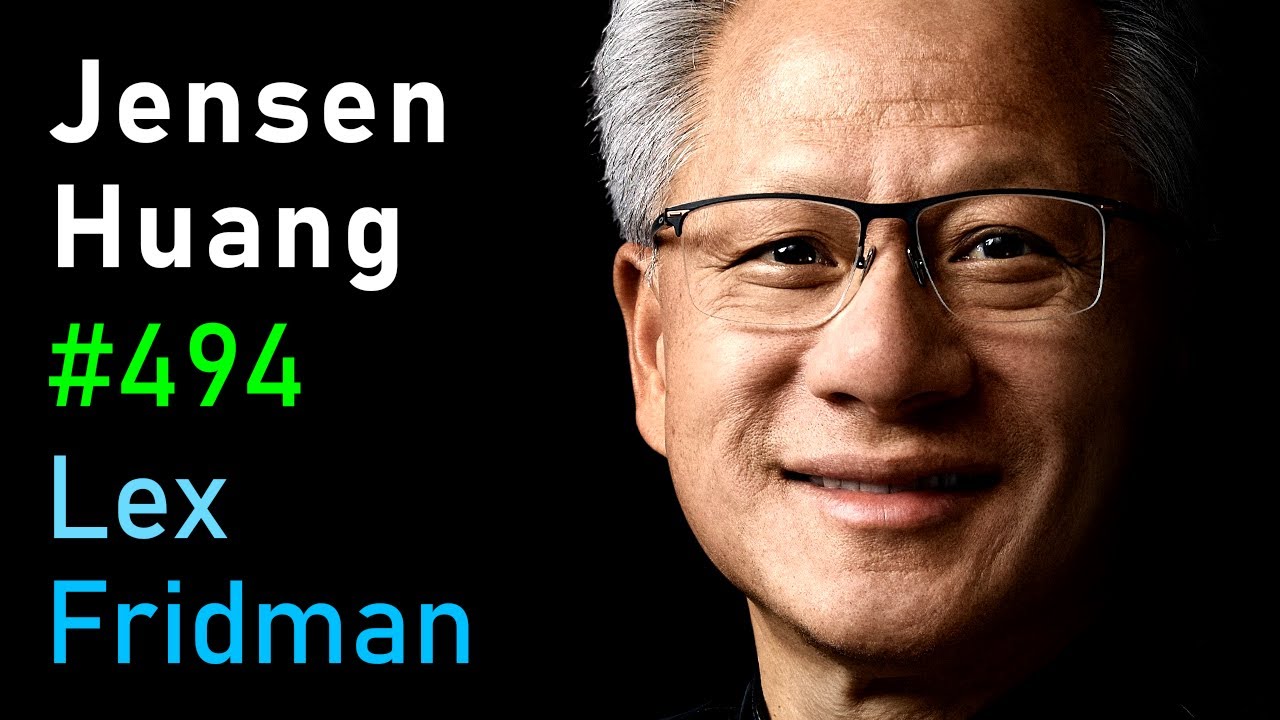 146 min
Jensen Huang: NVIDIA - The $4 Trillion Company & the AI Revolution | Lex Fridman Podcast #494
 311 min
Jeff Kaplan: World of Warcraft, Overwatch, Blizzard, and Future of Gaming | Lex Fridman Podcast #493
Ask anything from this episode.
Save it, chat with it, and connect it to Claude or ChatGPT. Get cited answers from the actual content — and build your own knowledge base of every podcast and video you care about.
Get Started Free