Key Moments
Jim Keller: Moore's Law, Microprocessors, and First Principles | Lex Fridman Podcast #70
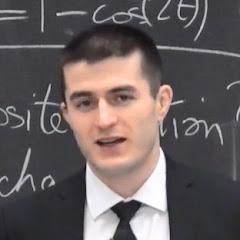 Lex Fridman
Want to know something specific about what's covered?
We've already dissected every moment. Ask and we will deliver (with timestamps).
Key Moments
Jim Keller discusses microprocessors, Moore's Law decline, AI, and the future of computing.
Key Insights
Computer architecture relies on abstraction layers from atoms to data centers.
Modern CPUs execute instructions out-of-order to find and optimize parallelism.
Moore's Law continues due to thousands of innovations, not just transistor shrinking.
AI advancements are driven by computation increases and evolving mathematical abstractions.
Autonomous vehicle systems face challenges in understanding human behavior.
Human beings are complex, with understanding deeper than just executing recipes.
BUILDING COMPUTERS FROM FIRST PRINCIPLES
Jim Keller begins by explaining the layered abstraction of computer engineering, starting from atoms forming transistors, then logic gates, and finally complex processing units. This progresses up through instruction set architectures (ISAs) to software. He highlights that while ISAs like x86 and ARM are stable due to their foundational nature, modern computer implementations are far more complex, executing instructions out-of-order and managing parallelism to achieve high performance. This complexity is necessary because the market demands speed and efficiency, rejecting simple, clean, but slow designs.
THE ART AND SCIENCE OF PARALLELISM
Keller elaborates on parallelism, distinguishing between 'found parallelism' where sequential code is analyzed for independent instructions to execute out-of-order, and 'given parallelism' found in tasks like rendering pixels where operations are inherently parallel. He explains that achieving high performance requires predicting branch outcomes with extreme accuracy. This has evolved from simple history-based prediction to complex, neural-network-like prediction systems that act as mini-supercomputers within the CPU, managing large instruction windows and optimizing execution graphs.
MOORE'S LAW AND THE CASCADE OF INNOVATION
Discussing Moore's Law, Keller notes it has been incorrectly declared dead numerous times. He argues its continuation is due to thousands of innovations beyond transistor shrinking. Each innovation faces its own diminishing returns, but as one plateaus, another emerges, creating a cascade that sustains exponential growth. He likens this to a series of overlapping 's-curves,' with advancements in materials, manufacturing, and design enabling smaller, more controlled transistors, pushing towards fundamental physical limits but still having significant room for progress.
THE EVOLVING MATHEMATICS OF COMPUTATION
Keller traces the evolution of computation from simple arithmetic to vector processing, matrix operations, and the complex mathematical abstractions used in AI, like convolutions and topology problems. He suggests that computation has reached a point where it can explore mathematical realms previously understood only by mathematicians. While AI training might involve optimization (a form of search), the inference and pattern recognition in deep networks represent a more complex, less understood computational process, pushing the boundaries of what we can describe.
THE CHALLENGES OF AUTONOMOUS SYSTEMS
Transitioning to autonomous vehicles, Keller points out that while the underlying computer hardware can be improved predictably, the complexity arises from understanding human behavior. Unlike ballistic systems with predictable physics, human drivers introduce elements of theory, irrationality, and unpredictability. He emphasizes that building safe autonomous systems requires more than just object detection; it involves inferring intent and handling complex social interactions, suggesting that systems involving human behavior are significantly more complicated than purely physical problems.
CRAFTSMANSHIP AND THE MINDSET OF INNOVATION
Keller reflects on his work at Tesla, highlighting the blend of craftsmanship, innovation, and at times, chaos. He values a first-principles approach, stripping away assumptions to find fundamental truths, a mindset exemplified by Elon Musk. This involves understanding that current solutions are often local maxima and that true progress requires re-thinking and re-building. He likens engineering to craftsmanship, where complex skills are honed and applied thoughtfully, even in resource-constrained environments, to achieve elegant and effective solutions.
THE NATURE OF CONSCIOUSNESS AND THE UNIVERSE
Addressing consciousness, Keller acknowledges the mystery but leans towards computation as a likely explanation. He discusses the layered complexity of the human brain, which possesses multiple thinking systems and a 'dream system' that remains poorly understood. He posits that the universe itself might be a peculiar computer, where the immense complexity of physical laws and quantum effects makes its computational description vast. While the existential threat of superintelligent AI is not a primary concern for him, he acknowledges the profound philosophical questions about evolution, existence, and our place in the cosmos.
Mentioned in This Episode
●Products
●Software & Apps
●Companies
●Concepts
●People Referenced
Common Questions
Modern computers fetch hundreds of instructions, identify the dependency graph between them, and then execute independent units out of order to achieve significant speedups, often 10 times faster than in-order execution.
Topics
Mentioned in this video
A semiconductor company where Jim Keller worked after Tesla, mentioned in the context of Moore's Law being 'not dead'.
A semiconductor company where Jim Keller worked on microarchitectures like K7, K8, K12, and Xen.
An automotive and energy company where Jim Keller worked, particularly on the hardware side of autopilot development.
A technology company where Jim Keller worked on A4 and A5 processors.
The host of the podcast, who introduces Jim Keller and asks questions.
Co-founder of Intel and the originator of Moore's Law, defined as doubling the number of transistors every two years, and the source of a closing quote on effort.
A computer scientist whose observation that every 10x increase in computation generates a new computation type is discussed.
Legendary microprocessor engineer who has worked at AMD, Apple, Tesla, and Intel, known for his work on microarchitectures and co-author of x86-64 instruction set.
CEO of Tesla and SpaceX, known for his first principles thinking, and a key figure in the development of vehicle autonomy.
Cited for his observation on diminishing returns and the need to start new projects to reach the next level of innovation.
A type of computer specialized in 'given parallelism,' performing simple operations on many elements simultaneously, like pixels.
The observation that the number of transistors in a dense integrated circuit doubles about every two years, which Jim Keller explains as a continuous cascade of innovations.
A field of computer science that involves creating intelligent machines, discussed in the context of its exponential improvement and potential for superintelligence.
More from Lex Fridman
View all 552 summaries 227 min
Gary Gallagher: American Civil War, Slavery, Lincoln, Grant & Lee | Lex Fridman Podcast #499
 232 min
The Rise and Fall of the Roman Empire and the Byzantine Empire | Lex Fridman Podcast #498
 174 min
Biggest Mysteries in Physics: Antimatter, Dark Energy & ToE - Don Lincoln | Lex Fridman Podcast #497
 259 min
FFmpeg: The Incredible Technology Behind Video on the Internet | Lex Fridman Podcast #496
Ask anything from this episode.
Save it, chat with it, and connect it to Claude or ChatGPT. Get cited answers from the actual content — and build your own knowledge base of every podcast and video you care about.
Get Started Free