Key Moments
Jared Diamond on Leaders, Luck, and Irreplaceability
 Conversations with Tyler
Want to know something specific about what's covered?
We've already dissected every moment. Ask and we will deliver (with timestamps).
Key Moments
Jared Diamond argues that most leaders are replaceable, with historical impact often determined by opportune circumstances rather than individual genius. Even seemingly unique figures like Jesus or Muhammad might have had their roles filled by others, suggesting broader societal and environmental factors are more significant than individual leadership.
Key Insights
Jared Diamond posits that no leader in human history has been truly irreplaceable, suggesting that with time, circumstances change and others would have emerged to fill similar roles, even for figures like Jesus Christ.
Genghis Khan's success is attributed to being born during an unusually wet period on the steppes, which provided the resources for his conquests, highlighting the role of environmental timing in leadership impact.
Diamond's geographical determinism, as seen in 'Guns, Germs, and Steel,' explains long-term societal development based on available domesticable plants and animals and continental axes, rather than individual leaders.
While destructive leaders like Hitler can have a profound impact, the list of impactful 'builder' leaders in the 20th century is slightly longer, indicating a balance between negative and positive influence.
Rachel Carson's 'Silent Spring' is credited with kickstarting the environmental movement a decade earlier than it might have otherwise, showcasing the significant influence of a well-timed scientific publication by a respected scientist.
Botswana's remarkable economic success over 60 years, transforming from Africa's poorest nation to one of its wealthiest, is presented as a case study, though its future sustainability is questioned due to reliance on diamonds and potential corruption.
The illusion of irreplaceable leaders
Jared Diamond challenges the notion that any single leader is indispensable to history. He argues that even figures as monumental as Jesus Christ would likely have had their influence replicated by other prophets of the era if Christ had not lived. Similarly, while acknowledging the charisma of founders like Muhammad, Diamond suggests that the conditions for Islam's rise might have led to a similar outcome with a different figure. This perspective shifts the focus from individual agency to the broader societal and environmental contexts that allow certain figures to rise and have impact. Diamond asserts that in the long run, no leader has made a difference that couldn't have been made by someone else under the right circumstances.
Environmental timing and the rise of conquerors
Diamond uses Genghis Khan as a prime example of how luck and environmental timing play a crucial role in leadership success. Recent research indicates that Khan was born during an unusually wet period on the steppes, a condition that significantly aided the growth of populations and armies. Had he been born just a few decades earlier or a few hundred miles away, his historical impact might have been negligible. This illustrates Diamond's broader point that conditions often ripen for change, and then someone emerges to lead. The success of leaders, particularly in conquest, is thus not solely attributable to their individual brilliance but is heavily influenced by favorable environmental factors and opportune moments.
Geography versus individual agency
Diamond clarifies that his work, particularly 'Guns, Germs, and Steel,' does not negate the role of individuals but rather frames their impact within larger geographical and environmental contexts. While he acknowledges that certain individuals, like Jeff Bezos with Amazon, can significantly shape specific industries, he maintains that long-term historical trajectories, such as why English is spoken in America today, are better explained by geographical factors. These include the availability of domesticable plants and animals in regions like the Fertile Crescent and the East-West axis of Eurasia, which facilitated the spread of agriculture and technology, compared to the North-South axis of the Americas. This perspective emphasizes that while leaders can influence events, the stage on which they perform is largely set by geography.
The dual nature of leadership: builders and destroyers
When discussing political leaders, Diamond notes that while destructive figures like Hitler undeniably had a massive impact, the historical record shows a slightly longer list of 'builder' leaders who positively shaped events. Hitler's charisma, manipulative skills, and willingness to take bold risks contributed to his significant, albeit devastating, influence. However, the conversation also touches upon leaders who prevented catastrophes, such as Winston Churchill's role in preventing the Nazi invasion of Britain, and potentially Nikita Khrushchev's actions that may have averted World War III. The importance of both constructive and destructive leadership is acknowledged, though Diamond suggests that, in aggregate, positive impacts have been more numerous throughout history.
The impact of Rachel Carson and the environmental movement
Rachel Carson is highlighted as an example of an individual whose work significantly accelerated a historical movement. Her book, 'Silent Spring,' published in 1962, is credited with jumpstarting the environmental movement in the United States by raising public awareness about the dangers of pesticides. Diamond argues that while the environmental movement might have developed eventually, Carson's timely and eloquent contribution brought it to prominence much earlier. He contrasts her impact with the idea that she was easily replaceable, noting that her unique position as a respected scientist able to communicate complex issues to the public, combined with her graceful writing style, made her influence profound. This illustrates how a single, well-articulated message can catalyze widespread change.
Botswana's success and future uncertainties
Botswana is presented as a rare African success story, having transformed from one of the continent's poorest nations at independence in 1966 to one of its wealthiest over the subsequent 60 years. This economic achievement is largely attributed to prudent management of its diamond wealth. However, Diamond raises questions about the long-term sustainability of this success, noting the nation's small population (3 million) and its heavy reliance on a single resource. The prospect of synthetic diamonds and the potential for corruption suggest that Botswana's future economic stability may face significant challenges, echoing concerns seen in other resource-dependent nations.
John Wooden: More than a recruiter
The discussion touches upon legendary UCLA basketball coach John Wooden, with the interviewer suggesting his primary talent was player recruitment, particularly securing stars like Kareem Abdul-Jabbar and Bill Walton. Diamond counters this by emphasizing Wooden's exceptional coaching abilities, his meticulous preparation (spending 2.5-3 hours planning each practice), and his focus on player development and physical conditioning. Wooden's psychological insight into his players and his ability to foster teamwork were crucial. Diamond recounts Wooden's adjustment of practice groups from five to seven players to ensure better team cohesion, underscoring his depth as a coach who used basketball as a metaphor for life, profoundly influencing his players beyond the sport itself.
The complex interplay of factors shaping history
Diamond reiterates that his work emphasizes a multi-causal approach to understanding history, moving beyond simplistic explanations. He explains his contribution to the understanding of why societies develop differently, highlighting the role of domesticable plants and animals, continental axes, and the spread of infectious diseases originating from domesticated animals. He also points to the importance of latitudinal similarities for the spread of agriculture and technology. Diamond critiques the idea that distance from the equator is a dominant factor, citing advanced civilizations that existed at various latitudes. He advocates for recognizing the complexity of historical development, where geography, environment, institutions, and individual actions all play interconnected roles.
The fading art of face-to-face communication
Diamond expresses concern over the decline of direct, face-to-face communication skills, particularly among younger generations who rely heavily on indirect methods like social media. He draws a contrast with his experiences in New Guinea, where traditional, direct communication fostered sophisticated negotiation skills. He observes that the increasing reliance on mediated communication, from telephones to the internet, has led to a deterioration in social and interpersonal skills, even among university students. Diamond suggests that while figures like Alexandria Ocasio-Cortez may be adept at using social media for political gain, this does not necessarily equate to strong interpersonal communication abilities. He believes that true leadership often requires robust direct engagement.
Cautious optimism for the future
Despite his earlier works on environmental collapse, Diamond expresses a cautious optimism about the future. This optimism is fueled by two significant developments: the increasing environmental awareness and action within major corporations, and the growing engagement of young people with environmental issues. He cites examples like Walmart and Unilever taking initiative in sustainability and notes that even oil companies are becoming more mindful of environmental impact due to legal and contractual pressures. The active involvement of youth in environmental advocacy, exemplified by his son's early participation in environmental protests, instills hope. Diamond estimates the odds of a positive outcome at 51%, a slight improvement over his earlier assessment, attributing this shift to these evolving corporate and generational attitudes.
Addressing global environmental challenges
When asked about the single most pressing global environmental issue, Diamond resists naming one, likening the complexity to a happy marriage requiring mastery of numerous factors. He argues that interconnected issues like climate change, inequality, and the risk of nuclear war are all critically important. He stresses the need for dialogue between nuclear-armed states, mentioning the post-Cuban Missile Crisis talks as an example of how close calls can spur necessary communication. He points to North Korea as a current significant risk, underscoring the ongoing need for diplomatic engagement across all nuclear-capable nations to mitigate existential threats.
Reflections on personal impact and future goals
Diamond reflects on his own career trajectory, shifting from studying gallbladders to writing seminal works on history, geography, and now leadership. He attributes this shift in part to the birth of his children, which made him realize the need to address broader, more impactful issues. Receiving a MacArthur Fellowship also spurred a sense of expectation to contribute more significantly. His future goals include completing his study of all 200 of Bach's cantatas and summarizing his 60 years of research on New Guinea birds, focusing on why some species successfully inhabit remote mountain ranges while others do not. He views these intellectual pursuits, alongside contributing to his family's happiness, as his primary objectives for the coming decade.
Mentioned in This Episode
●Software & Apps
●Companies
●Organizations
●Books
●Concepts
●People Referenced
Common Questions
Jared Diamond argues that no leader is truly irreplaceable in the long run, as circumstances change and others can emerge to take leadership roles. While some individuals have immense influence, their impact is often shaped by the context and timing of their emergence.
Topics
Mentioned in this video
Jared Diamond studied physiology at Harvard University.
Jared Diamond studied physiology at Cambridge University.
Mentioned in the context of a game where UCLA, coached by John Wooden, played against them.
A scientific journal where a recent article on genetic evidence for increased intelligence in Western Eurasians was discussed.
Diamond was sent by the World Wildlife Fund in 1999 to conduct environmental studies in Chevron's oil fields in Papua New Guinea.
Identified as the organizer of Christianity.
Professor of Geography at UCLA, author of 'The World: Guns, Germs, and Steel' and the new book 'Upheaval: Turning Points For Nations In Crisis'. He is also a physiologist, ornithologist, anthropologist, sociologist, evolutionary biologist, ecologist, and environmental historian.
Mentioned as a potential candidate for the least replaceable leader in history, though Diamond argues no leader is truly irreplaceable.
Founder of the largest land empire in history, whose success was influenced by being born during a particularly wet period on the steppes.
Mentioned as another historical leader, contrasted with Genghis Khan.
Founder of Amazon, credited with its success as a customer-centric, comprehensive online store.
Mentioned as a constructive leader who made a significant difference in the 20th century.
Considered a leader who prevented significant negative events, such as Hitler's invasion of Britain.
Potentially played a crucial role in preventing World War III.
His handling of the Cuban Missile Crisis is highlighted as his most significant achievement, preventing nuclear war.
Author of 'On the Origin of Species', mentioned alongside Rachel Carson as a scientist whose book had a major impact.
A renowned scientist and communicator, mentioned in comparison to Rachel Carson.
A contemporary prominent science writer, mentioned for his writing style in comparison to Rachel Carson's.
Credited with making substantial investments in the pomegranate juice industry, enabling its large-scale development.
Former UCLA basketball coach, lauded for his comprehensive approach to coaching that extended beyond player recruitment to tactics, physical conditioning, and psychology.
Co-author of influential theories on economic history, focusing on extractive vs. inclusive institutions, and a recipient of the Nobel Prize.
Jared Diamond's father, a hematologist and pediatrician, who influenced Jared's early interest in medicine and science.
Cited as a prime example of a destructive leader who had a profound impact on the 20th century due to his charisma and manipulative nature.
Mentioned as a constructive leader who made a significant difference in the 20th century.
Mentioned as a politician who was deceived by Hitler.
The founding president of Botswana, cited as a successful leader.
Author of 'Silent Spring', credited with significantly contributing to the environmental movement.
One of the first scientists to achieve success writing for the public, mentioned in comparison to Rachel Carson.
Basketball player recruited by John Wooden to UCLA (formerly Lew Alcindor).
Basketball player recruited by John Wooden to UCLA, who spoke highly of Wooden's influence.
His economic history theories suggest that intermarriage in England and the Netherlands led to lower time preference and increased savings, contributing to the Industrial Revolution.
Her work attributes historical differences to ideology, individualism, freedom, the Enlightenment, and Christianity.
Co-author of influential theories on economic history, focusing on extractive vs. inclusive institutions, and a recipient of the Nobel Prize. Diamond has a close relationship with him and learned about natural experiments from him.
Diamond listens to Bach's cantatas as a way to relax and ensure good sleep.
Used as an example of a company whose success is largely attributed to its founder, Jeff Bezos.
Cited as a major corporation that has taken a lead in sustainable products.
A major company mentioned as an example of one that would likely not allow such a long-term, low-return investment as the Resnick family's in pomegranate juice.
A major company mentioned as an example of one that would likely not allow such a long-term, low-return investment as the Resnick family's in pomegranate juice.
Diamond worked as an environmental consultant for Chevron's oil fields in New Guinea.
Cited as a major corporation that has taken a lead in sustainable fisheries.
Jared Diamond's new book, which explores the role of leaders in various fields like politics, business, sports, and religion.
Rachel Carson's influential book that raised awareness about the dangers of pesticides and helped launch the environmental movement.
Diamond's previous influential book that explains the broad patterns of history based on geographical and environmental factors.
Charles Darwin's seminal work, mentioned as one of the most impactful books written by scientists.
Jared Diamond's first book, which contained chapters that later evolved into 'Guns, Germs, and Steel', 'Collapse', and 'Why Is Sex Fun?'.
A book by Jared Diamond that originated from a chapter in 'The Third Chimpanzee'.
A book by Jared Diamond that originated from a chapter in 'The Third Chimpanzee'.
Held up as an example of a country that has achieved significant development since independence, despite early poverty.
Mentioned in the context of water desalination and energy sources.
Discussed as a region where individual leaders have had little impact due to its fragmented nature, diverse languages, and tribal loyalties.
Mentioned as an example of great art created by Europeans 25,000 years ago.
Its energy production is largely nuclear.
Identified as the most dangerous player in the context of nuclear proliferation, with efforts being made to initiate talks.
More from Conversations with Tyler
View all 55 summaries 63 min
Luke Burgis on Mimetic Desire, Catholicism, and the Age of Social Contagion
 63 min
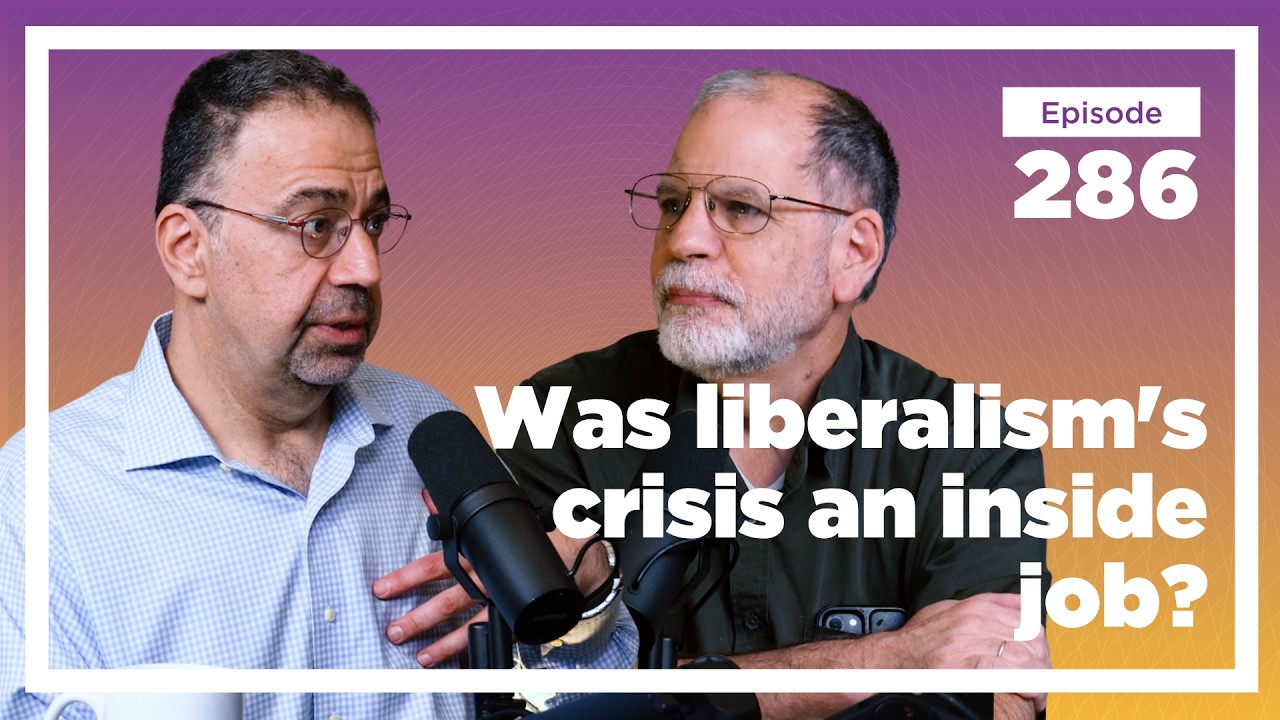
Daron Acemoglu on Liberalism, Automation, and the Educated Elite
 68 min
Julia Ioffe on Russian Women, Missing Men, and the Roots of Autocracy
 64 min
Andrew Graham-Dixon on Vermeer, a Forgotten Sect, and Underrated Artists
Ask anything from this episode.
Save it, chat with it, and connect it to Claude or ChatGPT. Get cited answers from the actual content — and build your own knowledge base of every podcast and video you care about.
Get Started Free