Key Moments
Jack Dorsey: Square, Cryptocurrency, and Artificial Intelligence | Lex Fridman Podcast #91
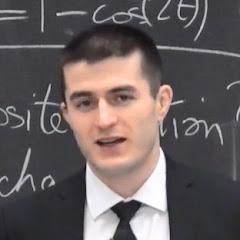 Lex Fridman
Key Moments
Jack Dorsey discusses Square's mission, cryptocurrency, AI's impact, and the importance of human connection.
Key Insights
Square's core mission is to increase economic access by lowering barriers, particularly for small businesses and entrepreneurs.
Cryptocurrency, especially Bitcoin, is seen as a native currency for the internet, enabling greater innovation and global accessibility.
AI presents significant risks, especially black-box systems lacking explainability, and necessitates a focus on human self-awareness and oversight.
Job displacement due to automation is a serious concern, highlighting the need for solutions like Universal Basic Income (UBI).
Personal well-being, including diet and mindfulness, is crucial for mental performance and focuses attention in a distracting world.
Mortality serves as a powerful tool for prioritizing what truly matters in life, fostering a sense of purpose and connection.
THE EVOLUTION OF SQUARE AND INCREASING ECONOMIC ACCESS
Jack Dorsey, co-founder of Twitter and founder of Square, discusses Square's fundamental mission: to increase people's access to the economy. Initially focused on hardware for card swiping, Square realized the deeper challenge was enabling individuals and small businesses to accept payments without facing traditional financial gatekeepers like credit checks and FICO scores. This led to a shift in mindset from distrust to 'trust and verify,' significantly increasing the percentage of merchants that could be onboarded by focusing on transaction-level integrity.
CRYPTOCURRENCY AS THE INTERNET'S NATIVE CURRENCY
Dorsey expresses a strong belief in Bitcoin as the internet's native currency, capable of revolutionizing global commerce. He highlights that current internet companies face significant hurdles when entering new markets, requiring local banking partnerships and navigating diverse regulations. A digital currency like Bitcoin bypasses many of these complexities, offering a consistent global standard that can foster innovation and speed. This potential for a truly global, accessible currency is a key driver of his enthusiasm.
THE PROMISE AND PERIL OF ARTIFICIAL INTELLIGENCE
Discussing AI, Dorsey acknowledges its rapid advancements but warns of significant risks, particularly the proliferation of 'black box' systems that cannot explain their decisions. This lack of explainability is a major concern, especially as we increasingly rely on AI for critical decisions in finance, healthcare, and beyond. He emphasizes the need for AI systems to articulate their reasoning, a challenge compounded by humans' own difficulty in explaining their decisions, and raises the possibility of deep human-AI connections.
ADDRESSING JOB DISPLACEMENT AND THE ROLE OF UBI
Dorsey aligns with Andrew Yang's concerns about job displacement due to automation and AI, particularly for roles like cashiers. He emphasizes that while automation brings benefits, it also necessitates societal adaptation. This leads to the critical discussion of Universal Basic Income (UBI) as a potential safety net, providing a financial floor that allows individuals to focus on retraining and finding new careers without immediate survival anxieties. He views UBI not as an incentive to quit work, but as a means to provide stability during a significant economic shift.
MAXIMIZING MENTAL PERFORMANCE THROUGH LIFESTYLE CHOICES
Dorsey shares personal insights into maximizing mental performance, advocating for challenges that foster self-awareness and focus. He discusses his practice of intermittent fasting, specifically eating only one meal a day, which he finds increases mental clarity and appreciation for human experience. This approach, along with embracing discomfort, helps him learn and grow, drawing parallels to overcoming his childhood shyness through deliberate practice. He believes these lifestyle choices are crucial for navigating distractions and enhancing deep thinking.
ACCEPTING MORTALITY AS A CATALYST FOR MEANINGFUL LIVING
Contemplating mortality, Dorsey views death not with fear, but as a transformation and a vital tool for prioritizing life. He uses the daily awareness of his own finiteness to focus on what truly matters, whether it's work, relationships, or personal growth. This perspective, he argues, clarifies priorities and underscores the preciousness of each moment, encouraging a more focused and meaningful existence. The ultimate meaning, he suggests, derives from connection and participation in something larger than oneself.
THE NATURE OF IDENTITY AND THE CHALLENGE OF DETECTION
The conversation touches upon the evolving nature of identity in the digital age, especially with advancements in AI and the creation of deepfakes. Dorsey notes that the technology to create sophisticated bots and fake identities is advancing faster than the technology to detect them. He highlights this as a significant challenge for industries like finance, which rely on identity verification. The ability to quickly detect and adapt to new forms of deception is crucial for maintaining trust and security in digital systems.
THE PHILOSOPHICAL IMPLICATIONS OF AI AND HUMAN CONNECTION
Dorsey reflects on the potential for humans to find deep meaning and connection with AI systems, referencing the movie 'Her' and real-world instances of people forming bonds with AI. He posits that finding meaning is subjective and not solely dependent on technology; however, AI can facilitate this. He also discusses the importance of self-awareness, particularly in a world where algorithms increasingly influence decisions, suggesting that practices like meditation are vital for regaining focus and understanding one's own motivations and choices in relation to AI guidance.
Mentioned in This Episode
●Products
●Companies
●Books
●Concepts
●People Referenced
Common Questions
Jack Dorsey emphasizes hiring people with expertise or who are fast learners, leveraging the open-source community, and fostering critical thinking, problem-solving, and a willingness to question assumptions.
Topics
Mentioned in this video
The pseudonymous creator of Bitcoin, discussed in the context of anonymous vs. pseudonymous creation and the sacrifice of ego.
Mentioned in relation to concerns about AI and existential threats, and a discussion about distinguishing humans from bots.
Mentioned as an instructor on MasterClass, teaching scientific thinking and communication.
Mentioned as a host of a podcast Jack Dorsey has appeared on.
Mentioned for his tweet about Jack Dorsey's commitment to COVID-19 relief and his concerns about job displacement.
Mentioned as an instructor on MasterClass, teaching guitar.
Mentioned as a host of a podcast Jack Dorsey has appeared on.
Author of '21 Lessons for the 21st Century,' whose ideas on meditation and self-awareness are discussed.
Mentioned as an instructor on MasterClass, teaching chess.
Co-founder and CEO of Twitter, and founder and CEO of Square.
Mentioned as an instructor on MasterClass, with a course on space exploration.
Mentioned as an instructor on MasterClass, teaching poker.
Mentioned as an instructor on MasterClass, with a course on conservation.
Mentioned as a host of a podcast Jack Dorsey has appeared on.
Discussed as a brilliant person who was on the podcast the previous day, talking about Bitcoin and Ethereum.
Formulated the Turing test 70 years prior, discussed as a canonical problem in artificial intelligence related to natural language understanding.
Mentioned as having previously advocated for Universal Basic Income.
His words about Bitcoin being a paradigm shift, similar to microcomputers, are shared at the end of the podcast.
Mentioned as someone who eats one meal a day, influencing Jack Dorsey's own dietary habits.
A financial services and digital payments company founded by Jack Dorsey.
A social media platform co-founded by Jack Dorsey.
Online education platform offering courses from experts, mentioned as a podcast sponsor.
Mentioned as a partner that Square had to convince of its trustworthiness.
Mentioned as a partner that Square had to convince of its trustworthiness.
Mentioned as an example of a system that may know a person's preferences better than they do, contributing to offloading self-awareness.
Mentioned as a company whose algorithms might contribute to users offloading self-awareness.
Mentioned for its animated films, specifically 'Wall-E' and 'Ratatouille'.
Discussed as a key area of interest for Jack Dorsey and its potential role in the future of the internet.
Mentioned in the context of discussions around cryptocurrency and distributed ledger technology.
Mentioned as a technology related to cryptocurrency and distributed ledger technology.
Advocated as the necessary native currency for the internet, enabling global innovation and accessibility.
Highlighted as a crucial learning resource and contributor to building meaningful software systems.
Discussed as a core component of building large-scale systems and Square's operations.
Discussed in relation to engineering at scale, its potential and risks, and its role in Square's business.
Discussed as a benchmark for artificial intelligence, particularly in natural language processing, and its difficulty to pass.
Mentioned as an area with increasing intelligent devices and potential for economic integration.
More from Lex Fridman
View all 549 summaries 259 min
FFmpeg: The Incredible Technology Behind Video on the Internet | Lex Fridman Podcast #496
 124 min
Vikings, Ragnar, Berserkers, Valhalla & the Warriors of the Viking Age | Lex Fridman Podcast #495
 146 min
Jensen Huang: NVIDIA - The $4 Trillion Company & the AI Revolution | Lex Fridman Podcast #494
 311 min
Jeff Kaplan: World of Warcraft, Overwatch, Blizzard, and Future of Gaming | Lex Fridman Podcast #493
Ask anything from this episode.
Save it, chat with it, and connect it to Claude or ChatGPT. Get cited answers from the actual content — and build your own knowledge base of every podcast and video you care about.
Get Started Free