Key Moments
Ishan Misra: Self-Supervised Deep Learning in Computer Vision | Lex Fridman Podcast #206
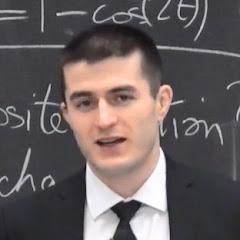 Lex Fridman
Key Moments
Self-supervised learning simplifies AI training by using unlabeled data for computer vision.
Key Insights
Self-supervised learning (SSL) reduces reliance on labeled datasets, making AI training more accessible.
SSL models learn representations from unlabeled data, enabling better generalization and performance.
Contrastive learning is a key SSL technique, where models learn by distinguishing similar and dissimilar data points.
SSL is applicable across various domains, including computer vision, natural language processing, and audio.
The development of SSL addresses challenges in data annotation costs and scalability.
SSL aims to bridge the gap between supervised and unsupervised learning by leveraging inherent data structure.
REDEFINING ARTIFICIAL INTELLIGENCE TRAINING
The core idea of self-supervised learning (SSL) is to train AI models without requiring meticulously labeled data. This approach leverages the vast amounts of unlabeled data readily available, significantly reducing the dependency on human annotators. By creating supervisory signals directly from the data itself, SSL models learn meaningful representations and patterns, ultimately enhancing their performance and generalization capabilities across various tasks.
THE MECHANICS OF SELF-SUPERVISED LEARNING
SSL methods often involve pretext tasks that the model must solve using only the input data. For instance, in computer vision, a model might be tasked with predicting the rotation of an image or filling in missing parts. These pretext tasks allow the model to learn underlying structures and semantic features without explicit labels, creating a powerful foundation for downstream applications.
CONTRASTIVE LEARNING: A KEY APPROACH
Contrastive learning has emerged as a dominant paradigm within SSL. The principle is straightforward: the model learns to distinguish between similar (positive pairs) and dissimilar (negative pairs) data points. By maximizing the similarity between positive pairs and minimizing it for negative pairs, the model develops robust embeddings that capture essential characteristics of the data, proving highly effective in unsupervised and semi-supervised settings.
BROAD APPLICATIONS AND FUTURE POTENTIAL
The impact of SSL extends far beyond image recognition. It has shown immense promise in natural language processing, enabling models to understand context and meaning in text, and in audio processing for tasks like speech recognition. As SSL techniques mature, they are poised to democratize AI development by lowering the barrier to entry related to data annotation costs and computational resources.
ADDRESSING DATA SCARCITY AND ANNOTATION CHALLENGES
One of the most significant challenges in traditional supervised learning is the sheer volume of labeled data required. Acquiring and annotating this data is often expensive, time-consuming, and prone to human error. SSL directly tackles this bottleneck by utilizing readily available unlabeled data, making it a more scalable and efficient approach for training powerful AI models in real-world scenarios.
BRIDGING THE GAP FORWARD
SSL represents a significant step towards more general artificial intelligence. By learning representations that are useful for a wide array of tasks, these models exhibit greater adaptability and require less task-specific fine-tuning. This paradigm shift is paving the way for more robust, versatile, and accessible AI systems that can understand and interact with the world more effectively.
Mentioned in This Episode
●Products
●Software & Apps
●Companies
●Organizations
●Drugs & Medications
●Concepts
●People Referenced
Common Questions
Self-supervised deep learning in computer vision refers to training models on large datasets without explicit human-annotated labels. Instead, the models learn by generating their own supervisory signals from the data, often by predicting missing parts of an image or understanding contextual relationships.
Topics
Mentioned in this video
Mentioned as a device for managing or interacting with content, possibly data or personal habits.
A specific gaming mouse brand, likely brought up in a discussion about precision tools or performance in gaming/computer use.
Mentioned as an example of a personal electronic device.
A line of smartphones designed and marketed by Apple Inc., mentioned as a familiar electronic device.
A popular hybrid video game console from Nintendo, mentioned in the context of gaming or entertainment.
Better known as Eminem, an American rapper, mentioned in the context of university departments, possibly as a figure of study or cultural impact.
An American singer, possibly mentioned in a cultural reference or as a public figure.
An American actor, possibly mentioned as a public figure in a discussion about fame or public perception.
A psychologist known for his work on interpersonal closeness, potentially in the context of communication or relationships.
A social media platform, likely mentioned in the context of information sharing or online interaction.
A major technology company, mentioned in relation to computer hardware and performance.
A major American film studio, mentioned as an example of a media company or for film production.
Mentioned in the context of advanced language models, likely referring to their GPT series, which utilizes Transformer architectures.
A social media platform for image sharing, possibly mentioned in relation to visual content or design inspiration.
A streaming service, mentioned in the context of video content and media consumption.
An electronics retailer, mentioned in the context of consumer electronics or market analysis.
A Japanese multinational automotive manufacturer, mentioned as an example of a car brand or engineering achievement.
A popular Japanese media franchise, mentioned in the context of animated content or cultural references.
A popular Japanese role-playing video game series, mentioned in the context of gaming or popular culture.
Referenced in a discussion about contextual understanding and narratives, possibly alluding to the visual style or storytelling.
More from Lex Fridman
View all 549 summaries 259 min
FFmpeg: The Incredible Technology Behind Video on the Internet | Lex Fridman Podcast #496
 124 min
Vikings, Ragnar, Berserkers, Valhalla & the Warriors of the Viking Age | Lex Fridman Podcast #495
 146 min
Jensen Huang: NVIDIA - The $4 Trillion Company & the AI Revolution | Lex Fridman Podcast #494
 311 min
Jeff Kaplan: World of Warcraft, Overwatch, Blizzard, and Future of Gaming | Lex Fridman Podcast #493
Ask anything from this episode.
Save it, chat with it, and connect it to Claude or ChatGPT. Get cited answers from the actual content — and build your own knowledge base of every podcast and video you care about.
Get Started Free