Key Moments
Iran Just Struck a US Base — Here's How 2 Wars Merge Into WW3
 Impact Theory
Want to know something specific about what's covered?
We've already dissected every moment. Ask and we will deliver (with timestamps).
Key Moments
Iran's ballistic missile strike on a US base in Jordan and Ukraine's attack on an Iranian ship signal a dangerous merge of regional conflicts into a potential WW3, complicated by global economic instability and shifting geopolitical alliances.
Key Insights
Iran's ballistic missile attack on a US military base in Jordan was an attempted surprise attack, with Iran claiming successful hits while US forces stated all missiles were intercepted.
China's decreased oil demand, accounting for approximately 74% of the global pullback, is a significant factor influencing oil prices, currently hovering in the upper $80s despite ongoing conflicts.
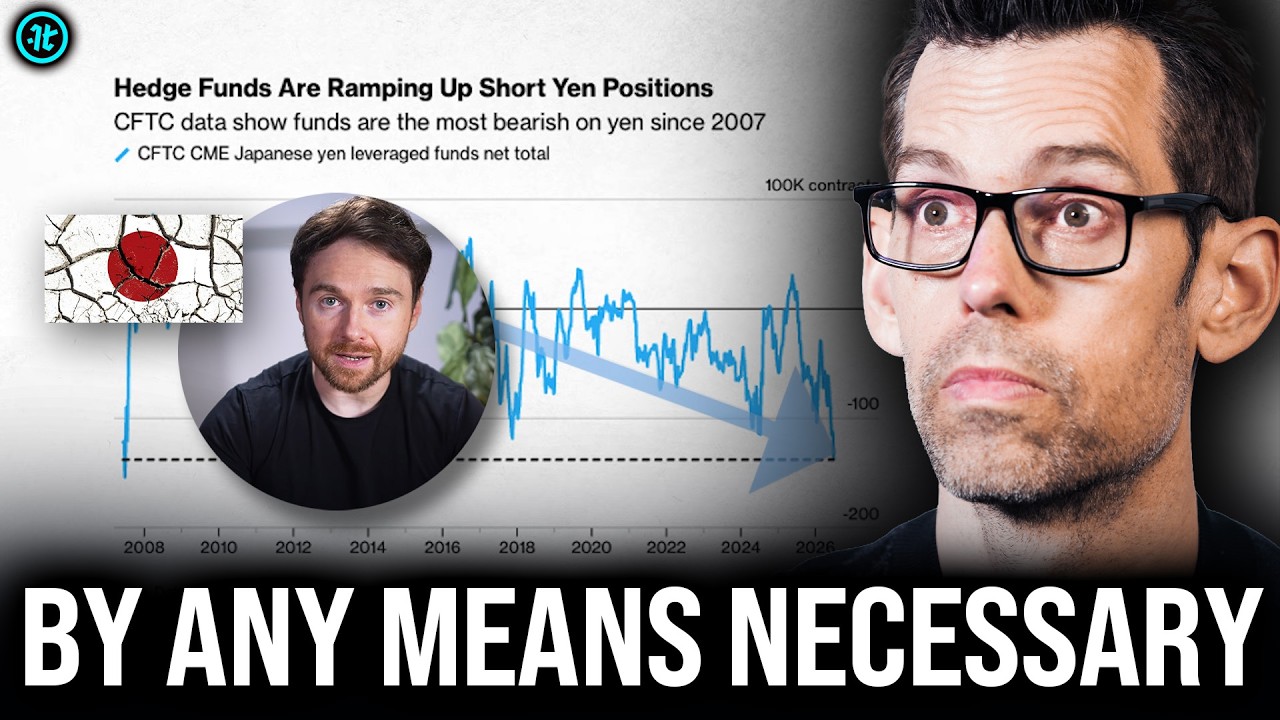
The Japanese yen carry trade unwinding is creating a "huge question mark over liquidity the sort of world over," contributing to global economic instability.
New York City plans to open five taxpayer-funded government grocery stores by 2029, promising to sell core goods at 30% below retail prices, a model that has historically failed in other locations due to unsustainable financial losses.
Sam Altman believes OpenAI is close to creating a 'genie that can grant any wish,' contingent on advancements in cheap stored solar energy and near-zero-cost robotic labor.
Ukraine has confirmed striking an Iranian ship in the Caspian Sea, claiming it was involved in moving military cargo between Iran and Russia, despite Iran's initial claims of an unintentional strike and a subsequent demand for restitution.
Iran's escalating actions and the risk of wider conflict
The transcript details Iran's ballistic missile attack on a US military base in Jordan, characterizing it as an attempted surprise attack. While US forces claim all missiles were intercepted, Iran suggests otherwise. This incident, occurring shortly after Iran purportedly agreed to a ceasefire, highlights a pattern of aggressive actions that are straining regional stability. The analysis suggests that Iran's strategy is to create economic disruption in key shipping lanes like the Strait of Hormuz, aiming to pressure the US and potentially influence US political outcomes, such as the midterms. The speaker argues that expecting Iran to cease its asymmetric warfare tactics when the US has employed similar strategies against them is unrealistic, and that a strategy focused on 'breaking Iran's will to fight' requires a more significant and sustained effort, especially if internal dissent within Iran is a factor. The risk of the US running into munitions shortages due to the high rate of drone and missile production by Iran is also raised.
The merging of conflicts: Ukraine, Russia, and Iran's interconnected wars
A critical development discussed is the potential for the US-Iran conflict and the Ukraine-Russia war to merge into a larger global conflict. This is underscored by Ukraine's confirmed strike on an Iranian ship in the Caspian Sea. While initial reports suggested an accident, further analysis indicates the strike was intentional, aimed at disrupting military cargo shipments between Iran and Russia. Iran's response, including summoning Ukraine's agency and demanding restitution, highlights the increased tension. Ukraine's stance, as described, is that the ship was operating in evasion of international sanctions and that Iran must end its support for Russia. This interconnectedness is visualized by Iran bordering the Caspian Sea, where Ukraine is now operating. The speaker posits that this merging of conflicts could draw in more European nations and create complex diplomatic and military pressures, potentially allowing the US to leverage support for Ukraine against European pressure on Iran.
Global economic fragility and China's role
The global economic landscape is presented as highly unstable, with significant concerns arising from China's economic situation and the Japanese yen carry trade. China's decreased oil demand, reportedly accounting for a substantial portion of the global pullback in oil prices, is a key factor keeping oil prices relatively low despite geopolitical tensions. However, this softening demand is also linked to China's own economic troubles, particularly its housing crisis. The unwinding of the Japanese yen carry trade is highlighted as a major source of global liquidity uncertainty. South Korea's stock market has experienced significant volatility, tripping trading 'breakers' multiple times, indicating broader market fragility. The speaker suggests that the interconnectedness of these economic factors, combined with ongoing wars, creates a "rogue wave" scenario where isolated issues can amplify each other, leading to unpredictable and potentially catastrophic outcomes.
The flawed promise of government-run grocery stores
The transcript critiques New York City's plan to launch taxpayer-funded government grocery stores, aiming to sell core goods at 30% below retail prices. Drawing on historical examples from other cities like Baldwin, Florida, and Erie, Kansas, the analysis argues that such initiatives are financially unsustainable. Grocery stores operate on notoriously thin margins (1-3%), and even with subsidies for rent, taxes, and buildout, the deep discounts would necessitate continuous taxpayer funding to cover losses. The speaker asserts that government bureaucrats cannot run grocery stores more profitably than private entities like Walmart, citing a lack of profit incentive and price signal discipline. This approach is seen as a distraction from the real causes of unaffordability, such as inflation driven by money printing and supply chain disruptions, and is characterized as a 'brain tumor' treatment that only masks symptoms without addressing the root cause.
China's economic model and the DSA's agenda
The discussion contrasts China's 'capitalism with Chinese characteristics' model with the perceived socialist agenda of the Democratic Socialists of America (DSA). While China is not considered truly communist, its authoritarian control combined with market mechanisms has led to significant economic growth, albeit with human rights concerns like concentration camps and the suppression of business leaders. The DSA's program, which advocates for non-profit status for essential services like food, energy, medicine, and transportation, is presented as a 'crush people down strategy' that reduces freedom. The speaker argues that this approach, unlike China's attempt to lift brakes on citizens' economic activity, would lead to taxpayers funding unprofitable businesses and creating scarcity, drawing parallels to the concept of 'zombie companies' in Japan that rely on cheap debt to survive.
AI's 'genie' potential and economic disruption
Sam Altman's assertion that OpenAI is close to creating a 'genie that can grant any wish' is explored. The speaker agrees with the potential impact of AI, particularly when combined with advancements in cheap stored solar energy and near-zero-cost robotic labor. Existing AI capabilities in areas like 3D asset creation, architectural design generation, and protein folding are cited as evidence of its transformative power, even without further breakthroughs. The potential for AI to create an 'age of abundance' is acknowledged, echoing Elon Musk's predictions of a significantly larger economy and the potential obsolescence of traditional retirement savings. However, a cautionary note is struck against abandoning fiscal discipline, as the timeline for this abundance remains uncertain. The speaker also touches on the ongoing debate around AI's use of copyrighted material, arguing that digitizing and learning from all available information, including books, is beneficial for progress.
Geopolitical protectionism and the future of manufacturing
The trend towards protectionism in global trade is highlighted, with the US banning imports of Chinese humanoid robots and inverters. This is framed as a necessary step in a 'Hamiltonian moment' where countries must strengthen their domestic industries and decouple from globalist tendencies. The speaker argues that nations need to bring manufacturing back, even if it leads to slightly higher costs, to ensure self-sufficiency, citing the UK's inability to produce virgin steel as an example of the risks of over-reliance on imports, particularly from China. This protectionist wave is seen as a predictable response to the shifting global balance of power and will lead to cycles of protectionism and globalism.
The psychology of conflict and economic decision-making
The conversation delves into the underlying psychology driving both global conflicts and economic decisions. It's suggested that wars can often stem from petty disputes and a refusal to back down, similar to how personal conflicts escalate. This human tendency towards 'pissing contests' and feelings of disrespect is amplified by global economic instability, creating a volatile environment. On the economic front, the desire for lower prices, a core driver for consumers, leads entrepreneurs to innovate by reducing costs associated with raw materials, energy, and labor. The rise of AI is presented as a significant way to reduce labor costs, offering a 'huge win for the consumer' but posing risks to employees. The speaker emphasizes that people get what they pay for, and if the collective desire is for cheaper goods, the system will adapt, often at the expense of labor wages or through increased automation.
Mentioned in This Episode
●Products
●Software & Apps
●Companies
●Organizations
●Concepts
●People Referenced
Common Questions
Iran launched multiple ballistic missiles at a US military base in Jordan. CENTCOM reported that all missiles were intercepted and did not hit anything, but Iran's actions follow earlier strikes that killed US service members.
Topics
Mentioned in this video
Iran struck a US base in Jordan, an unprovoked attack.
The Bab Elmandab Strait has been closed by the Houthis, impacting global oil flow.
The first city-owned grocery store is planned to open in the Bronx.
Ukraine struck an Iranian ship in the Caspian Sea, a critical area for Iran-Russia military cargo shipments.
Iran continues to hit ships going through the Strait of Hormuz, causing economic disruption.
The Houthis seem to be largely trying to blockade Saudi Arabia.
Missile deliveries from western China to Iran will transit through Pakistan.
South Korea's stock market has tripped breakers two days in a row due to rapid decline, signaling global economic instability.
High-speed rail in California is cited as an example of government projects exceeding initial budget estimates.
Iran struck a US base in Jordan and is claiming that things aren't as they seem, trying to get a jump on the US. Iran also struck US service members on July 17th at Salty Air Base.
Ukraine hit an Iranian ship in the Caspian Sea, claiming it was carrying military cargo to Russia, escalating tensions.
New York City is implementing state-run grocery stores and a pied-à-terre tax, controversial economic policies.
A city with a reportedly successful state-run grocery store, though the speaker expresses skepticism.
The ongoing conflicts threaten to pull Europe into a larger war, impacting global stability.
If China were to move on Taiwan, the US would likely block straits to cut off China's energy supply.
A city in Florida that opened a city-owned store in 2019, which lost money and eventually closed.
China is negotiating directly with the Houthis to secure oil supplies and is forming alliances with Russia and Iran, representing a growing geopolitical power.
The yen has cracked, and Japan's changing economy presents a massive global systemic risk.
An Iranian missile strike on July 17th killed three service members at Salty Air Base.
Russia is supporting Iran and is involved in a conflict with Ukraine, contributing to global instability. Russia was running a different strategy regarding munitions.
Only 5% of global supply goes through the Red Sea, and China is negotiating with the Houthis to ensure passage.
Jongqing Bao Shang, an intermediary for the China-Iran arms deal, is based in Hong Kong.
The US's actions in Venezuela are cited as an example of bullying and violation of sovereignty.
A city in Kansas where a state-run grocery store failed to become profitable and is scheduled to close.
The UK cannot produce its own virgin steel, making it vulnerable to external control by countries like China.
Sam Altman states that OpenAI is close to creating a 'genie' that can grant any wish.
Iran wants Trump out of office, preferring someone with a stance more like Biden or Obama.
Before Alibaba's IPO, Jack Ma was kidnapped and re-educated by the Chinese government for complaining about the banking system.
His penthouse, valued at $238 million, is on city books for only $15.5 million, highlighting discrepancies in property valuation.
Trump is in a tizzy over Iran's actions and paused American bombing campaigns to give diplomacy a chance, which the speaker criticizes as naive. He also said, "We're going to beat the effing s*** out of them."
Zelenskyy felt supported by Lindsey Graham in moving things in Ukraine's direction.
China's concentration camps for Uyghur Muslims are cited as an example of authoritarian tendencies.
Xi has said he is dismissive of the West, reflecting China's growing ambition.
Quoted as saying 'the US doesn't have allies; it just has interests,' implying that alliances shift with changing interests.
Under Mao, communist China was responsible for the deaths of at least 45 million people, some estimates higher.
Mentioned as someone working to build cheaper and more rapid munitions for the US.
Trump met Netanyahu at the White House for talks centered on Iran.
Stalin followed Lenin, and together they were responsible for 25 million deaths in the Ukrainian famine.
A prominent economist associated with the Austrian School of economics.
Iran wants Trump out of office, preferring someone with a stance more like Biden or Obama.
Zelenskyy claimed responsibility for the strike on the Iranian ship in the Caspian Sea, citing military cargo shipments.
Hamilton's principles of a strong nation through domestic manufacturing are invoked to explain current protectionist policies.
An influential figure in Austrian economics.
New York politician, Mam Donnie, is initiating city-owned grocery stores and a pied-à-terre tax, which the speaker views as economically problematic.
Previously on the show, argued that we are already in World War III.
Lenin's playbook involved publishing lists of 'kulaks' (better farmers) and landlords, a practice similar to doxing people today.
Wrote an article arguing against the dangers of communism, emphasizing individual freedom and innovation.
Allegedly murdered a CEO on the streets of New York City, believing him to be a greedy capitalist, raising concerns about populist rhetoric.
Believes AI will create an age of abundance, expanding the economy fivefold in 5-6 years, eliminating the need for traditional savings.
Referenced in the context of discussions about the DSA and Austrian economics.
The US is trying to kill so many people in the IRGC that internal turmoil will prevent coherent attacks against the US and its allies.
CENTCOM called Iran's missile attack on a US base an 'attempted surprise attack' and stated all missiles were intercepted.
A suggestion for learning about Austrian economics, a school of thought the speaker is familiar with.
The Houthis have closed the Bab Elmandab Strait and are negotiating with China to ensure oil flow.
Ukraine's SBU (equivalent to FBI/CIA) hit the Iranian ship because it was evading international sanctions and moving military cargo.
The DSA is pushing for city-owned grocery stores and has an ideology driven by resentment and a desire for a larger, authoritarian state.
Described as very bad for people living under it, with historical examples of mass deaths in China and Russia.
The unwinding of the Japanese yen carry trade creates huge liquidity questions globally.
The formation of alliances between China, Russia, and Iran is part of a broader de-dollarization trend.
The speaker's entry into economics was a 'battle against Keynesian economics'.
Used as a benchmark for efficiency in grocery store operations, arguing that government bureaucrats cannot outperform them.
Sam Altman states that OpenAI is close to creating a 'genie' that can grant any wish.
Involved in a scandal for scanning and destroying books, using a copyright loophole.
Mentioned in the context of China's willingness to exploit its population for manufacturing, including using nets to prevent suicides at Foxconn factories.
Jack Ma, before Alibaba's IPO, was kidnapped by the Chinese government for critical comments.
Praised for its incredible efficiencies in logistics and driving down costs through innovation.
The speaker's former company, which became wealthy by refusing to give retailers like Walmart large margins due to high consumer demand.
An anecdotal (possibly apocryphal) example of a company going out of business due to Walmart's aggressive margin demands and a small increase in supplier costs.
Has been scanning books for over a decade, digitizing information, which AI can then scrape.
More from Tom Bilyeu
View all 131 summaries 125 min
Mass Wave Of Migrants Storm Cueta, Middle East Conflict Expands & Melilla & Update On The US Economy
 55 min
Every Time This Happens To The Yen, Markets Break — We Had To React
 40 min
China Just Made Its Biggest Gold Move In 3 Years — We Had To React
 120 min
A DSA Leader Went on Fox and Admitted the Whole Plan (Abolish ICE, Open Borders, Kill the Senate)
Ask anything from this episode.
Save it, chat with it, and connect it to Claude or ChatGPT. Get cited answers from the actual content — and build your own knowledge base of every podcast and video you care about.
Get Started Free