Key Moments
Ilya Sutskever: Deep Learning | Lex Fridman Podcast #94
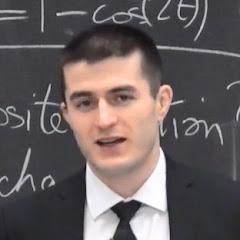 Lex Fridman
Key Moments
Ilya Sutskever discusses deep learning's evolution, from the AlexNet breakthrough to the future of AI, touching on reasoning, language, and AGI.
Key Insights
The pivotal moment for deep learning was the realization that very large neural networks could be trained end-to-end with backpropagation, especially spurred by advancements like the Hessian-free optimizer and Alex Krazewski's fast convolutional neural network kernels.
The human brain has served as a critical source of intuition and inspiration for deep learning, influencing fundamental concepts like artificial neurons and architectures such as convolutional neural networks.
While artificial neural networks have advantages like scalability and computational power, interesting differences from the human brain, such as the use of spikes and temporal dynamics, warrant further investigation but may not be essential for current deep learning paradigms.
Cost functions are a powerful and fundamental idea in deep learning, facilitating reasoning and optimization, though novel approaches like Generative Adversarial Networks (GANs) suggest alternative frameworks such as game theory equilibrium may also be fruitful.
The success of deep learning over the past decade was driven by the convergence of abundant supervised data, significant computational power (GPUs), and the conviction that existing theoretical ideas, when combined with these resources, would yield dramatic results.
Machine learning exhibits a high degree of unity across domains like computer vision, natural language processing, and reinforcement learning, with core principles applying broadly, though domain-specific architectures and techniques remain relevant.
Transformers have revolutionized NLP due to their efficiency on GPUs, shallow architecture enabling easier optimization, and the powerful attention mechanism, though recurrent networks might see a comeback in some form.
The phenomenon of 'double descent' in neural networks, where performance initially improves with model size, then worsens, and finally improves again, challenges traditional statistical intuition and highlights the complex relationship between model size, data, and generalization.
While backpropagation is immensely useful, exploring brain-inspired learning mechanisms like Spike-Timing-Dependent Plasticity (STDP) could offer alternative or complementary training methods.
Reasoning in neural networks is debated but plausible, as demonstrated by systems like AlphaZero playing Go; however, general reasoning capabilities and the architecture for achieving them remain areas of active research.
The concept of neural networks as 'searches for small circuits' or 'small programs' is a compelling metaphor, with current large, over-parameterized neural networks acting as complex circuits that effectively generalize by containing compressed information.
Long-term memory in neural networks is implicitly stored in parameters, but developing mechanisms for explicit, selective memory and forgetting is crucial for more sophisticated AI.
GPT-2's success demonstrated the power of scaling up transformer models with more data and compute, revealing emergent semantic understanding and prompting discussions on responsible AI release strategies.
AGI may require deep learning combined with novel ideas such as self-play, which can generate surprising, creative, and robust behaviors, though simulation will likely play a key role.
While a physical body might be beneficial for AGI, it's not strictly necessary, and consciousness/self-awareness are fascinating but ill-defined concepts whose emergence from complex neural networks is a possibility.
The ultimate goal of intelligence testing, beyond current benchmarks, lies in achieving perfect, error-free performance in complex tasks and demonstrating genuine understanding rather than just pattern matching.
The meaning of life, rather than a singular objective answer, is about embracing existence, maximizing personal value and enjoyment, and possibly fulfilling an evolutionary drive for survival and procreation.
THE DAWN OF DEEP LEARNING AND NEURAL NETWORK REVOLUTION
Ilya Sutskever traces the deep learning revolution back to around 2010-2011 when the realization struck that very large neural networks could be trained end-to-end using backpropagation. This was significantly boosted by innovations like the Hessian-free optimizer and Alex Krazewski's efficient CUDA kernels for convolutional neural networks (CNNs). The idea was that if a large network could represent complex functions, and if it could be trained effectively, it would succeed. This vision was fueled by the intuition that these artificial networks bore similarities to the human brain, which also processes information in layered fashion and can recognize objects rapidly.
INSPIRATION FROM THE BRAIN AND THE ROLE OF COST FUNCTIONS
Analogies to the human brain have been a constant source of intuition for deep learning researchers since its inception. Early pioneers like Rosenblatt, McCulloch, and Pitts were inspired by biological neurons, and later work, like Fukushima's convolutional neural networks, also drew parallels. Sutskever emphasizes that while precision is needed for these analogies, the brain's structure and function provide invaluable guidance. A key idea that enabled training was the concept of a cost function, which measures performance and guides optimization algorithms like gradient descent. While seemingly trivial in retrospect, the cost function provides a mathematical object to reason about system behavior.
THE COMPUTATIONAL AND DATA DRIVEN SURGE
The deep learning successes of the past decade were not solely due to new algorithms but a potent combination of factors. Sutskever highlights the crucial role of massive amounts of supervised data and significant computational power, particularly GPUs, which became widely available. What was also missing was the conviction that these elements, when combined with existing deep learning concepts, would lead to breakthrough results. The ImageNet challenge served as a catalyst, providing a hard, undeniable benchmark that convinced a skeptical computer vision community and shifted the field's trajectory from theoretical debate to empirical engineering.
UNITY AND DIVERSITY IN MACHINE LEARNING DOMAINS
Sutskever posits that machine learning possesses a remarkable unity, with fundamental principles applying across diverse domains like computer vision, natural language processing (NLP), and reinforcement learning (RL). While distinct architectures like CNNs for vision and Transformers for NLP are currently used, these may converge in the future. NLP, in particular, has seen a significant unification around the Transformer architecture. Although RL requires specialized techniques due to its interactive and non-stationary nature, many underlying principles, such as gradient-based optimization, remain common, suggesting a path toward broader AI unification.
THE PUZZLE OF REASONING, LANGUAGE, AND GENERALIZATION
The capacity for reasoning in neural networks is a profound question, with systems like AlphaZero exhibiting sophisticated decision-making in complex games, suggesting a form of reasoning within constrained environments. The historical debate about language understanding, particularly in contrast to Noam Chomsky's views, centers on whether deep semantic understanding can emerge solely from large-scale data and compute. Sutskever's work, including the 'sentiment neuron' discovery, suggests that larger models do indeed show emergent semantic capabilities that smaller ones lack. The concept of 'double descent' further complicates traditional views on overfitting, showing that performance can improve even beyond the interpolating regime of parameters.
THE QUEST FOR AGI AND RESPONSIBLE DEPLOYMENT
Looking towards Artificial General Intelligence (AGI), Sutskever believes it will likely involve deep learning combined with novel ideas, potentially including self-play, which has shown surprising and creative emergent behaviors. While simulation is a powerful tool for training, transfer to the real world is crucial and becoming increasingly effective. The discussion also touches on the ethical considerations of releasing powerful AI models like GPT-2, advocating for staged releases and open dialogue to manage potential negative impacts. He posits that AGI systems could be designed to be controlled and aligned with human values, driven by a fundamental desire to help humanity flourish.
Mentioned in This Episode
●Products
●Software & Apps
●Organizations
●Studies Cited
●Concepts
●People Referenced
Common Questions
Ilya Sutskever's core intuition was the realization around 2010-2011 that large and deep neural networks could be trained end-to-end with backpropagation. He connected this to the brain's processing, assuming if a 10-layer network could mimic the brain's neuron firings in 100 milliseconds, it could recognize objects, provided there was enough data and compute.
Topics
Mentioned in this video
Inventor of the Hessian-free optimizer, which enabled training of 10-layer neural networks end-to-end without pre-training.
A linguist who believes language is fundamental to everything and underlies human understanding, with his theories sometimes contrasted with empirical deep learning approaches to language.
The first U.S. President, mentioned for his act of relinquishing power, contrasted with dictators, in the context of controlling AGI.
Co-founder and Chief Scientist of OpenAI, one of the most cited computer scientists in history with over 165,000 citations, known for his work in deep learning.
One of the co-authors of the AlexNet paper, known for writing fast CUDA kernels that enabled the training of convolutional neural networks on ImageNet.
A pioneering computer scientist and mathematician, whose imitation game is discussed as a test of intelligence, and from whom a quote on machine learning as simulating a child's mind is shared at the end.
An American author, disability rights advocate, political activist, and lecturer who was born deaf and blind, cited as an example of overcoming sensory limitations through compensation, relevant to the discussion of embodied AI.
The 16th U.S. President, quoted for his observation on character and power: 'nearly all men can stand adversity, but if you want to test a man's character give him power'.
A class of machine learning frameworks where two neural networks contest with each other in a game-theoretic scenario, used for generating new data instances.
A fundamental algorithm used to train neural networks by calculating the gradient of the loss function with respect to the weights in the network.
A neural network architecture that makes extensive use of attention mechanisms, becoming a foundational element for breakthroughs in natural language processing due to its efficiency on GPUs and non-recurrent nature.
A type of simple recurrent neural network, an early example of applying neural networks to language processing, dating back to the 1980s.
A machine learning paradigm where the learning algorithm can interactively query a user or other information source to obtain the desired outputs, allowing models to selectively learn from data.
A biological learning rule that adjusts the strength of synaptic connections based on the relative timing of pre- and postsynaptic neuron spikes.
An optimization method invented by James Martens that allowed for the training of deep neural networks from scratch, a significant early step in deep learning.
A more generalized version of AlphaGo, capable of mastering multiple games like chess, shogi, and Go through self-play reinforcement learning, demonstrating advanced reasoning capabilities.
A large visual database designed for use in visual object recognition software research, serving as a key benchmark for deep learning success.
A computer program that plays the game of Go, developed by DeepMind, which uses deep neural networks and tree search to achieve superhuman performance.
A large language model developed by OpenAI, based on the Transformer architecture, with 1.5 billion parameters, trained on a massive dataset of web text, capable of generating highly realistic and coherent text.
More from Lex Fridman
View all 549 summaries 259 min
FFmpeg: The Incredible Technology Behind Video on the Internet | Lex Fridman Podcast #496
 124 min
Vikings, Ragnar, Berserkers, Valhalla & the Warriors of the Viking Age | Lex Fridman Podcast #495
 146 min
Jensen Huang: NVIDIA - The $4 Trillion Company & the AI Revolution | Lex Fridman Podcast #494
 311 min
Jeff Kaplan: World of Warcraft, Overwatch, Blizzard, and Future of Gaming | Lex Fridman Podcast #493
Ask anything from this episode.
Save it, chat with it, and connect it to Claude or ChatGPT. Get cited answers from the actual content — and build your own knowledge base of every podcast and video you care about.
Get Started Free