Key Moments
How to Use Curiosity & Focus to Create a Joyful & Meaningful Life | Dr. Bernardo Huberman
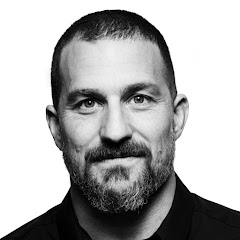 Andrew Huberman
Want to know something specific about what's covered?
We've already dissected every moment. Ask and we will deliver (with timestamps).
Key Moments
Dr. Bernardo Huberman, a physicist, shares his journey balancing profound scientific curiosity with an appreciation for everyday life.
Key Insights
Cultivating deep curiosity and a humanistic education provides a broad context for understanding the universe and oneself.
True scientific breakthroughs often arise from unconventional approaches and a willingness to pivot between diverse fields.
Maintaining discipline and an internal moral compass, rather than succumbing to peer pressure, is crucial for personal and professional growth.
Balancing intellectual pursuits with an appreciation for daily joys, rituals, and human connections enriches life and provides grounding.
The ongoing 'Quantum Internet' race is critical for future security, offering unbreakable encryption based on physics rather than mathematics.
Avoiding the pursuit of external validation (like prizes) in favor of intrinsic satisfaction from novel discoveries leads to a more fulfilling career path.
An optimistic view of technology and human ingenuity suggests solutions to global challenges, despite the present societal and political complexities.
EARLY LIFE AND THE SEED OF CURIOSITY
Dr. Bernardo Huberman, Andrew Huberman's father, was born in Argentina and exhibited an early and profound interest in abstract ideas, particularly philosophy and psychology. Despite a strict, humanistic education that included Latin and Greek, and societal pressures to pursue law or engineering, a high school physics teacher ignited his fascination with the underlying order of the universe. This passion was not rooted in an innate mathematical prowess but in the philosophical quest to understand how the world is put together, providing a "touchstone" of order amidst personal and political uncertainties in mid-20th century Argentina.
IMMIGRATION AND CULTURAL TRANSITION TO AMERICAN SCIENCE
Huberman's pursuit of physics led him to the United States as a graduate student at the University of Pennsylvania, supported by a U.S. Navy fellowship. This period marked a significant personal and cultural struggle. Having a strong theoretical background but lacking practical application skills, he found the academic environment challenging and often felt isolated. He rigorously maintained personal discipline, shunning the counterculture movement's recreational drug use and excessive behaviors, driven by a commitment to his values and a concern for his intellectual clarity, a trait he shares with figures like Rick Rubin.
THE ALLURE OF NOVELTY: FROM SOLID-STATE PHYSICS TO QUANTUM CONCEPTS
After completing his PhD, Huberman sought independence from traditional academic post-doc paths. He found a unique research environment at Xerox Park in Palo Alto, a nascent hub of innovation. Here, he diverged from conventional solid-state physics to explore esoteric concepts like tachyons and later, chaos theory, becoming a foundational figure in its development. This willingness to embrace new, often unconventional, research areas characterized his career, driven by an insatiable curiosity and the joy of intellectual discovery, rather than external accolades like Nobel Prizes.
UNRAVELING COMPLEX THEORIES: RELATIVITY, CHAOS, AND FRACTALS
Huberman provided accessible explanations of complex physics theories. Relativity, he noted, challenges human intuition because our brains are not evolved to comprehend near-light speeds where time and length behave counter-intuitively. Chaos theory explains how tiny initial differences in a system can lead to vastly divergent outcomes, challenging classical predictability. Fractals, in contrast, describe self-similar patterns at different scales. Huberman's work notably demonstrated that quantum systems, due to wave interferences, are not chaotic, offering a reassuring predictability at the subatomic level—a discovery that surprised even Richard Feynman.
EMBRACING DIVERSE FIELDS: COMPUTATION, ECONOMICS, AND ATTENTION
After making significant contributions to chaos theory, Huberman transitioned again, applying physics principles to study computer networks, birthing the concept of the 'Ecology of Computation.' This multidisciplinary approach, blending economics with artificial intelligence and computer science, showcased his knack for identifying fertile, uncrowded research areas. His later work on the economics of attention highlighted the addictive nature of digital technologies, demonstrating his enduring commitment to understanding complex systems, whether physical, technological, or social, driven by curiosity rather than loyalty to a single discipline.
THE QUANTUM INTERNET: A NEW FRONTIER IN SECURITY
Huberman detailed the critical importance of the Quantum Internet, an emerging technology providing unbreakable encryption based on the laws of physics. Unlike classical encryption, which relies on complex mathematical functions that quantum computers could eventually break, quantum communication leverages the principle that any attempt to observe a quantum message (cubits) destroys it, making it impervious to eavesdropping. This global race, with China leading in satellite-based quantum communication, represents a paradigm shift in cybersecurity, replacing mathematical security with physical law-based security.
REFLECTIONS ON SCIENTISTS, HUMANITY, AND THE WORK-LIFE BALANCE
Huberman's interactions with scientific giants like Murray Gell-Mann and Richard Feynman reveal his ability to respect their intellectual contributions while acknowledging their human flaws and eccentricities. He emphasizes that scientists, despite their profound insights, are complex individuals. Personally, he balances his intense intellectual pursuits with a deep appreciation for everyday joys—good food, classical music, nature walks, and cherished rituals—a grounding he attributes to his upbringing and his Danish wife. This balanced approach highlights that a meaningful life integrates high-level thought with present-moment enjoyment.
THE EVOLUTION OF EDUCATION AND CAREER PATHS
He notes a shift in the landscape of science and technology, where significant advancements often originate from companies rather than academia. While professional degrees remain essential for fields like medicine and law, he advises caution for those entering technology, as large language models may soon automate many programming tasks. He advocates for a strong, broad educational background, especially in the humanities, to foster critical thinking and cultural understanding, preventing individuals from becoming mere 'blue-collar workers' of the digital age. He views success stories like Zuckerberg and Musk as 'unicorns' whose paths are risky and not easily replicable.
OPTIMISM FOR THE FUTURE AND THE POWER OF DISCIPLINE
Huberman maintains an optimistic outlook on humanity's ability to solve major challenges like global warming through technology and wisdom, favoring practical solutions like nuclear power over abstract worries. His personal philosophy emphasizes discipline, self-awareness, and a commitment to internal values, rather than external validation or peer pressure. He sees life's journey as a continuous process of learning and adaptation, rejecting the notion of a 'fixed' career or retirement, preferring to remain engaged in stimulating work that allows his mind to thrive.
THE SPIRITUALITY OF ORDER AND THE LIMITATIONS OF AGENCY
While not believing in an anthropomorphic God actively managing daily events, Huberman is drawn to the concept of pantheism, where God is synonymous with nature's organizing principles. He experiences a sense of mystery and spiritual connection through observing the cosmos and listening to classical music. He acknowledges the brain's limitations in fully grasping quantum mechanics or the full scope of reality, but cautions against mistaking random coincidences for divine intervention. His perspective underscores a profound respect for the universe's inherent order, which humans have the capacity to unravel and appreciate.
THE VALUE OF RITUALS AND LIVING IN THE PRESENT
Huberman emphasizes the importance of rituals and being present, citing his meditation practice as a tool for managing anxiety and grounding himself. He believes in enjoying the pursuit of goals, rather than solely the achievement, and highlights the transient nature of emotional highs after success. He encourages a continuous pursuit of novel interests to avoid stagnation, an approach that has led him to switch fields numerous times. This deliberate choice to embrace new challenges reflects his belief that internal satisfaction and curiosity are greater motivators than external recognition or adherence to a singular path.
ETIQUETTE AND SOCIETAL COHERENCE
Huberman views etiquette as crucial for societal harmony and personal respect. He notes that proper dress and conduct signify respect for others and the occasion, contrasting the casual attire prevalent in some parts of American society with the more formal customs in Europe or during significant events. He believes that the pendulum of societal norms will eventually swing back towards greater formality and respect, as people rediscover the value of politeness and codified behavior in fostering a sense of order and community.
THE PHILOSOPHY OF A JOYFUL AND MEANINGFUL EXISTENCE
For Huberman, the ultimate goal is not mere happiness but 'joyfulness'—a deeper state of inner contentment and presence. He champions living one's life as a 'work of art,' embracing both high-level intellectual challenges and the simple pleasures of daily existence. His journey exemplifies a continuous quest for knowledge, an embrace of change, and a profound appreciation for life's inherent beauty, demonstrating that a fulfilling life merges deep scientific inquiry with a grounded, joyful, and humanistic approach to the world.
Mentioned in This Episode
●Supplements
●Products
●Software & Apps
●Companies
●Organizations
●Books
●Concepts
●People Referenced
Common Questions
He was initially interested in diverse ideas like philosophy and psychology. His interest in physics solidified in high school when a teacher exposed him to the field, offering a sense of order and power to understand the universe.
Topics
Mentioned in this video
The simulation of human intelligence processes by machines, especially computer systems. Dr. Bernardo Huberman now sees its usefulness for the typical citizen, believing it will improve life.
A large language model developed by OpenAI, capable of generating human-like text, which Dr. Bernardo Huberman notes can now program for users, making programming skills more accessible but also posing challenges for blue-collar programmers.
A global computer network providing a variety of information and communication facilities, consisting of interconnected networks using standardized communication protocols; Dr. Bernardo Huberman's work on the 'Ecology of Computation' and social networks was foundational for its understanding.
A British writer and Anglican theologian, who studied sagas and mythology and eventually became a devout Christian, illustrating a journey of spirituality and belief.
An entrepreneur known for his extreme longevity protocol aimed at reversing his biological age, mentioned in the context of pursuing extended lifespans.
Host of the Lex Fridman Podcast, who provided suggestions and support to Andrew Huberman when he started his podcast.
A distinguished theoretical physicist and mathematician known for his work in quantum electrodynamics and solid-state physics, who held unconventional views on global warming, suggesting it might lead to a 'garden Sahara'.
A renowned biologist and naturalist, author of 'On Human Nature,' whose theory on the religious instinct stemming from a submissive component in humans was mentioned.
Host of The Joe Rogan Experience podcast, cited for his work ethic and ability to balance multiple careers with a fulfilling personal and family life, who also helped support Andrew Huberman in starting his podcast.
A high-risk taker and entrepreneur, CEO of Tesla and SpaceX, who Dr. Bernardo Huberman acknowledges for his ambition (e.g., Mars colonization) but also notes his adaptable dress code depending on the context.
The co-founder of Apple Inc. who saw the innovations at Xerox PARC and built the first Macintosh computer based on them, a brilliant but quirky individual.
A Danish physicist who made foundational contributions to understanding atomic structure and quantum theory, for which he received the Nobel Prize in Physics in 1922.
The co-founder of Facebook, whose casual attire (hoodies) at one point symbolized a particular Silicon Valley style.
A true genius who invented computers and game theory in economics, known for his photographic memory and contributions, including his book 'The Computer and the Brain,' which inspired Dr. Bernardo Huberman.
A theoretical physicist and cosmologist, known for his contributions to the theories of general relativity and quantum gravity, who was advised by Roger Penrose.
A renowned theoretical physicist who developed the theory of relativity, often mythologized as being only interested in science, but also concerned with practical matters like salary.
Former Vice President of the United States and prominent environmental activist, mentioned in the context of discussions around climate change and its perceived severity.
A psychotherapist and author, whose interview with Andrew Huberman was praised by Dr. Bernardo Huberman for Andrew's interviewing talent.
An Austrian neurologist and the founder of psychoanalysis, whose writings were read by Dr. Bernardo Huberman as a teenager, even if not fully understood at the time.
A molecular biologist, biophysicist, and neuroscientist who played a crucial role in deciphering the structure of the DNA molecule. He is associated with the Cavendish Laboratory in Cambridge.
An American molecular biologist, geneticist, and zoologist, best known as one of the discoverers of the structure of DNA, who wrote 'The Double Helix,' a book Dr. Bernardo Huberman found incredibly exciting.
One of the Founding Fathers of the United States and the principal author of the Declaration of Independence, admired by Dr. Bernardo Huberman for his beliefs in liberty.
The current president of Argentina, who ran against the ideology of Peronism, mentioned in the context of Argentina's political history.
A Nobel Prize-winning physicist who discovered the quark and was known for being intimidating and often critical, but also brilliant; Dr. Bernardo Huberman had personal and professional interactions with him.
A Nobel Prize-winning physicist with esoteric ideas about the brain operating at a quantum level, an incredibly brilliant man who advised Stephen Hawking.
A former Stanford department member, now a professor in Ohio, known for his extremely high work hours, an example of pushing physical and mental limits in academia.
A Nobel Prize-winning physicist known for his exceptional brilliance and eccentric personality, often creating a myth around himself, whom Dr. Bernardo Huberman interacted with at Caltech.
A billionaire entrepreneur and venture capitalist, known for his unconventional views on education, suggesting that a university degree might not be necessary.
A brand of loose leaf and ready-to-drink yerba mate, praised for its quality and taste, which Andrew Huberman personally loves and helped develop the zero-sugar cold brew version.
A brand of virtual reality headsets, which Dr. Bernardo Huberman received for free but never used, indicating his preference for analog experiences over digital immersion.
A virtual private network (VPN) that secures and privatizes internet data by routing activity through encrypted servers, preventing tracking and data theft.
A mattress and pillow company that customizes products to individual sleep needs, allowing for better sleep quality.
An artificial intelligence research laboratory that develops advanced AI models like ChatGPT, which Dr. Bernardo Huberman believes companies using their products will profit more than OpenAI itself.
An American multinational information technology company where Dr. Bernardo Huberman was previously the director of the Social Computing Laboratory.
An online platform offering professional therapy with licensed therapists, noted for its convenience and ability to provide a good rapport, support, and useful insights.
A scientific research and development company that was once the most famous research institution, known for its elite status, which Dr. Bernardo Huberman considered for employment.
An electrolyte drink containing sodium, magnesium, and potassium in correct ratios, without sugar, used by Andrew Huberman for hydration and electrolyte balance.
A vitamin, mineral, probiotic drink with prebiotics and adaptogens, designed to cover foundational nutritional needs, used by Andrew Huberman for energy, sleep, and immune system strength.
A traditional South American caffeinated beverage known for regulating blood sugar, high antioxidant content, improved digestion, and possible neuroprotective effects, preferred by Andrew Huberman as a caffeine source.
Andrew Huberman's podcast where he discusses science and science-based tools, whose success is attributed to his talent for explaining complex topics clearly.
A prestigious professional organization of scientists in the United States, which Dr. Bernardo Huberman was nominated for but did not join due to his multidisciplinary work.
An Ivy League university where Dr. Bernardo Huberman pursued his graduate studies in physics under a Navy fellowship.
Palo Alto Research Center, a research and development company that played a pivotal role in the development of personal computing, where Dr. Bernardo Huberman worked on physics and computer science.
A new type of computing that uses quantum-mechanical phenomena, such as superposition and entanglement, to perform computations, allowing for potentially unbreakable encryption.
Advanced AI models trained on vast amounts of text data to understand, generate, and respond to human language; they are increasingly being used to solve complex problems and are capable of programming, though they can also 'hallucinate'.
More from Andrew Huberman
View all 395 summaries 32 min
The Science & Treatment of Obsessive Compulsive Disorder (OCD) | Huberman Lab Essentials
 159 min
Raising a Dog & Mastering Calm Assertive Energy | Cesar Millan
 37 min
Essentials: Tools for Hormone Optimization in Males | Dr. Kyle Gillett
 33 min
Essentials: The Science of Eating for Health, Fat Loss & Lean Muscle | Dr. Layne Norton
Ask anything from this episode.
Save it, chat with it, and connect it to Claude or ChatGPT. Get cited answers from the actual content — and build your own knowledge base of every podcast and video you care about.
Get Started Free