Key Moments
How to Be Happy — Arthur C. Brooks Interview
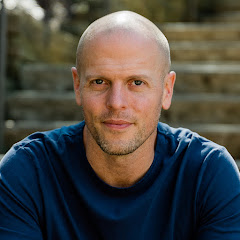 Tim Ferriss
Want to know something specific about what's covered?
We've already dissected every moment. Ask and we will deliver (with timestamps).
Key Moments
Arthur C. Brooks discusses finding lasting happiness by wanting less, managing unhappiness, and cultivating enjoyment, satisfaction, and meaning through faith, family, friends, and service.
Key Insights
Lasting satisfaction comes from 'haves divided by wants,' meaning reducing desires rather than accumulating more.
Happiness and unhappiness are distinct, coexisting emotions; true happiness involves managing negative affect rather than eliminating it.
The three 'macronutrients' of happiness are enjoyment (with people and memory), satisfaction (from struggle and deferred gratification), and meaning (coherence, purpose, significance).
Identifying and managing 'idols' (money, power, pleasure, fame) is crucial for avoiding self-deception and regret.
Cultivating deep, honest friendships, engaging in spiritual practices, and viewing work as service are vital components of a fulfilling life.
Embracing discomfort and practicing 'death meditation' on fears like failure or mental decline can liberate individuals to live more fully and gratefully.
THE REVERSE BUCKET LIST: WANTING LESS FOR LASTING SATISFACTION
Arthur C. Brooks introduces the concept of the 'reverse bucket list,' a practice he adopted at age 50 after realizing traditional bucket lists led to decreased satisfaction. He explains that true and stable happiness isn't about accumulating more, but about shifting one's mindset to desire less. This involves consciously detaching from ambitions and desires for money, power, admiration, or fame by writing them down and then symbolically crossing them out. This exercise moves these desires from the automatic, limbic system to the executive-managing prefrontal cortex, allowing individuals to manage their aspirations without being owned by them. The goal is intention without attachment, recognizing that the joy is in the journey, not just the destination.
FREEDOM FROM ATTACHMENT: VIEWS, POSSESSIONS AND MINDFULNESS
Brooks extends the principle of detachment to views and opinions, inspired by the teachings of Thich Nhat Hanh. He notes that attachment to one's beliefs can be as dangerous as attachment to wealth, leading to conflict and isolation. By consciously detaching from strongly held political views, for instance, one can cultivate greater tolerance, curiosity, and love, fostering stronger relationships. He also discusses Thich Nhat Hanh's emphasis on mindfulness, highlighting how being fully present in daily activities, like washing dishes, is essential for truly experiencing life, rather than living perpetually in the future or the past.
THE MYSTICAL AND THE PHYSICAL: HOLISTIC WELL-BEING
Brooks shares a profound mystical experience from his youth at the Shrine of Guadalupe, which led to his conversion to Catholicism. This highlights the human need for the transcendent and metaphysical, suggesting that allowing something to guide one to a deeper place is crucial for well-being. He also details his physical fitness regimen, including blood occlusion training, which he recommends for those over 40 to build strength and hypertrophy at lower weights, protecting joints. For Brooks, physical fitness is not about vanity but a happiness technique—it helps manage negative affect and fosters resilience.
UNHAPPINESS IS NOT THE OPPOSITE OF HAPPINESS
Drawing on his father's example of a brilliant yet gloomy life, Brooks delves into the complex relationship between happiness and unhappiness. He explains that these are not mere opposites but distinct phenomena, often processed in different brain hemispheres, and can coexist. Through the PANAS test, individuals can identify their 'affect profile' (e.g., 'mad scientist,' 'cheerleader,' 'poet,' 'sober judge') to understand their natural disposition towards positive and negative emotions. The key is not to eliminate unhappiness but to manage it, as negative emotions are vital for survival, learning, and personal growth.
THE MACRONUTRIENTS OF MEANING: ENJOYMENT, SATISFACTION, AND PURPOSE
Brooks outlines three crucial 'macronutrients' for happiness: enjoyment, satisfaction, and meaning. Enjoyment, he clarifies, is not mere pleasure (which can be addictive) but pleasure mixed with social connection and memory (e.g., sharing a beer with friends, not drinking alone). Satisfaction comes from achieving goals through struggle and deferred gratification, leading to a sense of accomplishment. Meaning, the most elusive, requires coherence (understanding why things happen), purpose (identifying life's direction), and significance (recognizing one's impact). He stresses that all three must be balanced and abundant for a truly happy life.
IDENTIFYING YOUR IDOLS: MONEY, POWER, PLEASURE, FAME
Inspired by Saint Thomas Aquinas, Brooks presents a 'What's My Idol' exercise, encouraging individuals to identify their primary 'Divinity substitute' from money, power, pleasure, or fame. He argues that most people are driven by one or two, and recognizing this dominant idol is crucial for understanding self-defeating behaviors and avoiding regret. Using Tim Ferriss as an example, he illustrates how even seemingly desirable pursuits can become idols that detract from genuine happiness once their dark sides are experienced. For Ferriss, his primary idol was pleasure, which can be mistakenly pursued as an inoculation against negative emotions, highlighting the need for healthier strategies for managing inner turmoil.
USING MONEY WISELY: EXPERIENCES, TIME, AND GIVING
Brooks details three scientifically proven ways to use money to increase happiness: buying experiences, buying time, and giving it away. Buying experiences, especially those shared with loved ones that create lasting memories, is far more effective than acquiring possessions. Buying time by outsourcing disliked tasks (e.g., hiring help for yard work) can reduce stress, but the liberated time must be used purposefully and enjoyably, not frittered away. Giving money to causes or individuals who genuinely need it and align with one's values provides profound happiness, as seen in his own practice of tithing and concentrated giving.
THE DEATH MEDITATION: EMBRACING MORTALITY AND FAILURE
Brooks introduces 'maranasati' or death meditation, a practice derived from Theravada Buddhism, which involves confronting fears related to death and insignificance. For many, this isn't physical death itself, but the 'death fear' of irrelevance, being forgotten, or failure. By regularly contemplating one's deepest fears (e.g., losing one's mind, professional failure), individuals can become familiar with these potential futures and liberate themselves from their paralyzing grip. He encourages Harvard students, often unfamiliar with failure, to perform this meditation on academic or career setbacks, fostering resilience and perspective.
THE MICRO-NUTRIENTS OF HAPPINESS: FAITH, FAMILY, FRIENDS, AND WORK
Brooks distills the myriad components of happiness into four core 'micronutrients': faith (or a spiritual/philosophical journey), family relationships (especially the mystical, chosen aspect of love), friends (emphasizing 'useless' real friends over 'useful' deal friends), and meaningful work that serves others. He stresses the importance of investing time and effort into cultivating these areas, particularly nurturing deep, honest friendships that provide candid feedback. His own system involves regularly assessing his progress in these areas through a detailed spreadsheet and strategic planning.
THE POWER OF HONESTY: NEVER LIE, ESPECIALLY TO YOURSELF
From Aristotle's 10 secrets to happiness, Brooks highlights the critical importance of 'Never Lie, especially to yourself.' He shares that his wife cited his honesty as a key reason for falling in love, emphasizing that true, companionate love thrives on pure honesty, even if it means not volunteering every thought unless directly asked. More profoundly, he argues that self-honesty—facing one's truths, both good and bad—is a difficult but life-changing practice. To cultivate this, he suggests seeking uncomfortable feedback from trusted, 'real' friends and engaging in consistent self-reflection.
THE PATH TO HAPPIERNESS: UNDERSTAND, PRACTICE, SHARE
Brooks outlines a three-step protocol for sustained happiness: understand, practice, and share. First, individuals must gain knowledge about the science of happiness. Second, they must translate this knowledge into specific, ingrained habits and practices, much like a meticulous scientific experiment on oneself. Third, and most crucially, they must share this knowledge by teaching others. This commitment to teaching acts as a powerful motivator and accountability mechanism, cementing the habits and fostering a deeper understanding. He credits his role as a happiness professor and his collaboration with Oprah Winfrey as key to this process.
EMBRACING SUFFERING FOR A FULLY ALIVE LIFE
The central message Brooks hopes readers take away from his collaborative book is the integral role of unhappiness in living a full and meaningful life. He argues against the modern tendency to pathologize or eliminate all suffering, asserting that 'happierness' is the goal, not the absence of unhappiness. True happiness isn't found by avoiding pain, but by embracing the suffering that accompanies deferred gratification, managed wants, and the quest for meaning. He cites thinkers like Carl Jung and Andrew Solomon, who advocate for accepting and even loving one's struggles as essential parts of personal growth and self-discovery. Suffering, paradoxically, makes one more 'fully alive.'
CULTIVATING GRATITUDE FOR THE GOOD AND THE BAD
Brooks offers a practical technique for embracing both positive and negative experiences: starting each day with a statement of fact and aspiration—acknowledging uncertainty while expressing deep gratitude for everything, good and bad. He introduces the 'failure journal,' a method for processing disappointments and setbacks. By recording failures, reflecting on lessons learned a month later, and identifying positive outcomes six months later, individuals can shift their perspective. This practice transforms painful experiences into opportunities for growth and gratitude, ultimately integrating them into a fuller, more appreciative view of life.
Mentioned in This Episode
●Software & Apps
●Tools
●Companies
●Organizations
●Books
●Studies Cited
●Concepts
●People Referenced
Building a Happier Life: Practical Strategies
Practical takeaways from this episode
Do This
Avoid This
Common Questions
The reverse bucket list is a practice where you write down your ambitions and desires, then consciously cross them out as attachments. This exercise aims to detach you from the 'hungry ghosts' of wanting more, recognizing that lasting satisfaction comes from wanting less, shifting desires from the limbic system to the prefrontal cortex for conscious management.
Topics
Mentioned in this video
Tibetan Buddhist leader whose teachings on intention without attachment and meditation techniques influenced Arthur C. Brooks's Catholic prayer practices.
A famous economic study from Princeton showing that happiness flattens out after an annual income of $75,000, indicating money beyond a certain point doesn't increase happiness.
A neuroscientist at the University of Wisconsin who has done work showing that negative emotions are largely dominated by activity in the right side of the brain.
Author of the article 'The Tail End,' which greatly influenced Tim Ferriss to prioritize family and friends by showing the declining time spent with loved ones over a lifetime.
A colleague of Arthur C. Brooks at Harvard Business School who, along with Mike Norton, conducted extensive research on purchasing happiness through experiences, time, and charitable giving.
Roman Emperor and Stoic philosopher whose private diary, 'Meditations,' is remembered more than his reign.
A doctor and friend of Tim Ferriss who recommended Arthur C. Brooks's book 'From Strength to Strength'.
Freud's greatest student, cited for his idea that one cannot truly understand happiness until unhappiness has been experienced, a concept reflecting the importance of suffering.
Former Prime Minister of the UK, known for referring to his depression as the 'black dog,' an analogy mentioned in relation to the 'Noonday Demon' by Andrew Solomon.
Co-author of 'How to Build the Life You Want,' and host of 'Super Soul' podcast. Her readership of Arthur C. Brooks's articles and prior book led to their collaboration.
Author of 'The Noonday Demon,' whose beautiful writing on anxiety and depression includes the sentiment of loving one's depression for what it teaches about life.
A great Vietnamese Buddhist monk whose teachings on attachment to views and mindfulness greatly influenced Arthur C. Brooks.
The peasant man in Catholic teaching who saw an apparition of the Blessed Virgin Mary near Mexico City, resulting in her image imprinted on his tilma.
A prominent evangelical figure who dated Arthur C. Brooks's aunt during college at Wheaton.
Lead singer of The Rolling Stones, whose song 'I Can't Get No Satisfaction' is referenced to illustrate the temporary nature of satisfaction and the hedonic treadmill.
A medieval philosopher and theologian, responsible for introducing Aristotle to the modern world, whose insights on human happiness and 'idols' (divinity substitutes) are studied in Arthur C. Brooks's class.
A pop star who tweeted, 'Fame is prison,' a comment Arthur C. Brooks considers 'deeply adept' in the context of fame being a bitter fruit despite high desire.
A colleague of Arthur C. Brooks at Harvard Business School who, along with Ashley Williams, conducted exhaustive research on how to buy happiness through experiences, time, and giving.
A distinguished neuroscientist at Harvard who vetted Arthur C. Brooks's new book to ensure the accuracy of its neuroscience sections.
A famous book by Thich Nhat Hanh that sparked the mindfulness revolution in the West, starting with a simple description of washing dishes.
A book from the Bible quoted by Tim Ferriss ('ashes to ashes, dust to dust') to emphasize the impermanence of worldly things, including legacy and wealth.
A private diary intended for self-reflection by the Roman Emperor Marcus Aurelius, recommended for those seeking a 'quasi-religious experience' and a sense of their own 'littleness.'
A fiction book recommended by Arthur C. Brooks as a 'deeply awe-inspiring experience about the human condition and the absurdity of it' for those seeking personal growth.
Arthur C. Brooks's new book, co-authored with Oprah Winfrey, designed as an owner's manual for happiness, emphasizing managing emotions and building a meaningful life.
St. Thomas Aquinas's magisterial work, highlighted for its master class structure of presenting questions, objections, and counter-arguments.
Tim Ferriss's book, mentioned by Arthur C. Brooks for its focus on specific, 'hacky' protocols and experiences, including unusual dietary and sexual experiments for 'fun.'
Arthur C. Brooks's prior book, recommended by Peter Attia, which explored themes of finding satisfaction and not declining in happiness after success.
A book mentioned by Tim Ferriss that explores the biochemical reasons for exercise and its explicit purpose in improving mood.
The image of the Blessed Virgin Mary, depicted as a woman of mixed race, which contributed to millions of conversions to Catholicism in Mexico by being culturally subversive and relatable to the local population.
A psychometrically validated test used to determine if someone is high positive/high negative or low positive/low negative in their emotional affect, available on Arthur C. Brooks's website.
A book by Andrew Solomon about anxiety and depression, described as 'the best book I've ever read' on the topic, emphasizing the profound lessons that can be learned from suffering.
A small Christian College in Seattle where Arthur C. Brooks's father was a lifelong college professor.
A famous college outside Chicago where Arthur C. Brooks's grandfather was dean and where many family members, including his aunt who dated Billy Graham, attended.
The publication where Arthur C. Brooks writes a weekly column that applies happiness science to real life with actionable advice, and which was read by Oprah Winfrey.
A documentary mentioned in the context of identical twin studies and the ethical challenges of studying separated twins.
The newspaper where Arthur C. Brooks wrote an obituary for Thich Nhat Hanh.
Oprah Winfrey's book podcast where Arthur C. Brooks was a guest, leading to their book collaboration.
A famous Catholic pilgrimage site in Mexico City where Arthur C. Brooks had a mystical experience at age 15, leading to his conversion to Catholicism.
The location of Oprah Winfrey's tea house where she and Arthur C. Brooks framed up their book over several days.
The location where Arthur C. Brooks rented a house for six weeks in winter to write his part of the book, often looking at the Pacific Ocean.
Mentioned as an 'unhappiness machine' due to its tendency to evoke mixed emotional states and negativity bias.
A beer company whose advertising campaigns are cited as an example of how pleasure (drinking beer) is almost always shown with people and memory, avoiding the problematic nature of solitary pleasure.
Mentioned for its internal mantra 'feedback is a gift,' used to cultivate a culture of open and honest communication in the workplace.
More from Tim Ferriss
View all 705 summaries 108 min
The Random Show — AI Super Assistants, Dream Engineering, Wizards, Supplements, and More!
 121 min
How to Legalize Medical Psychedelics in Your Country — Tania de Jong on Australia’s Breakthrough
 70 min
Q&A with Tim — The Art of Male Friendship, Reinvention in The Age of AI, & More
 125 min
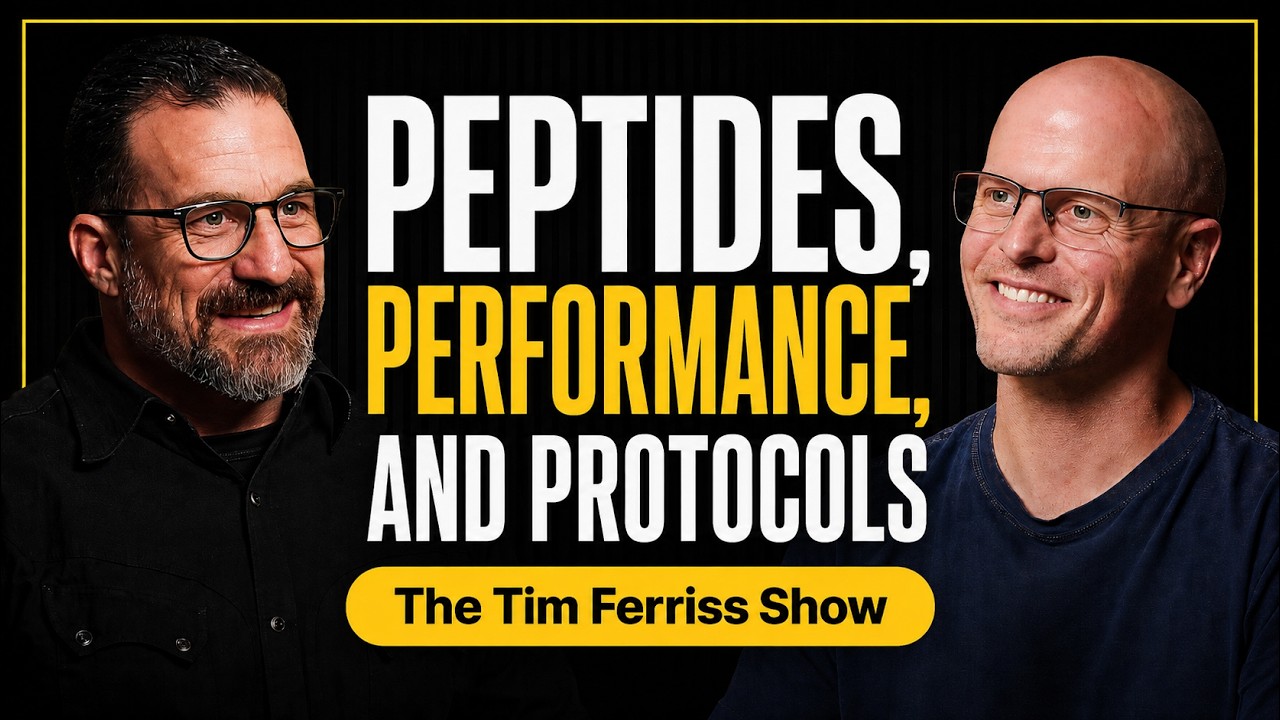
Dr. Andrew Huberman — Peptides, Performance, and Protocols
Ask anything from this episode.
Save it, chat with it, and connect it to Claude or ChatGPT. Get cited answers from the actual content — and build your own knowledge base of every podcast and video you care about.
Get Started Free