Key Moments
How to Avoid the Busy Trap (and Other Misuses of Your Time) | The Tim Ferriss Show (Podcast)
 Tim Ferriss
Want to know something specific about what's covered?
We've already dissected every moment. Ask and we will deliver (with timestamps).
Key Moments
Seneca advises against the 'busy trap,' urging intentional withdrawal from futile pursuits and living deliberately.
Key Insights
Avoid the 'busy trap' by recognizing and withdrawing from futile or self-imposed obligations.
True progress requires decisive action, not half-measures or perpetual hesitation.
Evaluate pursuits based on their worthiness and avoid being busy for busyness' sake.
Meaningful life is about noble living, not merely the length of one's life.
The fear of death often stems from a life unlived, filled with postponed undertakings.
Procrastination, especially in important decisions, leads to regret and missed opportunities.
RECOGNIZING FUTILE PURSUITS
The core message emphasizes the importance of identifying and disengaging from activities that are ultimately pointless or self-imposed. Seneca suggests that many individuals become ensnared in a 'busy trap,' pursuing goals or obligations that do not serve them. This involves a conscious effort to observe one's life and discern which endeavors are truly valuable versus those that are merely a distraction or a means of avoiding deeper issues. The advice encourages a critical self-assessment to determine if one's current path is leading to a meaningful outcome or simply perpetuating a cycle of busyness.
THE NECESSITY OF DECISIVE ACTION
Seneca strongly advocates for decisive action, contrasting it with procrastination and half-measures. He uses the metaphor of a physician needing to feel a pulse or a gladiator reading an opponent's glance to illustrate that specific, real-time decisions are crucial. General rules can be written down, but the execution of plans, especially those involving withdrawal from detrimental situations, requires presence of mind and immediate engagement. Delaying these critical decisions often results in being permanently stuck, unable to extricate oneself from difficult circumstances.
CHOOSING EITHER WITHDRAWAL OR EXISTENCE
A radical yet important directive from Seneca is to either fully withdraw from a detrimental way of life or to withdraw from existence altogether. This highlights the severity of being trapped in futile pursuits. However, he tempers this by suggesting a gentle path, aiming to loosen the knot rather than cut it, provided it can be done. The key is to recognize that prolonged suspension or struggle is worse than a decisive end, whether that end is a retreat or a more final resolution. The urgency is to avoid being perpetually caught in a bad situation.
AVOIDING EXCUSES AND EXTERNAL COMPULSION
The text critiques the common human tendency to make excuses for being trapped in undesirable situations, such as claiming to be 'compelled' or acting 'against one's will.' Seneca asserts that no one is truly forced to pursue prosperity or remain in a specific business against their true desires. If one continues to struggle after the opportunity to disengage has been presented, it negates the excuse of compulsion. Therefore, it's crucial to acknowledge that choices are being made, even if they lead to a difficult situation, and to avoid continuing a path simply because it has become familiar or offers apparent advantages.
THE ALLURE OF REWARDS VERSUS HARDSHIPS
A significant reason people remain trapped is their love for the rewards of their endeavors, even while cursing the hardships involved. This is likened to complaining about ambitions or mistresses; the underlying feeling is not hate but a form of bickering or dissatisfaction with a situation they could leave but choose not to. The desire for what might be gained—wealth, status, retinue—often outweighs the recognition that the effort is unworthy or that escape is possible. People delay their exit, lingering voluntarily in situations they find wretched, illustrating that many hold fast to their own forms of slavery.
THE WISDOM OF ESCAPE AND LIVING NOBLY
True freedom, Seneca argues, comes from despising the rewards of business or demanding pursuits. If freedom is genuinely desired, one must be willing to leave behind the baggage, both literal and metaphorical. Attempting to carry possessions or status while escaping leads to failure. Stoic philosophy, represented by figures like Zeno and Chrysippus, offers temperate and honorable advice for such an escape. Ultimately, the focus should be on living a noble life, not merely a long one, as many postpone their true undertakings until it is too late, fearing death without having truly lived.
THE FUTILITY OF POSTPONEMENT
The selection includes a poignant quote from Epicurus, emphasizing that everyone leaves life as if they have just entered it, being equally afraid of death and ignorant of life. This is attributed to the habit of postponing all undertakings. We fail to act when the time is right and delay when the opportunity is present. This constant deferral means that life's projects are never completed, and the end arrives with a sense of unfinished business. The core failing is not in nature but in our own choices, leading us to depart from life unfulfilled and fearful, unlike the state of carefreeness we had at birth.
Mentioned in This Episode
●Software & Apps
●Companies
●Books
●People Referenced
Avoiding Halfway Measures and the Busy Trap
Practical takeaways from this episode
Do This
Avoid This
Common Questions
Seneca advises against halfway measures, urging individuals to fully commit to their decisions. He suggests either fully withdrawing from detrimental pursuits or, if necessary, cutting ties decisively rather than lingering in indecision.
Topics
Mentioned in this video
A compilation created by Tim Ferriss for audiobook listening of Seneca's letters.
A book by Tim Ferriss for which 99designs was used to create cover prototypes.
A collection of Seneca the Younger's moral letters, specifically Letter 22 on the futility of halfway measures, which is highlighted in the episode.
More from Tim Ferriss
View all 696 summaries 127 min
Reimagining Biotech with Jake Becraft of Strand Therapeutics — Tim’s Founder Kitchen
 132 min
Reversing Type 2 Diabetes and Rowing 2,750 Miles — Sami Inkinen of Virta Health
 71 min
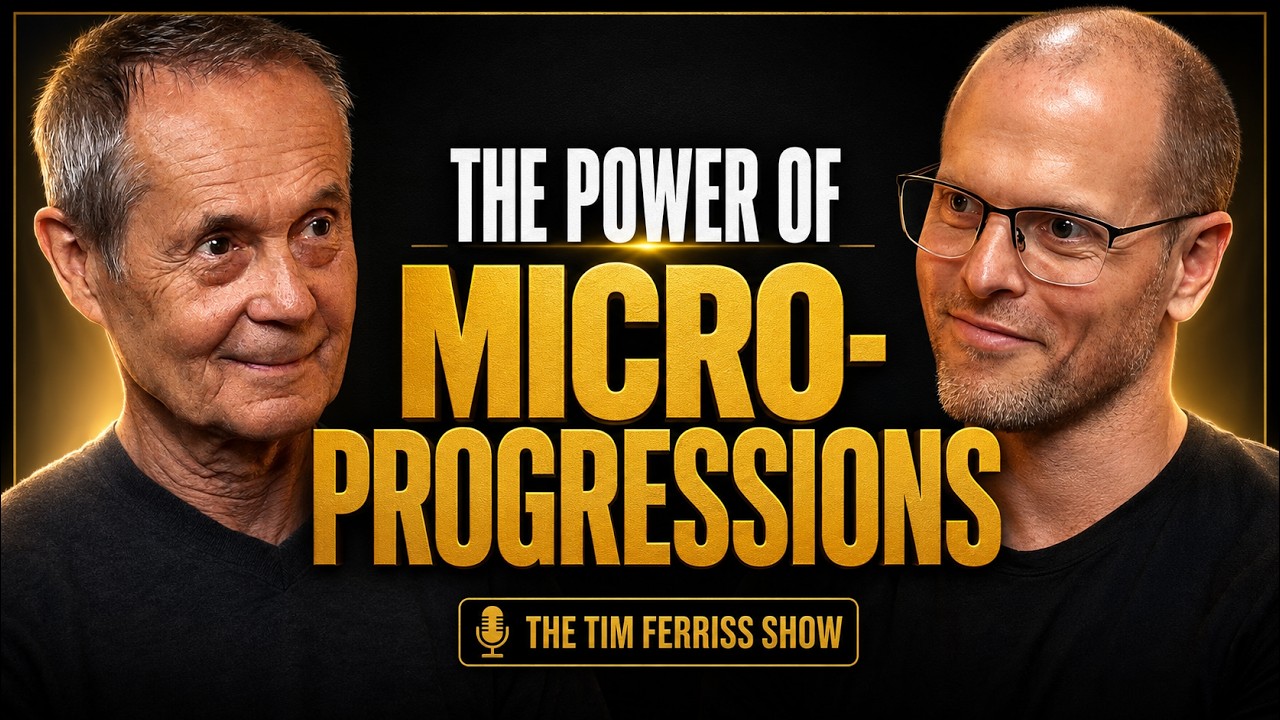
The Most Incredible Transformation I’ve Ever Seen — Jerzy Gregorek on Cerebral Palsy and Coaching
 34 min
PRISONER NO MORE: The True Story of Tae Jin Park
Ask anything from this episode.
Save it, chat with it, and connect it to Claude or ChatGPT. Get cited answers from the actual content — and build your own knowledge base of every podcast and video you care about.
Get Started Free