Key Moments
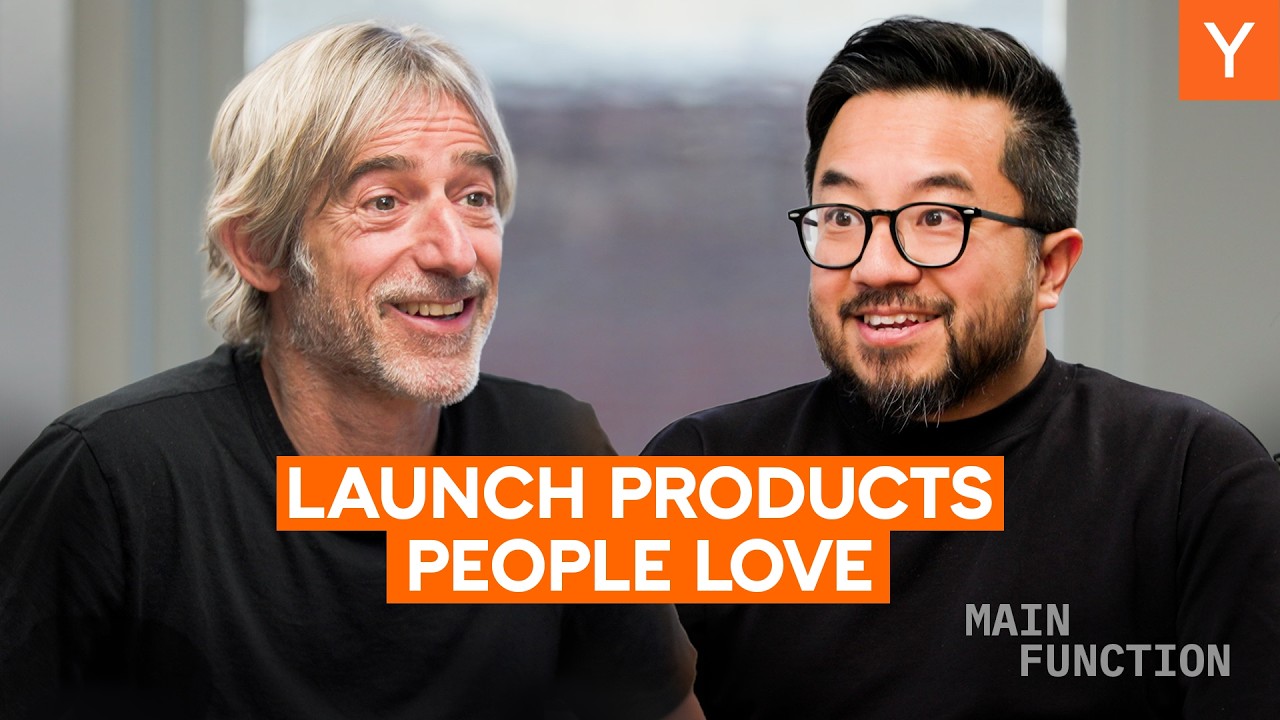
How David Lieb Turned a Failing Startup Into Google Photos | Backstory
 Y Combinator
Want to know something specific about what's covered?
We've already dissected every moment. Ask and we will deliver (with timestamps).
Key Moments
David Lieb turned a failing startup into Google Photos by ignoring his bosses and defying being fired twice, eventually building a product used by billions.
Key Insights
Bump, an app developed by David Lieb and co-founders, saw rapid growth to 150 million users but struggled with low usage frequency and a lack of a clear business model.
Initial user interviews for Bump revealed that people were primarily using it to share photos with family, a significant insight that was missed by the founders.
After Bump's struggles, the team pivoted to Flock, another photo-sharing app, which also failed to gain traction, leading to a near shutdown of the company.
Paul Graham's advice to 'replace the entire photos app on the phone' spurred the idea for PhotoRoll, which eventually became the foundation for Google Photos.
Lieb defied his managers at Google to build Google Photos, facing conflict and being fired from the team twice before ultimately getting approval for the project.
Google Photos launched in 2015 and grew to over a billion users in less than four years, becoming a massive success driven by AI-powered search and organization features.
The early days of ambition and unexpected pivots
David Lieb's journey began with a strong academic foundation in engineering, but a desire for more than a traditional engineering path led him to explore entrepreneurship. Inspired by the success of YouTube, he co-founded Bump in 2009, an app designed to share contact information by bumping phones. Bump experienced explosive growth, reaching 150 million users, driven by word-of-mouth and a novel interaction method. Lieb emphasizes that building a successful product often requires total commitment and accepting that failure is a likely part of the journey, with success rarely being a straight line. The team, comprised of engineers, figured out mobile app development on the fly, trusting their intuition about product design. This early phase highlighted the potential for anyone to build something impactful and the value of building products for oneself.
The critical flaw of low usage frequency
Despite Bump's massive user base and popularity, as evidenced by its high ranking on the app store and even an investment from MC Hammer, the app faced a critical challenge: low usage frequency. Lieb categorizes product success using a 2x2 grid of frequency and value per interaction. Bump fell into the 'low frequency, low value' box, meaning users didn't interact with it often enough to sustain it as a business. The founders made classic startup mistakes, including raising too much money too quickly, hiring too fast, and not having a credible business model. Taking Y Combinator's advice to 'talk to your users,' Lieb personally contacted the top 100 users and discovered a surprising insight: they were primarily using Bump to share photos, not contact information. This realization was a turning point, indicating that the core problem they should have been solving was photo sharing.
The relentless pursuit of photo sharing
The discovery that users were leveraging Bump for photo sharing, particularly among family members, led Lieb and his team to pivot to their second app, Flock. Flock was designed to automatically share photos taken with friends using geolocation and social graph data. However, this product also failed to gain significant traction, with users expressing positive feedback but not actually engaging with the app. Lieb highlights the difficulty in getting users to provide honest, critical feedback and the importance of relying on quantitative data like retention curves. Facing dwindling funds and the potential failure of their venture after investing millions, the team sought advice from Paul Graham. Graham's provocative suggestion to 'replace the entire photos app on the phone' sparked the idea for PhotoRoll, a concept for a superior photo management experience.
Defiance and destiny at Google
After selling Bump to Google, Lieb's team aimed to build PhotoRoll using Google's technology, envisioning it as the future of photo management. However, upon arrival, they found their plans had changed due to a reorganization at Google, and they were instead tasked with working on Google+. Lieb, convinced of the potential for a product like Google Photos to reach a billion users, defied his superiors. He continued to work on the Google Photos concept on the backburner, designing it with a lead designer and gaining support from engineers who preferred it over the social network project. This defiance led to conflict, and Lieb was fired from the team twice. He utilized his network and called in favors to rally support for Google Photos, ultimately winning the battle to build the product.
Building Google Photos and a personal crisis
With the green light and a team of 20 from Bump joining around 100 Google employees, Google Photos was built from scratch in approximately nine months, launching in 2015. The product was designed as 'a home for all of your life's memories,' incorporating pioneering AI for searchability, organization by face, and automated creation features, essentially aiming to be a 'photo assistant for every human.' Google Photos was an immediate success, growing to over a billion users in under four years. However, at the height of this professional triumph, Lieb faced a personal crisis: a leukemia diagnosis. This life-threatening event led him to re-evaluate his priorities, cherishing memories in Google Photos and reflecting on the value of life itself. He realized he did not want to die without having made a significant impact.
A new mission: coaching the next generation
Surviving leukemia and undergoing a year of intense chemotherapy, Lieb experienced a profound shift in perspective. He found the simple act of smelling the air in San Francisco after his treatment to be an incredibly powerful experience. Recognizing that his role at Google had evolved away from the product building he loved and into bureaucracy, he decided to leave. Lieb joined Y Combinator in September 2022, embracing a new role as a coach rather than a player. His motivation is to leverage his extensive experience, including his failures and successes, to guide and support the next generation of founders in building the future products that will shape the world.
Mentioned in This Episode
●Products
●Software & Apps
●Companies
●Organizations
●Drugs & Medications
●People Referenced
Startup Lessons from David Lieb
Practical takeaways from this episode
Do This
Avoid This
Common Questions
David Lieb's first app was called Bump, created with a friend during his MBA program. It allowed users to share contact information by bumping their phones together.
Topics
Mentioned in this video
The speaker and founder of Bump and the product lead for Google Photos.
Mentioned for featuring Bump's icon in one of his pitch decks.
An investor in Bump, highlighting its early popularity.
Co-founder of Y Combinator, who advised David Lieb to replace the iPhone's entire photos app.
An internal prototype app developed by David Lieb's team at Google, which later evolved into Google Photos.
David Lieb's second app, designed to automatically share photos taken with friends using geolocation and social graph data.
The first app David Lieb co-founded, designed for easy contact information sharing by bumping phones.
The platform where Bump was first submitted and launched, experiencing rapid initial growth.
A widely successful photo storage and management service developed by David Lieb and his team, which grew to over a billion users.
The healthcare provider where David Lieb first sought medical attention leading to his leukemia diagnosis.
Mentioned as a benchmark for a billion-user product.
The company where David Lieb worked after dropping out of his PhD program.
A platform mentioned as an example of a successful startup sold for a billion dollars, inspiring David Lieb.
An accelerator program David Lieb applied to with Bump, which provided funding and mentorship.
The company that acquired David Lieb's startup and where he eventually led the development of Google Photos.
More from Y Combinator
View all 602 summaries 33 min
India Can Create The Largest AI Companies
 41 min
Zynga Founder: Consumer Is Not Investible Right Now - Thats Why You Should Build It
 43 min
The Age Of The 40-Year-Old Solo Founder Is Here
 31 min
Groww: If Your Customers Don't Love It or Hate It, You've Already Lost
Ask anything from this episode.
Save it, chat with it, and connect it to Claude or ChatGPT. Get cited answers from the actual content — and build your own knowledge base of every podcast and video you care about.
Get Started Free