Key Moments
George Hotz: Comma.ai, OpenPilot, and Autonomous Vehicles | Lex Fridman Podcast #31
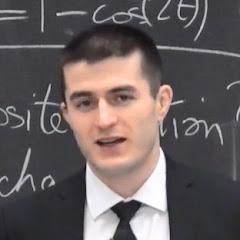 Lex Fridman
Key Moments
George Hotz discusses Comma.ai, AI, hacking, and the future of autonomous vehicles.
Key Insights
The nature of reality and simulations, and the possibility of 'hacking' them.
Hotz's journey into hacking, starting with electronics and progressing to software exploitation.
The development and philosophy behind Comma.ai's OpenPilot system for autonomous driving.
The challenges and future of autonomous vehicles, including the role of driver monitoring and data.
Reflections on the meaning of life, work, and the potential for deep human-AI relationships.
The singularity and the future dominance of machine computation over biological computation.
PERSPECTIVES ON REALITY AND SIMULATIONS
The conversation begins with a philosophical dive into the simulation hypothesis, exploring whether humanity is living in a simulation. Hotz posits that such a simulation could be designed to be unfalsifiable, making it impossible to prove or disprove its existence. He draws parallels with well-designed virtual machines in computing, suggesting that a sufficiently advanced simulation might be undetectable from within. This theoretical framework frames his later discussions on hacking and escaping limitations.
THE EVOLUTION OF A HACKER AND PROGRAMMER
George Hotz recounts his early fascination with hacking, stemming from electronics and a book on 'grey hat hacking.' His initial iPhone unlock was a physical feat, driven by a lack of software exploitation knowledge at the time. His programming journey involved self-teaching, internships at Google and Facebook, and the iterative development of tools like 'Kira,' a sophisticated debugger. He emphasizes the importance of receiving constructive feedback and the sheer practice required to refine his skills.
OPENPILOT: THE PHILOSOPHY AND ENGINEERING OF COMMA.AI
At Comma.ai, Hotz and his team are developing OpenPilot, an open-source driver assistance system. He explains that the goal is not necessarily to achieve full Level 5 autonomy immediately but to create a robust and valuable Level 2 system, focusing on excellent lane-keeping. The system uses a smartphone in a case with a custom CAN transceiver ('panda') to interface with the car's systems, fusing camera and radar data. Hotz stresses the importance of driver monitoring to ensure safety and the belief that excellent lane-keeping is a significant value proposition.
CHALLENGES AND APPROACHES IN AUTONOMOUS DRIVING
Hotz expresses skepticism about the timelines and approaches of some larger companies aiming for full autonomy, particularly regarding Level 4 and 5 systems. He highlights Tesla's incremental, data-driven approach as potentially more effective than others. He discusses the complexities of autonomous driving, distinguishing between static and dynamic driving problems, and the importance of addressing the 'counterfactual' – predicting and reacting to unpredictable human behavior. He believes an end-to-end learning approach, similar to AlphaGo, is the most promising path forward.
THE FUTURE OF HUMAN-AI INTERACTION
The conversation delves into the future of human-AI relationships, with Hotz expressing a serious interest in deep connections with AI, even to the point of 'merging' with a machine. He imagines a future where AI can deeply model and understand individuals, offering guidance and companionship. He also touches on the potential for a 'simulation' of intimate experiences, blurring the lines between the digital and physical.
THE SINGULARITY AND INTELLIGENT AGENTS
Hotz shares his belief in the coming singularity, predicting that machine computation will surpass biological computation around 2038. He views himself as an intelligent agent seeking to build a maximally compressive model of the world to understand his purpose. He likens this to a mathematical goal function, where winning means understanding and fulfilling that purpose, a process that involves reducing uncertainty about the reward function and maximizing its value.
ETHICS, SECURITY, AND THE VALUE OF WORK
Addressing ethical questions, Hotz frames the 'trolley problem' as more of a philosophical troll than a practical engineering challenge for current Level 2 systems, stating that the decision would be passed to the human driver. He views security as an extreme form of safety, emphasizing local sensor reliability over dependency on external communication. He also reflects on work, stating that it provides his life meaning, advocating for working smarter rather than just longer hours.
COMMODITIZATION AND COMPETITION IN AUTONOMOUS VEHICLES
Hotz discusses the competitive landscape of autonomous vehicles, arguing that unlike ride-sharing services with network effects, AVs lack this advantage. He believes this will lead to commoditization, where the primary differentiator becomes cost. He respects companies like Waymo for their technical progress but questions the long-term financial viability of their capital-intensive approach. He also touches on the potential for Comma.ai to eventually become an insurance company, leveraging data to incentivize safer driving.
Mentioned in This Episode
●Products
●Software & Apps
●Companies
●Organizations
●Books
●Concepts
●People Referenced
Comma.ai's Autonomous Driving Principles
Practical takeaways from this episode
Do This
Avoid This
Common Questions
Yes, George Hotz believes we are likely living in a simulation. He suggests it could be unfalsifiable if designed to prevent information from getting in or out, making it impossible to prove from within.
Topics
Mentioned in this video
Used as an example of a large binary that would be challenging to debug with advanced tools like Kira due to its size and performance.
A programming language that George Hotz admits is confusing with its ecosystem but will likely be part of the future due to its presence in browsers.
A web server used by George Hotz in a distributed file system he developed, highlighting his approach to building compact, efficient systems.
A vision system company whose performance Elon Musk sought to replace, leading to George Hotz's initial contract discussions.
A navigation software used as an example of a valuable V2I (vehicle-to-infrastructure) communication that improves driving experience without being safety-critical.
Google's programming language that George Hotz used to write a master server for his distributed file system, comparing it to C++ but easier.
A JavaScript-based tool open-sourced by comma.ai for analyzing CAN traffic data from cars.
A programming language George Hotz picked up during college, especially for CTF competitions due to its speed for rapid development. He later notes its limitations for large codebases.
A superset of JavaScript mentioned as a potential future direction.
The vehicle communication bus that Panda uses to interact with the car, including radar, main car, and proxy camera data.
A traditional debugger mentioned by George Hotz to highlight the advanced capabilities of Kira, such as rewinding and direct variable tracking.
A programming language Go is compared to, being described as easier and having a strong type system.
A JavaScript library used for building user interfaces, which comma.ai employs for its debug tools.
The communication protocol used for data transmission between the phone (running Openpilot) and the CAN transceiver (Panda).
GM's advanced driver-assistance system, praised by George Hotz for its in-highway experience but criticized for its engagement/disengagement process and crudeness.
A timeless debugger developed by George Hotz, allowing users to rewind program execution and visualize variable changes efficiently.
A programming language that George Hotz mentions he has continually embraced, noting its persistent presence despite its perceived flaws.
A JavaScript-based tool open-sourced by comma.ai for annotating disengagements in autonomous vehicle logs.
Tesla's advanced driver-assistance system, which George Hotz believes has flaws in lane changes and lacks proper driver monitoring.
A functional programming language George Hotz used to write a compiler during his time at Carnegie Mellon, demonstrating his diverse language exposure.
A strongly typed language mentioned conceptually by Lex Fridman as a potential alternative for large codebases.
Comma.ai's open-source driver-assistance system, currently at version 0.6 and aiming for 1.0 focusing on perfected lane-keeping.
Google's offensive security team that announces vulnerabilities and enforces a 90-day deadline for companies to fix them before publicly dropping the zero-day exploit.
The university George Hotz attended at age 22 to take advanced computer science courses, including operating systems, compilers, and AI.
An organization mentioned as doing a great job of evaluating autonomous driving systems like Tesla Autopilot.
An automotive and energy company, whose Autopilot system George Hotz critically evaluates and compares to Openpilot.
A machine learning based vehicle automation company founded by George Hotz, focused on developing advanced driver-assistance systems.
The car brand identified with GM's Super Cruise system, which comma.ai bought to experience and learn from.
A company founded by Anthony Levandowski, whose focus on trucking solutions is seen by George Hotz as a valid approach distinct from comma.ai.
Where George Hotz worked for a period when he was developing his third version of his debugger.
An autonomous vehicle company mentioned as using the same DARPA Urban Challenge codebase as Waymo and Cruise.
Where George Hotz interned after the iPhone unlock, building hardware for Street View and receiving critical feedback that helped him improve his programming skills.
One of the primary car manufacturers supported by Openpilot, with the 2020 Corolla noted for its excellent performance.
A company focused on autonomous trucking, mentioned as having a similar approach to Pronto, which George Hotz respects.
A company that sells driver monitoring cameras to fleet owners, praised by George Hotz for its effective business model that creates value by reducing accidents.
A live-streaming platform where George Hotz codes, intentionally exaggerating his frantic style for entertainment.
One of the primary car manufacturers supported by Openpilot, with almost every model made recently being compatible.
An insurance company mentioned hypothetically as a competitor if comma.ai were to enter the car insurance market with vastly lower premiums for safe drivers.
A car manufacturer whose vehicles are supported by Openpilot.
The ride-sharing company, discussed in the context of network effects and George Hotz's skepticism about autonomous vehicles' ability to compete in the taxi market.
An autonomous vehicle company mentioned as using the same DARPA Urban Challenge codebase as Waymo and Cruise.
The processor used in the devices running Openpilot, described as a phone in a plastic case.
A Google product for which George Hotz built hardware and wrote software during his internship.
A virtual reality headset mentioned as a component for potential 'VR brothels' or novelty experiences with real dolls and good software.
Google's Tensor Processing Unit pod, estimated to be equivalent to the compute power of about five human brains.
A smartphone that George Hotz was the first person to unlock, starting his public recognition as a hacker.
A GPU mentioned to illustrate the feasibility of building data centers to achieve human-level compute power.
The forward-facing camera sensor used in the devices running Openpilot.
Praised as the best car for Openpilot due to its actuator having less lag, providing a superior experience.
A principle of computing power growth that George Hotz mostly agrees with, influencing his prediction of the singularity's timing.
Discussed in the context of a simulation being designed like a perfectly isolated virtual machine, making it impossible to detect if one is inside a simulation.
Co-founder of Motional (formerly nuTonomy, a pioneer in self-driving) mentioned as someone who initially built aftermarket systems but gave up due to technical challenges.
Creator of Linux, admired by George Hotz for doing the 'real work' of building foundational infrastructure.
Host of the Artificial Intelligence podcast, interviewing George Hotz.
Founder of comma.ai, known for being the first to unlock an iPhone and an outspoken personality in AI and technology.
CEO of Tesla, who George Hotz met with to discuss a contract for building a vision system for Autopilot, and whose claims about autonomy are often debated.
Co-founder of Aurora, mentioned by George Hotz as someone he respects in the self-driving car space.
Another 'mad genius' in the autonomous driving space, whose approach, along with Pronto and Embark, George Hotz respects as a viable alternative.
A computer scientist and philosopher, described as being 'obsessed with counterfactuals,' a concept George Hotz applies to autonomous driving problems.
A YouTuber and AI educator with whom George Hotz had an interview, where he 'trolled' about life being work and AI girlfriends.
A researcher known for his early writings on the singularity and AI surpassing human intelligence, which deeply influenced George Hotz as a teenager.
Creator of LLVM and Swift, respected by George Hotz for his significant contributions to software infrastructure.
A pioneer in self-driving cars, respected by George Hotz for his legitimate skills, particularly driving a car through the desert when considered impossible.
A cellular automaton mentioned as an example of a system with simple fundamental rules that can exhibit complex behavior, analogous to the universe if it were a simulation.
A TV show mentioned by Lex Fridman, specifically an episode about VR and relationships, in the context of AI girlfriends and virtual reality experiences.
More from Lex Fridman
View all 549 summaries 259 min
FFmpeg: The Incredible Technology Behind Video on the Internet | Lex Fridman Podcast #496
 124 min
Vikings, Ragnar, Berserkers, Valhalla & the Warriors of the Viking Age | Lex Fridman Podcast #495
 146 min
Jensen Huang: NVIDIA - The $4 Trillion Company & the AI Revolution | Lex Fridman Podcast #494
 311 min
Jeff Kaplan: World of Warcraft, Overwatch, Blizzard, and Future of Gaming | Lex Fridman Podcast #493
Ask anything from this episode.
Save it, chat with it, and connect it to Claude or ChatGPT. Get cited answers from the actual content — and build your own knowledge base of every podcast and video you care about.
Get Started Free