Key Moments
Food, Climate, and Pandemic Risk: A Conversation with Bruce Friedrich and Liz Specht (Episode #244)
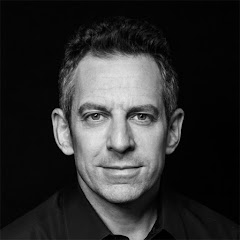 Sam Harris
Want to know something specific about what's covered?
We've already dissected every moment. Ask and we will deliver (with timestamps).
Key Moments
Alternative proteins from plants and cultivation offer solutions to food security, climate change, and pandemic risk.
Key Insights
Animal agriculture is a significant contributor to climate change, estimated at 14.5% of global human-caused emissions.
Industrialized animal farming is a primary source of pandemic risk and antibiotic resistance, threatening global health.
Alternative protein sources, such as plant-based and cultivated meat, offer more sustainable and healthier protein production methods.
The economic and pragmatic benefits, rather than ethical arguments, are key drivers for consumer adoption of alternative proteins.
Innovation and investment in alternative proteins can create new economic opportunities and allow developing nations to 'leapfrog' unsustainable industrial practices.
Collaboration between governments, universities, and industry is crucial to accelerate research, development, and adoption of alternative proteins.
THE INTERCONNECTED CRISIS OF FOOD PRODUCTION
The current system of protein production, particularly industrialized animal agriculture, poses direct threats to global survival by exacerbating climate change and increasing pandemic risks. These issues, often viewed separately, are fundamentally linked to how we source our food. The inefficiency of converting feed to animal protein demands vast resources, contributing significantly to environmental degradation. Furthermore, the close proximity of humans and animals in intensive farming environments creates fertile ground for zoonotic diseases and the overuse of antibiotics, leading to widespread resistance.
THE GOOD FOOD INSTITUTE'S MISSION AND APPROACH
The Good Food Institute (GFI) operates as a nonprofit dedicated to reimagining protein production through science and markets. Their strategy focuses on developing and scaling alternative protein technologies like plant-based and cultivated meat to address global challenges. GFI aims to create a future where these alternatives taste the same or better, and cost the same or less, than conventional meat. They achieve this by supporting entrepreneurs, attracting investment, engaging with large food companies, and advocating for government funding in open-access research and development.
PRAGMATICS OVER ETHICS FOR CONSUMER ADOPTION
While ethical considerations regarding animal welfare are valid, GFI emphasizes a pragmatic approach to drive consumer adoption of alternative proteins. The focus is on taste, cost, and convenience, appealing to 'flexitarians' and 'reducitarians' rather than solely vegetarians or vegans. This 'systems one' (intuitive, immediate desires) thinking, driven by sensory experience and affordability, is seen as more effective than solely relying on 'systems two' (rational deliberation) based ethical arguments, which have historically struggled to change widespread dietary habits.
CLIMATE AND GLOBAL HEALTH BENEFITS OF ALTERNATIVES
Shifting to plant-based and cultivated meat offers substantial environmental and public health advantages. Animal agriculture's inefficiency leads to significant land and water use, and it's a major contributor to greenhouse gas emissions. Waste from factory farms pollutes waterways, creating dead zones. Crucially, reducing reliance on antibiotics in meat production can curb the rise of antibiotic-resistant bacteria, a threat to modern medicine. Alternative proteins eliminate the risk of contributing to pandemics and antibiotic resistance, offering a much safer protein source.
ACCELERATING THE TRANSITION: GOVERNMENT AND INDUSTRY ROLES
The transition to alternative proteins requires significant investment and policy support. GFI advocates for governments to incentivize this shift through open-access research funding and by encouraging private companies to retool factories. This approach allows nations, particularly developing economies, to 'leapfrog' unsustainable industrialization. Collaboration with established agribusinesses like Tyson and JBS is vital, as they possess robust supply chains and market understanding. Bringing these companies on board as partners, rather than adversaries, is key to transforming the protein industry.
OVERCOMING PSYCHOLOGICAL BARRIERS AND FOSTERING INNOVATION
Initial consumer hesitation, or an 'ick factor,' towards cultivated meat is a psychological hurdle that familiarity and education can overcome. As alternative proteins become more accessible, affordable, and demonstrably safe, consumer acceptance is expected to grow. GFI is also fostering a 'gold rush' mentality in academia, encouraging STEM talent to pursue careers in alternative proteins. By creating dedicated research centers and interdisciplinary programs, universities can produce a pipeline of skilled professionals crucial for this transformative industry.
Mentioned in This Episode
●Companies
●Organizations
●Books
●People Referenced
Transforming Protein Production: Key Takeaways
Practical takeaways from this episode
Do This
Avoid This
Environmental Impact Comparison (Protein Categories)
Data extracted from this episode
| Protein Source | Climate Change Impact (per calorie of protein) |
|---|---|
| Legumes (soy, peas) | 1 calorie |
| Chicken | 40 calories (relative to legumes) |
| Pork | Significantly more than chicken |
| Beef | Significantly more than pork |
Efficiency of Protein Production
Data extracted from this episode
| Animal/Method | Calories In (feed) per Calorie Out (meat) |
|---|---|
| Chicken | 9:1 |
| Pork | Much higher than chicken |
| Beef | Much higher than pork |
| Cultivated Meat | Three times more efficient than chicken (input/output) |
Common Questions
Current industrialized animal agriculture is a major contributor to climate change, is the most likely source of the next pandemic, and drives antibiotic resistance by feeding sub-therapeutic antibiotics to farm animals, which threatens the efficacy of modern medicine.
Topics
Mentioned in this video
Published a cover story titled 'Pig Zero' about antibiotic resistance linked to animal agriculture.
Sam Harris's foundation, which made a donation to The Good Food Institute.
Cited for its statistic that animal agriculture is responsible for 14.5% of global climate change.
Bruce Friedrich's alma mater.
An international nonprofit that is reimagining the process of protein production, focusing on technology and markets to address climate change and pandemic risk.
Liz Specht's alma mater.
Mentioned in the context of antibiotic resistance, with its former president stating it could lead to the end of modern medicine.
A publication where Bruce Friedrich has had work published.
Institution where Bruce Friedrich and Liz Specht studied.
An Indian institution that received government funding to research cultivated meat.
Bruce Friedrich's alma mater.
Bill Gates's organization, which adopted The Good Food Institute's recommendations for accelerating alternative protein development.
An organization that identified animal meat consumption as the most likely cause of the next pandemic.
Mentioned as an example of a university that could establish an alternative protein research center, potentially with equity in spin-off enterprises.
Former US FDA Commissioner under Donald Trump, who was supportive of alternative proteins.
Founder of a company in the cultivated meat space, previously interviewed on Sam Harris's podcast.
Co-founder and leader at The Good Food Institute, focusing on global strategy to address protein production's impact on climate and health.
Mentioned for his work on Systems 1 and Systems 2 thinking, applied to food choices.
Founder of a company in the alternative protein space, mentioned in the context of utilizing education for change.
Author of a book discussing food and agriculture as a critical pillar for climate change mitigation, and is enthusiastic about plant-based and cultivated meats.
Former CEO of Tyson Foods, quoted saying 'if we could make meat without the animal, why wouldn't we'.
Mentioned as a potential influential figure in government who could drive the alternative protein agenda.
Former president of the World Health Organization, quoted on the threat of antibiotic resistance leading to the end of modern medicine.
A scientist at The Good Food Institute, focused on identifying and forecasting technological needs in alternative protein production.
Founder of a company in the alternative protein space, mentioned in the context of utilizing education for change.
Mentioned as a potential influential figure in government who could drive the alternative protein agenda.
Former US Secretary of Agriculture under Donald Trump, who was supportive of alternative proteins.
A company producing plant-based meat alternatives, whose consumer data shows most buyers also purchase meat.
Automaker pledging to be 100% electric by 2035, illustrating a transition similar to alternative proteins.
A major food company involved in the plant-based and cultivated meat space, mentioned as a partner in India.
A major meat company that has invested in Uma Valetti's company and is exploring alternative proteins.
A company producing plant-based meat alternatives, whose consumer data shows most buyers also purchase meat.
A major meat company that has launched its own plant-based meat brands.
A company that achieved the first commercial sale of cultivated meat in Singapore.
A major meat company that has invested in alternative protein brands and sees the shift as an opportunity.
A major food company that has entered the plant-based meat market.
A major meat company investing in alternative proteins and supplying KFC in China.
A major meat company that has invested in alternative protein brands and sees the shift as an opportunity.
A cultivated meat company that has received investment from Tyson and Cargill.
Automaker pledging to be 100% electric by 2035, illustrating a transition similar to alternative proteins.
Mentioned as a country that could become the global supplier of meat if it fully embraces alternative protein production; also a key player in battery gigafactories.
Mentioned as a developing economy where The Good Food Institute operates, and where the Modi government has funded cultivated meat research.
More from Sam Harris
View all 300 summaries 34 min
Is Psychedelic Therapy Ready for FDA Approval?
 26 min
You Lose Interest the Moment You Realize It's AI
 28 min
Michael Pollan on Consciousness, Psychedelics, and the Limits of Neuroscience
 22 min
Why the Stock Market Has Become a Casino
Ask anything from this episode.
Save it, chat with it, and connect it to Claude or ChatGPT. Get cited answers from the actual content — and build your own knowledge base of every podcast and video you care about.
Get Started Free