Key Moments
Final Thoughts on the 2024 Presidential Election: A Conversation with Mark Cuban (Episode #390)
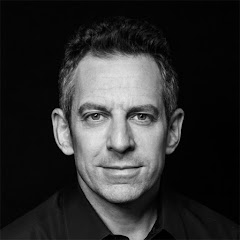 Sam Harris
Want to know something specific about what's covered?
We've already dissected every moment. Ask and we will deliver (with timestamps).
Key Moments
Mark Cuban argues for Harris, stressing Trump's ethical failings, economic risks, and damage to norms, while highlighting Harris's policy focus and potential for normalcy.
Key Insights
Mark Cuban criticizes Donald Trump's character, deeming him unethical, unintelligent, and transactional, with a history of mistreating businesses and people.
Cuban believes many business elites supporting Trump are motivated by social issues like immigration and the 'woke mind virus,' not just taxes or regulation.
Elon Musk's behavior on X is increasingly like Trump's, characterized by deregulation, unprincipled actions, and the amplification of divisive rhetoric.
Cuban highlights Kamala Harris' performance in the campaign, crediting her strategy of rallies for boosting favorability and awareness, despite criticisms of evasiveness.
Cuban refutes the 'great replacement theory' and argues against Trump's mass deportation plans, emphasizing the economic and ethical costs.
Cuban dismisses Trump's economic policies, particularly tariffs, as detrimental and highlights Harris's specific proposals on healthcare and tax equity.
A return to 'normal politics' and diplomacy is a key theme, with Cuban contrasting Trump's transactional approach with Harris's policy-oriented and communicative style.
CRITIQUE OF DONALD TRUMP'S CHARACTER AND POLICIES
Mark Cuban launches a strong critique of Donald Trump, describing him as unethical, unintelligent, and fundamentally transactional. Cuban cites Trump University, Trump Soho, and the Trump Foundation as examples of unethical business practices, including short-paying vendors. He argues that Trump’s lack of concern for ordinary Americans and his history of business dealings define his character. Cuban also points to Trump's alleged lack of understanding of his own policies and his failure to learn, contrasting this with the need for a competent leader.
THE MYSTERY OF TRUMP'S POLITICAL INDESTRUCTIBILITY
Cuban explores the phenomenon of Trump's political resilience, noting that unlike normal politicians, Trump seems immune to traditional reputational damage. He suggests that a significant portion of the electorate feels wronged by the establishment and views Trump as a 'virus' or a disruptor against these forces. This perspective, Cuban explains, leads supporters to overlook Trump's indiscretions, seeing him as a figure who will overturn a system they believe has failed them. This explains why even serious ethical lapses do not deter his base.
ELON MUSK AND THE SILICON VALLEY ELITE'S MOTIVATIONS
The conversation delves into why prominent figures like Elon Musk and David Sachs support Trump. Cuban dismisses the notion that it's solely about lower taxes or deregulation for these billionaires. Instead, he identifies specific social issues, particularly immigration and what Musk terms the 'woke mind virus,' as radicalizing factors. Cuban speculates that some in Silicon Valley, like Musk, believe they can manipulate Trump due to his technical ignorance, viewing him as a transactional figure they can influence to achieve their specific agendas, including control over aspects of governance.
KAMALA HARRIS' CAMPAIGN STRATEGY AND EFFECTIVENESS
Cuban analyzes Kamala Harris's campaign, acknowledging perceived weaknesses such as her difficulty in candidly addressing past policy shifts. However, he strongly defends her strategic use of rallies, arguing it effectively boosted her favorability and name recognition. He posits that this approach, focusing on connecting with a broad base and playing to her strengths, was crucial for turning around her campaign's standing. Cuban emphasizes that her strategy yielded positive results, moving her from a deficit to a competitive position.
THE SOUTHERN BORDER, IMMIGRATION, AND DEPORTATION DEBATE
The dialogue addresses the complex issue of the Southern border and immigration policies. Cuban criticizes the Democratic party's initial resistance to border security measures, calling it a significant political misstep. He contrasts Trump's call for mass deportations with Harris's approach, which allows for paths to residency or citizenship, particularly for long-term residents with families. Cuban expresses deep ethical and practical concerns about Trump's proposed deportation policies, highlighting their potential economic devastation and the humanitarian cost, questioning the morality of such actions.
ECONOMIC POLICIES: TAXES, HEALTHCARE, AND TARIFF DESTRUCTION
Cuban sharply criticizes Trump's economic proposals, particularly his reliance on tariffs, which he argues have historically failed and will harm consumers and businesses by increasing costs. He contrasts this with Harris's specific policy ideas, such as tackling pharmacy benefit managers to lower medication costs and supporting Employee Stock Ownership Plans to address wealth inequality. Cuban dismisses concerns about Harris's tax policies, stating that proposed changes would largely benefit lower and middle-income individuals, while Trump's policies offer minimal to no advantage for the vast majority of Americans regarding taxes.
GLOBAL ROLE AND THE NEED FOR NORMALCY IN POLITICS
Cuban discusses America's role in the world, emphasizing the importance of supporting allies like Israel and NATO, and contrasts Trump's transactional foreign policy with a more traditional, diplomacy-focused approach expected under Harris. He advocates for a return to 'normal politics,' characterized by reasoned policy debate and consensus-building, which he believes Harris embodies. Cuban argues that Trump's continuous provocation fuels division and that a Harris administration offers a path toward restoring stability and sane institutional functioning, unlike Trump's personality-driven politics.
Mentioned in This Episode
●Products
●Software & Apps
●Tools
●Companies
●Organizations
●Books
●Concepts
●People Referenced
Common Questions
Mark Cuban states that beyond lower taxes and less regulation, business leaders like Elon Musk and David Sachs are often motivated by specific social issues such as immigration and what they term the 'woke mind virus'.
Topics
Mentioned in this video
One of the two major political parties in the United States. Described as having become a personality cult around Donald Trump, losing its traditional conservative identity.
The legislative branch of the United States federal government. Mentioned as a potential collaborator for Kamala Harris in implementing healthcare reforms.
The armed forces of the United States, mentioned in the context of its technological advancement through AI and its role in national security, contrasted with Trump's approach.
A major newspaper mentioned in the context of the normalization of institutions, suggesting it would be more reliable under Harris than Trump.
One of the two major political parties in the United States. Mentioned in relation to its evolution and the 'pendulum swing' of political ideologies.
Intermediaries in the prescription drug pricing system, accused of artificially inflating costs. Kamala Harris plans to take on these middlemen to increase transparency and lower medication prices.
The North Atlantic Treaty Organization, a military alliance. Mentioned in relation to the commitment to defend allies like Poland and Ukraine.
A prestigious university mentioned in the context of the normalization of institutions, suggesting it would be more reliable under Harris than Trump.
The NBA team owned by Mark Cuban, mentioned as part of his public profile.
A defunct for-profit company founded by Donald Trump that offered real estate courses; cited as an example of Trump's unethical business practices.
A charitable foundation established by Donald Trump; cited as an example of unethical business practices.
The National Aeronautics and Space Administration, mentioned in the context of Elon Musk potentially seeking control over it if Trump were president.
Businesses with a limited number of employees and revenue. Their economic concerns and potential impact from immigration and tariff policies are discussed.
Groups that seek to elect candidates to public office. The discussion highlights the transformation of the Republican party and the dynamics within the Democratic party.
A strategy of balancing competing interests or viewpoints. Used to describe the Biden-Harris administration's approach to the conflict concerning Israel and Gaza.
The amount by which a sum of money is too small; a shortfall. Economists' concerns about Trump's policies potentially worsening deficits are discussed.
The rules, actions, and decisions made by the government of the United States. Discussed extensively in relation to immigration, economy, tariffs, foreign relations, and healthcare.
The expenses associated with medical care. A significant concern for households and businesses, with proposed solutions focusing on transparency and tackling middlemen.
Government actions designed to boost economic activity. Mentioned in relation to Federal Reserve interest rate cuts to counteract recessionary pressures.
The network of organizations, people, activities, and information involved in moving a product or service from supplier to customer. Its vulnerabilities, exposed by COVID-19, are discussed.
An approach characterized by self-interest and a focus on immediate gain, often at the expense of principles or long-term relationships. Used to describe both Donald Trump and, to some extent, Elon Musk.
Taxes imposed on imported goods. A major point of contention, with significant criticism of Trump's proposed across-the-board tariffs and praise for strategic ones.
The diplomatic and strategic relationship between the United States and Israel. Discussed in the context of US foreign policy and Middle East stability.
The ability of businesses or nations to compete effectively in the global marketplace. Linked to innovation in AI and semiconductor manufacturing.
The fundamental principles and beliefs that are considered important in the United States. Discussed in relation to immigration policy and political discourse.
The exchange of goods and services between the United States and China. Central to the discussion on tariffs and their economic impact.
The holding of shares in a company. Promoted as a way to reduce wealth inequality and allow employees to benefit from company success.
A proposed tax policy that would apply to the increase in value of assets that have not been sold. Discussed as a potential economic crusher and clarified as not being a current campaign proposal.
The complex systems used by social media platforms to curate content. Discussed as a tool that reinforces existing beliefs and potentially radicalizes users, especially in relation to Trump and Musk's content.
A system of government by the whole population or all the eligible members of a state, typically through elected representatives. The health of democracy in the US is a central theme.
The plan of action adopted by a political candidate or party to achieve electoral success. Analyzed for the Harris campaign, focusing on rallies and public communication.
The strategy guiding the United States' interaction with foreign nations. Discussed in relation to alliances, trade, and global stability.
The strategies and actions the US government takes to influence its economy. Debated in terms of potential impacts from Trump's and Harris's proposed policies.
Diversity, Equity, and Inclusion. Mentioned as a social issue that has radicalized some business leaders against progressive policies and the Democratic party.
A metaphor used to describe how Donald Trump has taken over the Republican party, making it his personal domain rather than a traditional political party.
The unequal distribution of assets within a society. Discussed as a significant problem, with proposals like Employee Stock Ownership Plans and down payment assistance.
The cost of borrowing money. Economists' concerns about Trump's policies potentially increasing interest rates are discussed.
The movement of people into a country for the purpose of settlement. A central issue in the discussion, particularly regarding border policy and its political implications.
The system of government and political activities in the United States. The discussion focuses on the current state of US politics, particularly the 2024 election.
The relationship between the United States and Taiwan. Discussed in the context of geopolitical tensions with China and Taiwan's critical role in semiconductor manufacturing.
The large-scale deportation of undocumented immigrants. Contrasted between Donald Trump's hardline stance and Kamala Harris's more nuanced approach.
The process by which political power is passed from one leader or party to another after an election. Donald Trump's refusal to commit to this is highlighted as a major concern.
The rising cost of healthcare services and products. Identified as a significant component of overall inflation and a key area Kamala Harris plans to address.
A pejorative term used to criticize progressive social activism and policies. Mentioned as a source of alienation for some voters and a critique of the 'woke mind virus'.
The refusal to accept the results of an election. A major theme in the critique of Donald Trump, who continues to claim the 2020 election was stolen.
Government actions related to taxation, spending, and regulation. A major focus, with contrasting approaches from Trump and Harris analyzed.
A conspiracy theory that suggests a deliberate plan to diminish the white population through immigration and lower birth rates. Elon Musk is mentioned as endorsing this theory.
A term used by Elon Musk and others to criticize progressive social and political ideologies, described as a radicalizing factor for some business leaders.
Tariffs imposed by a country in response to tariffs imposed by another country. Discussed in the context of the trade war between the US and China during Trump's presidency.
The global system of international law and institutions established after World War II. The discussion revolves around whether a Harris administration would uphold it.
A type of retirement plan that allows employees to own shares in the company they work for. Mark Cuban and Kamala Harris both support these as a way to reduce income inequality.
Programs that help first-time homebuyers with the cost of a down payment. Kamala Harris supports these as a way to address wealth inequality.
A view of politics that prioritizes practical results and effectiveness over ideological purity. Used to frame the border issue as a political liability for Democrats.
Refers to a return to traditional, less polarized political discourse and behavior. Yearned for by both Sam Harris and Mark Cuban as a contrast to the current political climate.
An order issued by the President of the United States. Mentioned in relation to Biden's executive order aimed at limiting border crossings.
A phenomenon where a leader gains intense devotion from followers, often through charisma and manipulation. Discussed in relation to both Donald Trump and Elon Musk.
An increase in the production of economic goods and services. Economists' differing views on whether Trump's or Harris's policies would be better for economic growth are presented.
The divergence of political attitudes to ideological extremes. Discussed as a major problem in the US, exacerbated by Donald Trump's presence in politics.
The system of maintaining and restoring health through the services of medical professionals. A key focus of policy discussion, particularly regarding costs and access.
The border between the United States and Mexico, discussed as a major political issue, with critiques of both Trump's and Biden-Harris administrations' policies.
A Palestinian territory. Mentioned in the context of the Israel-Hamas conflict and the pressure on the Biden-Harris administration regarding civilian casualties.
A country discussed in the context of US foreign policy, support for allies, and the ongoing conflict in Gaza.
A country engaged in conflict with Russia, mentioned in the context of US foreign policy and support for allies like Poland.
A country mentioned in relation to a past US policy under Trump of selling weapons despite the ongoing war in Yemen.
A residential building in New York City associated with Donald Trump; mentioned as part of his business dealings that raised ethical questions.
An island democracy whose security is discussed in relation to potential Chinese invasion and US foreign policy, particularly concerning its vital semiconductor industry.
A country mentioned in the context of the humanitarian crisis resulting from the war and US arms sales.
US states where the outcome of an election is uncertain and can change from one election to the next. Mentioned as a target for campaign efforts.
Employees whose work eligibility has been verified using the I-9 form. The fear of these employees being targeted for deportation is discussed.
Founder of the Honestly podcast, for which Sam Harris participated in a debate with Ben Shapiro.
Entrepreneur and CEO, mentioned for his influence in the business community, his support for Trump, his conservative views on immigration and 'wokeism', and his behavior on X (formerly Twitter).
The current Vice President and Democratic candidate for president, discussed in terms of her campaign strengths, weaknesses, policy positions, and potential effectiveness.
Former senior advisor to Donald Trump, known for his role in shaping Trump's immigration policies. Mentioned in the context of potential mass deportations.
Former personal attorney for Donald Trump, whose testimony about Trump instructing him to short-pay vendors is used as evidence of unethical behavior.
The current President of the United States, mentioned in relation to immigration policy, economic performance, and the Chips Act.
Mentioned alongside Barari Sers as someone who believes Kamala Harris must be flawless.
Entrepreneur, investor, and owner of the Dallas Mavericks, who is an outspoken supporter of the Harris campaign and discusses his political views and critiques of Donald Trump.
Host of the Making Sense podcast, conducting a discussion with Mark Cuban about the 2024 presidential election, focusing on concerns about Donald Trump and support for the Harris campaign.
Mentioned as having participated in a debate with Sam Harris for the Honestly podcast.
Host of The Joe Rogan Experience podcast, mentioned as a good interviewer, but appearing on his show is deemed a waste of time for Kamala Harris due to the potential for the interview to be distorted by Trump supporters.
Mentioned alongside Van Jones as someone who believes Kamala Harris must be flawless.
Former National Security Advisor under Trump, mentioned as an example of a 'freak and grifter' who held power during the Trump administration.
The body of laws governing immigration in the United States. Its complexities and controversies are central to the discussion on border policy and deportations.
An outdated US law mentioned in the context of Donald Trump's potential use of deportation powers.
A US law aimed at boosting domestic semiconductor manufacturing. Credited to the Biden administration for recognizing the importance of TSMC.
The United States-Mexico-Canada Agreement, a trade pact signed by Trump, mentioned in relation to how China can use manufacturing in Mexico to circumvent US tariffs.
The United States-Mexico-Canada Agreement. Discussed regarding how China might use Mexican factories to evade US tariffs.
A technology company and a customer of Taiwan Semiconductor, mentioned in the context of advanced chip manufacturing.
A company manufacturing agricultural machinery, mentioned as an example of a business that could be negatively impacted by Trump's proposed tariffs.
A sports drink mentioned as an example of a common household item whose price might increase due to inflation, contrasted with potential healthcare cost reductions.
A company that manufactures advanced AI chips, a major customer of Taiwan Semiconductor. Its role in global technological advancement is highlighted.
A critical company in Taiwan that manufactures advanced semiconductor chips, vital for AI development. Its importance is discussed in relation to US foreign policy and potential Chinese invasion.
Abbreviation for Taiwan Semiconductor Manufacturing Company, discussed as the most important company in the world for advanced semiconductor chips.
A technology company that acquired Mark Cuban's second business, making many employees millionaires.
A podcast platform where a debate between Sam Harris and Ben Shapiro took place.
An AI language model used by Mark Cuban to research the number of people earning over $400,000, as part of an analysis of tax impacts.
Platforms for online social interaction and content sharing. Criticized for its role in reinforcing political beliefs and spreading misinformation, particularly concerning Trump and Musk.
More from Sam Harris
View all 302 summaries 27 min
Is America Heading for a Debt Crisis? An Economist Explains
 27 min
Is America Heading for a Debt Crisis? An Economist Explains
 34 min
Is Psychedelic Therapy Ready for FDA Approval?
 26 min
You Lose Interest the Moment You Realize It's AI
Ask anything from this episode.
Save it, chat with it, and connect it to Claude or ChatGPT. Get cited answers from the actual content — and build your own knowledge base of every podcast and video you care about.
Get Started Free