Key Moments
Early Thoughts On a Pandemic: A Conversation with Amesh Adalja (Episode #191)
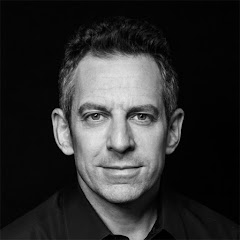 Sam Harris
Key Moments
Expert discusses COVID-19, emphasizing it's a dress rehearsal for worse pandemics, not the worst-case scenario.
Key Insights
The estimated case fatality rate for COVID-19 may be around 0.6%, significantly lower than initial high predictions but still higher than seasonal flu.
COVID-19 presents a spectrum of illness, with mild cases often indistinguishable from a cold, aiding its transmission.
Children may experience milder symptoms due to less robust immune responses or potential cross-immunity from prior coronavirus exposures.
The R0 (contagiousness factor) for COVID-19 is comparable to the flu, and social distancing aims to flatten the epidemic curve by spreading cases over time.
While effective treatments and a vaccine are months away, repurposed antivirals like Remdesivir and Chloroquine are being investigated.
The current pandemic should be viewed as a 'dress rehearsal' for potentially more severe future pandemics, highlighting the need for better preparedness.
ASSESSING THE SEVERITY AND FATALITY RATE
Dr. Amesh Adalja estimates the case fatality rate (CFR) for COVID-19 to be around 0.6%, with a range slightly above seasonal flu (0.1%), but considerably lower than initial 1-3% predictions. This estimate is largely based on data from South Korea, which has conducted extensive testing. The severity can be influenced by factors like age and pre-existing conditions, though healthy individuals can also be severely affected. The discrepancy in CFR estimates is partly due to a 'severity bias' where milder cases may go unreported or untested.
TRANSMISSION DYNAMICS AND SYMPTOM SPECTRUM
COVID-19 is primarily a respiratory virus spread through droplets from coughs and sneezes, and to a lesser extent, contaminated surfaces. The virus exhibits a wide spectrum of illness, from asymptomatic or mild cold-like symptoms to severe respiratory distress. This range, particularly the mild cases, facilitates undetected community spread. Children may experience milder symptoms, possibly due to immature immune systems or acquired cross-immunity from other seasonal coronaviruses, though their role in transmission is still under investigation.
THE IMPORTANCE OF SOCIAL DISTANCING AND FLATTENING THE CURVE
The concept of 'flattening the curve' aims to spread out the peak of infections over a longer period. This strategy is crucial for preventing healthcare systems from being overwhelmed by reducing the intensity of spread. Measures like working from home, canceling non-essential social gatherings, and avoiding crowded spaces are recommended. While individual risk assessment is important, collective social distancing is vital for managing community transmission and ensuring healthcare capacity.
TREATMENT AND VACCINE DEVELOPMENT TIMELINES
The development of effective treatments and a vaccine is ongoing. Antiviral treatments, such as repurposed drugs like Remdesivir and Chloroquine, are in clinical trials, with potential results expected in the coming months. Vaccine development is a longer process, with the most optimistic timeline for availability being 12 to 18 months, due to extensive safety testing required. Unlike the flu, a universal coronavirus vaccine might be achievable, potentially offering longer-lasting immunity.
SEASONALITY AND FUTURE PANDEMIC PREPAREDNESS
Similar to other seasonal coronaviruses, COVID-19 is expected to see reduced transmission during summer months, followed by a potential resurgence in the fall. This seasonality is influenced by both behavioral changes and the virus's interaction with environmental factors. Dr. Adalja emphasizes that the current pandemic serves as a critical 'dress rehearsal' for potentially more catastrophic future events, such as a highly lethal avian flu. This underscores the need for robust pandemic preparedness, improved surveillance, and proactive measures against emerging infectious diseases.
PREVENTATIVE MEASURES AND PUBLIC HEALTH ADVICE
Individuals are advised to practice good hygiene, similar to precautions taken during flu season. Seeking medical care should be a lower threshold for high-risk individuals, while the majority with mild symptoms can manage at home. Resources like the CDC, local health departments, and academic institutions (e.g., Johns Hopkins Center for Health Security, CIDRAP) are recommended for reliable information. Avoiding panic and ensuring healthcare systems are not overwhelmed by unnecessary visits are key public health goals.
Mentioned in This Episode
●Companies
●Organizations
●Books
●Drugs & Medications
●Concepts
●People Referenced
Common Questions
Dr. Adalja's best estimate, primarily based on South Korean data, places the upper bound of the case fatality rate at 0.6%, which is six times that of seasonal flu but significantly lower than some earlier predictions of 3% or more. This figure accounts for potential severity bias in testing.
Topics
Mentioned in this video
Mentioned as the guest on a previous podcast episode about coronavirus, serving as a point of comparison for the current discussion.
Mayor of New York City, whose statement about the virus degrading quickly on surfaces was contrasted with scientific understanding.
An infectious disease specialist and critical care physician from Johns Hopkins University, providing expertise on pandemic preparedness.
An example of an individual with a high R0 for Salmonella typhi, illustrating how individual behavior can impact transmission.
Mentioned as an example of a pathogen that can have a very high R0 due to specific carriers, like Typhoid Mary.
Used as a point of comparison for both drug repurposing (Remdesivir trial) and political politicization of outbreaks.
A volume edited by Dr. Adalja, indicating his expertise in high-impact biological threats.
Used as a benchmark for comparison regarding case fatality rates and contagiousness, with coronavirus showing a higher CFR.
Mentioned as a comparison to coronaviruses, highlighting its hardiness on surfaces, unlike enveloped viruses.
A common respiratory illness used as a baseline to compare the severity and contagiousness of the novel coronavirus.
Mentioned as a more dangerous potential threat with high mortality rates (up to 60%) if it were to become efficiently transmissible between humans.
Used as an example of a disease that is not transmissible between humans, highlighting a contrast with respiratory viruses.
Mentioned as a country that implemented variations of China's containment model.
As the origin of the outbreak and a source of goods shipped internationally, also discussed in relation to its public health response.
A location in New York State where social distancing measures were being implemented.
Cited for its extensive per capita testing for coronavirus, providing the basis for Dr. Adalja's case fatality rate estimate.
Mentioned as a location that implemented variations of China's containment model.
Mentioned as a location that implemented variations of China's containment model.
Dr. Adalja's think-tank focused on infectious disease emergencies, founded by the eradicater of smallpox, D.A. Henderson.
A medical journal that previously reported a higher case fatality rate for coronavirus than Dr. Adalja's estimate.
Associated with the University of Minnesota, this center is a recommended source for infectious disease news and policy.
Mentioned in the context of political polarization, where denial of the virus's severity is perceived to be prevalent.
A recommended source for reliable information on the coronavirus outbreak.
The institution where Dr. Adalja is affiliated and a primary resource for coronavirus tracking and information.
Investing in home testing for coronavirus, similar to efforts for flu testing.
A malaria drug being repurposed, showing potential antiviral effects in vitro, and available for off-label prescription.
Used as an example of a highly contagious disease with a high R0 (around 15).
An antiviral used in Ebola trials that showed activity against coronaviruses and is currently in Phase 2 clinical trials for COVID-19.
More from Sam Harris
View all 298 summaries 28 min
Michael Pollan on Consciousness, Psychedelics, and the Limits of Neuroscience
 22 min
Why the Stock Market Has Become a Casino
 61 min
UNRAVELING THE DREAM (A New Documentary Executive Produced by Sam Harris)
 20 min
Francis Fukuyama: The End of History Was Never What You Think
Ask anything from this episode.
Save it, chat with it, and connect it to Claude or ChatGPT. Get cited answers from the actual content — and build your own knowledge base of every podcast and video you care about.
Get Started Free