Key Moments
E8: TikTok + Oracle, how privacy loss will impact society, economy & COVID outlooks for 2021
 All-In Podcast
Key Moments
All-In Podcast discusses TikTok/Oracle deal, privacy, US-China relations, economy, COVID, and cancel culture.
Key Insights
The TikTok-Oracle deal raises concerns about data security and US-China tech relations, highlighting the need for reciprocity and stronger privacy laws.
The pandemic has accelerated trends like remote work and e-commerce, but also exposed economic disparities, raising questions about future employment and societal well-being.
While COVID-19 poses risks, especially to vulnerable populations, it is less deadly for young, healthy individuals, and a return to normalcy by next summer is anticipated by some.
The global warming debate is complex, involving both climate change and forest management, with technological innovation and government incentives seen as key to solutions.
Cancel culture and 'safetyism' are criticized for stifling open discourse, with concerns that extreme polarization could influence political outcomes.
The impact of the presidency on daily life is diminishing, with technology playing a larger role in shaping policy and societal changes.
BIG TECH AND GEOPOLITICAL TENSIONS
The discussion begins with the potential US ban on TikTok and its implications, including the proposed deal with Oracle. While some see it as a necessary step towards reciprocity with China, others view it as a slippery slope in escalating US-China tech relations. The core concern revolves around data security, with panelists emphasizing China's 'civil-military fusion' policy and its potential to leverage data for state interests, including surveillance and espionage. The conversation highlights a broader issue of asymmetric market advantages and the need for a more comprehensive policy than just banning individual apps.
PRIVACY AS THE NEW FRONTIER
A significant portion of the podcast is dedicated to the escalating concerns around personal data privacy. Panellists argue that the systematic collection and aggregation of data by tech companies pose a substantial security threat, potentially enabling blackmail and manipulation. The discussion draws parallels to historical espionage tactics, emphasizing that even seemingly innocuous data can be weaponized over time. This leads to a call for a fundamental re-evaluation of privacy, with suggestions for legislation mandating opt-out subscription services for free, ad-supported platforms.
ECONOMIC DISPARITIES AND THE FUTURE OF WORK
The podcast touches upon the economic impact of the pandemic, noting the simultaneous renaissance for software-based industries and the severe downturn for sectors like retail and restaurants. This has fueled discussions about a potential permanent unemployment class and the role of Universal Basic Income (UBI). However, the prevailing sentiment is that happiness stems from relative improvement and opportunity, not just a baseline income. The group expresses concern that a flatlined existence could lead to societal decay, underscoring the need to create frameworks for opportunity and progress.
NAVIGATING THE PANDEMIC AND RETURN TO NORMALCY
The panelists discuss the evolving understanding of COVID-19, differentiating its impact on vulnerable populations versus young, healthy individuals. While acknowledging the tragedy of every death, they note that initial mortality estimates were significantly higher than current figures, especially among younger demographics. A second lockdown is deemed unlikely due to lack of public support. There's an optimistic outlook that, with rapid testing, evolving treatments, and a better understanding of comorbidities, life could return to a semblance of normalcy by the following summer, though behavioral changes might persist.
THE RISE OF CANCEL CULTURE AND POLITICAL POLARIZATION
The conversation delves into the phenomenon of 'cancel culture,' characterized by 'safetyism' and the use of loaded language to silence dissenting views. The panelists criticize the extreme polarization in society, where open discourse is replaced by accusations and guilt by association. They observe that this overreach by the extreme left and right alienates a large moderate population, potentially leading to unexpected political outcomes. The concept of 'uncancelability' is highlighted as a key factor in Trump's appeal to those who feel attacked by these trends.
TECHNOLOGY, CLIMATE CHANGE, AND INNOVATION
The podcast explores solutions to global warming, emphasizing technological innovation and government incentives over consumer shaming. The potential of solutions like carbon sequestration through ocean-based seaweed farming and genetically engineered livestock is discussed. Panelists believe that the necessary science, engineering, and capital exist for these advancements, but market creation and government support are crucial for widespread deployment. The idea of a multi-party political system to better represent diverse viewpoints is also floated as a way to mitigate the extreme polarization seen in two-party systems.
Mentioned in This Episode
●Products
●Software & Apps
●Companies
●Organizations
●Books
●Concepts
●People Referenced
Common Questions
The 'Code 13' at the Four Seasons hotel referred to a child defecating in the swimming pool, causing a significant disruption and closure.
Topics
Mentioned in this video
The Chinese Communist Party, discussed in relation to data security and civil-military fusion policies.
Approved New Scale's small modular reactor for a site in eastern Idaho.
Mentioned as part of the 'extreme left' in the discussion on political polarization and cancel culture.
Mentioned via FBI Director Christopher Wray's speech on Operation Foxhunt.
Mentioned as an organization that had an unclear response regarding masks.
Mentioned as a target of a hack that collected data on over 100 million Americans, attributed to the Chinese.
Mentioned alongside TikTok as being subject to US government action.
A company creating small nuclear reactors, approved for a site in Idaho.
Mentioned as an encrypted messaging application.
Mentioned as a place where millions of consumers are buying veggie burgers.
A company that grows kelp to suck carbon from the atmosphere and sells carbon offsets.
Mentioned as a company the speaker wishes would go public.
Mentioned as a company the speaker wishes would go public.
Mentioned as an example of a company that bowed to Chinese demands to enter the market.
The potential ban of TikTok from US app stores and business transactions is a major topic of discussion.
Mentioned as a company the speaker wishes would go public.
Filed for its fourth SPAC, mentioned in the context of SPAC market growth.
Mentioned as a brand of house speaker that can also function as a microphone.
Announced as the subject of the second SPAC.
Mentioned in the proposed TikTok deal as having an oversight role.
A science fiction book by Stephen Baxter and Arthur C. Clarke discussed in the context of pervasive surveillance.
Mentioned as a comparison for a society focused on video games.
Mentioned as an organization that had an unclear response regarding masks.
An article analyzing cancel culture and the language used to 'cancel' people.
Co-host of the podcast, referred to as 'the queen of quinoa'.
Co-host of the podcast, referred to as 'the prince of spacks'.
FBI Director who gave a speech describing 'Operation Foxhunt'.
Senator mentioned for proposing legislation to regulate app data collection from countries hostile to the US.
Co-founder of Vox, mentioned as a signatory to the Harper's Magazine letter.
The current president, discussed extensively regarding his COVID-19 response, election prospects, and stance on cancel culture.
Mentioned for retroactively stating masks were not necessary to prevent supply runs.
His statement about running a high-risk experiment with CO2 emissions is referenced.
Discussed in a Tim Ferriss podcast episode regarding consumer choice and sustainability.
Mentioned as an example of a politician whose enemies overreacted, benefiting him.
Mentioned in the anecdote about the 'Code 13' incident.
Federal Reserve Chair whose speech on interest rates was discussed.
Mentioned for his 'burn it all down' idea and association with the Trump campaign. Also mentioned as a friend of Sacks.
Author of the article 'Taxonomy of Fear and Persuasion' on cancel culture.
Co-host of the podcast, referred to as 'Rain Man'.
Author whose book with tapes of Trump's COVID-19 statements is discussed.
Mentioned as a signatory to the Harper's Magazine letter and in relation to her views on transgender issues.
Mentioned in the context of the proposed TikTok deal with Oracle, suggesting a wealth transfer. Also known as Oracle founder.
Host of a podcast where Charles Koch discussed consumer choices.
Tweeted about investing in a kelp-growing company that sucks carbon from the atmosphere.
A professor at USC who was sanctioned for using a Chinese word that sounded like the n-word in a language class.
Mentioned as an example of consumer choice for sustainability.
Mentioned as an alternative car choice that the speaker would not choose over a Model Y.
Cited as an example of a device with ambient audio listening capabilities.
Mentioned as a personal car choice for off-road conditions.
Cited as an example of a device with ambient audio listening capabilities.
Mentioned as an alternative car choice that the speaker would not choose over a Model Y.
Cited as an example of a device with ambient audio listening capabilities.
Mentioned as a technology for genetically engineering cows to reduce methane emissions.
Mentioned as a concern for Republicans regarding climate change policy.
Mentioned as part of the 'extreme right' in the discussion on political polarization and cancel culture.
A TV series mentioned as an example of historical espionage tactics.
The pandemic and its societal and economic impacts are a central theme of the discussion.
Publication where 50 writers and intellectuals published a letter that sparked discussion on cancel culture.
Mentioned as a comparison for a dark societal outcome related to video games.
Mentioned as the publication where Matt Iglesias is a co-founder and where a trans writer works.
More from All-In Podcast
View all 409 summaries 77 min
Trump-Xi Summit, Benioff: "Not My First SaaSpocalypse," OpenAI vs Apple, Multi-Sensory AI, El Niño
 96 min
How We Grew Koch Inc. to $150 Billion Without Going Public: Charles & Chase Koch
 72 min
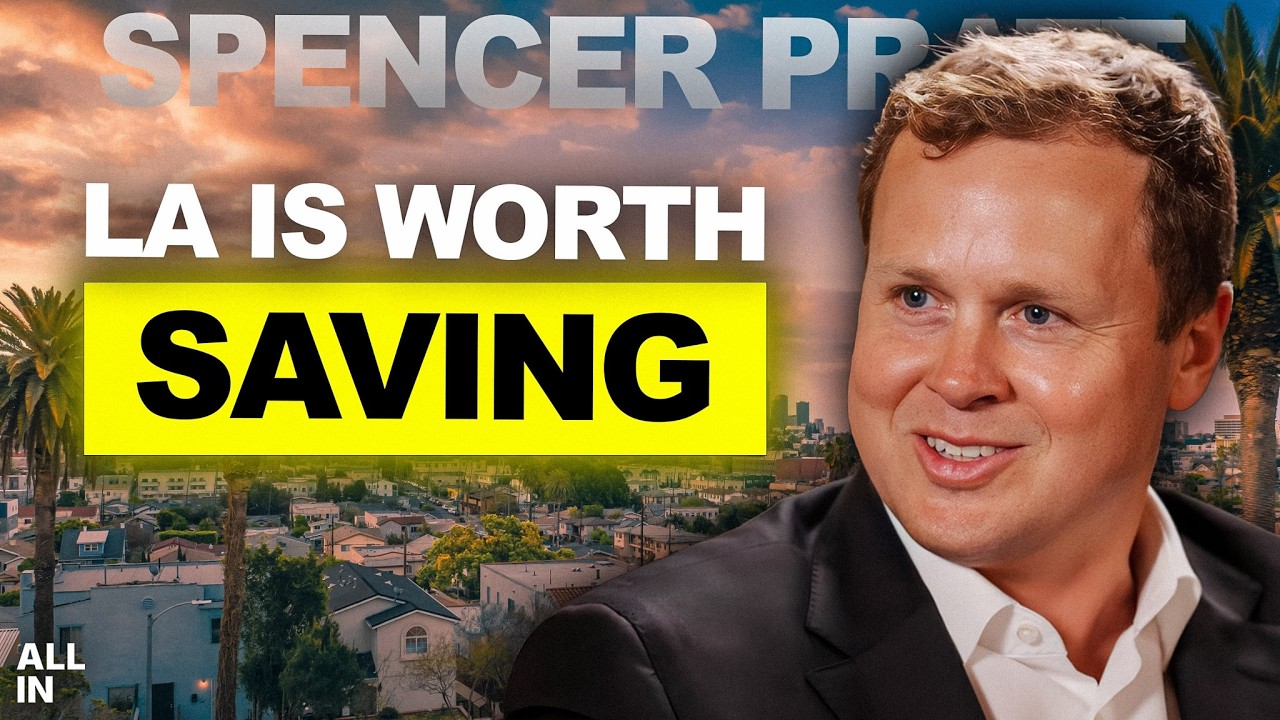
Spencer Pratt on Fixing LA: Wildfires, Homelessness, Corruption & the Fight to Take It Back
 83 min
Elon’s Anthropic Deal, The Next AI Monopoly?, “FDA for AI” Panic, Trading the AI Boom
Ask anything from this episode.
Save it, chat with it, and connect it to Claude or ChatGPT. Get cited answers from the actual content — and build your own knowledge base of every podcast and video you care about.
Get Started Free