Key Moments
E6: Big Tech antitrust aftermath, potential effects of an M&A clampdown on Silicon Valley & more
 All-In Podcast
Want to know something specific about what's covered?
We've already dissected every moment. Ask and we will deliver (with timestamps).
Key Moments
Big Tech antitrust hearings, M&A clampdown effects, censorship, and election predictions.
Key Insights
Antitrust hearings were largely performative theater with politicians grandstanding on various issues, not a cohesive antitrust approach.
Facebook faced significant scrutiny over the Instagram acquisition, with potential for divestiture, as Zuckerberg's strategy aims to make un-bundling technically impossible.
The "chilling effect" of antitrust scrutiny on M&A could be detrimental to startups, limiting exit opportunities and potentially lowering valuations.
A potential solution to Big Tech's dominance involves increased regulation and oversight of data collection, content moderation, and interoperability.
Amazon was seen as least likely to be broken up due to its vast market and pro-consumer pricing, but its expansion into new sectors is a long-term concern.
The discussion around censorship highlights concerns about platform neutrality, anonymity, and the impact of algorithms on content virality, with no easy solutions.
THE PERFORMERS AND THE POLITICS: ANTITRUST HEARINGS ANALYSIS
The Big Tech antitrust hearings featuring executives from Amazon, Apple, Facebook, and Google were largely characterized as performative theater. While politicians aimed to address various concerns such as censorship, market dominance, and the influence of tech giants, the questioning and understanding of antitrust principles were often poor. Jeff Bezos was noted for his candidness, while Mark Zuckerberg impressed with his preparedness. However, Tim Cook's presence felt less relevant as Apple's business model and market position differed significantly from the others, with distinct axes to grind targeting Google, Facebook, and Amazon.
FACEBOOK'S INSTAGRAM ACQUISITION AND TECHNOLOGICAL DEFENSES
Facebook's acquisition of Instagram drew considerable attention, with concerns that Zuckerberg's stated strategy was to acquire companies or copy their features, and later to merge them into a complex, monolithic codebase to make future divestitures technically infeasible. This approach, detailed in Zuckerberg's internal communications, is seen not as illegal, but as a clever technical strategy to preserve integration. This integration makes un-bundling services like Instagram incredibly challenging and time-consuming, potentially deterring regulatory action.
THE CHILLING EFFECT: M&A CLAMPDOWN AND STARTUP ECOSYSTEM DOWNSIDE
Increased antitrust scrutiny is predicted to have a significant "chilling effect" on mergers and acquisitions (M&A) within Silicon Valley. This could be disastrous for startups, as M&A is a primary exit strategy alongside IPOs. With M&A potentially off the table or significantly harder to navigate, late-stage private companies may see valuations decline. The argument is that startups, often unable to become successful standalone public companies, rely on acquisition for survival and investor returns, a vital part of the venture capital lifecycle.
REGULATORY RESPONSES AND POTENTIAL SOLUTIONS FOR TECH DOMINANCE
The discussion explored potential regulatory responses beyond traditional antitrust. One idea is the establishment of a regulatory body to oversee user data collection, targeting, and privacy, akin to how critical infrastructure like aviation or agriculture is managed. Another involves treating tech platforms more like publishers, necessitating adaptation of rules for their hybrid nature. Concepts like interoperability between messaging services and clear labeling of content to indicate bias or source were debated as ways to democratize information access and foster a more informed public.
AMAZON'S MARKET POSITION AND CONSUMER PRICING ARGUMENTS
Amazon was perceived as coming out of the hearings relatively unscathed, less likely to face breakups due to its immense market size and pro-consumer pricing. While acknowledged for potentially harming small local businesses, the core of antitrust scrutiny for Amazon, similar to Google and Facebook, would likely center on pricing manipulation in its ad auctions or its treatment of third-party sellers. The panel debated whether Amazon's best pricing policies and vast selection ultimately benefit consumers, even as it impacts smaller competitors and sellers on its platform.
CENSORSHIP, ANONYMITY, AND THE FUTURE OF ONLINE DISCOURSE
The debate around censorship on platforms like Twitter and Facebook highlighted the complexity of balancing free speech with content moderation. Concerns about anonymity, fake accounts, and algorithmic amplification of inflammatory content were central. While some advocated for requiring verified identities, others argued for nuanced approaches like content labeling or allowing users to curate their feeds more effectively. The difficulty in combating misinformation and deepfakes, alongside the potential for political weaponization of content moderation, suggests ongoing challenges for platforms and regulators.
THE ROLE OF SCALE AND INNOVATION IN BIG TECH'S SOCIETAL BENEFIT
Despite antitrust concerns, the panel acknowledged the societal benefits derived from the scale and profitability of large tech companies. Their ability to undertake massive R&D projects, such as Amazon's satellite constellation or Alphabet's self-driving car initiatives, allows for innovation that smaller companies cannot afford. This reinvestment of profits into R&D, job creation, and pioneering new technologies is seen by some as a net positive for humanity. However, the ethical implications of these companies' expansion and competitive strategies remain a significant point of contention.
AMAZON'S EXPANSION AND THE 'PROFIT IS MY OPPORTUNITY' MANTRA
Amazon's relentless expansion into new markets, encapsulated by the mantra "your profit is my opportunity," was identified as a primary source of concern. Unlike companies that have largely stayed within their core competencies, Amazon continuously diversifies, entering sectors where its vendors and partners operate. This strategy, from retail to infrastructure and potentially freight, positions Amazon as a particularly formidable and potentially scariest monopolist, consistently leveraging its scale to challenge and potentially dominate emerging industries, raising questions about long-term market fairness.
THE 2020 ELECTION OUTLOOK: MASKS, VACCINES, AND POLITICAL THEATER
The discussion turned to the upcoming 2020 US Presidential election, with a focus on the impact of COVID-19 trends and potential policy responses. The panel debated the promising news from vaccine trials and the increasing adoption of masks, which could influence case and death rates. A key thesis suggested that improving public health metrics and increased stimulus could bolster Trump's prospects, particularly if debates provide him an opportunity to reframe the narrative. However, significant concerns were raised about potential constitutional crises if election results are contested.
ELECTION DYNAMICS AND THE UNCERTAINTY OF THE OUTCOME
The election's uncertainty was a recurring theme, with debates on whether Joe Biden's apparent lead would hold as economic conditions improved or if Trump's campaign could rebound. The inability of Trump to hold rallies, a key campaign strategy, was seen as a significant disadvantage. While some expressed confidence in a decisive Biden victory, others highlighted the risk of a close election leading to legitimacy crises, especially given the polarization and skepticism towards mail-in voting among Trump supporters. The lack of a clear stimulus deal also emerged as a significant economic and political hurdle for the Trump administration.
Mentioned in This Episode
●Products
●Software & Apps
●Companies
●Organizations
●Concepts
●People Referenced
Common Questions
Jeff Bezos of Amazon was generally seen as having the best performance with a strong opening statement and candid responses. Mark Zuckerberg of Facebook was noted for his eloquence and preparation, effectively deflecting attacks.
Topics
Mentioned in this video
One of the hosts, referred to as 'Prince of SPACs', known for his venture capital work.
US Representative, criticized for grandstanding at the antitrust hearing and conflating censorship with antitrust.
Co-founder of PayPal, mentioned alongside Elon Musk and David Sacks.
Creator of Dilbert comics, an example of a public figure the speaker follows on Twitter despite potentially controversial views, highlighting the need for verified identity.
One of the hosts, referred to as 'Rainman himself', a professional blogger and fund manager at Craft Ventures, previously at PayPal.
Founder of Amazon, discussed regarding his performance at the Big Tech hearing and his business strategies.
CEO of Apple, mentioned as one of the 'hired guns' at the hearing; his company faced less scrutiny due to its market position.
Former US President, discussed in relation to Twitter censorship, mask-wearing, the 2020 election, and potential constitutional crisis.
Former US President; mentioned in the context of the 2000 election dispute (Gore v. Bush) as a historical example of a close election leading to a crisis.
Former US Vice President; mentioned as a hypothetical replacement candidate for Trump if he were to drop out of the election.
CEO of Google, mentioned as one of the 'hired guns' testifying at the Big Tech hearing.
Co-founder of PayPal, mentioned alongside Peter Thiel and David Sacks, also discussed in relation to Bezos copying his ideas.
CEO of Twitter, compared to Mark Zuckerberg regarding resistance to censorship and platform moderation, noted for Twitter's push for a paid version.
An up-and-coming investor who built a large audience under the pseudonym 'Super Mugatu' before revealing his true identity.
Former US Vice President; mentioned in the context of the 2000 election dispute (Gore v. Bush) as a historical example of a close election leading to a crisis.
US politician, mentioned as a hypothetical replacement candidate for Trump if he were to drop out of the election.
US Presidential candidate (at the time), discussed in terms of his 'basement strategy,' chances of winning the election, and potential for a constitutional crisis.
One of the hosts, referred to as 'the queen of quinoa' and associated with climate.com and an undisclosed beverage startup.
Founder of Facebook, discussed for his performance at the hearings, his strategy against antitrust breakups, and his stance on free speech.
US Congressman, noted for questioning Mark Zuckerberg about the Instagram acquisition and setting up a precedent for retroactive challenges.
Acquired Yammer for a billion dollars and is a competitor in the enterprise cloud business.
Social media platform, acquired by Facebook, facing potential retroactive divestment due to antitrust concerns.
One of the Big Tech companies testifying at the antitrust hearing, facing scrutiny for dominance in ads and search products, and 'cozying up to China'.
Mentioned as a potential acquirer in an ecosystem where large tech M&A is restricted.
One of the Big Tech companies, considered most at risk in antitrust, facing potential divestment of Instagram and scrutiny over censorship.
Mentioned as a potential acquirer in an ecosystem where large tech M&A is restricted.
A fund managed by David Sacks.
Mentioned as a potential acquirer in an ecosystem where large tech M&A is restricted.
Imageboard website, mentioned as a platform for anonymous behavior that might grow if mainstream platforms implement stricter identity rules.
Former retail giant, mentioned as an example of stores that failed due to changing consumer habits and the rise of Amazon.
Pharmaceutical and biotechnology company, mentioned in the context of a 30,000-person trial for a COVID-19 vaccine.
A company associated with David Friedberg.
One of the Big Tech companies, considered least at risk in antitrust due to its massive end market, but feared as the 'scariest monopolist' for its expansion.
Messaging platform, owned by Facebook, cited as an example of a product that would be difficult to separate from Facebook's monolithic codebase.
Social media platform, discussed as a potential alternative for users seeking anonymity if Twitter implements stricter identity verification.
E-commerce platform, mentioned as a cheaper alternative for businesses to sell products directly compared to Amazon.
Mentioned in relation to David Friedberg taking the first flight.
A company founded by David Sacks that Microsoft acquired for a billion dollars.
Company acquired by Google for $100 million in 2006, which developed technology to scan web pages and determine keywords, ultimately becoming AdSense.
Used as an example that Coke cannot buy Pepsi due to existing antitrust rules.
Parent company of Google, mentioned for taking risks with self-driving cars, highlighting the benefit of scale for large innovative companies.
Polling company, mentioned for a poll indicating that 55% of Trump supporters would not accept Biden's victory if mail-in votes were allowed.
Company involved in the acquisition of Credit Karma, highlighting that only large companies can afford certain acquisition prices.
A company acquired by Google for $2.6 billion, cited as an example of vertical expansion into a new market, rather than traditional ad business dominance.
Social media platform, mentioned for its scaled verification process, including address verification via postcard.
Aerospace company founded by Elon Musk, mentioned as an investment of Craft Ventures, and discussed in the context of Jeff Bezos copying Elon Musk's ideas.
Retail giant, compared to Amazon for its market position and for forcing best pricing negotiations on large sellers.
Retail chain, mentioned as a competitor of Amazon that is doing well despite Amazon's dominance.
Now a top 20 business in America by market cap, used as an example of a large company potentially restricted from further M&A, which could create opportunities for medium-tier businesses to compete.
One of the Big Tech companies, faced less scrutiny at the hearing due to its market position and loved products.
Social media platform, discussed regarding censorship of Donald Trump's tweets, anonymity, and potential paid verification.
Company acquired by Intuit, used as an example of a company whose acquisition price is only attainable by very large entities.
A type of rifle, mentioned in an extreme edge case example of how misinformation could lead to real-world violence.
A food product, mentioned as being sold on Amazon, with the seller incurring high fulfillment, shipping, and advertising fees.
Amazon's private label brand; discussed regarding its impact on third-party sellers and driving down prices, raising questions of fairness and data usage.
Wearable technology company, acquired by Google, with its acquisition facing regulatory hurdles and concessions to the EU.
Federal Aviation Administration, used as an analogy for a potential internet regulatory body, managing complex infrastructure like planes and wind turbines.
Mentioned as an organization that defends principles of free speech, even for speech that society hates.
Federal Communications Commission, mentioned as granting Amazon a license to launch a $10 billion satellite constellation, illustrating the benefit of scale for large innovative companies.
The European Union, mentioned as receiving antitrust concessions from Google regarding the Fitbit acquisition.
Google's advertising platform, which stemmed from the acquisition of Applied Semantics for $100 million in 2006 and generates tens of billions in revenue today.
Mentioned as a potential acquirer in an ecosystem where large tech M&A is restricted.
Financial blog, mentioned as getting banned for COVID-19 related posts that later proved acceptable/true, used to illustrate issues with platform censorship of verified accounts.
More from All-In Podcast
View all 426 summaries 102 min
Socialists Sweep NYC, China Catches Up in Coding, AI Memory Crunch, Micron's Blowout Quarter
 64 min
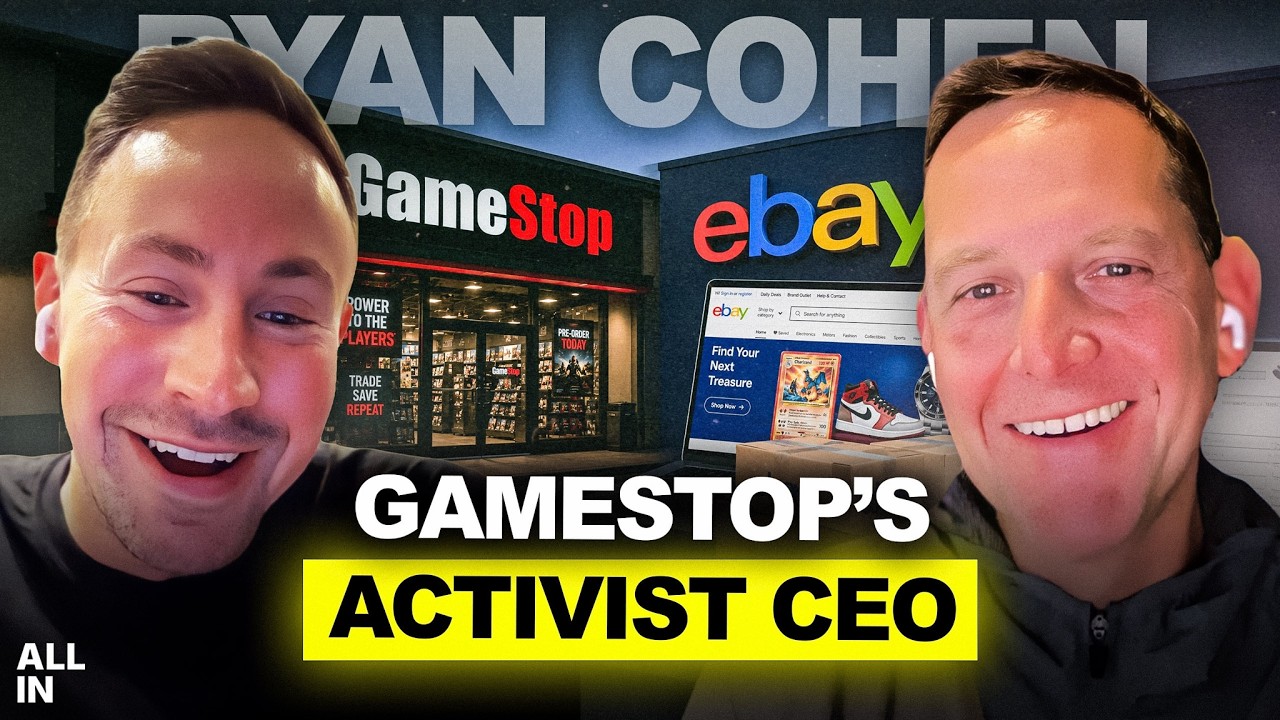
GameStop CEO Ryan Cohen’s $56B Plan to Take Over eBay
 85 min
World's First Trillionaire, Anthropic Fable Banned, The New Oligarchs, Iran Peace Deal
 102 min
Anthropic's Fable Backlash, Nationalizing AI, Inflation Heats Up & California’s Broken Elections
Ask anything from this episode.
Save it, chat with it, and connect it to Claude or ChatGPT. Get cited answers from the actual content — and build your own knowledge base of every podcast and video you care about.
Get Started Free