Key Moments
E44: USA's Afghanistan embarrassment, China's new algo laws, future of robots + Italy recap!
 All-In Podcast
Want to know something specific about what's covered?
We've already dissected every moment. Ask and we will deliver (with timestamps).
Key Moments
Afghanistan withdrawal, China's tech/algo laws, robotics race, and Bezos lawsuits.
Key Insights
The US withdrawal from Afghanistan was a catastrophic failure due to corruption and incompetence, costing trillions and lives.
China is asserting global influence by cracking down on tech, controlling algorithms, and seeking economic partnerships in regions the US withdraws from.
Robotics are advancing rapidly with Boston Dynamics and TeslaBot, raising questions about general vs. specialized automation and AI safety.
US policy is being undermined by special interests and a 'nanny state' mentality, eroding individual agency and fiscal responsibility.
Competition in space is heating up, seen in the rivalry between Bezos' Blue Origin and Musk's SpaceX, highlighting the need for strategic focus over lawsuits.
The "free money" train, coupled with eviction moratoriums and relaxed work requirements, contributes to labor shortages and economic fragility.
AFGHANISTAN: A CATASTROPHIC AND COSTLY FAILURE
The withdrawal from Afghanistan after 20 years is deemed a complete failure, likened to the Soviet experience. The consensus is that the war was unwinnable from the start, characterized by 20 years of lies from the Pentagon about progress, significant expenditure of $2 trillion, and the eventual collapse of the Afghan army and government. The botched withdrawal itself, including the abandonment of Bagram Airfield and leaving behind allies, is seen as further evidence of incompetence and a blow to American credibility.
CHINA'S ASCENDANCY AND TECHNOLOGICAL CONTROL
China is positioned to benefit from the US withdrawal, with plans to expand its Belt and Road Initiative and secure access to rare earth minerals. Concurrently, China is implementing strict new regulations on its tech sector, including potential bans on foreign IPOs, increased transparency for algorithms, and government control over content to promote 'positive energy.' This signifies a strategic move to consolidate domestic control and project global economic power.
THE ROBOTICS REVOLUTION AND THE FUTURE OF AI
The rapid advancements in robotics, exemplified by Boston Dynamics' sophisticated machines and Tesla's ambitious "Optimus" bot, signal a new era. Discussions revolve around the distinction between general-purpose and specialized automation, product-market fit for robots, and the ethical implications of advanced AI. While the potential is immense, concerns remain about safety, control, and whether these innovations will truly serve human needs or merely mimic human capabilities.
AMERICAN POLICY: INFIGHTING, SPECIAL INTERESTS, AND ERODING AGENCY
A significant portion of the discussion critiques American domestic policy, highlighting themes of special interest corruption, a 'nanny state' mentality, and the erosion of personal agency. Issues like the Supreme Court's ruling against the eviction moratorium, the Prop 22 debate in California concerning independent contractors, and the persistent 'free money' policies are seen as symptoms of a system that disincentivizes work and personal responsibility, fueled by lobbying and virtue signaling.
THE GEOPOLITICAL RAMIFICATIONS: FROM TAIWAN TO SPACE COMPETITION
The conversation extends to the future of global power dynamics, particularly concerning Taiwan's vulnerability to Chinese aggression. The panel discusses the strategic ambiguity policy and the immense economic cost of potential conflict. In space, the intense rivalry between Jeff Bezos' Blue Origin and Elon Musk's SpaceX is highlighted, with criticism directed at Bezos' legal challenges and a call for focus on innovation and execution rather than lawsuits.
EVALUATING LEADERSHIP AND INNOVATION: MUSK VS. BEZOS
The panel contrasts the approaches of Elon Musk and Jeff Bezos. Musk is lauded for his broad technical vision, relentless iteration, and customer-centric approach to projects like Tesla and Starlink, often overcoming initial skepticism. Bezos, despite his wealth and operational prowess, is criticized for his recent focus on lawsuits and perceived lack of technical execution in Blue Origin, suggesting a potential misjudgment of how to motivate technical talent and achieve long-term goals.
Mentioned in This Episode
●Products
●Software & Apps
●Companies
●Organizations
●Concepts
●People Referenced
Common Questions
Callin is a new social audio app that allows users to create podcasts from live rooms with an RSS feed, automating much of the post-production work. Unlike Clubhouse, which focuses on live, serendipitous experiences akin to a cocktail party, Callin aims to create long-tail podcasts for a more enduring content format.
Topics
Mentioned in this video
One of the hosts of the All-In Podcast, known for his strong opinions, especially on politics and foreign policy. He tweeted about the collapse of the American empire in relation to the Afghanistan withdrawal.
The U.S. President, criticized for his administration's handling of the Afghanistan withdrawal, particularly the pullout from Bagram Air Base and the slow processing of visas for Afghan allies.
A venture capitalist, cited for his views on the archaic nature of traditional full-time employment for gig workers and for discussing the need for affordable COVID-19 tests.
CEO of Tesla and SpaceX, who revealed plans for the 'Tesla Bot.' Praised as the most important technical, product, and business mind of our lifetime, and a 'customer of the robot' due to his factory needs.
Co-founder of Google, criticized for being 'absent' and not utilizing his enormous fortune and past talent effectively, in contrast to Elon Musk's continued work ethic.
A legendary basketball player and businessman, humorously suggested as someone to discuss the production and distribution of inexpensive COVID-19 tests due to his perceived competence.
The founder of Al-Qaeda, whose capture or death was a primary objective of the U.S. in Afghanistan. His death in Pakistan around 2010 should have signaled the end of U.S. involvement, according to the hosts.
The Governor of California, described as one of the most corrupt governors, engaging in sweetheart deals and disguising corruption with 'woke virtue signaling.' Subject of a recall campaign.
An independent journalist cited for his reporting on wasteful spending by defense contractors in Afghanistan, detailing how equipment would disappear.
The Special Inspector General for Afghanistan Reconstruction (SIGAR), appointed by Congress to investigate and report on the Afghan War's failures, revealing widespread incompetence and waste.
The sixth U.S. President, quoted for his foreign policy principle: 'America does not go abroad in search of monsters to destroy,' reflecting a rational foreign policy compared to current interventions.
Co-founder of Android, who led the robotics unit at Google after the acquisition of Boston Dynamics.
Founder of Virgin Group, mentioned in the context of Jeff Bezos 'dunking' on him regarding spaceflight achievements, seen as poor PR.
The despotic leader of North Korea, referenced in a joke that was considered too sensitive to be actually told at a 50th birthday speech.
The General Secretary of the Chinese Communist Party, who is implicitly protected by China's new algorithm regulations that mandate 'positive energy' and ban content criticizing the CCP.
Another host of the All-In Podcast, called the 'dictator' and 'duke' after returning from an Italian castle retreat. Known for his financial insights and strong views.
The President of Russia, mentioned in the context of U.S. requests for military staging resources in Asia, which he denied, highlighting Russia and China observing American actions.
A California Assemblywoman, credited with passing AB 5, which aimed to classify gig workers as employees, despite public opposition and being seen as driven by union interests.
Founder of Amazon and Blue Origin, whose post-CEO activities are criticized for involving lawsuits against SpaceX and NASA, seen as a 'miscalculation' that alienates technical talent.
The U.S. Secretary of State, criticized for doing nothing despite receiving warnings from a bipartisan group about the safety of Afghan allies and the slow processing of Special Immigration Visas.
Founder and CEO of SoftBank, whose belief in the 'singularity' and general-purpose AI influenced SoftBank's acquisition of Boston Dynamics.
The country where the podcast hosts and friends went for a vacation and birthday celebrations. Praised as a great country for adults to vacation.
A special administrative region of China, mentioned as an example of a democracy that has been 'flipped' by China, drawing parallels to the potential fate of Taiwan.
A region in central Italy, praised for its beauty and mentioned as a delightful vacation spot. One of the hosts jokingly says he's 'occupying' it.
The largest island in the Mediterranean Sea, an autonomous region of Italy. Mentioned as the location of David Sacks' boat.
A former U.S. military base in Afghanistan, whose early July abandonment by U.S. forces without warning to Afghan allies was cited as a critical mistake in the withdrawal process.
A country bordering Afghanistan and China, mentioned in the context of China's aspirations for partnership in the region for infrastructure development.
A peninsula annexed by Russia from Ukraine, cited as an example of a dictator (Putin) taking over other regions, implying that such actions won't stop unless challenged.
An island nation in Melanesia, humorously suggested as a target for 'war' due to its beauty and the desire for an island, satirizing interventionist foreign policy.
A city in Italy, praised as amazing during the Italy trip recap.
A large Italian island in the Mediterranean Sea, expressed love for during the Italy trip recap.
A global power watching the U.S. withdrawal from Afghanistan with keen interest, aiming to build infrastructure like highways to access rare earth minerals. Also discussed for its tech crackdown and algorithm regulation.
A democratic island nation considered at risk of invasion by China following U.S. withdrawal from Afghanistan. Its defense is viewed as a crucial test of U.S. global commitment and economic stability due to its advanced chip manufacturing.
A country subject to Russian ambitions, mentioned alongside Crimea as an example of dictatorial expansionism that needs to be countered.
A Nordic island nation, humorously suggested as a target for 'war' only in the summertime due to its reported beauty, further satirizing interventionist foreign policy.
A city in Italy, described as incredible during the Italy trip recap.
A new social audio app being launched by one of the hosts, David Sacks. It allows users to create podcasts from live rooms with an RSS feed, automating post-production.
A mobile operating system, mentioned in the context of Andy Rubin, who previously started and ran the company that developed Android before Google acquired it.
A social audio app, discussed as being irrelevant compared to Callin's approach of creating long-tail podcasts, rather than just live serendipitous experiences.
The headquarters of the US Department of Defense, criticized for providing misleading information about the progress of the Afghanistan War for two decades, creating a culture of advancement based on bogus metrics.
A global analytics and advice firm, cited for its polling data in Afghanistan that showed high levels of corruption and support for Sharia law among the population, indicating a lack of 'product-market fit' for Western democracy.
A prominent American newspaper, mentioned for reporting on the sexual abuse of young boys by Afghan warlords who were U.S. allies, which the U.S. government allegedly ignored.
The US Internal Revenue Service, jokingly mentioned as David Friedberg's 'office' due to his remote work setup.
A militant Islamist multi-national organization, whose presence in Afghanistan was the initial just cause for U.S. intervention after 9/11. The mission to destroy Al-Qaeda and kill Osama bin Laden was largely accomplished early in the war.
A large employees union, criticized for heavily lobbying against Prop 22 and for legislation that would force gig workers into full-time employee status, despite not representing workers in these industries and against voters' will.
A prominent research university, mentioned as the institution from which Boston Dynamics spun out in the 1990s.
The Islamic fundamentalist group that overran Kabul and took control of Afghanistan after the U.S. withdrawal, having been previously engaged in by the U.S. since 9/11.
A respected British business newspaper, mentioned as the source for a story about China's watchful eye on Afghanistan following the U.S. withdrawal, signaling China's regional ambitions.
An affiliate of the Islamic State, which claimed responsibility for suicide bombings outside Kabul airport, killing over 100 people including U.S. service members.
The U.S. government agency responsible for the nation's civilian space program. Sued by Blue Origin over lunar lander proposals that prioritized SpaceX.
An American technology news website, cited as the source reporting that Blue Origin's lawsuit has delayed SpaceX's work on the lunar lander project.
An independent agency of the United States government that regulates interstate and international communications. Amazon urged the FCC to dismiss SpaceX's plans for another cluster of Starlink satellites.
A social media platform, mentioned in the context of Chinese government's concerns about algorithms causing chaos, contrasting with China's move to control algorithms.
An American aerospace manufacturer and space transportation services company founded by Elon Musk. Awarded NASA's lunar lander contract, leading to a lawsuit from Blue Origin. Also proposing to launch more Starlink satellites.
An American multinational technology company. Its founder Jeff Bezos is discussed in the context of his space ambitions and rivalry with Elon Musk.
An enterprise social networking service, mentioned by Chamath as a previous product he was involved in, to compare Callin as a better creation.
An online service that matches customers with local professionals for a variety of services, mentioned as an example of a company enabling flexible, gig-based work.
A robotics company known for its advanced robots capable of parkour and handling heavy objects. It was acquired by Google, then SoftBank, and is now owned by Hyundai. Their focus on general-purpose automation is debated.
A South Korean automaker that now owns Boston Dynamics. Expected to leverage Boston Dynamics' IP for special-purpose automation in its existing product lines.
An online payments system, also mentioned by Chamath as a previous product he was involved in, comparing Callin positively to it.
An American web services provider, mentioned as an example of a company that had to have a local partner in China due to foreign ownership prohibitions.
A Chinese multinational technology company specializing in internet-related services and AI, mentioned as having Variable Interest Entity (VIE) structures.
A ride-sharing and food delivery company, a key player in the Prop 22 debate, lobbying for its drivers to remain independent contractors. Drivers currently receive minimum $21/hour due to labor shortages.
A food delivery service, mentioned in the context of Prop 22 and the gig economy, where drivers are reportedly earning high rates due to labor shortages.
An aerospace manufacturer and spaceflight services company founded by Jeff Bezos. Mentioned in the context of Bezos suing NASA over lunar lander contracts, seen as a miscalculation.
Taiwan Semiconductor Manufacturing Company, a leading chip manufacturer in Taiwan. Its critical role in global advanced chip supply (70%) makes Taiwan's defense vital for the U.S. economy and national security.
A former energy trading company that famously used VIEs to shield losses and engage in shady accounting, leading to its collapse and new accounting laws. Mentioned as a historical example of VIE misuse.
A Chinese multinational technology company, noted for having complex Variable Interest Entity (VIE) structures in its prospectuses, which investors overlooked due to greed.
A utility company in California, mentioned in the context of Governor Newsom cutting a 'sweetheart deal' to absolve them of liability for fires they caused.
The tech giant that acquired Boston Dynamics in 2013 as part of its moonshot tech investing, later selling it. Their initial vision for a next-gen robotics platform is discussed.
A pizza chain, mentioned sarcastically when recounting a less extravagant birthday dinner. Highlighted as a low-cost, convenient food option.
A Japanese multinational conglomerate holding company that acquired Boston Dynamics from Google, driven by CEO Masayoshi Son's belief in the 'singularity' and general-purpose AI. Later sold to Hyundai.
A major social media platform, mentioned in the context of Chinese government's concerns about algorithms causing chaos, contrasting with China's move to control algorithms.
A video-sharing platform, mentioned in the context of Chinese government's concerns about algorithms causing chaos, contrasting with China's move to control algorithms.
A Chinese multinational technology and entertainment conglomerate, noted for having Variable Interest Entity (VIE) structures.
A Chinese e-commerce company, mentioned as having Variable Interest Entity (VIE) structures.
A ride-sharing company, also a key player in the Prop 22 debate, lobbying for its drivers to remain independent contractors.
Google's moonshot factory, an R&D division focused on technological advancements. Mentioned as the group that set up Boston Dynamics within Google.
The Islamic canonical law, discussed in the context of Gallup polling in Afghanistan, revealing that a large majority of Afghans believed it should be the sole or a primary source of legislation.
An ethnic minority group in China, whose plight is considered a 'no-fly zone' topic under China's new algorithm regulations, preventing discussion that might create social unrest.
A legal structure used by Chinese companies to bypass foreign ownership restrictions, allowing U.S. investors to buy 'equity' without direct asset claims. China's crackdown is now threatening these structures, potentially leading to massive capital losses.
A governmental program in which every adult citizen receives a set income regardless of their other earnings. California is described as having run a controlled experiment on UBI, leading to labor shortages.
A humanoid robot planned by Elon Musk, revealed at Tesla's AI Day. Designed to weigh 125 lbs, be 5'8", move 5 mph, and carry 45 lbs, with built-in limitations for human safety. Intended for factory work and space colonization.
A satellite internet constellation operated by SpaceX, praised as a 'real thing' despite initial skepticism, showcasing Elon Musk's capability to deliver on ambitious projects.
A brand of rapid antigen tests for COVID-19, mentioned in the context of the lack of affordable and accessible COVID testing in the US.
A California ballot proposition related to the classification of app-based drivers as independent contractors rather than employees, heavily lobbied by Uber and Lyft. Partially overturned by an appeals court.
California Assembly Bill 5, passed by Lorena Gonzalez, requiring many gig workers to be classified as employees, which Prop 22 sought to counter. Overturned by voters but challenged by activist judges.
More from All-In Podcast
View all 409 summaries 77 min
Trump-Xi Summit, Benioff: "Not My First SaaSpocalypse," OpenAI vs Apple, Multi-Sensory AI, El Niño
 96 min
How We Grew Koch Inc. to $150 Billion Without Going Public: Charles & Chase Koch
 72 min
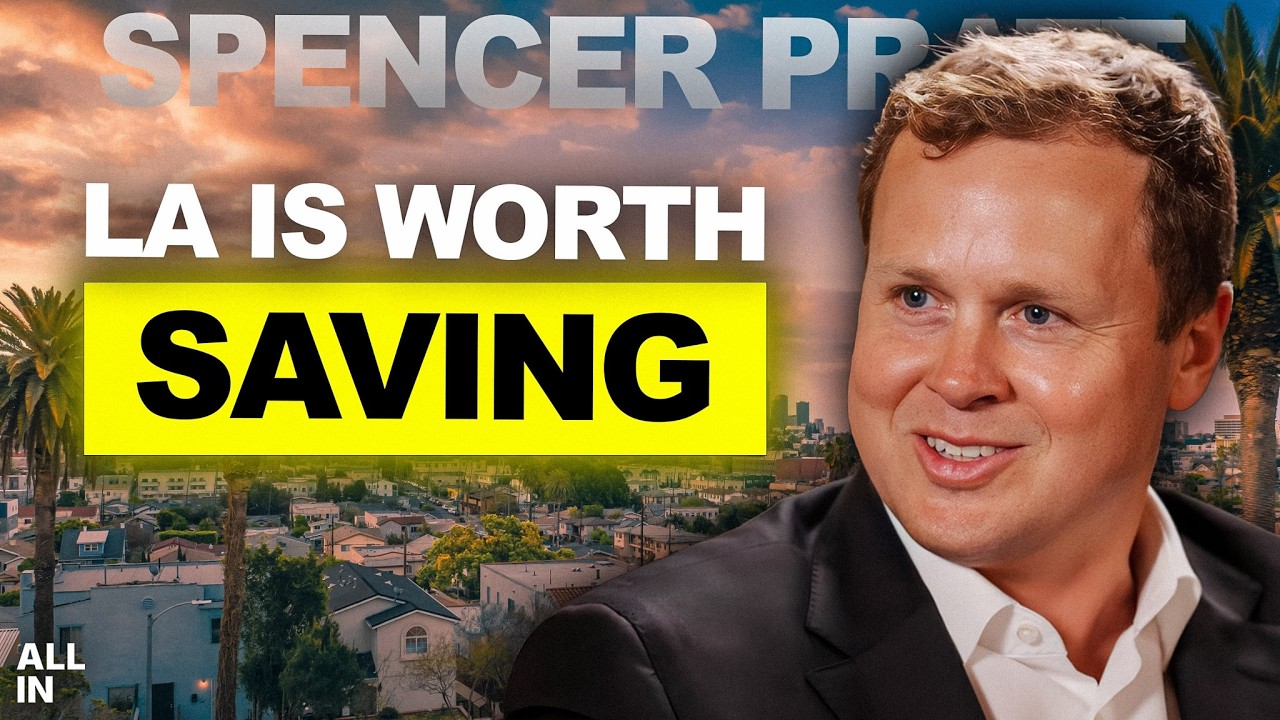
Spencer Pratt on Fixing LA: Wildfires, Homelessness, Corruption & the Fight to Take It Back
 83 min
Elon’s Anthropic Deal, The Next AI Monopoly?, “FDA for AI” Panic, Trading the AI Boom
Ask anything from this episode.
Save it, chat with it, and connect it to Claude or ChatGPT. Get cited answers from the actual content — and build your own knowledge base of every podcast and video you care about.
Get Started Free