Key Moments
Deep Learning State of the Art (2020)
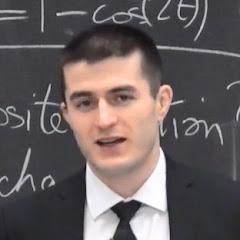 Lex Fridman
Want to know something specific about what's covered?
We've already dissected every moment. Ask and we will deliver (with timestamps).
Key Moments
Lex Fridman's 2020 deep learning overview: key research, frameworks, NLP, RL, AVs, ethics, and future hopes.
Key Insights
Deep learning has matured significantly, recognized by the Turing Award, with ongoing debates about its limitations and the need for broader AI capabilities.
Frameworks like TensorFlow and PyTorch are converging, offering improved usability, while reinforcement learning continues to advance rapidly through self-play in games and advanced robotics.
Natural Language Processing (NLP) has been revolutionized by Transformer models (BERT, GPT-2, XLNet), but true understanding and common-sense reasoning remain significant challenges.
Autonomous vehicles are a major AI application, with ongoing development in both learning-based (Tesla) and sensor-rich (Waymo) approaches, highlighting the need for continuous learning and robust testing.
Ethical considerations, including bias, fairness, privacy, and the societal impact of AI, are increasingly important, alongside the potential for AI companionship and the question of AI rights.
The future of AI hinges on interdisciplinary collaboration, the exploration of hybrid symbolic-AI systems, active and lifelong learning, and a balanced approach to both development and public discourse.
THE EVOLUTION AND CELEBRATION OF DEEP LEARNING
The year 2020 marks a significant point for deep learning, recognized by the Turing Award given to pioneers like Hinton, LeCun, and Bengio. This signifies the field's maturity and its widespread impact. The lecture traces AI's historical roots, from ancient aspirations to modern engineering marvels, emphasizing the enduring dream of understanding and recreating intelligence. It highlights key milestones like the perceptron, multi-layer perceptron, backpropagation, and the ImageNet moment, underscoring the journey from early theoretical models to revolutionary practical applications.
FRAMEWORKS, NATURAL LANGUAGE PROCESSING, AND REINFORCEMENT LEARNING IMMERGE
The landscape of deep learning frameworks, notably TensorFlow and PyTorch, shows convergence towards shared best features, enhancing usability and efficiency. In Natural Language Processing (NLP), Transformer models like BERT and GPT-2 have achieved state-of-the-art results, revolutionizing text generation and understanding, though true common-sense reasoning remains an open challenge. Reinforcement Learning (RL) continues its impressive trajectory, with advancements in self-play for games like Dota 2 and impressive performance in complex strategy games such as StarCraft II, showcasing emergent strategies and sophisticated multi-agent cooperation.
ADVANCEMENTS IN AUTONOMOUS VEHICLES AND ROBOTICS
Autonomous vehicles represent a critical real-world application of AI, with distinct approaches from companies like Waymo (sensor-rich, level 4) and Tesla (learning-based, level 2). The lecture details the immense testing and data collection efforts, emphasizing the iterative learning process ('data engine') crucial for continuous improvement. In robotics, reinforcement learning facilitates complex manipulation tasks, such as solving a Rubik's Cube, often through techniques like Automatic Domain Randomization (ADR) to enhance robustness and generalization.
THE SPECTRUM OF AI APPLICATIONS AND ETHICAL CONSIDERATIONS
Beyond games and robotics, deep learning is highly impactful in areas like medical applications and autonomous driving. Algorithmic ethics remains a critical focus, with ongoing research into fairness, privacy, and bias. The lecture touches upon the societal implications of AI, particularly the growing influence of recommendation systems on information consumption and public discourse. It highlights the need for greater transparency and responsible development, especially as AI systems become more integrated into daily life.
THE STATE OF DEEP LEARNING SCIENCE AND FUTURE HOPES
The scientific frontiers of deep learning include graph neural networks (GNNs) for complex problems and Bayesian deep learning for uncertainty quantification. Hopes for 2020 center on advancements in common-sense reasoning, active learning, lifelong learning, and open-domain conversation. There's a strong emphasis on interdisciplinary collaboration across various scientific fields to tackle complex AI challenges and move towards more general artificial intelligence.
PUBLIC DISCOURSE, EDUCATION, AND THE PATH FORWARD
The intersection of AI and politics is becoming more prominent, with discussions about AI's capabilities and limitations entering public discourse. The lecture emphasizes the need for better communication between experts and the public, fostering informed debate rather than fear. It also highlights valuable educational resources, including online courses, books, and tutorials, encouraging hands-on learning through coding and building models. The overarching hope for the future is continued perseverance, open-mindedness, and hard work in pushing the boundaries of artificial intelligence.
Mentioned in This Episode
●Products
●Software & Apps
●Companies
●Organizations
●Books
●Studies Cited
●People Referenced
Common Questions
Deep learning's history traces back to 1943 with initial neural network models, progressing through perceptrons, backpropagation, CNNs, RNNs, and the term 'deep learning' itself emerging around 2006. Key moments include ImageNet in 2012, GANs, and transformer models.
Topics
Mentioned in this video
A key figure in deep learning, particularly for his work on recurrent neural networks and credit assignment, and is encouraged for further reading on community contributions.
Former head of Google Brain and Baidu AI Group, mentioned regarding 'online learning' or the 'data engine' concept in active learning for autonomous driving.
Developer of the perceptron and multi-layer perceptron, considered by some to be the father of deep learning for his work on multiple hidden layers in neural networks.
Co-recipient of the Turing Award for deep learning, co-authored a fundamental book on deep learning.
Co-recipient of the Turing Award for deep learning, co-authored a fundamental book on deep learning.
Considered a father of artificial intelligence, known for the Turing test and his predictions about machine thinking.
Chess grandmaster who lost to IBM's Deep Blue in 1997, a seminal moment in AI's capabilities in games.
Creator of the fast.ai course, considered an excellent introduction to deep learning using PyTorch.
Author of 'Man's Search for Meaning', mentioned in the context of AI ethics and suffering.
Noted for predicting that the popular press would declare the era of deep learning over by 2020, highlighting skepticism about its limits.
A presidential candidate who discussed artificial intelligence, noted for bringing the topic into public discourse despite a lack of fundamental understanding.
Author of 'Deep Learning with Python', praised for his Keras and TensorFlow expertise.
Author quoted for her perspective on AI's origins in the ancient wish to 'forge the gods'.
Mentioned as an example of relinquishing power, contrasted with those who seek absolute power, as a model for ethical leadership in the age of AI.
From DeepMind, known for his course on reinforcement learning and contributions to the field.
Philosopher whose work on animal ethics is referenced when discussing the potential rights of AI.
An OpenAI language model discussed for its potential dangers, release strategy, and its limitations in common sense reasoning, though noted for impressive text generation.
Platform offering the DeepLearning.AI course, recommended as an excellent introduction for beginners.
A popular deep learning framework that has converged with PyTorch, adopting eager execution and integrating Keras as its primary API. It also has browser and mobile implementations.
Mentioned in relation to the Jeopardy challenge, highlighting lessons learned about effective conversation, where machine learning is an assistive tool.
A leading deep learning framework that has converged with TensorFlow, now supporting TorchScript for graph representation and experimental mobile versions.
A large transformer language model from NVIDIA with 8.3 billion parameters, significantly larger than GPT-2, showing advancements in training scale.
DeepMind's AI program that defeated Lee Sedol in Go, a significant milestone in AI's game-playing abilities.
Voice assistant used as an example for open-domain conversations and the challenges of achieving human-like dialogue, highlighting its 'nervous' interaction style.
A transformer model from CMU and Google Research that combines bidirectionality from BERT with recurrence from Transformer-XL to achieve state-of-the-art results on multiple NLP tasks.
Offers a highly recommended course as an introduction to deep learning, utilizing PyTorch.
Developed Megatron LM, a large transformer model with 8.3 billion parameters, representing significant research in scaling language models.
Mentioned as a platform from which AI systems could potentially learn representations and understand the world, aligning with Yann LeCun's idea of self-supervised learning.
Mentioned in the context of autonomous vehicles and their autopilot system, highlighting its deep learning-based core.
AI research lab noted for AlphaGo's victory over Lee Sedol and for work in multi-agent reinforcement learning and recommendation systems.
A company and repository that provides pre-trained transformer-based NLP models and tools like 'right with transformer' for exploring language model capabilities.
Mentioned for developing GPT-2, its release strategy report, and its work on reinforcement learning (OpenAI 5) and emergent meta-learning in robotics.
Company behind Deep Blue, whose victory over Garry Kasparov in 1997 was a landmark event in AI.
Leading company in Level 4 autonomous driving, emphasized for its extensive testing and its use of deep learning as a core component. Discussed for its lidar-based approach and its iterative learning process.
Developed a dataset for question answering focused on common sense reasoning and is also involved in extending 'double descent' to deep neural networks.
Offers excellent courses on visual recognition (convolutional nets) and natural language processing.
Offers courses on fundamental mathematics for AI, including linear algebra and statistics. The speaker also has lectures available online.
Offers a Coursera course on deep learning, highly recommended for beginners.
More from Lex Fridman
View all 552 summaries 227 min
Gary Gallagher: American Civil War, Slavery, Lincoln, Grant & Lee | Lex Fridman Podcast #499
 232 min
The Rise and Fall of the Roman Empire and the Byzantine Empire | Lex Fridman Podcast #498
 174 min
Biggest Mysteries in Physics: Antimatter, Dark Energy & ToE - Don Lincoln | Lex Fridman Podcast #497
 259 min
FFmpeg: The Incredible Technology Behind Video on the Internet | Lex Fridman Podcast #496
Ask anything from this episode.
Save it, chat with it, and connect it to Claude or ChatGPT. Get cited answers from the actual content — and build your own knowledge base of every podcast and video you care about.
Get Started Free