Key Moments
David Yarrow on Art, Markets, Business, and Combining It All | The Tim Ferriss Show
 Tim Ferriss
Want to know something specific about what's covered?
We've already dissected every moment. Ask and we will deliver (with timestamps).
Key Moments
Photographer David Yarrow discusses his career, art, business, and philanthropy, from early struggles to global success.
Key Insights
Yarrow's early photography career was marked by challenges, but a single iconic Maradona photo at the 1986 World Cup changed his trajectory.
He transitioned from sports photography to banking, learning valuable lessons in humility, risk management, and the importance of network.
A major financial downturn and personal crisis led him back to photography, focusing on fine art and a business model that prioritizes third-party validation.
His approach to photography involves deep immersion, using wide-angle lenses to create an 'in the frame' experience for the viewer.
Philanthropy and conservation are central to his work, with a significant portion of his proceeds donated to various causes.
Yarrow emphasizes the power of storytelling, often using dramatic landscapes and compelling subjects like animals and remote communities.
THE ACCIDENTAL SHOT THAT LAUNCHED A CAREER
David Yarrow's journey began unexpectedly at the 1986 World Cup in Mexico. Despite being a novice photographer, his iconic shot of Diego Maradona being lifted aloft, World Cup in hand, became a defining moment. This single image, captured amidst the chaos of celebratory Argentinians on the pitch, surprisingly saved his equipment and his nascent photography career from being overlooked. It was an outlier in an otherwise unfocused portfolio, yet it provided the impetus and visibility needed to move forward.
BANKING AND THE LESSONS OF THE DEAL ROOM
Following his early photography experiences, Yarrow pursued a career in banking. This period was instrumental in shaping his business acumen, teaching him the importance of surrounding himself with bright individuals, the sting of failure, and the value of a strong network. The high-stakes environment of Wall Street and investment banking exposed him to the complexities of financial markets, a foundation that would indirectly influence his later approach to the art market, emphasizing strategy and understanding market dynamics.
RETURN TO ART AND THE BIRTH OF FINE ART PHOTOGRAPHY
A significant financial crisis and personal upheaval prompted Yarrow to return to photography, this time with a focus on fine art. He realized that while editorial photography paid little, fine art offered a path to genuine monetization. This shift involved a conscious effort to frame his work as art, not just documentation. He embraced the concept of 'self-propagation' for his brand, understanding that a strong, recognizable identity would lead to broader opportunities and market recognition.
THE WHOLESALE MARKET AND THIRD-PARTY VALIDATION
Yarrow advocates for a 'wholesale' approach to selling art, primarily through galleries, emphasizing the power of third-party affirmation. He contrasts his approach with photographers who vertically integrate, owning their galleries, citing potential risks and alienation within the art market. He believes that reputable galleries lend credibility and wider reach, allowing the art itself to be 'sold' by others, which he sees as more effective and less prone to self-promotion bias, a lesson learned from observing others' successes and cautionary tales.
IMMERSIVE STORYTELLING AND CONSERVATION FOCUS
His photographic style is characterized by immersive storytelling, often using wide-angle lenses to place the viewer directly within the scene, rather than compressing distance with telephoto lenses. This technique aims to evoke emotion and a sense of presence. Central to his work is a deep commitment to conservation and philanthropy. Many of his shoots involve endangered species and remote communities, with a significant portion of the proceeds from print sales dedicated to charitable causes, lending powerful purpose to his artistic endeavors.
THE DRAMA OF THE AMERICAN WEST AND GLOBAL CANVAS
Yarrow finds immense creative fuel in the American West, drawn to its vast landscapes and the inherent drama of its history and people. From the rugged terrain of Montana and Wyoming to the borderlands of Texas and the wildness of South Sudan, these locations serve as potent canvases for his stories. He emphasizes the visual richness and diversity of these settings, believing they offer unparalleled opportunities for narrative-driven photography and a stark contrast to the more curated environments of established art markets.
Mentioned in This Episode
●Products
●Software & Apps
●Companies
●Organizations
●Books
●People Referenced
Common Questions
David Yarrow, then a 20-year-old student, obtained a press pass for the 1986 World Cup final in Mexico after Scotland was eliminated. He gambled by leaving his long lens to get close to Maradona with a wide-angle lens, capturing the iconic shot of Maradona lifted on shoulders with the World Cup trophy. (Timestamp: 788)
Topics
Mentioned in this video
A membership-based site offering healthy and organic products at wholesale prices, with a program to provide free memberships to low-income families.
A British bank where David Yarrow chose to work instead of Getty Images.
Car manufacturer, mentioned in an analogy about choosing between an original and a replica wagon.
A stock photo agency that offered David Yarrow a job early in his career.
An investment bank whose dealing room was depicted in 'Liars Poker.'
An online legal service that helps individuals and businesses with legal needs like wills and business formation, without charging by the hour.
Photography company that sponsored the Olympics and provided labs for film processing.
Photography company that sponsored the Olympics and provided labs for film processing.
Swedish mobile telephony company that warned investors the day before 9/11.
An investment bank, whose struggles in 2006 were early signs of the financial crisis.
A feeder fund to Bernie Madoff, known to David Yarrow.
Company at the center of the leveraged buyout described in 'Barbarians at the Gate.'
Scandinavian telephony stock that saw a big run in the late 1990s.
Lingerie brand that experienced a "stunning fall from grace," used as an example of how changing public taste can affect a brand.
Streaming service, admired for its courage in investment and commitment to original content, despite being exposed to current crises.
Almond butter available at a discount through Thrive Market.
Mayonnaise made with avocado oil, offered at a discount through Thrive Market.
A free browser extension that finds and applies promo codes automatically at checkout.
Marinara sauce available at a discount through Thrive Market.
The international governing body of association football, mentioned in the context of the 1986 World Cup and historic corruption allegations.
A Tom Hanks film, featuring a scene with Mark Rylance as a Russian spy, which David Yarrow uses to illustrate the importance of maintaining optimism and awareness without paralysis.
Cameron Crowe film that inspired David Yarrow's 'mission statement' for his photography career.
Classic Steven Spielberg film, mentioned in the context of David Yarrow's obsession with great white sharks and a Texan attorney nicknamed 'Jaws.'
A film, mentioned as a typical movie to watch during a lonely Christmas.
The ill-fated ocean liner, used as an analogy for how news headlines can misrepresent significant events.
Fantasy television series, mentioned when discussing people involved in a photoshoot on the Rio Grande.
A documentary film about Ayrton Senna, mentioned as being directed by the same person who directed the Maradona documentary.
Popular book series by J.K. Rowling, mentioned when discussing Rowling's quote about rock bottom.
Netflix series, used as an example of significant investment in original content, with its high production cost.
A British newspaper David Yarrow worked for, where his early World Cup photography wasn't highly regarded.
A movie about Amy Winehouse, mentioned alongside 'Senna' and the Maradona film as directed by the same filmmaker.
Tennis player, who once spat on David Yarrow at Wimbledon, an early claim to fame for Yarrow.
Author of the Harry Potter series, quoted for her expression on rock bottom being a solid foundation.
Fashion designer used as an example of consistent pursuit of excellence in branding and taste.
Supermodel, who collaborated with David Yarrow on a photoshoot involving a wolf, motivated by contributing to a hospital that cared for her late brother.
Actor, mentioned as a 'great' celebrity David Ferriss has spent time with.
Actor, who played the Russian spy in 'Bridge of Spies,' his character's calm demeanor is noted as a philosophical lesson for dealing with adversity.
Photographer who started as a cinematographer and focused on large elephants in East Africa, shooting in black and white on film. David Yarrow admired his work and approach to conservation.
Manager of Manchester United for many years, who managed Scotland at the 1986 World Cup.
American writer, quoted as saying the two most important days in a person's life are the day they're born and the day they find out why.
Fictional character from the film 'Wall Street,' who David Yarrow found 'super cool.'
Author of 'Fooled by Randomness,' whose book influenced David Yarrow's thought processes after the 9/11 market event.
Filmmaker, whom David Yarrow looks up to enormously.
Actor, who frequently collaborates with Steven Spielberg and described Spielberg's ability to elicit emotional reactions.
Actress, mentioned by Tim Ferriss as being sweet and kind-hearted, similar to Cindy Crawford.
A marine biologist and good friend of David Yarrow, known for his excellent photographs of great white shark breaching.
Actor, who starred in 'Jerry Maguire,' mentioned in context of David Yarrow's mission statement.
Former US President, with whom David Yarrow had lunch at SMU in Dallas.
Former Dallas Cowboys quarterback, who attended a David Yarrow photoshoot in Dallas.
Celebrated art gallery owner in Southern America, a big donator to NOMAR (New Orleans Museum of Art), whose stable David Yarrow is proud to be part of.
German figure skater, whose beauty was a focus for photographers at the 1988 Calgary Olympics.
Fictional character from the film 'Wall Street,' used to describe his early banking role.
Financial criminal who ran the largest Ponzi scheme, whose collapse led to the downfall of David Yarrow's hedge fund.
An icon in hedge fund management, whose CNBC interview David Yarrow listened to.
Actor, whose emotionally empathetic nature was discussed on Tim Ferriss's podcast, relating to Spielberg's directing style.
Music artist, whose 'Earth Song' music video was filmed by Nick Brandt in the Serengeti.
Photographer from the Andy Warhol school, known for his work in Tsavo, admired by David Yarrow.
Filmmaker, whose scenic style is referenced when discussing the landscapes of Arizona.
Actor and musician, mentioned as a 'great' celebrity David Ferriss has spent time with.
Founder of Tiger Fund Management, whose 'Tiger Cubs' are well-known figures in hedge fund management.
Filmmaker, considered by David Yarrow as his gold medal position hero, known for eliciting emotional reactions.
Argentinian football legend, whose iconic photo with the World Cup trophy was taken by David Yarrow in 1986.
British ski jumper known for his poor performance at the 1988 Calgary Olympics, for whom David Yarrow was assigned to take photos.
Director of 'Jerry Maguire,' whose movie inspired David Yarrow's mission statement.
Artist, associated with Peter Beard's school of photography.
Former US President, mentioned as a historical figure who was both a hunter and a conservationist.
Australian photographer who vertically integrated his business model, taking pictures and selling them through his own galleries, a counterpoint to David Yarrow's wholesale approach.
Inventor, whose story of learning from 1,000 ways how not to create permanent light is a metaphor for David Yarrow's iterative process in photography.
The National Football League, contrasted with FIFA in terms of corruption perception.
American sports magazine, mentioned as being a much bigger publication in 1988 than it is today.
David Yarrow's alma mater, where he studied business and economics.
Federal Bureau of Investigation, to whom Bernie Madoff handed himself over.
Ivy League university mentioned as a platform for people building careers in finance.
Massachusetts Institute of Technology, mentioned as a platform for people building careers in finance.
Financial news channel, where anchors' professional conduct during 9/11 was noted.
College football team from Madison, whose highly attended games surprised David Yarrow coming from a UK perspective.
Ivy League university mentioned as a platform for people building careers in finance.
American football team, with whom David Yarrow recently shot a project.
Museum in New Orleans to which Arthur Roger is a major donator.
Mentioned in comparison to FIFA regarding corruption.
Organization running a refugee camp in South Sudan where David Yarrow spent Christmas Day.
Oliver Stone film that influenced David Yarrow's decision to enter banking.
A national park on the Rio Grande, described as one of the least visited but most beautiful American parks, where David Yarrow did a photoshoot.
A national park in Kenya, known for its large elephants, where Nick Brandt spent a lot of time photographing.
A region in Tanzania where Michael Jackson's 'Earth Song' video was filmed, and where Nick Brandt developed his passion for photography.
A national park in Kenya, known for large elephants, where Peter Beard spent a lot of time photographing.
A large stadium in Mexico City where David Yarrow photographed the 1986 World Cup final.
A book about the RJR Nabisco leveraged buyout, which was influential reading for bankers in the 1980s.
A book about Salomon Brothers' bond trading desk, which David Yarrow referred to as a 'bible' for those in finance.
A book about the history of hedge funds, mentioned as effectively 'Liars Poker for hedge funds' and containing stories about Julian Robertson.
Book by Nassim Nicholas Taleb, which played a big role in David Yarrow's thought processes regarding luck and market events.
More from Tim Ferriss
View all 703 summaries 70 min
Q&A with Tim — The Art of Male Friendship, Reinvention in The Age of AI, & More
 125 min
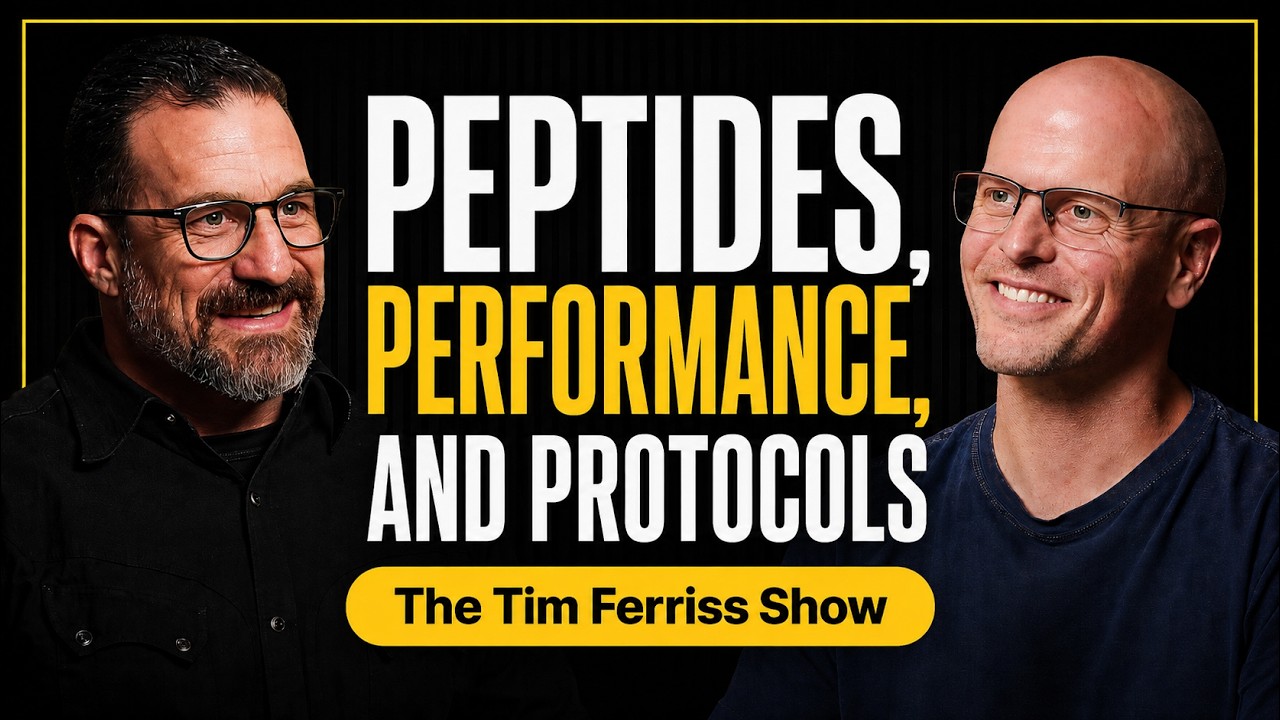
Dr. Andrew Huberman — Peptides, Performance, and Protocols
 112 min
The Random Show! Mortality, AI, Supplements, Rock Climbing, & More
 88 min
The Legendary Hollywood Power Broker — Guy Oseary on 36 Years of Managing Madonna, 26 IPOs, and More
Ask anything from this episode.
Save it, chat with it, and connect it to Claude or ChatGPT. Get cited answers from the actual content — and build your own knowledge base of every podcast and video you care about.
Get Started Free