Key Moments
David Silver: AlphaGo, AlphaZero, and Deep Reinforcement Learning | Lex Fridman Podcast #86
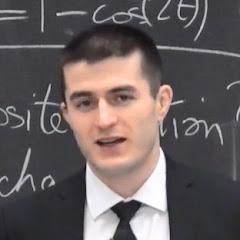 Lex Fridman
Key Moments
David Silver discusses AlphaGo, AlphaZero, and deep reinforcement learning, revolutionizing AI.
Key Insights
Reinforcement learning offers a framework to formalize and solve the problem of intelligence.
AlphaGo's success demonstrated a paradigm shift, moving beyond traditional search-based AI by leveraging deep learning.
AlphaZero significantly advanced AI by achieving superhuman performance in games like Go and Chess solely through self-play, devoid of human expert knowledge.
MuZero further generalized reinforcement learning by learning game rules and dynamics from scratch, even without explicit instructions.
Creativity in AI can emerge from the process of self-correction and discovering novel strategies, as seen in AlphaZero's novel Go openings.
The development of AI is a layered process, mirroring the evolution of intelligence from simple mechanics to complex learning systems.
FROM EARLY PROGRAMMING TO THE BUG OF INTELLIGENCE
David Silver's fascination with computers began at age seven with a BBC Micro, leading to early programming experiences like writing his name repeatedly. This childhood exploration of coding, akin to playing with Lego, revealed the limitless possibilities of computation. Influenced by his father's pursuit of an AI master's degree, Silver was exposed to concepts like Prolog and family tree querying. However, his true passion for artificial intelligence ignited at university, driven by the profound question of whether human intelligence could be recreated in machines.
THE CHALLENGE OF GO AND THE PROMISE OF REINFORCEMENT LEARNING
Silver's initial career in game development involved creating handcrafted AI, which he later recognized as superficial. This led him back to academia for his PhD, focusing on applying reinforcement learning (RL) to the game of Go. Unlike chess, Go's immense complexity and intuitive evaluation made it a formidable AI challenge. Traditional brute-force search methods had failed, and human intuition was considered key. Silver saw RL as the principled approach to enable a system to learn from first principles, understand the game better than humans, and potentially crack the broader problem of AI.
DEEP REINFORCEMENT LEARNING AND THE BEAUTY OF NEURAL NETWORKS
Deep Reinforcement Learning (DRL) combines the learning principles of RL with the powerful representation capabilities of neural networks. Silver highlights that neural networks, capable of learning any function, provide a ceiling-less toolkit for agents. This allows for systems that can improve indefinitely with more data and computation. The surprising effectiveness of deep learning, particularly in high-dimensional spaces where optimization landscapes are complex yet navigable, is a key aspect of DRL's success. This approach tackles the 'knowledge acquisition bottleneck' by enabling systems to learn rather than requiring explicit programming.
THE BREAKTHROUGH OF ALPHAGO AND DEFEATING WORLD CHAMPIONS
AlphaGo marked a pivotal moment in AI. Initially trained on human expert games, it evolved significantly. The project's major scientific investigation was whether deep learning alone could capture the intuition needed for Go. Astonishingly, a pure deep learning system achieved human master-level performance without search. This led to the historic AlphaGo vs. Lee Sedol match in 2016, where AlphaGo defeated the world champion. This victory, watched by millions, was a watershed moment, demonstrating AI's capability beyond human intuition and challenging conventional norms in the game. The match highlighted AI's potential for creativity, such as AlphaGo's unconventional 'move 37'.
ALPHA ZERO: SELF-PLAY AND GENERALIZATION
AlphaGo Zero represented a significant leap by removing reliance on human expert data, learning entirely through self-play. This approach aimed for a more general AI by stripping out human knowledge, making the system more adaptable. Silver found that self-play, where an agent plays against itself, is crucial for self-correction and continuous improvement. The system's ability to learn from scratch and outperform previous versions, even discovering novel strategies discarded by humans, underscored the power of reinforcement learning. This generality was further demonstrated when the AlphaZero algorithm, without modification, achieved superhuman performance in Chess and Shogi.
MUZERO AND LEARNING WITHOUT RULES
CREATIVITY, APPLICATIONS, AND THE FUTURE OF INTELLIGENCE
Silver views creativity in AI as discovering the unknown and unexpected, a process inherent in self-play and correction seen in systems like AlphaZero. The algorithms developed have found applications beyond games, such as in chemical synthesis and quantum computation, showcasing the general applicability of AI. He envisions a future where AI plays a crucial role in solving real-world problems, likening the evolution of intelligence to layered objectives, from universal entropy maximization to the specific goals of intelligent agents.
Mentioned in This Episode
●Products
●Software & Apps
●Companies
●Organizations
●Books
●Concepts
●People Referenced
Common Questions
David Silver's first program, written at around seven years old on a BBC Model B microcomputer, displayed his name in different colors and looped it, igniting his fascination with computers and their limitless possibilities.
Topics
Mentioned in this video
Beginner's All-purpose Symbolic Instruction Code, a family of general-purpose, high-level programming languages.
One of the strongest early Go-playing programs based on Monte Carlo search, achieving human master level on smaller boards.
A computer program developed by DeepMind that plays the game of Go, famous for defeating top human players.
A large visual database designed for use in visual object recognition software research.
A chess-playing computer developed by IBM, notable for being the first computer program to defeat a reigning world chess champion.
An AI system developed by DeepMind that achieved grandmaster level in the video game StarCraft II.
A finance app that allows users to send money, buy Bitcoin, and invest in the stock market.
A general-purpose logic programming language, commonly associated with artificial intelligence and computational linguistics.
A DeepMind AI program that learns optimal strategies for games like Go, chess, Shogi, and Atari games without being told the rules of the game.
A more generalized version of AlphaGo that learns to play Go, chess, and shogi without human expert data, purely through self-play.
Former Canadian astronaut, whose MasterClass course on space exploration is mentioned.
Primatologist and anthropologist, whose MasterClass course on conservation is mentioned.
Professional poker player, whose MasterClass course on poker is mentioned.
Co-founder and CEO of Google DeepMind, who was excited about the AlphaGo project.
Russian chess grandmaster and former World Chess Champion, whose MasterClass course on chess is mentioned.
One of the authors of Deep Blue, recently met with Garry Kasparov.
A South Korean professional Go player, considered one of the strongest players of all time. He played a historic match against AlphaGo in 2016.
Creator of SimCity and The Sims, whose MasterClass course on game design is mentioned.
Musician, whose MasterClass course on guitar is mentioned.
Current World Chess Champion, who reportedly improved his performance by studying AlphaZero's games.
A physicist cited for metaphors related to the purpose of the universe.
Lead researcher on AlphaGo, AlphaZero, and co-led AlphaStar and MuZero efforts at DeepMind. The primary guest for this podcast episode.
Astrophysicist and science communicator, whose MasterClass course on scientific thinking is mentioned.
Host of the Artificial Intelligence Podcast.
Pioneered Monte Carlo tree search in computer Go in 2006.
Creator of the Mogo program, and a colleague of David Silver.
European Go champion, defeated by AlphaGo marking the first time a Go program beat a professional player.
A heuristic search algorithm for some decision processes, used in games and AI, that evaluates positions by simulating random playouts.
A type of machine learning where an agent learns to make decisions by performing actions in an environment to maximize a reward signal.
A subset of machine learning using neural networks with multiple layers, enabling the learning of complex feature hierarchies.
A Japanese variant of chess, which AlphaZero also mastered.
Where David Silver studied computer science as an undergraduate.
Massachusetts Institute of Technology, mentioned in the context of a view on the universe's purpose to maximize entropy.
A prominent scientific journal where research papers on the applications of AlphaZero were published.
Where David Silver pursued his PhD under Richard Sutton, known for its strong games group and history in board games.
More from Lex Fridman
View all 549 summaries 259 min
FFmpeg: The Incredible Technology Behind Video on the Internet | Lex Fridman Podcast #496
 124 min
Vikings, Ragnar, Berserkers, Valhalla & the Warriors of the Viking Age | Lex Fridman Podcast #495
 146 min
Jensen Huang: NVIDIA - The $4 Trillion Company & the AI Revolution | Lex Fridman Podcast #494
 311 min
Jeff Kaplan: World of Warcraft, Overwatch, Blizzard, and Future of Gaming | Lex Fridman Podcast #493
Ask anything from this episode.
Save it, chat with it, and connect it to Claude or ChatGPT. Get cited answers from the actual content — and build your own knowledge base of every podcast and video you care about.
Get Started Free