Key Moments
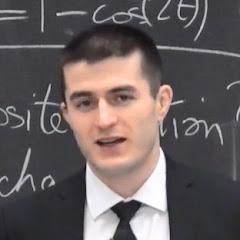
Daphne Koller: Biomedicine and Machine Learning | Lex Fridman Podcast #93
 Lex Fridman
Want to know something specific about what's covered?
We've already dissected every moment. Ask and we will deliver (with timestamps).
Key Moments
Daphne Koller discusses ML in biomedicine, disease understanding, personalized medicine, and the future of education.
Key Insights
Machine learning and large-scale data generation are revolutionizing drug discovery and disease understanding, moving towards personalized medicine.
Current understanding of diseases like Alzheimer's and schizophrenia is limited, often requiring a shift from broad hypotheses to understanding heterogeneous mechanisms.
Disease-in-a-dish models, utilizing iPS cells and advanced imaging, offer more relevant in-vitro systems for studying human diseases compared to traditional animal models.
MOOCs transformed education by offering flexible, concise, and adaptive learning, highlighting a crucial need for continuous skill development in a rapidly changing world.
Machine learning models need to better incorporate uncertainty quantification for critical applications like medical diagnosis and autonomous systems.
While AGI is a distant dream, there are immediate concerns regarding the misuse of powerful AI and gene-editing technologies, and the societal need for norms that promote good.
THE INTERSECTION OF MACHINE LEARNING AND BIOMEDICINE
Daphne Koller discusses the nascent but exciting phase of applying machine learning to drug discovery and medical treatments. She emphasizes the critical role of generating large, high-quality datasets, a departure from traditional research where data generation served scientific discovery as a byproduct. Insitro, her company, prioritizes creating these datasets specifically to power machine learning models, aiming to build predictive models that address fundamental human health challenges. This approach flips the script, making data generation a primary goal to enable powerful AI applications in medicine.
UNDERSTANDING COMPLEX DISEASES AND LONGEVITY
Koller highlights that our understanding of many major diseases, such as Alzheimer's and schizophrenia, is still very rudimentary, often closer to zero than to advanced comprehension. These diseases are likely not single entities but heterogeneous collections of mechanisms. The risk of most age-related diseases increases with age, indicating a strong overlap between aging and disease processes. While immortality remains a distant concept, the aspiration for increased 'healthspan'—living longer in a healthy and active state—is a more attainable and worthy societal goal.
ADVANCEMENTS IN DISEASE MODELING: FROM ANIMALS TO 'DISHES'
Traditional animal models often fail to accurately replicate human diseases due to differing biological mechanisms, leading to poor translation of drug trial results. Koller introduces 'disease-in-a-dish' models, enabled by recent technological advancements. These models use induced pluripotent stem cells (iPSCs) derived from human cells, which can be differentiated into specific cell types (like neurons or cardiomyocytes) mirroring a patient's genetics. This allows for direct study of disease mechanisms at the cellular level, offering a more direct bridge to human physiology compared to animal models.
THE POWER OF DATA AND CELLULAR PHENOTYPES
The ability to collect quantitative data from individual cells, through techniques like single-cell RNA sequencing and advanced microscopy, transforms biological research into digital datasets. These datasets, coupled with machine learning, can uncover complex patterns and disease subtypes previously hidden. By comparing healthy cells with genetically modified or diseased cells, researchers can identify specific genetic contributions and cellular phenotypes. This data-driven approach allows for the identification of potential interventions that might revert diseased cells to a healthy state, offering novel drug discovery avenues.
REVOLUTIONIZING EDUCATION WITH MOOCS
Co-founding Coursera, Koller was instrumental in the MOOC revolution, driven by the realization that continuous learning is essential in a rapidly evolving job market. MOOCs offered a solution by providing flexible, concise, and adaptive learning experiences. Key lessons learned include the effectiveness of short video modules, fragmented course structures for better engagement, and self-paced learning. These principles have influenced both online education and traditional campus teaching, emphasizing the need for brevity and learner control.
AI, UNCERTAINTY, AND THE FUTURE OF INTELLIGENCE
Koller acknowledges the limitations of current AI in handling uncertainty, especially critical in fields like medicine where incorrect, overconfident predictions can be dangerous. Research into Bayesian deep learning and ensemble methods aims to create more calibrated AI systems that can accurately express their confidence and admit when they don't know. While AGI remains a distant prospect, immediate concerns focus on the potential misuse of AI and gene-editing technologies, and the societal need for robust norms that actively promote good behavior and mitigate risks from complex, poorly understood systems.
Mentioned in This Episode
●Software & Apps
●Companies
●Organizations
●Concepts
●People Referenced
Common Questions
Daphne Koller shifted her focus to applying machine learning to improve human health, founding Insitro to lead in drug discovery and treatment development.
Topics
Mentioned in this video
Co-founder of Coursera with Daphne Koller, who also led the 'For Engineering Everywhere' initiative.
Host of the podcast, discussing AI and its applications with Daphne Koller.
Mentioned for his quote about making a 'dent in the universe,' which inspired Daphne Koller's view on life's meaning.
Professor of computer science at Stanford University, co-founder of Coursera, and founder/CEO of Insitro, focused on machine learning in biomedicine.
AI researcher who believes intelligent systems should possess self-doubt to ensure human control.
Online learning platform co-founded by Daphne Koller, which significantly impacted global education, particularly in AI.
A finance app that was a sponsor of the podcast, used for sending money, buying Bitcoin, and investing.
A technology that sequences the RNA of individual cells to measure gene activity, providing detailed cellular data.
A mental health disorder discussed as being poorly understood, with current hypotheses not yet sufficiently validated.
Used as an example of a disease that has been understood to be heterogeneous, not a single entity.
A neurodegenerative disease discussed as being poorly understood, with current hypotheses not yet sufficiently validated.
A metabolic disorder discussed as having some validated mechanisms but also many unknown factors.
An educational model where online content is consumed before class, and class time is used for problem-solving and interaction.
An early benchmark for artificial intelligence, mentioned in the context of the historical pursuit of AGI.
Refers to the discovery of reprogramming adult somatic cells into induced pluripotent stem cells.
A gene editing technology used in experiments to introduce mutations and study their effects at the cellular level.
Scores that quantify an individual's genetic predisposition to certain diseases by analyzing variations in their genome.
University where Daphne Koller is a professor of computer science and where early MOOC efforts originated.
An organization that advances robotics and STEM education for young people, which receives donations through Cash App promotions.
Mentioned in the context of early online education initiatives (OpenCourseWare) that preceded MOOCs.
More from Lex Fridman
View all 553 summaries 193 min
Khabib Nurmagomedov: Dagestan, MMA, UFC, Islam, Conor, Fedor & Football | Lex Fridman Podcast #500
 227 min
Gary Gallagher: American Civil War, Slavery, Lincoln, Grant & Lee | Lex Fridman Podcast #499
 232 min
The Rise and Fall of the Roman Empire and the Byzantine Empire | Lex Fridman Podcast #498
 174 min
Biggest Mysteries in Physics: Antimatter, Dark Energy & ToE - Don Lincoln | Lex Fridman Podcast #497
Ask anything from this episode.
Save it, chat with it, and connect it to Claude or ChatGPT. Get cited answers from the actual content — and build your own knowledge base of every podcast and video you care about.
Get Started Free