Key Moments
Dan Carlin: Hardcore History | Lex Fridman Podcast #136
 Lex Fridman
Key Moments
Dan Carlin discusses human nature, war, evil, historical figures, and the future with Lex Fridman.
Key Insights
Human nature is complex, capable of both good and evil, with environment and motivation playing crucial roles in shaping actions, as seen in figures like Stalin and Hitler.
War and violence are deeply intertwined with human existence and societal structure; while violence might be diminished, the necessity of 'force' as a counter-measure in society is likely enduring.
Traditional patriotism and national identity, especially in ideological states, can be manipulated to justify conflict, often at the expense of individual soldiers who become victims.
Mass media, particularly in the digital age, can exacerbate societal divisions for profit, making genuine unity and collective action challenging, and requiring individuals to critically assess information.
Charismatic leaders, while capable of immense good or evil, often arise to meet the contextual needs of their time, but institutions must foster stability to prevent reliance on strongmen.
Technological advancements by individuals, like Elon Musk's initiatives with Tesla, offer a hopeful path to addressing global challenges by aligning self-interest with the greater good, potentially fostering unity through practical solutions rather than abstract ideals.
THE DUALITY OF HUMAN NATURE AND THE DEFINITION OF EVIL
Dan Carlin and Lex Fridman open by exploring whether humans are fundamentally good or a mix of good and evil shaped by environment. They delve into the slippery definition of 'evil', often linking it to actions that cause significant pain, suffering, and destruction. However, the motivation behind such actions complicates the diagnosis of evil; for example, inflicting suffering on a few to benefit many. Historical figures like Joseph Stalin believed they were acting for the greater good of communism, raising questions about whether evil can exist in the mind of someone convinced of their righteousness, or if it lies purely in the end result.
MOTIVATIONS OF TYRANTS: HITLER VERSUS ALEXANDER THE GREAT
The discussion extends to the motivations of historical figures, contrasting Hitler with Alexander the Great. If Hitler genuinely believed his actions were for the betterment of the German people, and Alexander's conquests were primarily for self-glorification, does that make Alexander morally "worse"? Carlin questions judging solely on outcomes without considering intent, acknowledging the discomfort in trying to understand the perspective of figures like Hitler while emphasizing the importance for historical analysis beyond mere condemnation. He suggests that while some individuals may act with malicious intent, others might be misguided or operating under a warped sense of good.
THE PERENNIAL ROLE OF FORCE AND VIOLENCE IN HUMAN SOCIETY
Carlin differentiates between 'violence' and 'force,' arguing that while humanity might aspire to abolish violence, 'force' seems an almost inescapable law of physics in human interaction, necessary for maintaining civilization. Whether for individual self-defense or national security, a counterforce is often required to prevent negative momentum. He ponders if a non-violent force is sufficient, or if violence exerted for a 'good' cause differs from random, uncontrolled aggression. This leads to the question of perpetual warfare, suggesting that as long as nation-states exist, the need for counterforce against perceived threats will likely persist, unless global entities like the UN can truly alleviate this.
THE 'TAIL WAGGING THE DOG': MILITARY-INDUSTRIAL COMPLEX
The conversation highlights how the existence of martial institutions can incentivize their use. The 'military-industrial complex' creates a self-fulfilling prophecy, where armies and weapons, initially for defense, can drive the rationale for conflict. Carlin distinguishes between the heroic individual soldier, often a victim of the system, and the upper echelons who control military decisions. He asserts that a true hero defends; someone sent to an unnecessary conflict becomes a victim of political machinations, emphasizing the need for extreme caution when committing troops to war and prioritizing their well-being above rhetoric or manipulation.
IDEOLOGY, PATRIOTISM, AND THE 'EYE OF THE BEHOLDER' IN HISTORY
Carlin explains that societies like the United States and the Soviet Union are ideologically based, uniting diverse peoples under shared beliefs (e.g., freedom/liberty vs. communism). This ideological framework shapes national identity and provides a powerful narrative, which can be manipulated. He notes that what one culture considers universal rights (like democracy or human rights) might be seen as 'Western rights' by others, such as China, who prioritize collective well-being over radical individualism. Understanding these differing biases and ideological underpinnings is crucial for defusing international conflict, even if it challenges one's own deeply ingrained perspectives.
VLADIMIR PUTIN AND THE CHALLENGES OF AUTHORITARIAN STABILITY
Discussing Vladimir Putin, Carlin acknowledges the Russian perspective of him as a stabilizer against chaos and corruption, particularly after the economic instability of the 1990s. However, he raises concerns from an American democratic viewpoint regarding the suppression of free press and questionable electoral processes. Carlin points out the inherent flaw of 'strongman' systems: the problem of succession. If a leader like Putin does not establish self-sustaining institutions that can operate without him, the very instability he aims to prevent will likely resurface upon his departure, highlighting the critical difference between temporary leadership and enduring systemic stability.
THE DEBATE OVER TRUTH IN THE AGE OF DIGITAL MEDIA
Carlin and Fridman discuss the evolving nature of truth in the digital age, especially with the internet and social media. While freedom of speech was once believed to lead stably toward truth, the current environment often results in fragmented realities where different groups hold deeply held, often contradictory, 'truths.' Carlin cautions against romanticizing past journalism, noting that bias and sensationalism have always existed. He worries that when governments become the sole arbiters of approved truth, it inevitably leads to a form of tyranny, emphasizing the importance of journalistic integrity, even as it becomes harder to discern amid misinformation and profit-driven narratives.
GENGHIS KHAN: HISTORICAL ARSONIST OR PROGRESSIVE REFORMER?
Carlin revisits his 'historical arsonist' concept in the context of Genghis Khan, questioning if figures who commit horrific acts can inadvertently (or purposefully) clear out stagnation, paving the way for a new, potentially better, world. He critiques the modern portrayal of Khan as a progressive, arguing that perceived 'toleration' (e.g., religious) was often a pragmatic mechanism for control rather than an enlightened moral stance. The Mongols' unique military advantage, stemming from their unparalleled human-animal relationship in warfare, set them apart as highly effective, rather than inherently moral, conquerors. The key to their success lay in Genghis Khan's ability to unite disparate nomadic tribes, temporarily overcoming their inherent disunity.
THE MAKING OF A LEADER: INHERITANCE VS. SELF-MADE
Carlin contrasts leaders who inherit power and strong existing systems (like Alexander the Great or Frederick the Great) with those who rise from humble beginnings (like Genghis Khan or, initially, Hitler). He suggests that inheriting a powerful military almost guarantees a leader will achieve 'greatness,' whereas true 'greatness' might be more attributable to individuals who build something from nothing. Hitler's transformation from an unremarkable soldier to a powerful, antisemitic demagogue remains a historical enigma, prompting questions about the defining moments that shape such figures and whether external circumstances 'mold' the man versus the man 'molding' his time.
BEING A HERO IN NAZI GERMANY AND THE INEVITABILITY OF HISTORY
The discussion pivots to the concept of heroism in Nazi Germany, highlighting the moral dilemma of opposing one's own government, which would have been seen as anti-patriotic by the common German. Carlin extols the bravery of groups like the White Rose movement, whose youth openly defied the regime despite certain execution. He argues that stopping Hitler militarily in the Rhineland's re-militarization phase might have been the most logical preventative action. However, removing Hitler might not have dissolved the underlying bitterness and socio-economic conditions that made his message resonate, raising questions about the 'inevitability' of history versus the 'great man' theory.
THE HOLOCAUST: A 'TRAGIC FLAW' IN HITLER'S WORLDVIEW
Carlin asserts that the Holocaust was not an integral part of fascism (unlike Mussolini) but rather a "weird sidebar" and a "tragic flaw" in Hitler's worldview. He describes Hitler's intense, conspiratorial anti-Semitism as an obsession, a wildly irrational theory that ultimately weakened Germany by driving away vital intellectual talent like Albert Einstein. The diversion of vast resources for the extermination of Jews during a total war of annihilation represents a profound historical irony, suggesting that this hatred may have inadvertently hampered Germany's destructive potential, such as in the nuclear arms race.
THE FRAGILITY OF MODERN SOCIETIES AND THE ENDURING THREATS
Addressing the question of humanity's potential self-destruction, Carlin challenges the optimistic view that 'evil' people are inherently incompetent. He cautions that while nuclear weapons have been tightly controlled until recently, other threats like widespread societal breakdown, terrorism (which doesn't require WMDs), or natural disasters (e.g., solar flares impacting power grids) could trigger catastrophic collapses. Our modern dependence on complex systems makes us increasingly fragile. Carlin suggests that humanity, conditioned to respond to immediate, existential threats, struggles with slow-burning, collective problems like climate change, making long-term environmental degradation a more insidious and likely path to societal decline than sudden nuclear war.
THE POWER OF INDIVIDUALS AND THE RHETORIC OF HOPE
Fridman expresses hope in individual charismatic leaders like Elon Musk, who can rally collective action through practical, self-interest-aligned solutions (e.g., Tesla making electric cars desirable). Carlin agrees on the genius of this approach, leveraging human nature rather than fighting against it. He sees Musk's work as potentially alleviating the need to escape a dying Earth by addressing environmental damage. Carlin also highlights the unifying potential of long-form media like podcasts, which allow for deep discussion and fostering empathy, contrasting them with profit-driven, divisive mainstream media. However, he remains wary of systems that consolidate power, even if for 'good' ends.
THE EVOLUTION OF PODCASTING: PIRATE RADIO TO MAINSTREAM
Reflecting on his journey from early radio to pioneering podcasting, Carlin describes the initial 'pirate radio' spirit of amateur content creation. While financial incentives were initially absent, the medium's technological evolution has ironically made monetization and distribution more complex for independent creators. He discusses the dilemma of partnering with large platforms like Spotify, weighing the benefits of reduced technical overhead and increased audience reach against the potential loss of independence or creative control. Carlin, prioritizing quality and his relationship with his audience, views such partnerships cautiously but acknowledges their growing necessity in an increasingly competitive and technologically demanding landscape.
THE ENDURING RELEVANCE OF HISTORY AND THE 'WHY' OF EXISTENCE
Carlin reinforces his approach to history as studying human constants across different eras and cultures, observing how the "guinea pig" (humanity) responds to diverse stimuli. While history doesn't precisely repeat, human motivations like love, hate, greed, and envy remain consistent. He sees this exploration as a personal quest, rather than a definitive answer to life's meaning. Carlin acknowledges philosophy and religion's role in grappling with the 'whys,' but humbly states his own inability to provide a definitive theory, preferring to analyze the fascinating array of existing perspectives on humanity's purpose and its winding journey through time.
Mentioned in This Episode
●Supplements
●Products
●Software & Apps
●Companies
●Organizations
●Books
●Concepts
●People Referenced
Common Questions
Lex defines evil as existence that causes pain, suffering, and destruction for many, while Dan highlights the complexity of motivation – one might inflict suffering on a small group to maximize good for a larger group, making definition situational.
Topics
Mentioned in this video
Adolf Hitler's autobiographical manifesto, mentioned in a discussion about Hitler's motivations, noting its political nature.
Dan Carlin's political podcast, which Lex Fridman notes delves into modern times with a historical voice.
A novel by Dostoyevsky, hypothetically mentioned as an example of a book written quickly due to a deadline.
A fictional account of WWII written by James Jones, based on his personal experiences.
The Russian leader whose historical context, path to power, and popular perception in Russia are discussed, noting the shift in his character over time.
British Prime Minister who, along with others, believed Hitler should have been stopped militarily early on when he was weak.
CEO of SpaceX and Tesla, admired for his work in space exploration and for creating Tesla, which addresses environmental issues by appealing to self-interest.
Mentioned as one of the two main people (along with Dan Carlin) who inspired Lex Fridman to love podcasting. He is noted for his long-form interviews.
A Marine whose quote about the front line being 'where the war is' highlights the distinct reality of combat.
Former Russian president who chose to give away power, which Putin saw as a defining act for 21st-century Russia.
The Russian president to whom Vladimir Putin gave power after two terms, though it was seen as a 'puppet' presidency.
A Soviet leader who Stephen Kotkin studies. Lex believes Stalin was sane and thought he was doing good for the world, despite being responsible for immense suffering.
Chess grandmaster and political activist who has been vocal from a Western perspective about the collapse of the Russian system.
A historian and scholar of Joseph Stalin, whose work Lex Fridman has read.
A prominent Nazi figure quoted as saying how easy it was to get people into war by appealing to patriotism.
A Mongol emperor of China, representing a later stage of the Mongol Empire as it settled into different societal roles.
Known for moral upstanding qualities and advocating for non-violence, discussed in contrast to leaders who make difficult, amoral choices.
Former Iraqi dictator, discussed as a 'greatest anti-terror weapon' in his region due to his repressive methods against threats like ISIS.
Founder of Stratfor, whose book 'The Next 100 Years' theorized about the potential breakup of the United States, which Dan Carlin disagreed with.
Author whose work is used as an example of evergreen literature whose long-term quality is paramount, regardless of creation time.
An ancient Macedonian king whose motivations (self-glorification) are contrasted with Hitler. He is also mentioned as a future Hardcore History topic.
Former Washington Post editor who gave a quiet speech assuring government officials that post-Watergate journalism wouldn't set a trend of adversarial reporting.
King of Prussia, mentioned as another example of a leader who inherited a great army and kingdom.
Public figure mentioned as an example of someone who experienced overwhelming abuse online, highlighting the negative impact of social media.
Host of Hardcore History and Common Sense podcasts. Praised by Lex Fridman as one of the greatest podcasters.
A German dictator discussed in the context of evil, motivations, and the circumstances of his rise to power. His anti-Semitism is considered a 'tragic flaw' that weakened Germany.
Early Christian theologian whose beliefs about the proper use of force are mentioned in philosophical discussions.
A historical leader of the Huns, mentioned as an impressive figure who united tribes and caused significant trouble for settled neighbors.
An influential historical figure mentioned as a powerful leader. Dan Carlin discussed his portrayal as either a 'historical arsonist' or a 'liberal reformer'.
Author of fictional accounts of WWII, like 'From Here to Eternity,' based on his service at Guadalcanal. He described the evolution of a soldier in front-line action.
A famous painter known for his depictions of Native Americans, including the Comanches.
Alexander the Great's father, who is argued to be a greater leader for building a strong kingdom and army from a disjointed group.
Former US President, credited with making crucial decisions during the Cuban Missile Crisis that prevented nuclear war, demonstrating the power of individual leadership during impending doom.
Figure revered for promoting peaceful solutions and love, whose effectiveness threatened existing power structures, leading to his assassination.
Philosopher known for the simulation hypothesis, which suggests we might be living in a simulated reality, an 'alien's ant farm'.
An ultra-endurance athlete and motivational speaker mentioned by Lex Fridman as a personal hero for his willingness to challenge mental limits through suffering.
A Jewish scientist whose departure from Germany due to anti-Semitism is considered a significant loss of intellectual capacity for the state.
A philosopher quoted regarding the unreasonableness of expecting perfection or sustained success over a long period, especially in avoiding self-destruction.
Finnish general, whose tape recording with Hitler in a normal conversation revealed a different side of Hitler's character.
A home security company Lex Fridman uses to monitor and protect his apartment.
Social media platform mentioned as an 'awful platform' for intellectual discussion, similar to Twitter.
An all-in-one drink that Lex Fridman starts every day with for nutritional support.
Publisher of a book written by Dan Carlin, which imposed a hard deadline for its release.
Social media platform mentioned by Lex as a 'broken' platform for intellectual and meaningful discussion, which he aims to compete with.
Elon Musk's electric vehicle company, praised for providing an environmental solution by creating a superior product that appeals to consumer self-interest, rather than requiring sacrifice.
Elon Musk's aerospace manufacturer, commended for achieving feats previously only possible for governments, faster and cheaper.
Streaming service mentioned as an example of a company that excels at supporting artists by removing headaches and providing a platform for flourishing without creative interference.
Audio streaming platform that partnered with Joe Rogan, discussed as a potential avenue for podcasters to manage monetization and reach a larger audience, without interfering with content.
Online video platform mentioned in the context of early 'amateur content' and contrasted with Spotify's approach to content creators.
A historical description of Hitler's rise to power and the Nazi era that Lex Fridman read at a young age.
A fictional character from Batman, referenced to discuss the idea of 'evil genius' in terrorism and whether evil people can generate destructive ideas.
A newspaper mentioned in the context of post-Watergate journalism and Catherine Graham's speech.
Dan Carlin's Hardcore History series on World War I, which was a deeply emotional and extensive two-year endeavor.
An international organization suggested as a theoretical entity to alleviate the need for mass violence and armies.
A radical Islamist militant group, used as an example of a terrorist organization that strong centralized leadership helped suppress.
A historical intergovernmental organization, raised in the context of preventing mass violence and the need for international bodies to alleviate war.
The unified armed forces of Nazi Germany from 1935 to 1945, mentioned in the context of its power being inherited by leaders.
The German government after WWI, seen as discredited and ineffective, contributing to the conditions for Hitler's rise.
Native American tribe mentioned as an example of formidable horse-riding warriors in North America, similar to the Mongols in their emphasis on skill in fighting.
Audio file format, representing the early, simpler era of podcast distribution where files were directly sold and played on MP3 players.
More from Lex Fridman
View all 549 summaries 259 min
FFmpeg: The Incredible Technology Behind Video on the Internet | Lex Fridman Podcast #496
 124 min
Vikings, Ragnar, Berserkers, Valhalla & the Warriors of the Viking Age | Lex Fridman Podcast #495
 146 min
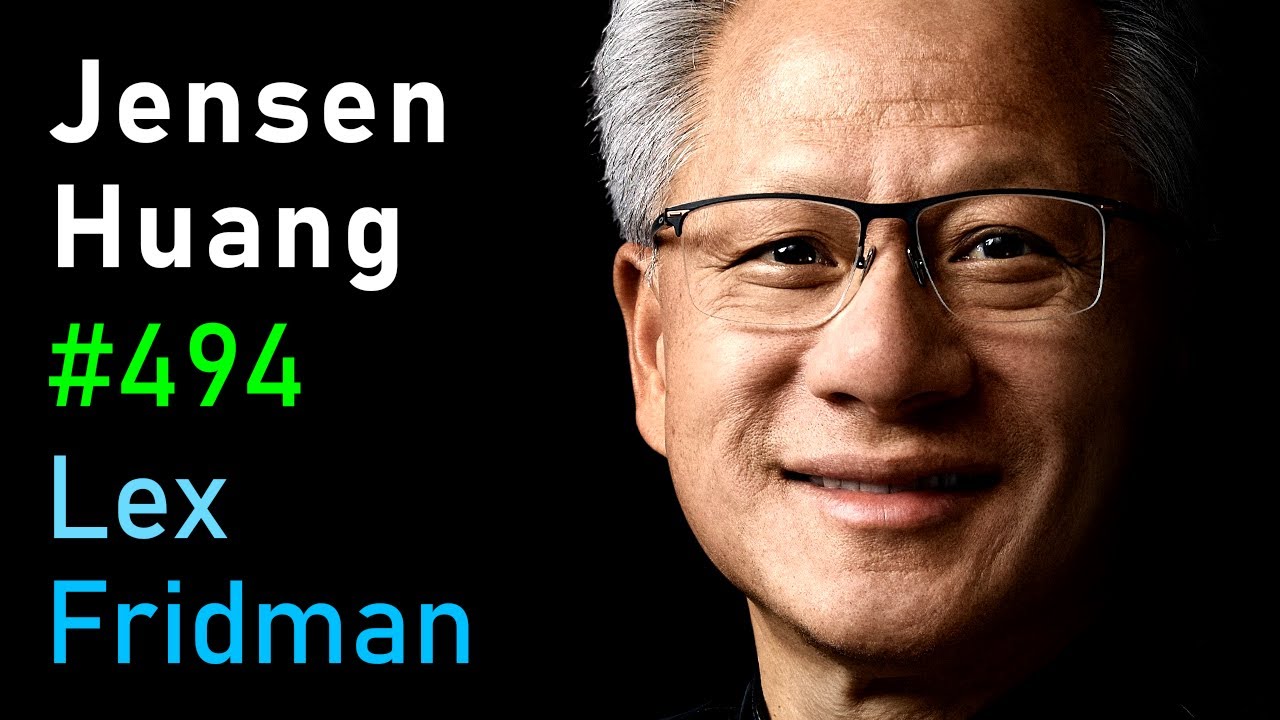
Jensen Huang: NVIDIA - The $4 Trillion Company & the AI Revolution | Lex Fridman Podcast #494
 311 min
Jeff Kaplan: World of Warcraft, Overwatch, Blizzard, and Future of Gaming | Lex Fridman Podcast #493
Ask anything from this episode.
Save it, chat with it, and connect it to Claude or ChatGPT. Get cited answers from the actual content — and build your own knowledge base of every podcast and video you care about.
Get Started Free