Key Moments
Campus Protests, Antisemitism, and Western Values (Episode #367)
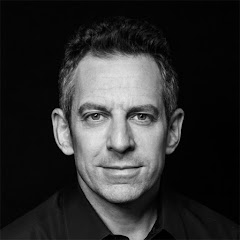 Sam Harris
Key Moments
Campus protests reveal moral confusion and a threat to Western values, fueled by misinformation and external funding.
Key Insights
Campus protests, amplified by social media, show a disturbing level of moral confusion regarding the Israel-Hamas conflict.
University administrations have demonstrated hypocrisy and inadequate responses to anti-Semitic incidents, tolerating behavior not seen towards other groups.
External funding, particularly from Qatar, influences academic institutions and student organizations promoting anti-Western and anti-Semitic agendas.
The protests highlight a broader issue of 'hate of Western Civilization' originating from within its own beneficiaries, not just external threats.
A narrow focus on antisemitism is counterproductive; the core problem is the clash between Western values and certain interpretations of Islam, particularly Islamism and Jihadism.
Misinformation and identity politics have distorted the perception of the conflict, framing Jews as oppressors and overlooking the genocidal intentions of groups like Hamas.
THE RISE OF MORAL CONFUSION AND PERFORMATHIX
The current wave of campus protests, particularly in response to the Gaza conflict, is characterized by a significant degree of moral confusion and performative activism amplified by social media. While not all participants are insincere, the ability to broadcast events instantly shapes their scale and nature. This phenomenon extends beyond university campuses, suggesting a broader societal issue where smartphones and social media are increasingly distorting human perception and reaction. This digital amplification is particularly concerning when it facilitates the apparent support for groups like Hamas by students at prestigious institutions, raising questions about the true scope and depth of the problem.
UNIVERSITY HYPOCRISY AND THE DOUBLE STANDARD
University administrations are criticized for their wholly inadequate and hypocritical responses to the protests. Clear violations of protest policies have been ignored for months, revealing a blatant double standard. Incidents of hostility and threats directed at Jewish students are tolerated to a degree that would be unacceptable if aimed at any other group. Actions like physically preventing Jewish students from accessing campus buildings or threatening them based on their identity should result in immediate expulsion, regardless of any political stance on the Israel-Palestine conflict. This institutional failure stands in stark contrast to how other forms of hate speech and harassment are typically addressed.
EXTERNAL INFLUENCE AND ACADEMIC CORRUPTION
A significant factor fueling the protests and antisemitism on campuses is the flow of money from external sources, notably Qatar, which has provided billions to Western universities. This funding appears to support groups like 'Students for Justice in Palestine,' which have links to the Muslim Brotherhood, an organization with genocidal intent towards Jews. Furthermore, decades of Middle Eastern studies departments being funded by islamist ideologies have created an environment susceptible to 'soft power' subversion. This influx of 'islamist lies' through entities like Al Jazeera undermines academic integrity and promotes a hostile agenda within educational institutions.
THE IDENTITY POLITICS DILEMMA AND MISCHARACTERIZATION
Beyond direct financial influence, the pervasive 'identitarian moral panic' has significantly warped the left's understanding of global conflicts. This framework imposes an oppressor-oppressed narrative onto every situation, leading to a severe mischaracterization of the Israel-Palestine conflict. Students often view the conflict through a lens of 'whiteness' versus 'blackness,' ignoring ethnic realities and the antisemitic nature of groups like Hamas. This identitarian framing renders them susceptible to believing propaganda that demonizes Israel and overlooks the genocidal aims of Hamas, which seeks the annihilation of Jewish people and Western values.
THE EXISTENTIAL THREAT OF ISLAMISM AND JIHADISM
The core issue transcends mere antisemitism; it represents a fundamental clash between Western civilization and certain interpretations of Islam, particularly Islamism and Jihadism. While not all Muslims are a threat, the dangerous fanaticism embedded within some interpretations of the religion poses a significant risk to open societies. The belief system, rooted in concepts of holy war, martyrdom, and intolerance for dissent, provides a doctrinal basis for extremist violence. The inability or unwillingness of many Western institutions and individuals to acknowledge this reality, often due to moral confusion or a reluctance to confront uncomfortable truths, leaves societies vulnerable.
RECLAIMING WESTERN VALUES AND INTELLECTUAL SANITY
Combating the current crisis requires a robust defense of Western values, focusing on ideas rather than identity politics. This involves rejecting funding from regimes like Qatar, purging DEI bureaucracy, and re-embraceing core principles of rational discourse, individual freedom, and the rule of law. Universities must prioritize genuine research and critical thinking over ideological conformity. Furthermore, a clear-eyed understanding of the threat posed by political Islam is essential, acknowledging that while not all Muslims are enemies, the doctrines that drive extremist violence are at odds with the foundations of open, pluralistic societies. This requires a willingness to confront difficult truths about cultural and religious differences.
THE DISTORTION OF REALITY AND MORAL INTUITION
The extremity of violence perpetrated by groups like Hamas on October 7th should be a clear indicator of their nature, yet many in the West struggle to accept this reality. A tendency to assume that people everywhere are fundamentally similar, and that extreme violence must stem from unbearable suffering, distorts moral intuition. This leads to a perverse situation where the victims of atrocity are somehow blamed, and the perpetrators' actions are excused as a response to injustice. This fundamental misunderstanding of the motivations behind extremist ideologies, particularly those rooted in specific religious doctrines, prevents a clear-eyed assessment of the conflict.
THE DOCTRINAL ROOTS OF CONFLICT AND MARTYRDOM
The core tenets of Islam, particularly concerning the concepts of holy war and martyrdom, are central to understanding Islamic extremism. Unlike Christianity, where figures like Jesus are presented as suffering, Muhammad is portrayed as a statesman and warlord. This difference is crucial, as Islam fundamentally aims to subsume all aspects of life, including governance. The doctrine of holy war and the promise of paradise for martyrs directly motivate actions like those seen on October 7th. The difficulty in distinguishing these actions from core Islamic teachings, as opposed to easily identifying them as contrary to the teachings of Jesus or Buddha, highlights the unique challenge posed by Islamism.
ISLAMISM VS. ISLAM: A NECESSARY DISTINCTION FOR SURVIVAL
While many distinguish between Islam and Islamism, this secular distinction lacks traditional justification and proves problematic in practice. Islamism, or the political intrusion of religion into governance, is not merely a modern aberration but is deeply intertwined with the religion's historical trajectory power. The idea that non-Muslims could rule over Muslims or possess equal power has always been anathema, intended to be rectified through both spiritual and physical means. This inherent worldview, which views the current status quo as an affront to divine will, drives the persistent yearning for victory that fuels many conflicts, particularly in the Middle East.
THE DANGERS OF MISINFORMATION AND CULTURAL IMPORTS
Western societies are susceptible to manipulation through misinformation and a willingness to import ideologies that are fundamentally opposed to their values. The weaponization of terms like 'racism' by ideological adversaries, coupled with internal societal issues like 'white guilt' and self-doubt, creates fertile ground for these ideas to flourish. Importing sufficient numbers of committed Islamists, much like importing Communists, will inevitably lead to significant societal problems. This is not a matter of bigotry but a rational concern about preserving the foundational principles of open, tolerant societies by understanding the consequences of cultural and ideological importations.
PROTECTING OPEN SOCIETIES IN A HOSTILE WORLD
Maintaining the values of open societies requires a proactive approach to defending against genuine threats, both foreign and domestic. This includes protecting oneself from misinformation and social contagion without succumbing to excessive surveillance or censorship. The aspirational ideals of welcoming immigrants and refugees, rooted in humanitarian values, should be preserved, but this must be balanced with a recognition that not all who seek entry share these values. Importing people with no intention of embracing Western principles and actively seeking to undermine them poses a clear danger, requiring a pragmatic approach to integration and immigration.
THE RESPONSIBILITY OF FREE SPEECH AND PLATFORMS
While the First Amendment protects freedom of speech, private platforms and organizations have a responsibility to manage the dissemination and amplification of harmful speech. The current media landscape is overwhelmed by lies, particularly concerning the Israel-Hamas conflict and foreign propaganda, rendering society ungovernable. This pervasive misinformation fuels distrust in institutions and deepens political polarization. Liberal confusion about issues like Islamic extremism, in particular, risks empowering right-wing authoritarianism. Therefore, a concerted effort is needed to contain the spread of dangerous falsehoods, even within the bounds of legal speech.
Mentioned in This Episode
●Products
●Companies
●Organizations
●Books
●Concepts
●People Referenced
Common Questions
The speaker argues that the primary issue is not just the protests themselves, but the moral confusion and hypocrisy of university administrations who tolerate behavior that targets Jewish students, which they would not tolerate if directed at other groups. The speaker also highlights the role of external funding and ideology in fueling these protests.
Topics
Mentioned in this video
Mentioned as a group that Hamas would harm, contrasting their values with those of Hamas and many Palestinians.
Compared to Islam, highlighting Islam's political nature and Muhammad's role as a statesman and warlord, contrasting with Jesus's crucifixion and emphasis on meekness.
The core principles that the speaker believes universities should recommit to, contrasting them with current issues like outside funding, DEI bureaucracy, and identity politics.
The speaker argues that the fundamental problem is the hatred of Western Civilization by its own inhabitants, which underlies issues like campus protests and antisemitism.
Identified as part of the problem within elite institutions that the speaker believes needs to be purged to restore Enlightenment values.
Mentioned as a sectarian division within Islam, contrasted with Sunni Islam, in the context of potential Arab solidarity with Israel against Iran.
Described as a term used to dismiss concerns about the connection between explicit religious doctrines and human rights abuses in Muslim-majority countries.
Refers to the general populace in Arab countries, whose attitudes are influenced by Islam and can limit what even dictators can do regarding policies towards Israel.
The speaker suggests that attempts to limit misinformation are sometimes perceived as Orwellian repression, a form of hysteria fostered by foreign actors.
A pervasive problem discussed extensively, particularly in the context of campus protests and its connection to criticism of Israel and hatred of Western Civilization.
Mentioned as a category of identity that one does not need to be to recognize that importing certain ideologies can threaten a society's values.
The speaker frequently refers to Western values, Western Civilization, and Western societies, contrasting them with Islamism and discussing threats to them.
Discussed extensively as intrinsically political, contrasting with Christianity's separation of church and state. Its doctrine of holy war, martyrdom, and intolerance for blasphemy are presented as core tenets.
Identified as a factor contributing to the confusion on college campuses, particularly its 'oppressor vs. oppressed' framing, which the speaker finds to be an 'identitarian disgrace'.
Used as an analogy to demonstrate how importing a large number of people with a specific ideology (like Communism) can threaten a society's foundational principles (like capitalism).
Associated with the Muslim Brotherhood's theology and used as a comparison to illustrate the severity of supporting Hamas, arguing professors supporting Hamas should be fired as they would if supporting Nazis.
The speaker discusses his evolving views on Zionism, ultimately concluding he is a committed Zionist while acknowledging that talking about it is counterproductive.
Identified as a group that, like Communists, poses a threat to Western societies if imported in sufficient numbers, seeking to impose their religious strictures.
Shouted by men celebrating the capture of hostages on October 7th, illustrating the jubilance and malice described.
Mentioned as a sectarian division within Islam, contributing to potential Arab solidarity with Israel against Iran, though possibly driven more by this schism than shared human values.
Linked with Islamists as groups seeking to impose their religion and posing a threat to Western societies, particularly in Europe.
A conspiracy theory associated with Tucker Carlson's audience and Candice Owens, discussed in the context of right-wing antisemitism.
A bill that has passed the House of Representatives, intended to make civil rights complaints easier for Jews, though the speaker notes it may conflate criticism of Israel with antisemitism.
The US constitutional amendment protecting freedom of speech, discussed in relation to private platforms' decisions about disseminating and amplifying speech.
A book by Paul Berman cited for its insights into how extreme violence is processed and the resulting moral distortions.
Cited for its verse suggesting to 'kill them wherever you find them and drive them from the places from which they drove you,' used to argue that Islam is a religion of conquest, not peace.
The poet whose words on the Statue of Liberty ('Give me your tired, your poor...') are discussed as an aspirational embodiment of American values, not necessarily its immigration policy.
Mentioned in the context of the Daily Wire and the reaction from certain groups on the right who expressed antisemitic sentiments towards him.
Mentioned for his audience's embrace of the 'great replacement' theory and for his perceived interest in the rhetoric surrounding the Statue of Liberty and immigration.
Mentioned as a terrorist group for which Palestinian support generally ranges between 40-60%, indicating widespread radicalization.
A writer whose point from 'Terror and Liberalism' about the distortion of moral intuition when encountering extreme violence is cited.
Mentioned as a friend who was anti-Zionist without being antisemitic, indicating a past possibility that the speaker believes may no longer exist.
Identified as valuable immigrants who understand the problems in Muslim-majority societies and can help inoculate Western countries against extremism.
Mentioned as an example of someone blamed by the left for the fatwa and near-death experience he endured, highlighting the left's perceived failure to defend free speech.
The individual who exposed the funding trail from Qatar to various organizations involved in campus protests.
Mentioned as an example of someone who hacks and leaks state secrets, contributing to institutional distrust and hindering national security.
Used as a benchmark for judging attitudes towards women, comparing Western perceptions unfavorably with those in some Muslim societies where he might be considered 'unusually well-adjusted'.
Mentioned alongside Edward Snowden as someone who hacks and leaks state secrets, contributing to institutional distrust and hindering national security.
Mentioned as a figure followed by 'geniuses' who adhere to the 'great replacement' cult and reacted negatively to Ben Shapiro.
A surgeon in Gaza whose experience of losing his wife and son during Israeli shelling is recounted from a 2009 New York Times article, highlighting the suffering and the perspective of militants.
Identified as valuable immigrants who understand the problems in Muslim-majority societies and can help inoculate Western countries against extremism.
Mentioned as a 'darling of alternative media' who is part of the confused left, alongside institutions defending free speech that he criticizes.
A militant group mentioned in relation to a wounded fighter in Gaza who, despite his injuries, was smiling and eager to return to fighting.
Mentioned as a source for a 2009 article about a Gaza surgeon's experience, with the speaker suggesting such an article would be unlikely to be published today.
Mentioned as a university whose students are confused about global events and lending support to groups like Hamas. Its brand damage is noted.
Mentioned alongside Hamas and Al Qaeda, characterized by its barbarism and compared to Muhammad's actions.
Mentioned as a university whose students are confused about global events and lending support to groups like Hamas. Its brand damage is noted. Also mentioned as the speaker's alma mater.
Cited as a major media outlet that needs to become 'morally sane' in its reporting.
Mentioned as a university that has been terrible in its response to campus protests and student confusion.
Mentioned alongside Hamas and the Islamic State as groups that attack Western targets for reasons often misunderstood by Westerners.
Referred to as an 'Islamist front group' that incorrectly suggests hate crimes are primarily directed at Muslims rather than Jews.
Mentioned in a hypothetical scenario to illustrate the outrage that would follow if US soldiers captured and paraded Saudi women and children, highlighting the moral disconnect in other situations.
An Islamist fundamentalist organization that advocates for Palestinian liberation and is described as a genocidal death cult by the speaker. Its connection to the Muslim Brotherhood and its role in organizing campus protests are discussed.
One of the universities where protests have occurred, with the speaker criticizing its inadequate and hypocritical response to violations of protest policies.
Mentioned as a university where protests have taken place and where problematic funding and ideologies are discussed.
Mentioned in the context of a slogan used by protesters, 'Shouting for the Jews to go back to Poland'.
A radical group that governs Qatar and is described as an offshoot of Hamas, with its theology being a fusion of Islamism and Nazism.
A radical group funded by the Muslim Brotherhood that finances student groups like Students for Justice in Palestine.
A student group identified as a primary organizer of campus protests, funded by American Muslims for Palestine, and whose response to October 7th is cited as evidence of their support for the massacre of families and hostage-taking.
A group of Jewish students at protests also funded by the Muslim Brotherhood's network.
The institution where Charles Asher Small works, which exposed the funding trail related to campus protests.
An organization dedicated to defending freedom of speech, mentioned critically in the context where the speaker believes some such institutions are enabling problematic ideas.
Mentioned for passing the 'Anti-Semitism Awareness Act'.
Mentioned as one of the Middle Eastern regimes that appears to want normalized relations with Israel, and whose actions in repelling Iran's attack are seen as promising.
Described as already experiencing the problem of political and militant Islam to an intolerable degree, serving as a warning for the U.S.
Mentioned as a country from which valuable immigrants can come, who are appalled by religious fanaticism.
The state at the center of the conflict, discussed in terms of its right to self-defense, its perceived role as a bully, and the historical context of its creation and existence.
Mentioned for the inscription of Emma Lazarus's poem, symbolizing American ideals of welcoming immigrants.
Mentioned as a foreign actor that, along with China, is accused of fanning the flames of partisanship and hysteria in Western societies.
Mentioned as formerly conquered Muslim land and a site of conflict where the mere presence of a Jewish state is considered unacceptable by a majority of Palestinians and many Muslims in the region.
Mentioned in the context of its recent drone and missile attack, which was repelled by Saudi Arabia and Jordan, seen as a potentially hopeful sign for regional relations.
The Palestinian territory from which protests are originating regarding the war. Images coming out of Gaza are noted as difficult to reconcile with political analysis.
Used as an analogy to highlight university hypocrisy: if protests targeted Chinese students for the actions of the Chinese government, it would be seen as morally insane, unlike the current situation with protests targeting Jewish students.
Identified as a major funder of US, Canadian, and British universities, contributing billions of dollars, and linked to the Muslim Brotherhood and Hamas.
The broader region where the conflict between Israel and Palestine takes place, and where traditional Islam clashes with Western values.
The speaker's home country, where campus protests, antisemitism, and societal issues related to Islam extremism are discussed.
Mentioned as a region where, historically, many countries have persecuted Jewish populations, and more recently, where Western Europe is perceived to be under pressure from political Islam.
Mentioned as a country whose universities receive funding from Qatar and where Jewish communities may struggle to gain recognition as victims.
Mentioned alongside Saudi Arabia as a Middle Eastern regime that helped repel Iran's recent attack, seen as a promising sign.
Mentioned as a country whose universities receive funding from Qatar.
The collective of Muslim-majority countries, discussed in terms of human freedom, religious doctrine, and potential conflict with Western values.
The broader region where the conflict between Israel and Palestine takes place, and where traditional Islam clashes with Western values.
Mentioned in the context of the left blaming the cartoonists for being murdered, illustrating the left's perceived failure to defend free speech.
Mentioned as a platform where recent events led to people expressing candid antisemitic views towards Ben Shapiro and his colleagues.
Referred to as an example of captured male soldiers being paraded as hostages, used to draw a parallel with the celebration of kidnapping women and children.
More from Sam Harris
View all 297 summaries 22 min
Why the Stock Market Has Become a Casino
 61 min
UNRAVELING THE DREAM (A New Documentary Executive Produced by Sam Harris)
 20 min
Francis Fukuyama: The End of History Was Never What You Think
 24 min
The Democratic Party Has a Reckoning Coming
Ask anything from this episode.
Save it, chat with it, and connect it to Claude or ChatGPT. Get cited answers from the actual content — and build your own knowledge base of every podcast and video you care about.
Get Started Free