Key Moments
Brene Brown Interview (Full Episode) | The Tim Ferriss Show (Podcast)
 Tim Ferriss
Key Moments
Brené Brown discusses vulnerability, courage, shame, and worthiness, emphasizing courage over comfort and embracing imperfection.
Key Insights
Vulnerability is not weakness but our best measure of courage, defined as uncertainty, risk, and emotional exposure.
Shame thrives in secrecy, silence, and judgment, but can be overcome with empathy.
Guilt (focus on behavior) is healthy and adaptive, while shame (focus on self) is damaging and correlated with negative outcomes.
Daring greatly means choosing courage over comfort, even when facing the possibility of failure.
Perfectionism, defined by external validation, hinders authenticity, whereas striving for excellence is internally motivated.
Embracing 'I am enough' fosters healthy striving and true self-worth, leading to greater achievement and well-being.
DEFINING VULNERABILITY AND COURAGE
Brené Brown defines vulnerability not as weakness, but as courage, characterized by uncertainty, risk, and emotional exposure. It's the willingness to show up and be seen when the outcome is unknown. Courage, rooted in the Latin word for 'heart,' is about telling one's story with their whole heart and choosing what's right over what's easy, practicing values rather than just professing them. This clarity in defining terms is crucial for meaningful conversations and is a cornerstone of her research.
UNDERSTANDING SHAME AND ITS IMPACT
Shame, an intensely painful belief that something is wrong with us, needs secrecy, silence, and judgment to thrive. It is the fear of disconnection and unworthiness. Brown explains that shame drives two primary narratives: 'you're not enough' and 'who do you think you are,' creating a vice that diminishes self-worth. Empathy is identified as the antidote to shame, creating a hostile environment for it to survive and grow.
THE EVOLUTIONARY ROLE AND DIFFERENCE BETWEEN SHAME AND GUILT
While shame may have served an evolutionary purpose for group cohesion by shunning dangerous individuals, it has become a profoundly dangerous tool in modern society. Brown distinguishes shame from guilt, stating that shame focuses on being a 'bad person,' whereas guilt focuses on having 'done something bad.' Guilt is healthy and adaptive, motivating behavioral change without attacking the self, unlike shame which is highly correlated with addiction, depression, and violence.
DARE GREATLY: CHOOSING COURAGE OVER COMFORT
Inspired by Theodore Roosevelt's 'man in the arena' quote, Brown defines daring greatly as choosing courage over comfort. This involves living bravely in the arena of life, accepting that one will face criticism and setbacks. She questions whether one chose courage or comfort when faced with challenges, emphasizing that staying small comes with resentment, while living bravely, though difficult, is essential for using one's gifts and living in one's power.
PERFECTIONISM VERSUS HEALTHY STRIVING FOR EXCELLENCE
Brown differentiates between perfectionism, which is outwardly defined and driven by the fear of criticism, and healthy striving for excellence, which is internally motivated. Perfectionism acts as a '20-ton shield,' intended to mitigate shame, blame, and judgment, but ultimately prevents authentic connection and being seen. Healthy striving, in contrast, focuses on effort, learning, and growth without the need for external validation, leading to more balanced achievements.
THE 'I AM ENOUGH' MINDSET AS A FOUNDATION FOR ACHIEVEMENT
The journey from 'What will people think?' to 'I am enough' is central to Brown's work. She clarifies that 'I am enough' does not mean a lack of ambition but a foundational belief in self-worth independent of accomplishments. This belief allows for healthy competitiveness and striving for excellence, rather than seeking external validation to fill a void. Operating from this place of worthiness 'unleashes' individuals to pursue their goals with authenticity and resilience.
THE INTERPLAY OF VULNERABILITY AND MASCULINE VIRTUES
Addressing concerns about the 'over-feminization' of boys and the coexistence of vulnerability with masculine virtues, Brown argues against false binaries. She posits that vulnerability *is* courage and that true strength involves being both tough and tender. Men who fail to develop emotional skills fare poorly, as do those who only learn to navigate male culture without emotional openness. The ideal is a balance, or rather an integration, of grit and grace, fear and bravery.
PRACTICING VULNERABILITY AND BUILDING TRUST
Developing vulnerability is a daily practice that often involves testing new ways of being. It's a reciprocal process where vulnerability earns trust, and trust allows for deeper vulnerability. Brown emphasizes the importance of boundaries, stating that vulnerability without them can become desperation or manipulation. Sharing meaningful, but not necessarily deeply personal, experiences and observing the feelings associated with that openness is key to this practice. The goal is not oversharing, but building intimacy and connection.
THE ROLE OF PRESENCE AND MINDFULNESS IN RELATIONSHIPS
Brown highlights that personal relationships, unlike professional endeavors, demand a high degree of presence and focus on the 'now.' While high-stakes professional situations might require future-oriented thinking, intimate connections thrive on being fully present. This shift towards embracing vulnerability has profoundly impacted her personal life, leading to more joyful and connected relationships with her family, demonstrating that embracing imperfection can lead to a richer, more fulfilling life.
RISING STRONG: THE PHYSICS OF GETTING BACK UP
Brown's latest book, 'Rising Strong,' explores the process of navigating falls, failures, and disappointments. It delves into what commonalities are shared by individuals who experience setbacks and emerge even more courageous and tenacious. The research for this book examines the 'physics of vulnerability,' understanding that if one is brave enough, falling is inevitable. The book offers insights into the journey of getting back up and continuing forward after being knocked down.
RESEARCH METHODOLOGY AND GROUNDED THEORY
Brown employs grounded theory in her research, building theories from lived experiences rather than starting with existing hypotheses. Her interviews, often conducted individually or in small groups using snowball sampling, involve taking detailed anthropological field notes. Data is coded to identify patterns until saturation is reached, meaning the emerging theory is robust and can predict responses. This method ensures that people's lived experiences are central to the research findings.
CHOOSING DISCOMFORT FOR GROWTH AND CONNECTION
Brown encourages listeners to lean into discomfort and give vulnerability a shot, framing it as a gateway to deeper connection and personal growth. She believes that seemingly intractable problems like those related to race, homophobia, and environmental issues cannot be solved comfortably. The willingness to embrace discomfort is seen as a direct path to bravery and rapid personal advancement, underscoring her core message of choosing courage over comfort to live a more authentic and impactful life.
Mentioned in This Episode
●Products
●Software & Apps
●Companies
●Organizations
●Books
●People Referenced
Common Questions
Brené Brown defines vulnerability as uncertainty, risk, and emotional exposure, emphasizing it as the willingness to show up and be seen when you have no control over the outcome. She contrasts this with the common misconception that vulnerability is weakness, instead seeing it as our best measure of courage.
Topics
Mentioned in this video
Mentioned as an example of a world-class performer that Tim Ferriss deconstructs.
A big wave surfer mentioned in relation to using larger swimming goggles.
Mentioned as an example of a world-class performer (director) that Tim Ferriss deconstructs.
Mentioned as an example of a world-class performer (chess prodigy) that Tim Ferriss deconstructs.
American Tibetan Buddhist nun whose teachings align with Brené Brown's research.
An American poet whose work is referenced as a source of inspiration.
Ancient Roman emperor and Stoic philosopher whose work resonates with Brené Brown's research.
An American mythologist whose work on the hero's journey resonates with Brené Brown's research.
Mentioned as an example of a world-class performer (director) that Tim Ferriss deconstructs.
Curator of TED, who decided to put Brené Brown's TEDx talk online.
Guest on the show, discussing her research on vulnerability, courage, shame, and worthiness. Author of 'Rising Strong', 'Daring Greatly', and 'The Gifts of Imperfection'.
The drummer for the band Rush, praised for his drumming and poetic abilities.
A strength coach from the former Soviet Union interviewed by Tim Ferriss, who discussed oversharing.
Mentioned as an example of using an awkward topic to deflect conversation.
Brené Brown's latest book, which explores what it takes to get back up after falling, focusing on resilience and the physics of vulnerability.
One of Brené Brown's number one New York Times bestselling books, focusing on cultivating courage and embracing imperfection.
A book that Brené Brown has gifted to others most frequently.
One of Brené Brown's number one New York Times bestselling books, exploring the journey from 'what will people think' to 'I am enough'.
Brené Brown's organization that brings her work to communities and families.
Brené Brown is a research professor at the Graduate School of Social Work here.
Band known for the drumming and poetic lyrics of Neil Peart, referenced for a quote about decision-making.
Mentioned as a company where Wealthfront technologists previously worked.
A disruptive, set-it-and-forget-it investing service offering services previously reserved for the ultra-wealthy at a lower cost through software automation.
Mentioned as a source of inspiration, specifically a Pixar movie.
More from Tim Ferriss
View all 694 summaries 71 min
The Most Incredible Transformation I’ve Ever Seen — Jerzy Gregorek on Cerebral Palsy and Coaching
 34 min
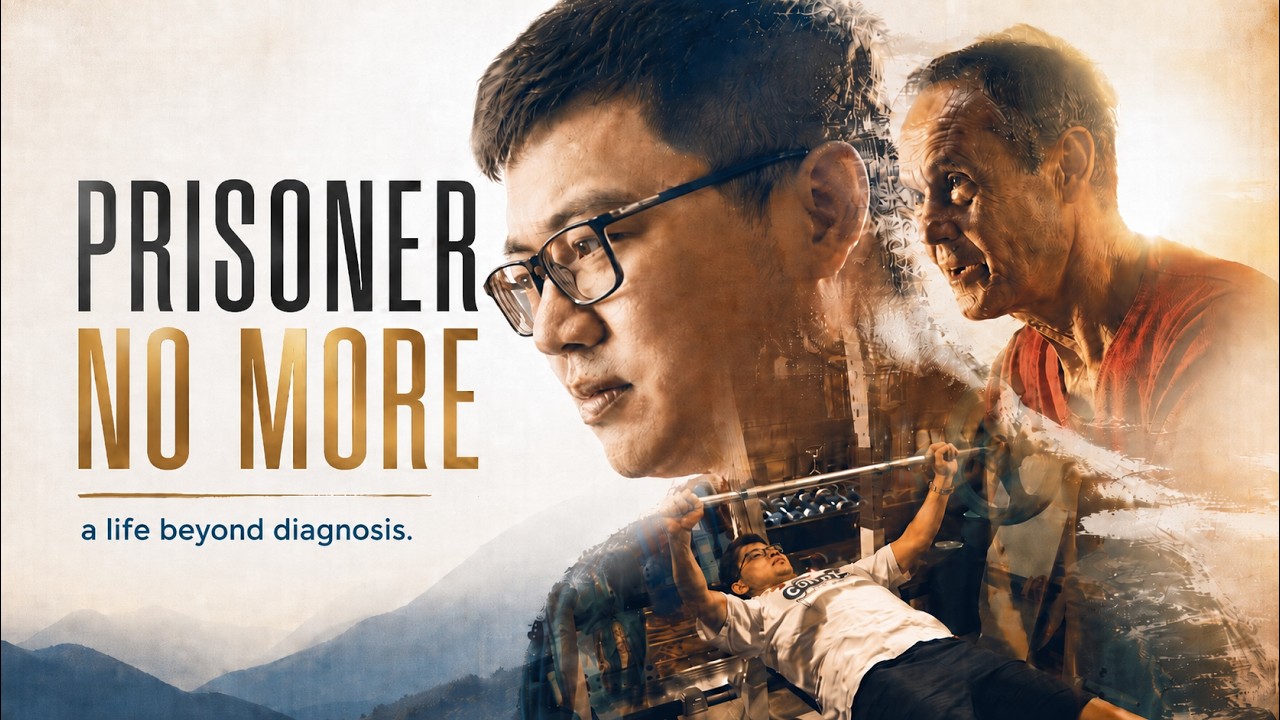
PRISONER NO MORE: The True Story of Tae Jin Park
 89 min
From Food Stamps to the Super Bowl War Room — NFL Chief Security Officer Cathy Lanier
 55 min
From Dad’s Basement to Selling Two Companies — 4-Hour Workweek Success Story
Ask anything from this episode.
Save it, chat with it, and connect it to Claude or ChatGPT. Get cited answers from the actual content — and build your own knowledge base of every podcast and video you care about.
Get Started Free