Key Moments
Apple Is Trying to Kill OpenAI Right Before Its IPO
 Impact Theory
Want to know something specific about what's covered?
We've already dissected every moment. Ask and we will deliver (with timestamps).
Key Moments
Apple is suing OpenAI for massive hardware IP theft, accusing them of stealing trade secrets to gain an edge before their IPO. This lawsuit could significantly impact OpenAI's valuation and future, with Elon Musk also weighing in, calling Sam Altman a 'scammer'.
Key Insights
Apple alleges OpenAI, including former Apple executives like Jony Ive's team and Tang Tan, systematically stole trade secrets, including over a thousand pages of confidential technical files and manufacturing documents for Apple's circuit boards.
The lawsuit targets OpenAI's hardware business, describing it as "rotten to its core" and highlighting that over 400 former Apple employees now work at OpenAI.
The timing of Apple's lawsuit is critical, occurring just as OpenAI prepares for an IPO, potentially devaluing the company and impacting its hardware device strategy.
The global oil market is showing unusual stability despite ongoing conflict in Iran and attacks on shipping in the Strait of Hormuz, largely attributed to China's reduced demand and increased supply flexibility.
Palmer Luckey's company, Anduril, is designing cruise missiles that can be mass-produced on automotive-style assembly lines, drastically reducing parts and manufacturing time, turning car factories into potential defense deterrents.
A US Army nuclear scientist is under investigation for allegedly divulging classified information, including locations of underground nuclear missiles and launch protocols, to an operative posing as a potential romantic interest.
Apple's 'kill shot' lawsuit against OpenAI signals a new era of AI hardware IP conflict
In a dramatic escalation of the tech world's superpower rivalry, Apple has filed a federal lawsuit against OpenAI, accusing the AI company of systematic trade secret theft "at industrial scale." The complaint alleges that OpenAI, through key former Apple employees like Tang Tan (OpenAI's Chief Hardware Officer and ex-Apple VP of Product Design) and Chang Leu (former Apple Senior Systems Electrical Engineer), has stolen proprietary hardware designs and manufacturing processes. Apple claims over 1,000 pages of confidential technical files, including details on circuit board manufacturing, were downloaded by exploiting a security bug. The lawsuit paints OpenAI's hardware business as "rotten to its core" and highlights that over 400 ex-Apple engineers now work for OpenAI. This direct attack, particularly its timing just before OpenAI's anticipated IPO, suggests Apple is aiming to cripple its competitor's valuation and strategic direction, especially concerning hardware devices that could rival the iPhone. The dispute also involves Elon Musk, who publicly labeled Sam Altman a "scammer," adding another layer of high-stakes drama to the unfolding situation.
Mitch McConnell's health sparks AI-generated image controversy
Following Senator Mitch McConnell's hospitalization, a statement attributed to him was released, claiming he was recovering well after a brief unconscious spell and pneumonia. However, scrutiny of the accompanying photo, supposedly showing him reading a newspaper, revealed anomalies upon close inspection. The "NY" logo on a Yankees hat in the photo appeared distorted, and the overall image's pixelation led many, including 'Grock' who analyzed it, to conclude it was AI-generated. This incident serves as a PSA on the sophistication of AI image generation and the ease with which public figures can be misrepresented. The discussion also touches upon the unreliability of photos versus videos released by public figures, especially during times of uncertainty about their health, and the potential for such fakes to fuel conspiracy theories.
The global economic landscape: Unforeseen oil market stability amid geopolitical conflict
Despite escalating military actions in Iran and attacks on shipping in the Strait of Hormuz, the global oil market has shown surprising resilience and stability, with prices not surging as drastically as anticipated. Analysts like Ken Griffin point to significant 'demand destruction' and increased elasticity in China's oil consumption as key factors. China, a major global consumer, has dramatically reduced its demand for oil, far exceeding expectations. This, coupled with Iran's strategic, albeit episodic, flow of oil and the US's efforts to keep the Strait of Hormuz open for trade, has prevented a major supply shock. While the threat of conflict in the Strait of Hormuz previously sent Brent crude to $119 a barrel, current prices remain significantly lower. This stability suggests markets are pricing in a 'new world order' where sporadic attacks are managed, and global demand is not as inelastic as previously assumed. However, Jeff Snyder presents a contrasting view, suggesting the 'flat oil curve' is a signal of potential oversupply and a weakening global economy, indicating a 'stealth recession' may already be underway.
Palmer Luckey's vision: Automotive-style mass production of cruise missiles
Palmer Luckey, co-founder of Anduril, showcased a revolutionary approach to defense manufacturing: mass-producing cruise missiles using automotive-style assembly lines. Unlike traditional methods that rely on high-end aerospace factories and numerous parts, Anduril's design significantly reduces components (by 90%) and manufacturing time (by 10%). This innovation allows automotive factories to be repurposed for defense, thereby multiplying a nation's deterrent capabilities. Luckey's focus on tangible, physical engineering and manufacturing, a departure from the dot-com era's emphasis on software and apps, is highlighted as a critical shift. This initiative is seen as a vital part of national security, particularly in deterring China from acting on Taiwan, and is a testament to American ingenuity in bringing manufacturing back home.
The 'live by the sword, die by the sword' doctrine and escalating global tensions
The discussion delves into the 'live by the sword, die by the sword' principle, suggesting that nations engaging in targeted strikes should not be surprised by retaliatory actions. The ongoing military actions against Iran are framed within this context, with the US striking numerous Iranian military targets. The speaker argues that while confronting adversaries is necessary, the strategy of direct attacks carries inherent risks, potentially leading to wider conflicts, including nuclear escalation, especially if leaders like Putin feel cornered. The need to buy time, find 'off-ramps' for adversaries, and conduct operations quietly behind the scenes is emphasized as a more prudent approach than bombastic confrontations. This geopolitical strategy is further complicated by Canada's growing ties with China, creating a potential trade war with the US, and the broader instability in the global order, with China asserting influence in the Pacific and Iran aiming for regional hegemony.
Canada-China alignment and its economic implications for North America and Europe
Recent shifts in Canadian foreign policy, particularly its deepening economic ties with China, are raising concerns about a potential trade war with the United States. Canada has reduced tariffs on Chinese EVs while China has reciprocated on canola tariffs, creating significant bilateral trade. The US views this as Canada aligning with a geopolitical adversary and has threatened steep tariffs on all Canadian goods. This move is partly driven by the US's strategic assertion of its dominant position in the global economy and Canada's economic decline relative to the US. The impact extends to Europe, which is already struggling with an influx of cheap Chinese goods, leading to factory layoffs and economic strain. The speaker suggests that if China cannot export to the US or Europe, it will intensify its competitive pricing globally, potentially exacerbating economic instability and internal strife within nations reliant on manufacturing and welfare states. Canada, especially with its noted economic decline, appears particularly vulnerable to US economic pressure.
The puzzle of stable oil prices amid escalating Middle East conflict
The current situation in the Strait of Hormuz, usually a critical choke point for global oil supply, presents a puzzling paradox. Despite renewed US military strikes in Iran and ongoing attacks on oil tankers, oil futures have not seen the dramatic surge previously predicted. Analysts are attributing this to several factors, including a significant reduction in China's oil demand, which has proven more elastic than anticipated, and a more consistent, though not continuous, flow of oil from the region. The US has also asserted that the Strait remains open to lawful traffic, possibly due to degraded Iranian capabilities or a strategic calculation. This stability suggests that markets are factoring in demand-side dynamics, such as China's reduced consumption, and a managed approach to supply, rather than a pure supply shock scenario. However, some analyses, like Jeff Snyder's, warn that the 'flat oil curve' could indicate an impending oversupply and a broader weakening of the global economy, suggesting a 'stealth recession' might be in progress.
The 'AI master class' and the future of innovation
The discussion touches on the power of AI and its potential to drive innovation, exemplified by the upcoming 'AI Master Class' hosted by Tom Bilyeu, focused on using AI to launch companies. This highlights a broader trend of shifting focus from pure software applications to tangible physical engineering and manufacturing. Palmer Luckey's and Elon Musk's ventures into physical products, like advanced weaponry and space infrastructure, are presented as positive examples of this shift. The conversation also explores the immense potential of artificial intelligence itself, suggesting that even if current AI has hit a plateau, its widespread deployment will be transformative, much like the internet's impact over two decades. The argument is made that intelligence, whether human or artificial, is the core driver of progress, and the increasing integration of AI into various sectors heralds a new era of development.
Mentioned in This Episode
●Products
●Software & Apps
●Companies
●Organizations
●Books
●People Referenced
Common Questions
Lindsey Graham's death spurred numerous conspiracy theories, including claims of Russian assassination due to his support for Ukraine, Iranian responsibility given his presence on their 'hit list' (supported by an AI propaganda video), and even theories involving the Mossad to warn Trump against de-escalating in Iran. The speaker, however, leans towards the medical examiner's report of death from cardiovascular disease exacerbated by an unhealthy lifestyle.
Topics
Mentioned in this video
The current podcast being broadcast.
A classic film, ranked by the speaker as one of the all-time best, in contention with The Shawshank Redemption.
A film by Christopher Nolan, mentioned as confusing but still engaging due to its rhythm and visuals, despite a complex narrative.
A news outlet that reported on James Rosen's coverage of the nuclear scientist's leaked secrets.
A US Senator whose sudden death sparked various conspiracy theories, with initial reports attributing it to natural causes related to cardiovascular disease and unhealthy lifestyle. He visited Ukraine shortly before his death, which fueled speculation.
Founder of Anduril Industries, who has created low-cost cruise missiles that can be mass-produced in automobile factories, demonstrating an American ingenuity not seen since World War II.
Former US President, mentioned in connection with various conspiracy theories (e.g., alleged cover-up of Lindsey Graham's death), his administration's strikes against Iran, and his aggressive stance in trade negotiations with Canada.
A conservative commentator who was on Iran's alleged 'hit list' along with Lindsey Graham and Donald Trump.
A political activist mentioned as being on Iran's alleged 'hit list' with other public figures.
Russian President, discussed in the context of Russian involvement in Lindsey Graham's death and the need for an 'off-ramp' to prevent nuclear escalation.
US Senator whose health and a questionable AI-generated photo of him were discussed, raising concerns about transparency from elected officials.
Entrepreneur and CEO, praised for his focus on physical engineering and manufacturing. He is involved in a public spat with Sam Altman and is a proponent of space-based data centers and Optimus robots.
US Senator, mentioned hypothetically as a potential political figure who might react aggressively if a US leader were attacked by a foreign power.
A YouTube commenter whose remark about average lifespan age and conspiracy theories was shared.
Israeli Prime Minister, mentioned in the context of his quote about preemptive strikes based on Old Testament/Talmudic teachings, and his alleged death rumors.
Comedian, cited for his humorous yet insightful take on political rhetoric, specifically regarding Iran's chants of 'Death to America'.
A viewer who submitted two super chats; one expressing opposition to wealth taxes and government handouts, even during personal hardship, and another recommending anime that deals with self-improvement.
Founder of O'Keefe Media Group, known for video sting operations, credited with exposing a nuclear scientist leaking classified information.
Canadian Prime Minister, criticized for his economic policies, his engagement with China, and his investments primarily in the US.
An economic analyst who provides an alternative view to Ken Griffin, suggesting that the flattening oil curve indicates a global economy far weaker than perceived, leading to demand destruction rather than just supply elasticity.
Actor, praised for his performance as Red in The Shawshank Redemption, noted for his race-swapped role which was not an issue due to his acting skill.
President of China, who met with Canadian Prime Minister Mark Carney to discuss trade deals.
War Secretary, whose spokesperson was referred to by Newsmax for a statement on the nuclear scientist investigation.
Filmmaker, whose consistent quality leads the speaker to 'never bet against him' despite potential backlash for casting decisions in current projects.
CEO of OpenAI, described as the 'sociopath of AI' by the speaker, currently embroiled in a massive lawsuit with Apple over alleged hardware IP theft, and engaged in a fiery public exchange with Elon Musk.
Rapper, whose 'immortal words' about not writing anything down that could be used in court were referenced due to the incriminating messages sent by Chang Leu.
Founder of Citadel, whose analysis on oil demand elasticity, particularly in China, is discussed as a reason for stable oil prices despite geopolitical conflicts.
Newsmax chief Washington correspondent, covering the story of nuclear scientist Andrew Huff leaking classified information.
Former Apple design chief, whose company 'IO Products' was acquired by OpenAI, and who is implicitly dragged into Apple's lawsuit against OpenAI.
OpenAI's Chief Hardware Officer and former Apple VP of product design, accused by Apple of directing job candidates to bring actual hardware parts to OpenAI interviews for 'show and tell sessions'.
Former Apple senior systems electrical engineer, accused by Apple of exploiting a security bug to download over a thousand pages of confidential technical files and joking about it, then coaching other Apple employees on what materials to study.
Country mentioned in relation to Lindsey Graham's visit and the ongoing conflict, where a weapons facility was allegedly struck after his departure.
A country in continuous conflict with the US, involved in missile strikes and trade wars. Also mentioned for allegedly producing a propaganda video taking credit for Lindsey Graham's assassination.
A critical waterway through which a significant portion of the world's oil transits; mentioned in the context of US military strikes, Iranian threats, and its impact on oil markets.
Mentioned as an ally that the US could work with to weaken Russia and as an economic region affected by China's manufacturing exports and green policies.
A global power with growing influence, competing with the US and forming economic ties with Canada. Its economic practices, manufacturing capabilities, and rapid growth are discussed significantly.
Island nation targeted by China and the subject of Palmer Luckey's cruise missile deterrent strategy.
Mentioned as a potential location for weaponry that could hit the US, increasing geopolitical instability.
A country with strong ties to the US, facing religious and cultural beef with other Middle Eastern nations, particularly Iran.
A country on the verge of a trade war with the US, driven by its increasing alignment with China and its left-leaning policies. Its economic decline is noted.
The hospital where Senator Lindsey Graham was pronounced dead.
Iran's military force, accused of producing a Lego-style propaganda video to claim credit for Lindsey Graham's assassination and attacking a container ship in the Strait of Hormuz.
Mentioned as gifting a gold-plated Air Force One jet to Donald Trump.
The national intelligence agency of Israel, mentioned in the context of conspiracy theories about Lindsey Graham's death, highlighting how diverse narratives can attribute blame.
US political party whose official stances and documents, like the 'America 2025 project', should be taken seriously as indicators of their intentions.
Political organization mentioned as an example of an official body whose stated beliefs should be taken seriously, equating it to the Republican Party's commitment to their agendas.
International organization mentioned for its policies that allegedly 'gutted' US manufacturing in the past.
The group responsible for a video sting operation that caught a nuclear scientist leaking classified information.
A German far-right political party whose rising popularity is attributed to economic realities and xenophobia in Europe.
Organization mentioned in a super chat, with the Canadian PM Mark Carney being accused of being a 'WEF agent'.
A major technology company suing OpenAI for industrial-scale IP theft, alleging that OpenAI stole hardware designs and recruited Apple employees to provide confidential information.
An AI research and deployment company being sued by Apple for alleged trade secret theft, impacting its planned IPO. It is accused of misleading a manufacturing partner and having former Apple employees bring hardware parts to interviews.
A defense technology company founded by Palmer Luckey, manufacturing cost-effective cruise missiles designed for mass production in automotive-style assembly lines, to act as a deterrent, especially against China.
Social technology company that acquired Palmer Luckey's VR goggle technology (Quest) and later, Luckey was ousted from due to political stances.
A company founded by Jony Ive, acquired by OpenAI for $6.5 billion, and implicated in Apple's lawsuit against OpenAI.
Technology company that Apple partnered with for AI after dropping OpenAI in 2024.
An AI safety and research company that is leasing intelligence output from SpaceX AI's data centers.
Elon Musk's aerospace manufacturer, whose IPO hype about space data centers was criticized by Sam Altman. It is also mentioned for leasing its intelligence output to Anthropic.
Toy brick brand mentioned as the style for an AI-generated propaganda video from Iran.
VR goggles developed by Palmer Luckey in his teenage years, which became a multi-billion dollar product for Meta, showcasing his early innovation.
Tesla's humanoid robot, mentioned in a retweet with a critical comment about Elon Musk's unfulfilled promises regarding its deployment.
An oil type, advised against consumption and jokingly linked to Lindsey Graham's death in the context of bad diet.
Image editing software mentioned as a tool that could be used to clean up artifacts in AI-generated images, suggesting that creators of fake imagery should be more meticulous.
A program or organization that helps founders start companies, which the speaker endorses as valuable.
A classic Chinese text traditionally credited to the ancient Chinese philosopher Laozi, referenced for its nature as a collection of short philosophical stories, similar to the Hadith.
A film adaptation of Homer's epic poem, currently subject to public backlash regarding its race-swapped casting and potentially left-leaning interpretation.
A central text of Rabbinic Judaism, clarified as the source of the saying, 'What do you do when a man is coming to kill you? You rise early and kill him first,' rather than the Bible.
The central religious text of Islam, mentioned in comparison to the Hadith and Dao De Jing as a foundational religious text.
A collection of traditions and sayings of the prophet Muhammad, discussed as supplementary to the Quran, similar to the Talmud's role for the Hebrew Bible or the Dao De Jing's stories.
A highly acclaimed film mentioned in the context of race-swapped casting, noting that Morgan Freeman's character (Red) was originally Irish in the book, yet his performance transcended any critique.
More from Tom Bilyeu
View all 131 summaries 125 min
Mass Wave Of Migrants Storm Cueta, Middle East Conflict Expands & Melilla & Update On The US Economy
 55 min
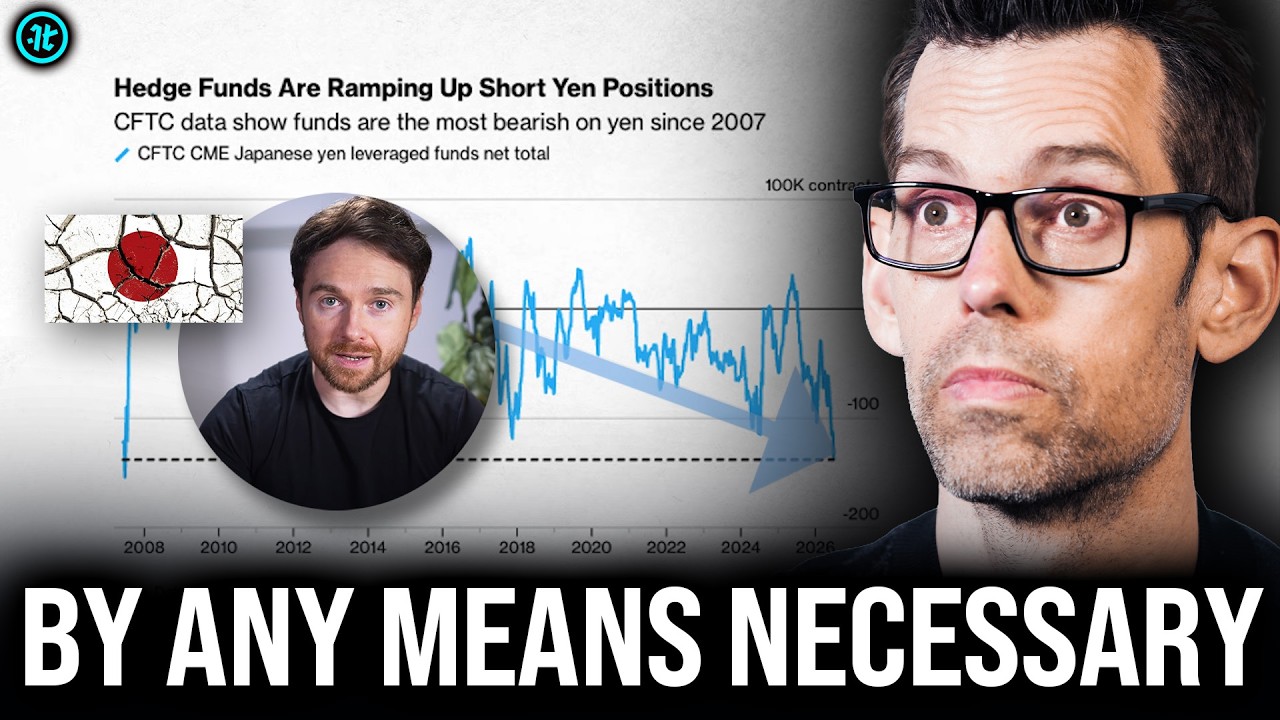
Every Time This Happens To The Yen, Markets Break — We Had To React
 106 min
Iran Just Struck a US Base — Here's How 2 Wars Merge Into WW3
 40 min
China Just Made Its Biggest Gold Move In 3 Years — We Had To React
Ask anything from this episode.
Save it, chat with it, and connect it to Claude or ChatGPT. Get cited answers from the actual content — and build your own knowledge base of every podcast and video you care about.
Get Started Free