Key Moments
Andrew Ng: Deep Learning, Education, and Real-World AI | Lex Fridman Podcast #73
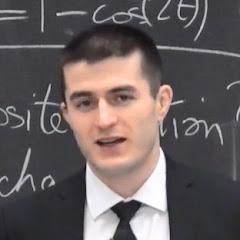 Lex Fridman
Key Moments
Andrew Ng discusses AI, education, and entrepreneurship, emphasizing practical impact and continuous learning.
Key Insights
The early vision for AI education was to automate teaching and reach millions, exemplified by the creation of MOOCs and Coursera.
Success in AI relies on understanding fundamentals, practical application, and the importance of scale in data and models.
Deep learning is a transformative technology with vast potential across industries beyond just the software sector.
Building successful AI startups requires a strong customer focus, systematic processes, and a mission that creates social good.
Continuous learning and developing habits, like regular study and note-taking, are crucial for mastery in AI.
The most impactful moments in life and career come from helping others achieve their dreams and advancing humanity.
EARLY INSPIRATIONS AND THE ROOTS OF AUTOMATION
Andrew Ng's journey into computer science began with early coding experiences and a fascination with artificial intelligence. A pivotal moment was realizing the potential of automation, which influenced his later work in machine learning and his efforts to automate aspects of education. This led to the development of Massive Open Online Courses (MOOCs), aiming to make learning more accessible and impactful, ultimately contributing to the founding of Coursera.
THE EVOLUTION OF ONLINE EDUCATION AND REACHING MILLIONS
Ng recounts the challenging but inspiring process of creating early MOOCs, often filming late at night with basic equipment. The core principle was always prioritizing the learner's experience, focusing on making concepts clear and accessible globally. This approach demonstrated the immense global interest in AI and machine learning, far exceeding initial expectations, and laid the groundwork for platforms like Coursera to educate millions.
THE POWER OF SCALE AND THE MISCALCULATIONS IN DEPLOYMENT
A key insight Ng shares is the critical role of scale – larger datasets and bigger models lead to better performance. While this proved correct, the early emphasis on unsupervised learning was a miscalculation. The empirical evidence from experiments demonstrating that scaling up neural networks consistently improved performance was a groundbreaking realization, especially at Google Brain, guiding the pursuit of larger-scale AI systems.
PRACTICAL AI: FROM HELICOPTERS TO MANUFACTURING
Ng's early research, like training helicopters to fly autonomously with Peter Abbeel, highlights a drive for practical, real-world applications over purely theoretical work. He emphasizes that while theoretical pursuits have their own beauty, his motivation stems from creating tangible positive impacts. This philosophy extends to his work in manufacturing, where practical challenges like small datasets and changing environments require robust, adaptable AI solutions.
DEEP LEARNING EDUCATION AND THE PATH TO MASTERY
The Deep Learning Specialization offered by deeplearning.ai is designed to be accessible, requiring basic programming and high school math. It covers foundational concepts, neural network construction, and crucial practical know-how, such as optimization and overfitting. Ng stresses the importance of systematic debugging and building intuition, much like learning the syntax and structure of traditional programming.
THE FUTURE OF AI: UNSUPERVISED LEARNING AND SOCIETAL IMPACT
Ng views unsupervised and self-supervised learning as highly promising areas with the potential to unlock significant advancements in AI, generating vast amounts of labeled data from unlabeled sources. He also highlights crucial short-term challenges like bias in AI, wealth inequality, and job displacement, urging focus on these immediate societal issues rather than distant AGI risks. Creating companies that deliver social good is a personal guiding principle.
BUILDING AI COMPANIES AND FOSTERING INNOVATION
The AI Fund operates as a startup studio, systematically creating new companies with a strong emphasis on serving customers and creating social good. Ng advises startups to focus on solving real customer problems, learn from failures, and build ecosystems for entrepreneurs. He believes that while AI is transforming every industry, it's essential to approach its adoption with a clear understanding of practical challenges and incremental steps.
CAREER PATHS AND THE IMPORTANCE OF HUMAN CONNECTION
Ng believes multiple career paths exist in AI, from industry roles to academia and startups. The most critical factor influencing career experience isn't the industry or company logo, but the people one interacts with daily. He advises prioritizing managers and peers who foster learning and collaboration, emphasizing that personal connection and the quality of relationships are paramount to both professional growth and finding fulfillment.
MAKING LEARNING A HABIT AND FINDING MEANING
Developing consistent learning habits, like dedicated study time and regular engagement with resources such as 'The Batch' newsletter, is key. Ng recommends handwritten note-taking for better retention and emphasizes that sustained effort, rather than sporadic bursts, drives long-term progress. Ultimately, the pursuit of happiness and a meaningful life involves helping others achieve their dreams and contributing to humanity's collective advancement.
Mentioned in This Episode
●Supplements
●Products
●Software & Apps
●Companies
●Organizations
●Books
●Concepts
●People Referenced
Andrew Ng's Advice for AI Learners and Builders
Practical takeaways from this episode
Do This
Avoid This
Common Questions
Andrew Ng's fascination started with learning to code at a young age to play games. Later, reading about expert systems and neural networks sparked his interest in creating intelligent computers. An early high school internship experience with tedious photocopying also fueled his interest in automation.
Topics
Mentioned in this video
A research division of Google where Andrew Ng was involved, focusing on deep learning. It was a key area for developing large-scale AI models.
Co-founded by Andrew Ng, this entity functions as a startup studio focused on systematically creating new AI companies.
A top university where admission to a PhD program is considered a good experience.
Founded by Andrew Ng, this company focuses on AI education, offering courses and specializations to help individuals learn and excel in deep learning.
A top university where Andrew Ng taught and where some of his initiatives, like the helicopter reinforcement learning project, took place.
A consulting firm that published a study estimating significant global economic growth from AI, much of which is expected outside the software internet sector.
An organization that receives donations from Cash App promotions, focused on advancing robotics and STEM education for young people.
An influential educator, researcher, and innovator in AI, co-founder of Coursera, Google Brain, DeepLearning.AI, Landing AI, and AI Fund.
A foundational figure in computer science and artificial intelligence, whose work inspired the dream of creating human-level or superhuman intelligence (AGI).
Mentioned as someone Andrew Ng pitched the idea of starting Google Brain to, based on the conviction from Adam Coates's work on scale.
A pioneer in deep learning, discussed as having a conversation with Andrew Ng about unsupervised learning where Hinton sketched arguments on a napkin.
Mentioned as an instructor for TensorFlow specialization courses.
A researcher who ran experiments at Stanford showing that larger training data leads to better performance, influencing the conviction in scaling models.
Host of the Lex Fridman Podcast, engaging in in-depth conversations on AI, technology, and science.
A prominent figure in AI and computer science, mentioned as a collaborator and friend with whom Andrew Ng discussed unsupervised learning on a napkin.
Andrew Ng's first PhD student, who worked on using reinforcement learning to fly helicopters, a key early research project.
Used as an analogy for a self-supervised learning task where an image is cut into pieces, and the model predicts the original permutation.
A phenomenon in machine learning where a model learns the training data too well, leading to poor performance on new data. It's a key concept discussed for practical application.
A fundamental optimization algorithm in machine learning, which is covered in the Machine Learning course and briefly touched upon in the Deep Learning Specialization.
Contrastive Predictive Coding, a self-supervised learning objective mentioned in the context of research by Aaron Menthol and others.
A thought experiment concerning AI alignment, where an AI tasked with maximizing paperclip production could potentially consume all resources, posing an existential risk.
A type of machine learning where an agent learns to make decisions by taking actions in an environment to maximize rewards. It's discussed as inspiring for teaching neural networks, but with limited real-world applications currently.
Graphics Processing Units were essential for early deep learning experiments, and lessons were learned about sharing them among multiple users.
A type of neural network that processes sequential data, mentioned as a key concept taught in the Deep Learning Specialization.
Founded by Andrew Ng, this company focuses on helping established companies adopt and implement AI and deep learning solutions.
Mentioned as an example of a company that has significantly impacted the taxi industry, illustrating winner-take-all dynamics in the internet sector and beyond.
A professional services network that also estimated a large economic impact from AI, reinforcing the potential of the technology.
A Chinese technology company where Andrew Ng served as Chief Scientist, leading efforts in AI, including initiating new business lines using AI capabilities.
Mentioned alongside Uber as a company that has disrupted the taxi industry.
A programming language used for exercises in the Deep Learning Specialization, indicating a basic programming background is needed.
Co-founded by Andrew Ng, it's a platform that offers online courses, including those on machine learning and deep learning, helping millions of students globally.
The team Andrew Ng spoke with after initial successes with speech and maps, indicating the propagation of AI adoption within Google.
A finance app presented as a sponsor, used for sending money, buying Bitcoin, and investing. It also supports the organization FIRST.
A mechanism in neural networks that allows the model to focus on specific parts of the input, mentioned as a concept in the Deep Learning Specialization.
Used by Google Maps team to read house numbers, leveraging computer vision to improve location accuracy, a second successful internal customer project for Google Brain.
A weekly newsletter from DeepLearning.AI that Andrew Ng and his team send out to keep people updated on the latest AI news.
More from Lex Fridman
View all 549 summaries 259 min
FFmpeg: The Incredible Technology Behind Video on the Internet | Lex Fridman Podcast #496
 124 min
Vikings, Ragnar, Berserkers, Valhalla & the Warriors of the Viking Age | Lex Fridman Podcast #495
 146 min
Jensen Huang: NVIDIA - The $4 Trillion Company & the AI Revolution | Lex Fridman Podcast #494
 311 min
Jeff Kaplan: World of Warcraft, Overwatch, Blizzard, and Future of Gaming | Lex Fridman Podcast #493
Ask anything from this episode.
Save it, chat with it, and connect it to Claude or ChatGPT. Get cited answers from the actual content — and build your own knowledge base of every podcast and video you care about.
Get Started Free